
Quartz vs Marble: Which Is Better for Kitchen Countertops
Quartz vs Marble: Which Is Better for Kitchen Countertops
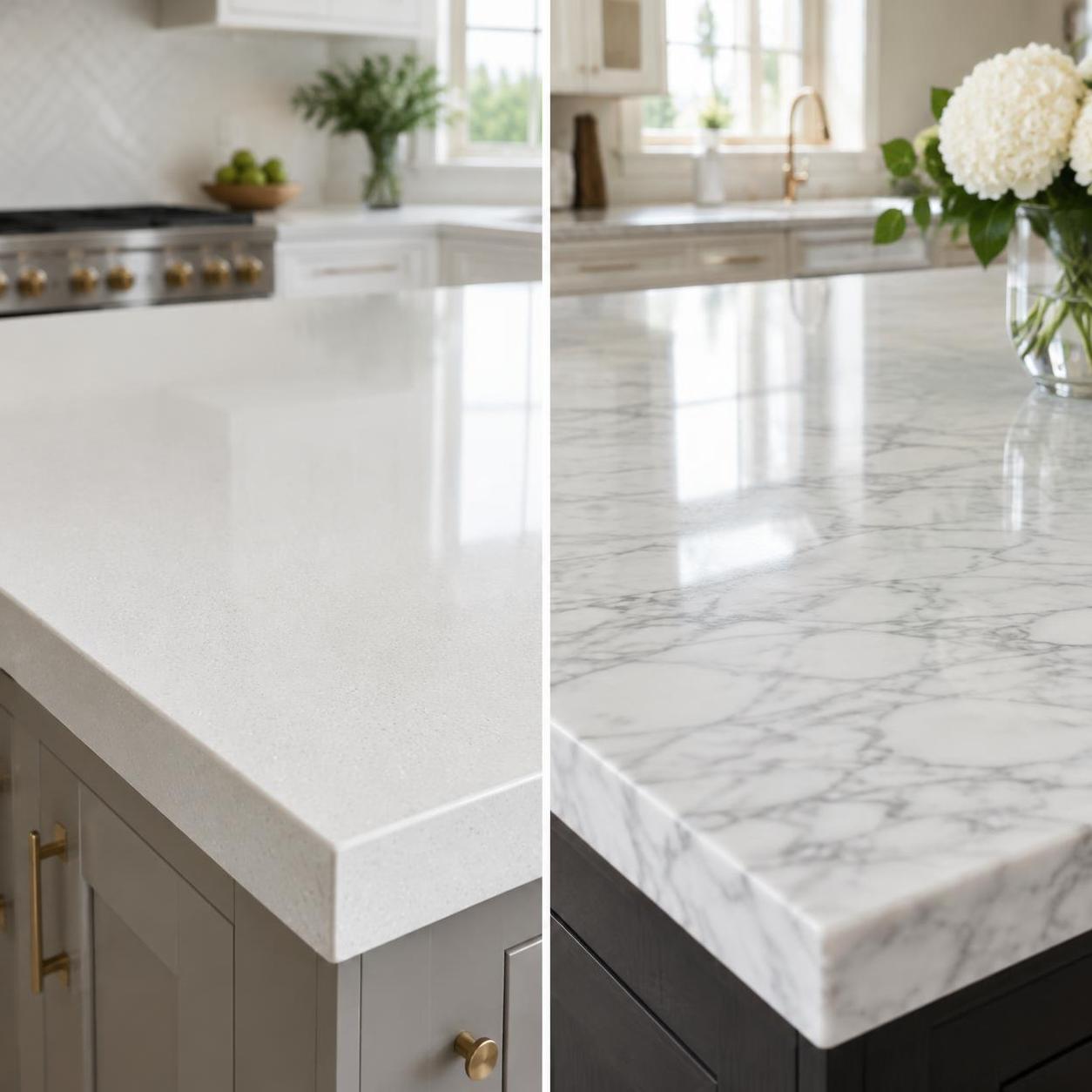
Quartz vs Marble for Kitchen Countertops: A Practical Comparison
If you are stuck on quartz vs marble for a kitchen countertop, the short answer is this: quartz is usually the better all-around choice for busy kitchens, while marble is the better choice for people who care most about natural beauty and are willing to accept more upkeep. The right answer depends less on trends and more on how you actually cook, clean, and use the space every day.
A lot of people start this comparison from appearance alone. That makes sense because countertops are one of the first things you notice in a kitchen. But after years of use, what matters most is usually stain resistance, etching, repair expectations, and whether the surface still fits your routine. That is where quartz and marble begin to separate.
The main difference between quartz and marble comes down to how each surface is made and how it ages. Quartz is engineered, so colour and pattern stay controlled and repeatable; marble is quarried, so every slab is one of a kind. For a marble vs quartz benchtop decision in a working kitchen, that single difference drives everything else: stain behaviour, maintenance, and how the surface reads after five years.
Quartz vs Marble: What really changes in daily use
Quartz is an engineered stone made from natural quartz combined with resins and pigments. Marble is a natural stone formed over time, with veining and movement that cannot be copied exactly. On paper, both can work as kitchen countertops. In real homes, they behave very differently.
Quartz is more forgiving. It handles spills better, needs less maintenance, and gives homeowners a more predictable surface. Marble is more sensitive. It can stain, etch, and show wear faster, especially in kitchens where people cook often, use citrus, leave oil splashes, or do not wipe surfaces quickly.
That does not make marble a bad material. It means marble asks more from the owner.
Durability is where quartz usually wins
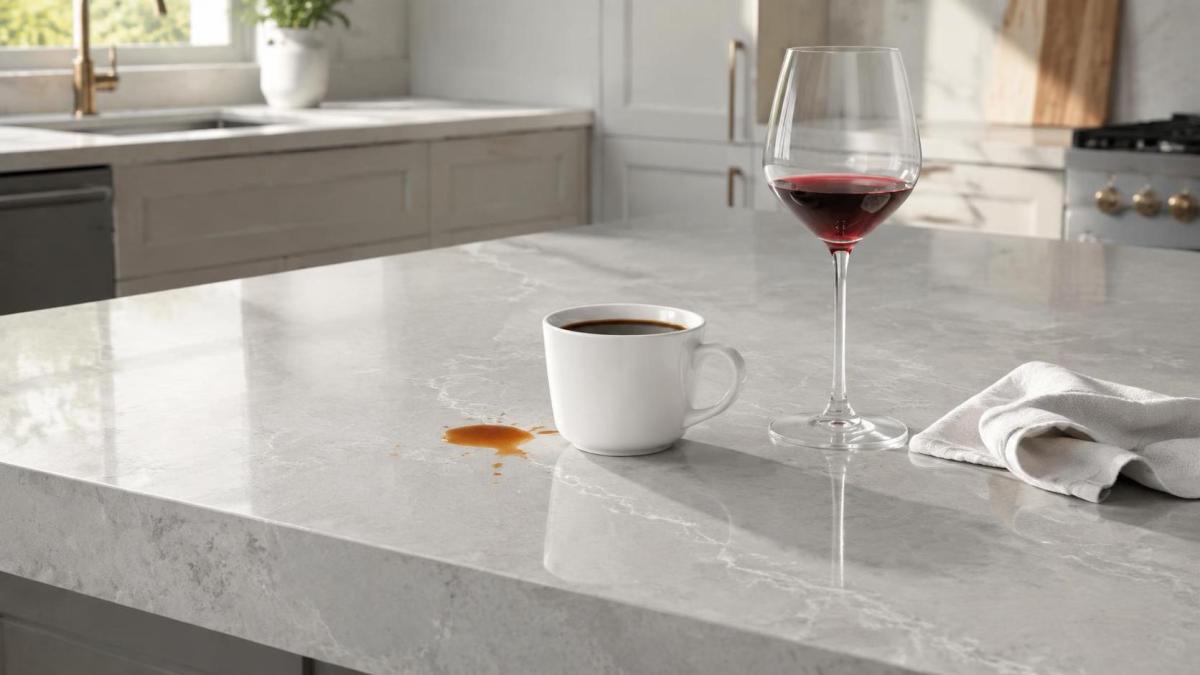
In practical kitchen use, quartz tends to hold up better. It is non-porous, so it does not need sealing in the way natural marble does. Coffee, red wine, tomato sauce, cooking oil, and similar messes are less likely to become a long-term problem if cleaned in normal time.
Marble is softer and more porous. One of the biggest misunderstandings is that people only worry about scratches. Scratches matter, but etching is often the bigger issue. Acidic foods like lemon juice, vinegar, or even some cleaners can dull the surface or leave marks. These are not always stains. Sometimes the stone itself has been chemically affected.
In a low-use kitchen, some owners accept that patina as part of marble’s character. In a hard-working family kitchen, that same aging can feel frustrating very quickly.
If your kitchen is used every day for real cooking, quartz is usually the safer material choice.
Marble still has something quartz cannot fully replace
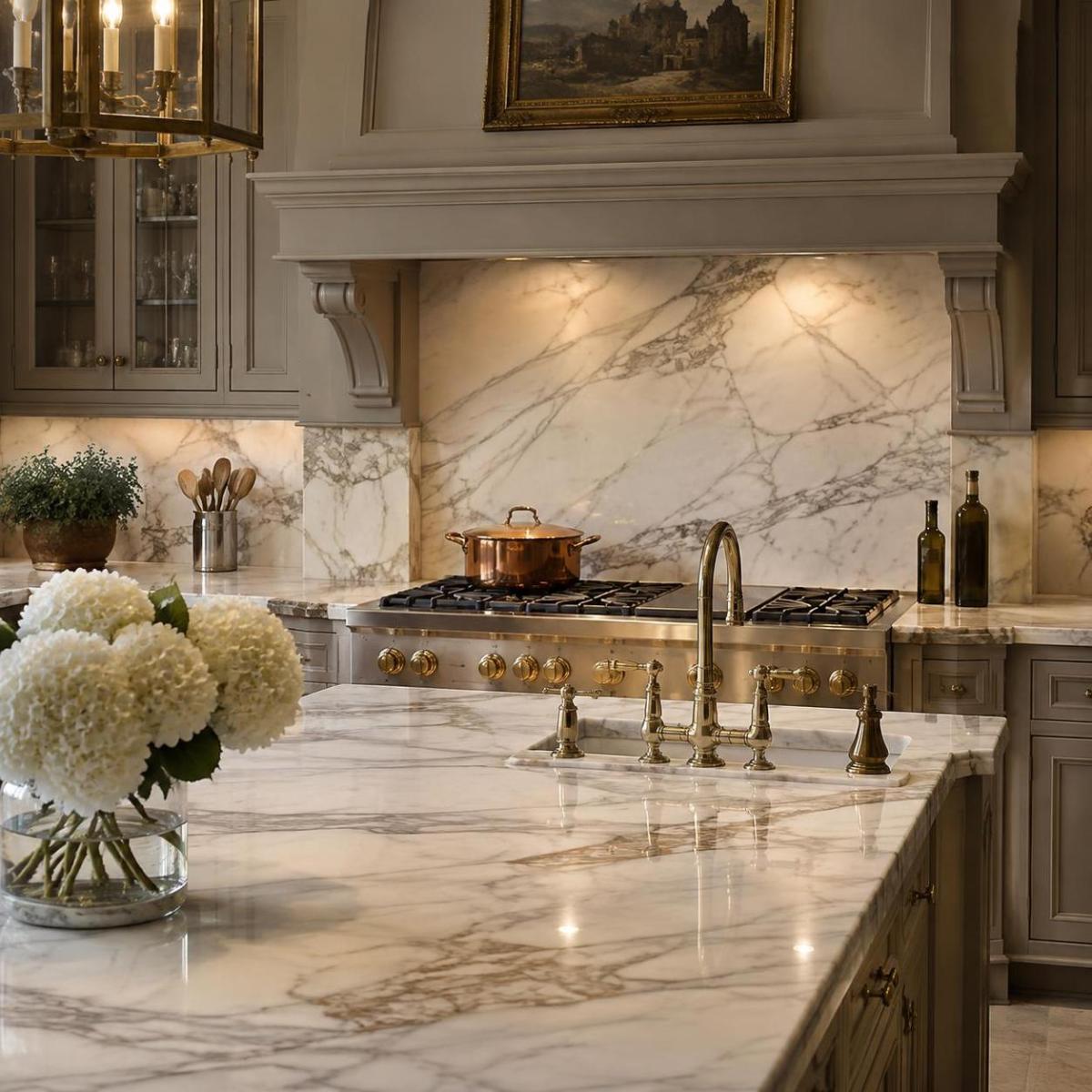
This is the part many comparison articles flatten too much. Marble is not popular only because it looks expensive. It has depth, softness, and natural variation that many engineered surfaces still struggle to match in a truly convincing way. Even high-quality quartz designs that imitate marble often look more controlled and consistent.
Some people want exactly that consistency. Others feel it makes the kitchen look a little too perfect or manufactured. There is no universal winner here.
White marble, especially styles with elegant grey veining, gives a kitchen a lighter and more architectural look. It works particularly well in classic interiors, high-end residential projects, and spaces where natural material expression matters more than low maintenance.
Quartz fits more easily into modern kitchens where clean performance, color control, and easier upkeep are the priority. It also offers more uniform slabs, which can be helpful when matching large islands, backsplashes, or multiple countertop sections.
Maintenance is where many buyers change their mind
People often say they are fine with “a little maintenance” until they understand what that means over five or ten years.
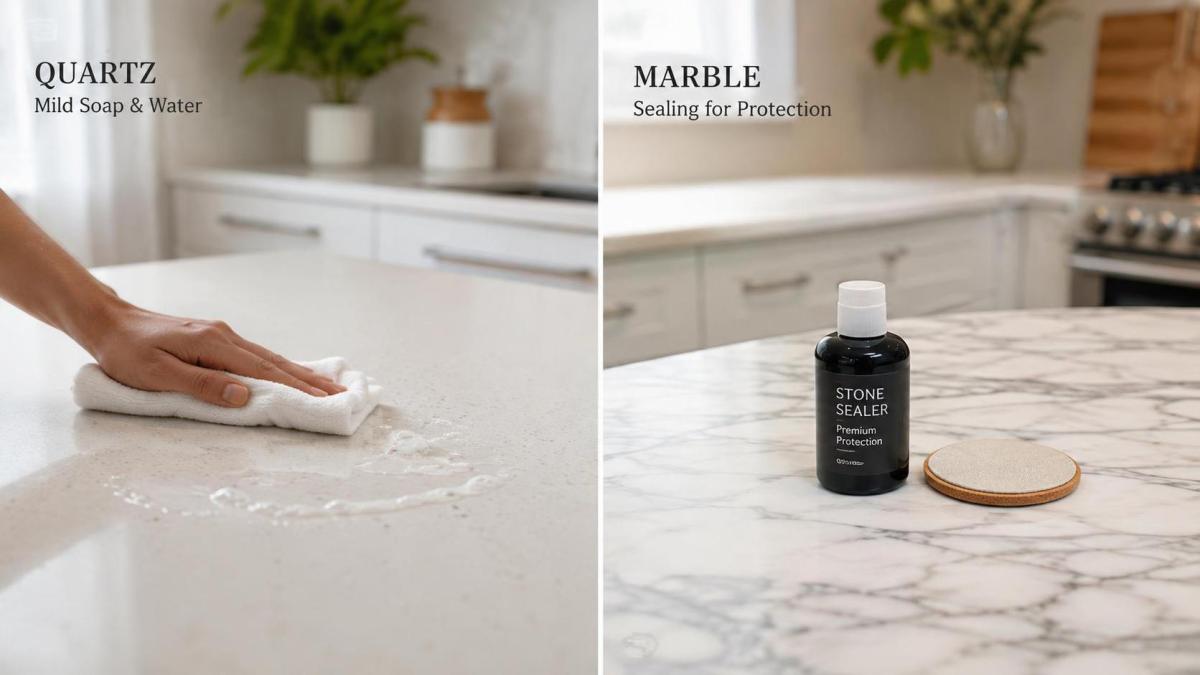
Quartz is straightforward. Daily cleaning usually requires only mild soap and water or a stone-safe cleaner recommended by the manufacturer. There is no sealing schedule for the surface itself in most cases, though care instructions should still follow the supplier’s guidance.
Marble needs more attention. Sealing helps reduce absorption, but sealing does not make marble stain-proof or etch-proof. That is an important distinction. Some buyers hear “sealed” and assume the stone is protected from everything. It is not. Sealers reduce risk; they do not change the nature of marble.
If you already know you do not want to think about coasters, cutting boards, cleaner ingredients, or quick wipe-down habits, marble is probably not the right countertop for your kitchen.
Cost is not just about the slab price
When people compare quartz and marble, they often focus only on initial purchase cost. That can be misleading because pricing varies widely by color, source, thickness, edge profile, fabrication complexity, and local labor rates. In many markets, premium quartz and mid- to high-grade marble can overlap, while rare marbles can cost much more. Actual pricing needs to be confirmed locally.
What matters more is total ownership cost.
Quartz often gives better value over time because it usually requires less maintenance and fewer corrective treatments. Marble may involve sealing, more careful cleaning, and occasional refinishing or professional restoration if the surface becomes etched or worn.
So when someone says, “marble and quartz are about the same price,” the next question should be: same price on installation day, or same price after years of use?
It also helps to separate countertop and benchtop quotes when you compare them. Marble versus quartz in a compact kitchen can look close on the first line, but marble versus quartz across a full benchtop, with cut-outs, edge profiles and sealing folded in, lands somewhere else entirely.
Heat, scratches, and repairs: the details people forget
Neither material should be treated carelessly. Hot pans should not go directly on either surface without protection, even though natural stone is often perceived as heat-friendly. Quartz contains resins, and excessive heat can damage the surface. Marble handles heat differently, but that does not mean it is immune to cracks, discoloration, or other problems under poor use conditions.
As for scratches, marble is generally more vulnerable. Quartz is harder in everyday use, though it is not indestructible. Heavy impact can still chip edges, especially around sinks or corners.
Repair expectations also differ. Marble can sometimes be honed or refinished by stone professionals, depending on the issue. Quartz repairs are possible in some cases, but perfect invisible repair is not always easy, especially with patterned surfaces.
Who should choose quartz
Quartz is usually the better fit if your kitchen is one of these:
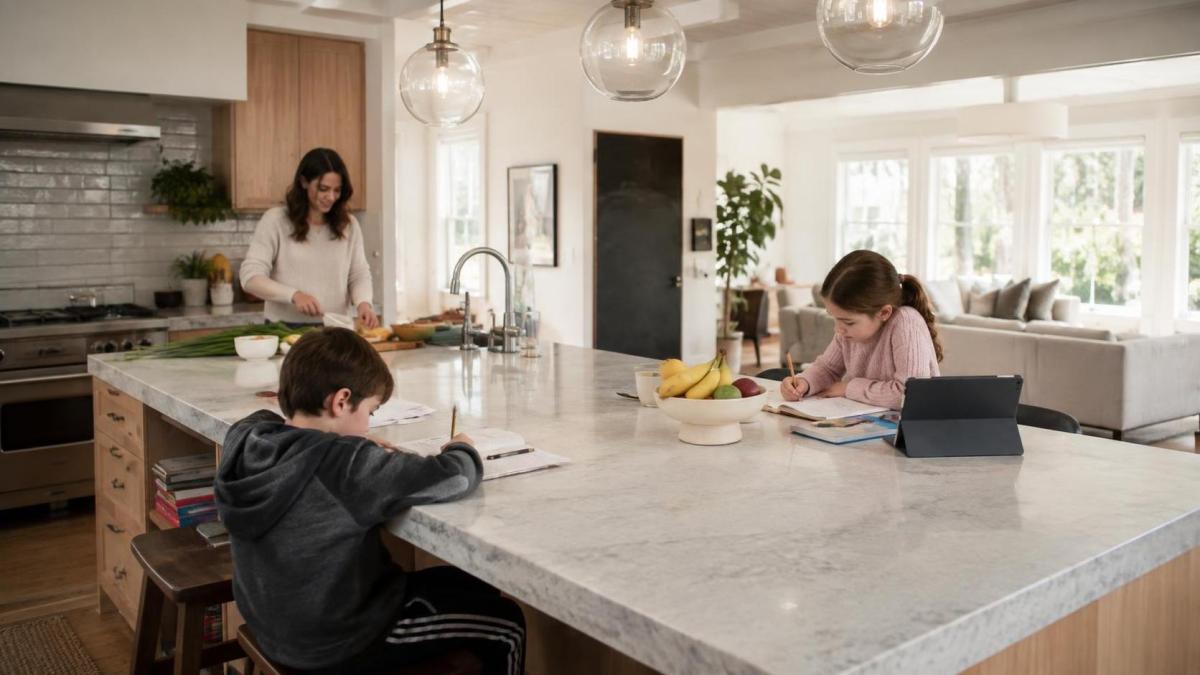
- A busy family kitchen with frequent cooking
- A rental, resale, or investment property where lower maintenance matters
- A household that wants a clean look without much ongoing care
- A project where consistent pattern and color are important
- A renovation where practicality matters as much as appearance
For many homeowners, quartz is not the exciting answer. It is the realistic one.
Who should choose marble
Marble makes sense when the visual priority is very high and the owner understands what comes with it.
- You want a natural stone with unique veining and variation
- You like the idea of a surface that ages and develops character
- Your kitchen sees lighter daily use, or you are comfortable being careful
- The project aims for a more timeless, natural, or luxury material palette
Marble also works well in specific applications where wear feels more acceptable, such as baking zones, feature islands, or kitchens designed more for light entertaining than heavy daily cooking.
The better question is not “Which is best?”
It is “What kind of kitchen do you actually have?”
That one shift usually makes the decision easier. A household with children, rushed mornings, frequent meal prep, and regular guests tends to benefit more from quartz. A design-led home where materials are chosen for atmosphere and authenticity may justify marble, even with the maintenance trade-off.
One more practical note: always view full slab samples when possible, not just small chips. Quartz patterns and marble veining both change dramatically at scale. Edge details, finish type, and cabinet color can also shift the final result more than many buyers expect.
Final take on quartz vs marble for kitchen countertops
For most kitchens, quartz is the better countertop material because it offers easier maintenance, better stain resistance, and fewer daily worries. Marble remains a strong choice for buyers who value natural beauty above convenience and understand that wear is part of the experience, not a defect.
When comparing quartz vs marble, the smartest decision is usually the one that matches your lifestyle, not the one that looks best in a showroom for five minutes.
If you are sourcing for a project rather than a single kitchen, the same trade-offs simply scale up. Our guide to buying quartz slabs from China walks through the MOQ, sample, tolerance and packing points to settle before drawings are released, and our quartz slab range lists the formats and thicknesses we supply to fabricators and wholesale buyers.
FAQ
Does quartz look cheaper than marble?
Not necessarily. High-quality quartz can look refined and premium, but it usually appears more controlled and uniform than real marble. Whether that feels better or worse depends on your taste.
Is marble too high-maintenance for a kitchen?
For some households, yes. If you cook often and do not want to monitor spills or acidic foods, marble can become annoying to live with.
Which adds more resale appeal?
That depends on the market and the overall design of the home. Marble can signal luxury, but quartz often appeals to more buyers because it is easier to maintain.
Can quartz countertops mimic marble well?
Many can mimic the general look very well. What they usually cannot fully reproduce is the depth and natural unpredictability of real marble.
What should I check before ordering either material?
Check the actual slab or large sample, finish type, edge profile, seam planning, and care instructions. Those details affect the final result as much as the material name.
What is the difference between quartz and marble?
Quartz is an engineered surface made from quartz minerals bound with resin, so colour and pattern repeat from slab to slab. Marble is a natural stone cut from the block, so its veining is unique and its surface is softer and more porous. That is the whole difference, and everything practical about maintenance, staining and repair follows from it.
Is marble or quartz better for a benchtop?
For almost every benchtop, quartz is the easier choice: it resists stains and etching without sealing. A marble benchtop works when you accept that it will patina and you are ready to seal and wipe it regularly.
If you are comparing materials at project level rather than countertop level, Why Choose Us for Your Quartz Slab Project and our Villa Quartz Slab Selection Guide for High-End Interiors work through the same trade-offs. If the brief already names a look rather than a material, our guide to quartz that looks like Taj Mahal shows which warm cream and ivory colours come closest to that quartzite.
If the comparison you are actually working through is against porcelain or sintered stone, our breakdown of quartz vs porcelain and sintered stone runs the same durability, heat, seam and installed-cost checks side by side.
Our breakdown of quartz vs quartzite sets a natural stone against a manufactured slab on exactly the same four points — hardness, sealing, cost and colour control.
Solid surface is the material most often confused with quartz on a specification sheet. Our comparison of quartz vs solid surface separates the two categories on hardness, heat tolerance, seam visibility and repairability.
Once the surface is chosen, the real test is consistency across a whole kitchen. Our batch inspection standard for export quartz orders explains how every slab is checked for colour, thickness and veining before it leaves the factory.
Related Articles
- Quartz vs Granite: Pros and Cons for Project Use
- Stain Resistance Performance of High-Grade Quartz Slabs
- Maintenance Guide for Quartz Countertops
- Hardness and Wear Resistance Advantages of Engineered Quartz
Source Low-Maintenance Engineered Quartz for Your Project
As an engineered quartz manufacturer and B2B supplier, we offer non-porous, stain-resistant slabs with consistent color and pattern across batches, ideal for busy family kitchens, multi-unit projects, hospitality, and commercial interiors. Contact us for samples, full-slab references, and project pricing.
📱 WhatsApp: +86 198 6115 3736
📧 Email: raykelee@hyquartzslabfactory.com
Send Us A Message