
Villa Quartz Slab Selection Guide for High-End Interiors
Villa Quartz Slab Selection Guide for High-End Interiors
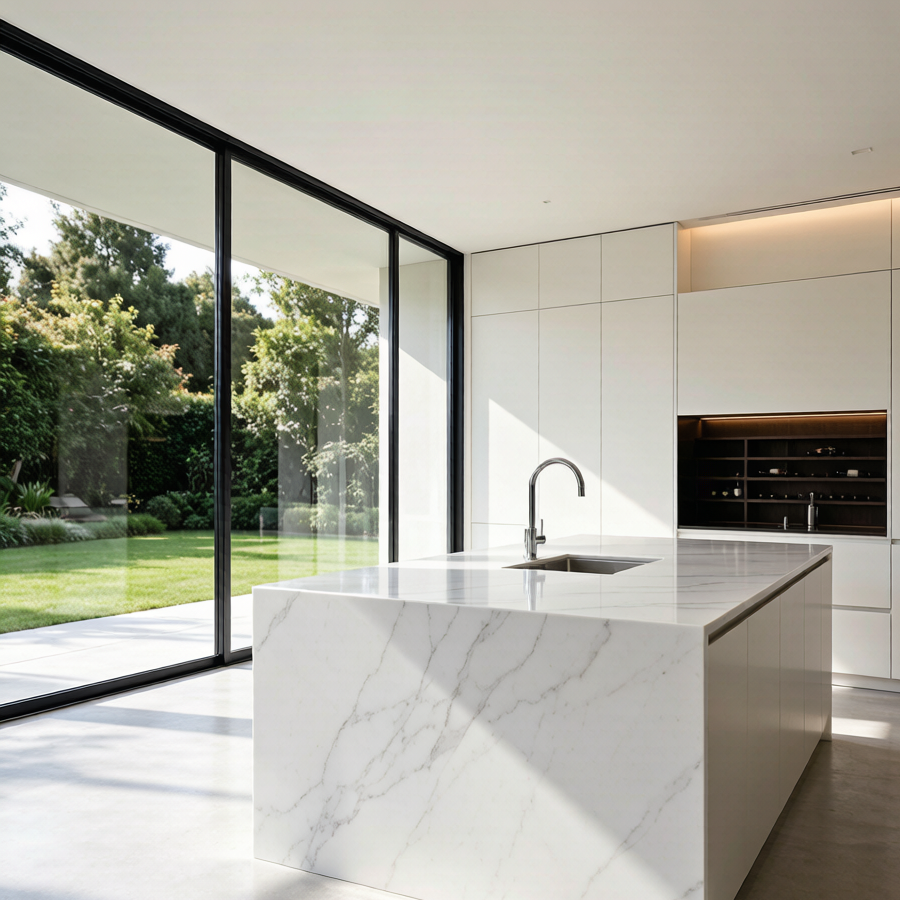
Villa Quartz Slab Selection Guide for High-End Interiors
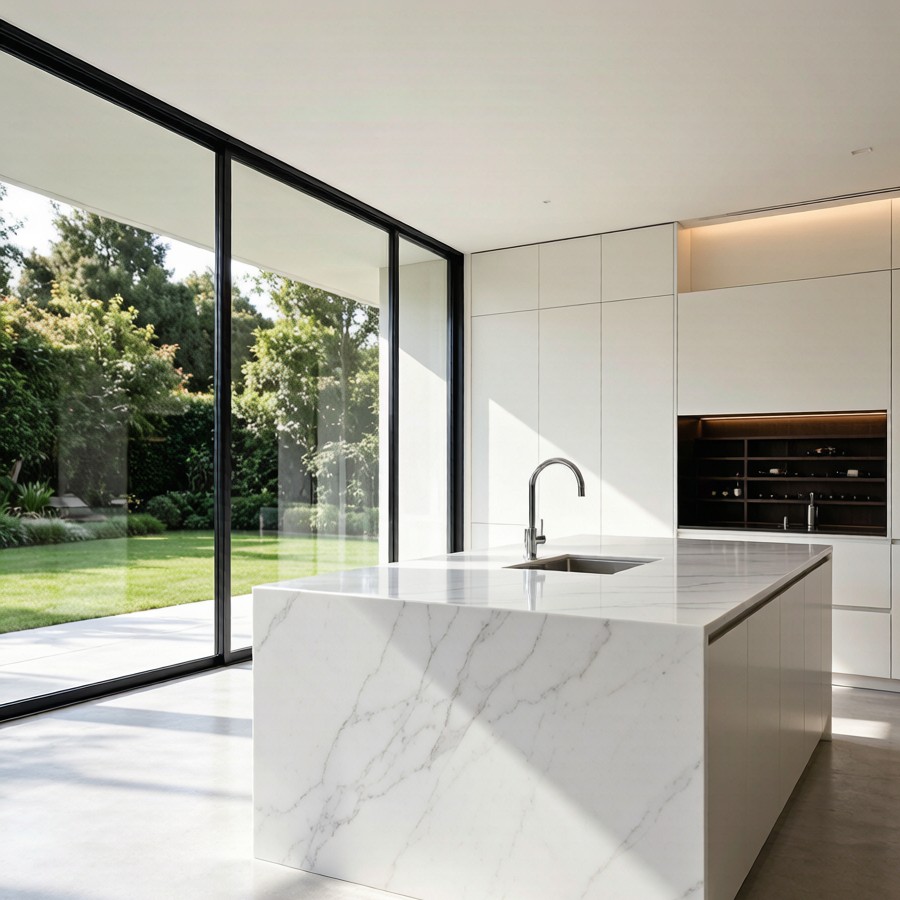
A villa project is not a normal residential job. The rooms are larger, the sight lines are longer, the detailing is exposed from more angles, and the owner is usually involved in the finish selection personally. That is why choosing a Villa Quartz Slab deserves more thought than picking a color from a sample fan. This guide is written for villa owners, interior designers, contractors and importers who need to specify engineered quartz across a whole house — kitchens, islands, bathroom vanities, staircases, wall cladding — and want the surfaces to look intentional together rather than like separate purchases.
Villa interiors create a specific challenge. In an average apartment, one kitchen countertop and one bathroom vanity are enough. In a villa, the same material family may appear in five or six different rooms, under different lighting, at different scales, and often on surfaces that are seen up close — a kitchen island the family gathers around every day, a master bathroom vanity, a floating staircase, a feature wall behind a fireplace. If the material is chosen room by room, the result is usually a house that feels assembled instead of designed.
The practical answer is to treat the Villa Quartz Slab decision as one coordinated specification rather than a series of independent purchases. This article walks through what actually changes the outcome: slab format and book-matching, how scale affects pattern choice, the difference between surface finish and visual quality, what to verify with a supplier before ordering, and the mistakes we see most often when villas are specified from a distance.
What Makes a Villa Quartz Slab Different From a Standard Order
The material itself does not change. What changes is the specification pressure. A villa typically needs larger continuous surfaces, more matching across rooms, and a higher tolerance for visual detail because the surfaces are viewed in generous daylight and from a distance where a mismatched tone is obvious.
Three factors separate a villa specification from a routine order:
- Scale. Large kitchens, double islands, long vanities and wall cladding mean bigger pieces and fewer joints. Slab format becomes a design decision, not a logistics afterthought.
- Continuity. The same tone usually has to hold across several rooms with different light exposure. Consistency between slabs matters more than the beauty of any single slab.
- Detail visibility. Book-matched veins, waterfall edges and mitred returns are read up close. Fabrication quality becomes visible in a way it rarely is in a compact apartment.
In other words, the villa context raises the bar on two things at once: how the material looks across the whole house, and how precisely it is made.
Slab Format and Book-Matching: Where Villas Are Won or Lost
The single most common villa regret is choosing a strong, dramatic pattern and then discovering that the layout forces visible seams exactly where the eye rests. A veined Villa Quartz Slab can look extraordinary on a full-height wall and chaotic on a countertop that has been cut into three pieces around a sink and a hob. The material is not the problem; the sequencing is.
Before committing to any pattern, it helps to confirm the actual usable slab dimensions and think through the cutting plan. Large-format slabs reduce the number of joints on long surfaces, which matters most on kitchen islands, wall cladding and stair treads. Where a strong vein is used, book-matching — mirroring two consecutive slabs so the pattern continues across a joint — can turn a potential weakness into the focal point of a room. Where a subtle, uniform surface is used, book-matching is less important because the eye has nothing to follow.
The working rule we give designers is simple: the more movement a pattern has, the more the layout has to be planned before the order is placed, not after. A quiet, even surface forgives a rough layout. A dramatic one does not. Choosing a Villa Quartz Slab is therefore as much a planning exercise as a visual one.
Choosing the Right Villa Quartz Slab for Each Room
Different rooms put genuinely different demands on the surface. Using one material everywhere is not the goal; using a coherent family of materials in the right places is.
- Kitchen island and main countertop. The hardest-working surface in the house. Prioritise a non-porous, scratch-resistant finish and a tone that hides everyday activity without looking dull. This is where most of the budget belongs.
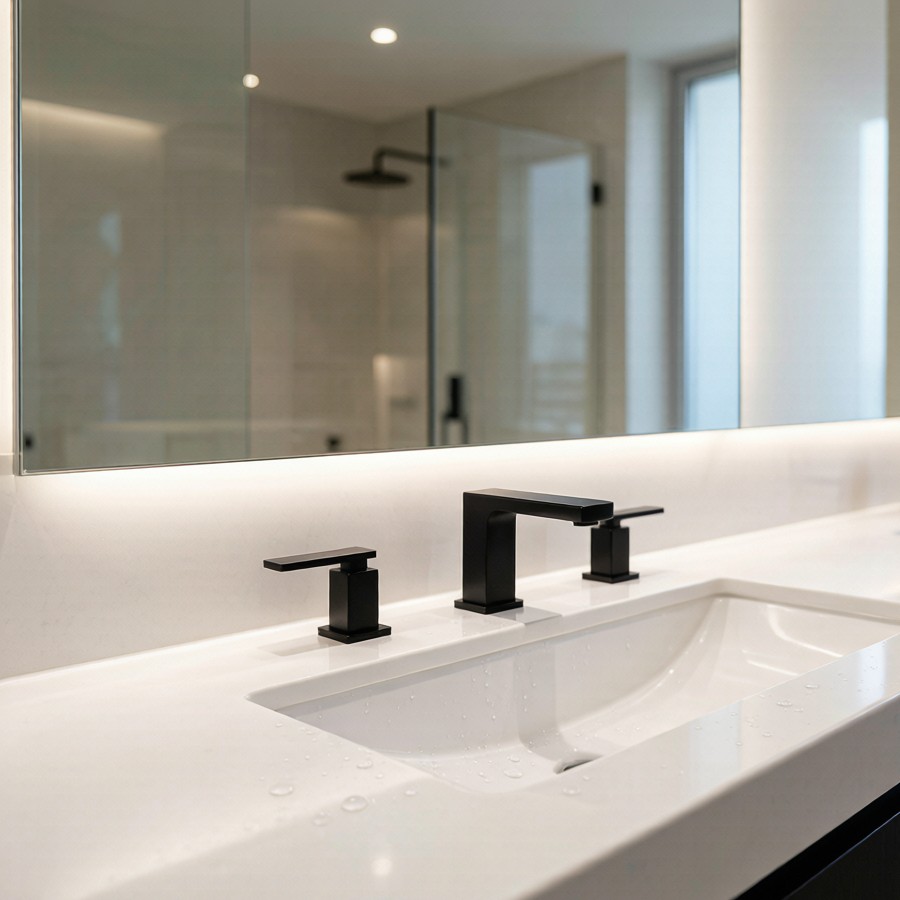
- Bathroom vanities. Water, soap, cosmetics and heat from styling tools. A non-porous surface keeps its appearance without the sealing routine that porous stone often needs. A softer, calmer pattern usually suits the smaller scale.
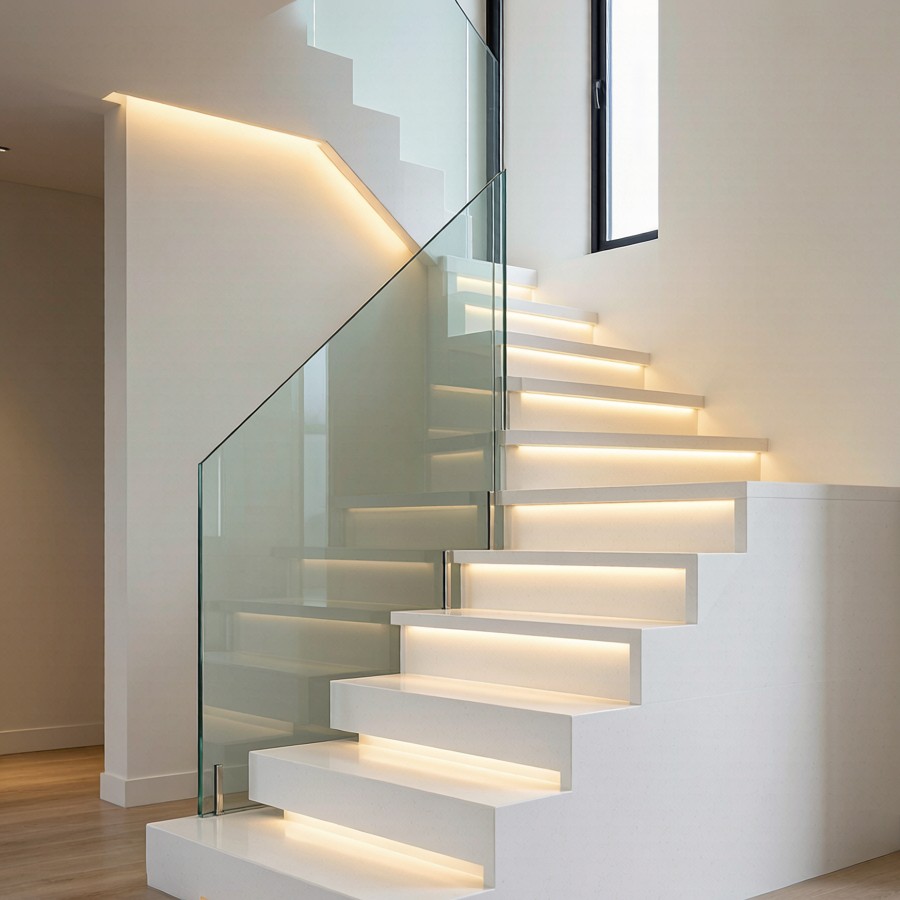
- Staircases and thresholds. Edge condition and slip considerations matter more than pattern here. Confirm the edge profile and understand that a polished surface can behave differently underfoot than a matte one.
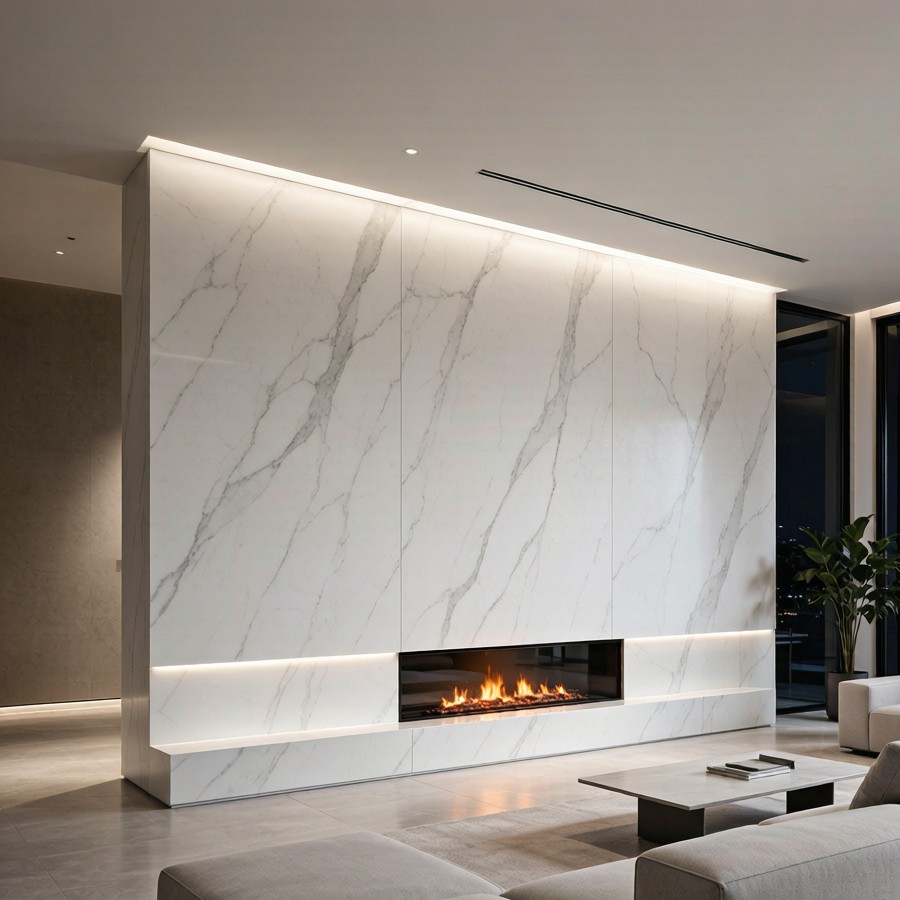
- Feature walls, fireplaces and cladding. This is where a bold Villa Quartz Slab earns its place. Vertical surfaces are seen in full and rarely touched, so pattern drama is low-risk — provided the slab sizes suit the height of the wall without awkward cuts.
- Outdoor kitchen or terrace bar. Only if the specific product and finish are rated for it. Outdoor use adds UV and thermal cycling to the brief and should be confirmed rather than assumed.
Color, Veining and Lighting Across a Whole House
In a villa, the same surface is seen under several very different light conditions in a single day. A slab that looks warm and calm in a south-facing showroom can read cold in a north-facing hall, and a bright white that looks crisp in daylight can appear slightly grey under warm evening lighting.
For that reason, the most reliable approach is to review samples in the actual spaces — or at least in comparable light — before the order is confirmed. Where a whole-house palette is being built, it is usually better to lock in the large surfaces first (island, main vanities, cladding) and then choose smaller elements around them, because a tonal difference is far more visible on a large area than on a small one.
It is also worth understanding that engineered quartz is manufactured, so color and pattern continuity is far more predictable than in natural stone. That predictability is exactly what a multi-room villa needs: it means the master bathroom vanity can be replaced in three years and still match, which is rarely true with a natural material.
What to Verify With a Supplier Before Ordering

A villa order is large enough that a misunderstanding at the quotation stage becomes expensive later. Before placing it, these points are worth confirming in writing:
- Slab dimensions and thickness. Confirm the actual usable size and the available thickness options, and state which thickness is required where. Thickness requirements vary by span, substrate and edge detail.
- Color consistency across the order. Ask how consistency across batches is managed, and how a future replacement slab will be matched.
- Finish and surface performance. Confirm the finish, and ask plainly about porosity, scratch and stain behaviour rather than relying on marketing language.
- Fabrication capability. Book-matching, mitred waterfall edges and tight joints are fabrication skills, not product features. Confirm the supplier or their fabricator can deliver the detail the design shows.
- Packing and transit protection. A villa order often travels far. Ask how slabs are packed for export and how edges are protected in transit.
- Documentation and compliance. Depending on the project location, fire performance, material declarations or local standards may need to be provided. Raise this early rather than at handover.
Common Villa Specification Mistakes
Most villa problems we see are not material failures. They are specification and coordination failures that were cheap to avoid at the design stage and expensive to correct on site.
- Choosing pattern before layout. A dramatic slab chosen from a photo, then forced into a layout with unavoidable seams, almost always disappoints.
- Mixing slabs from different batches. Where tone is meant to carry across rooms, batch consistency has to be planned, not hoped for.
- Underestimating fabrication detail. Seam placement, edge profile and support around cut-outs decide how the finished surface reads. The slab on its own does not.
- Assuming heat resistance means heat-proof. Quartz handles everyday kitchen activity well, but it is not heat-proof. Trivets and heat protection still matter, and this is worth telling the client before handover, not after a mark appears.
- Ignoring the maintenance handover. A villa may be cleaned by staff who change over time. Simple, written care guidance prevents most long-term appearance problems.
How to Judge the Right Villa Quartz Slab
Rather than asking whether a particular Villa Quartz Slab is "the best," it is more useful to ask whether it fits the way the room will actually be used for the next ten years. For a villa, that means reviewing the surface in real light, planning the layout before choosing the pattern, confirming that the fabrication detail shown on the drawing can genuinely be produced, and making sure the client understands how the surface should be cleaned and protected.
Frequently Asked Questions
Which Villa Quartz Slab colors work best across a whole house?
There is no single correct palette, but the most reliable approach is to anchor the house on one calm, consistent base tone for the large surfaces — kitchen island, main vanities and any cladding — and then use a bolder pattern only on vertical features. Engineered quartz is manufactured, so tone and pattern continuity is far more predictable than in natural stone, which is what makes a consistent multi-room villa palette achievable in the first place.
Is a Villa Quartz Slab suitable for a large kitchen island?
Yes. Engineered quartz is typically non-porous and scratch-resistant, which suits a surface that takes daily food preparation, spills and cleaning. For a large island, the practical considerations are slab format and seam planning — a larger slab reduces the number of joints on a long surface — plus adequate substrate support, especially around sink and hob cut-outs, because openings weaken the slab locally.
Can a Villa Quartz Slab be used for staircases and wall cladding?
Engineered quartz is widely used for wall cladding and feature surfaces, where it is seen in full and rarely touched. For staircases, the deciding factors are edge profile, support and slip behaviour rather than the material name, and a polished finish can behave differently underfoot than a matte one. Confirm these details with the designer and fabricator for the specific project.
How do I make sure several rooms match if slabs come from different batches?
Plan the quantity for the whole project as one order rather than room by room, so the material comes from the same production batch. Where the project must be supplied in stages, agree in advance how the remaining quantity will be reserved or matched, so a later vanity or replacement top still sits within the same tonal range as the surfaces installed first.
What thickness of Villa Quartz Slab should I specify?
It depends on span, substrate support and the edge detail the design calls for, rather than on a single universal figure. Thicker slabs can be used where a solid visual profile is wanted on an island or vanity edge, while thinner slabs are often doubled at the front edge to create the same visual thickness with less weight. Confirm the available thickness options with the supplier against the actual drawings before ordering.
A Villa Quartz Slab Decision Is a Whole-House Decision
In many villa projects, the surfaces work well not because a spectacular material was chosen, but because the whole specification was treated as one coordinated decision. The tone holds from the kitchen island through to the master vanity, the layout was planned before the pattern was chosen, and the fabrication detail was agreed early enough to be built properly. A Villa Quartz Slab performs best when it is specified as part of the architecture, not as a late purchase. Before final selection, it is worth confirming slab format, batch consistency, support details and cleaning requirements together — those checks usually matter more than another round of color debate.
Related Articles
- Best Quartz Colors for Kitchen Projects
- Quartz in Hotel Bathroom Projects
- Controlling Color Difference in Quartz Orders
- Quartz vs Granite for Project Use
Villa Quartz Slab Supplier for High-End Residential Projects
We supply large-format Villa Quartz Slab surfaces for villa kitchens, islands, bathroom vanities, staircases and feature walls, with consistent color across bulk orders, fabricator-ready sizes, and export packing for project delivery. Send us your villa drawings and finish requirement for samples and a project quotation.
📱 WhatsApp: +86 198 6115 3736
📧 Email: raykelee@hyquartzslabfactory.com
Send Us A Message