
Quartz Application in Hotel Bathroom Decoration
Quartz Application in Hotel Bathroom Decoration
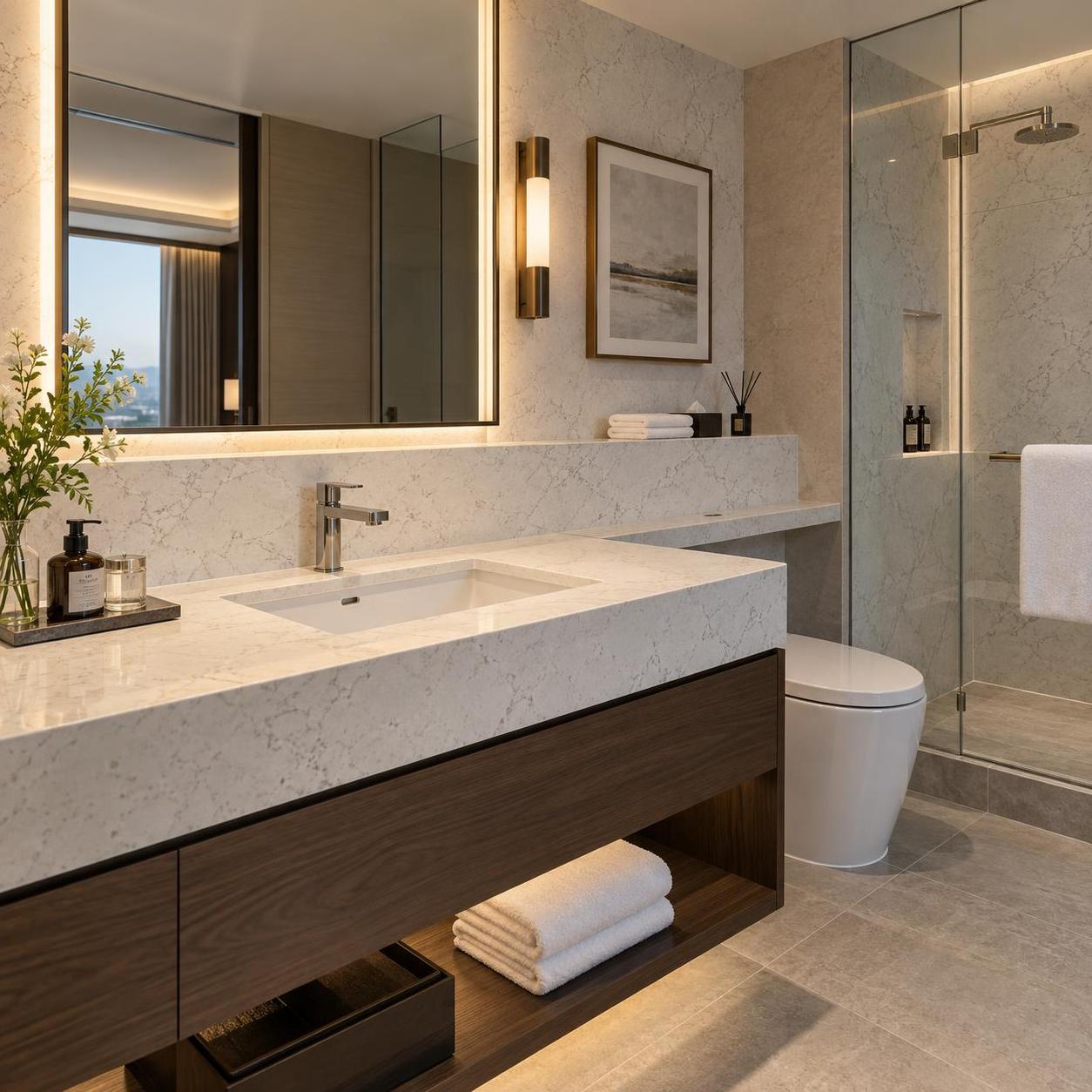
Quartz Applications in Hotel Bathroom Decoration and Design
Quartz application in hotel bathroom decoration is no longer a purely aesthetic choice. In many hospitality projects, it has become a material decision tied to operating cost, brand positioning, maintenance workload, and renovation cycles. For hotel owners, procurement teams, designers, and contractors, the real question is not whether quartz looks attractive. It is whether quartz performs reliably in the very specific conditions of hotel bathrooms: high humidity, frequent cleaning, repeated guest use, tight turnaround for maintenance, and constant pressure to preserve a premium appearance.
That is why quartz is gaining attention across mid-range, upscale, and serviced hospitality segments. It offers a combination that few materials can match easily: a controlled visual finish, consistent supply options, low day-to-day upkeep, and better stain resistance than many natural stones used in similar spaces.
Why hotel bathrooms are a different material environment
Material selection in hotel bathrooms follows a different logic from residential interiors. A homeowner may accept natural variation, occasional sealing, or even small surface changes over time. Hotels usually cannot. In a guest bathroom, the surface must remain visually stable across dozens or hundreds of rooms, and it must do so under repeated contact with water, cosmetics, toiletries, hair dyes, cleaning chemicals, and luggage impact.
This is where quartz surfaces enter the discussion with practical advantages. Engineered quartz is typically made from natural quartz particles combined with resin binders and pigments. The result is a non-porous or near-non-porous surface with a more uniform appearance than marble or granite. That uniformity matters in hotel projects because brand standards often require room-to-room consistency, especially in vanity tops, wall cladding accents, shelf surfaces, and integrated countertop designs.
In hospitality, visual consistency is not a minor design preference. It reduces approval disputes, simplifies mock-up acceptance, and helps avoid complaints when replacement pieces are needed months later.
Where quartz is most commonly used in hotel bathrooms
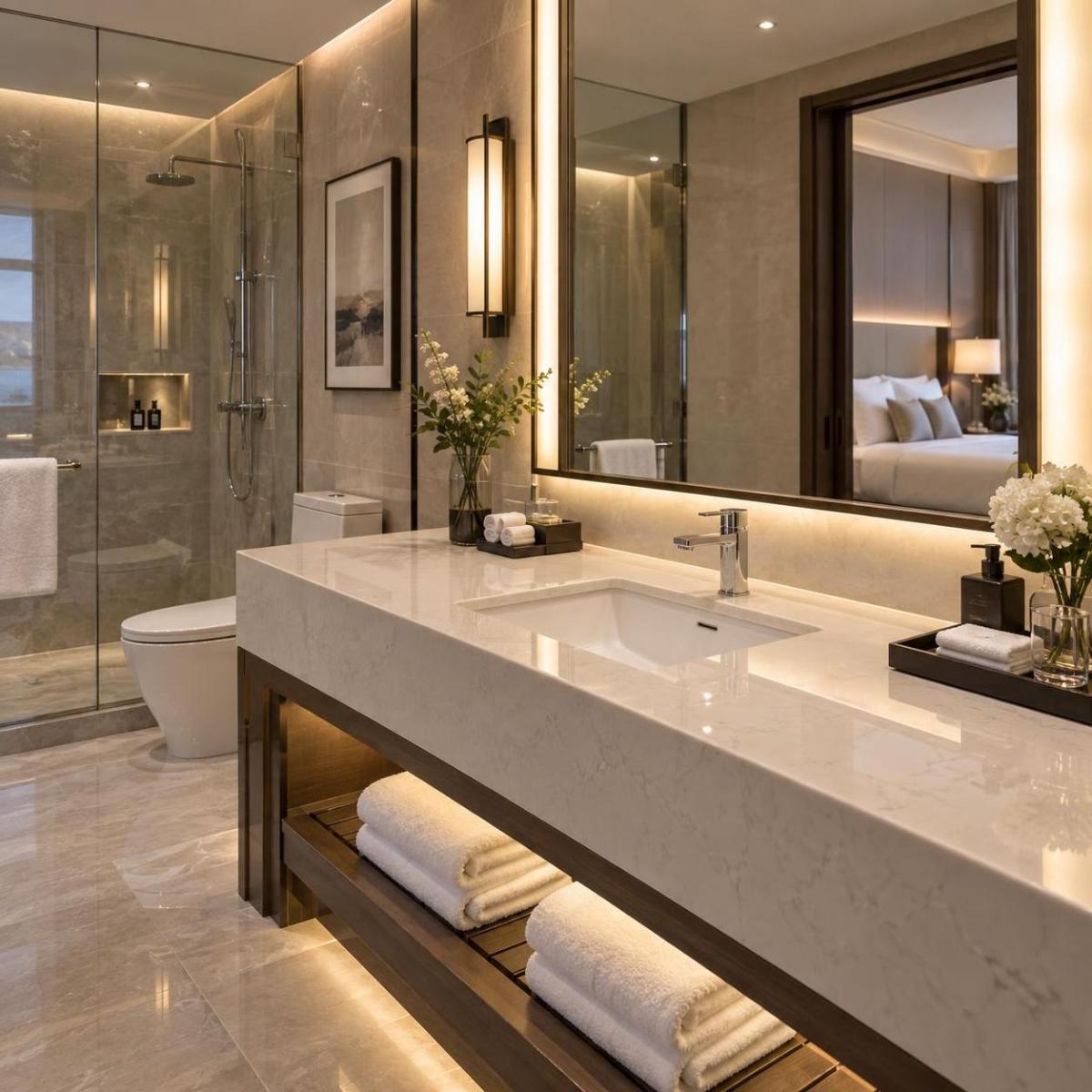
Quartz is not typically a one-material solution for every bathroom surface. Its most successful applications are the ones aligned with its performance strengths.
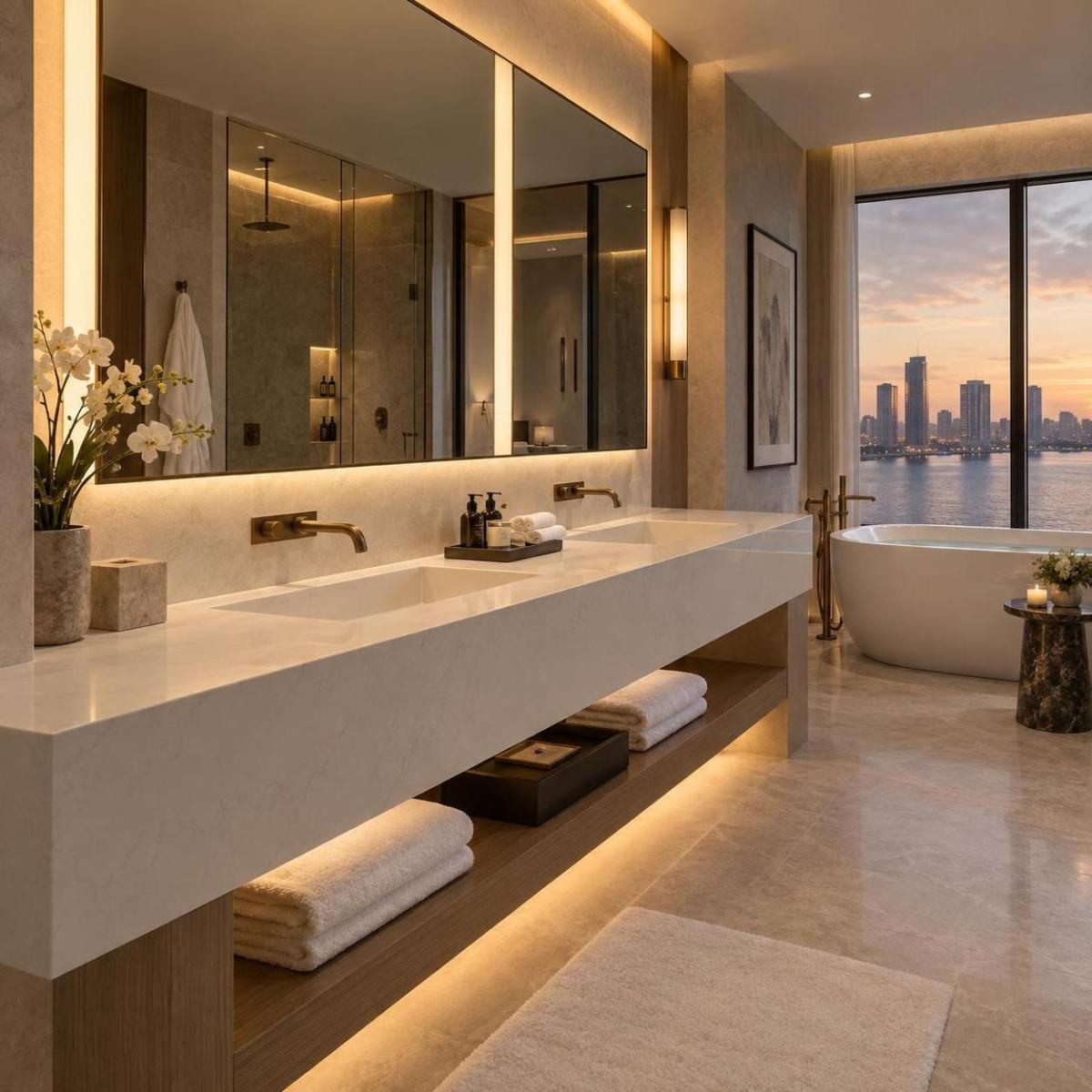
The most common use is vanity countertops. This is the clearest fit because vanity tops need resistance to water splashes, cosmetics, soap residue, and daily cleaning. Quartz also performs well in backsplash areas, shelving, ledge surfaces, and some decorative wall sections where design continuity is important.
In some projects, quartz is also used for shower benches, partition caps, and niche trims. These applications can work well, but they require more careful detailing. The reason is simple: hotel bathrooms are not just wet areas, but areas with temperature fluctuation, steam exposure, and frequent cleaning. Poor installation or insufficient support may create failures that are wrongly blamed on the material itself.
For flooring, quartz is less often the default choice compared with porcelain tile or natural stone alternatives, especially where slip resistance is a major concern. Surface finish, local code requirements, and cleaning method must all be reviewed before extending quartz into floor applications.
What makes quartz attractive to hotel owners and operators
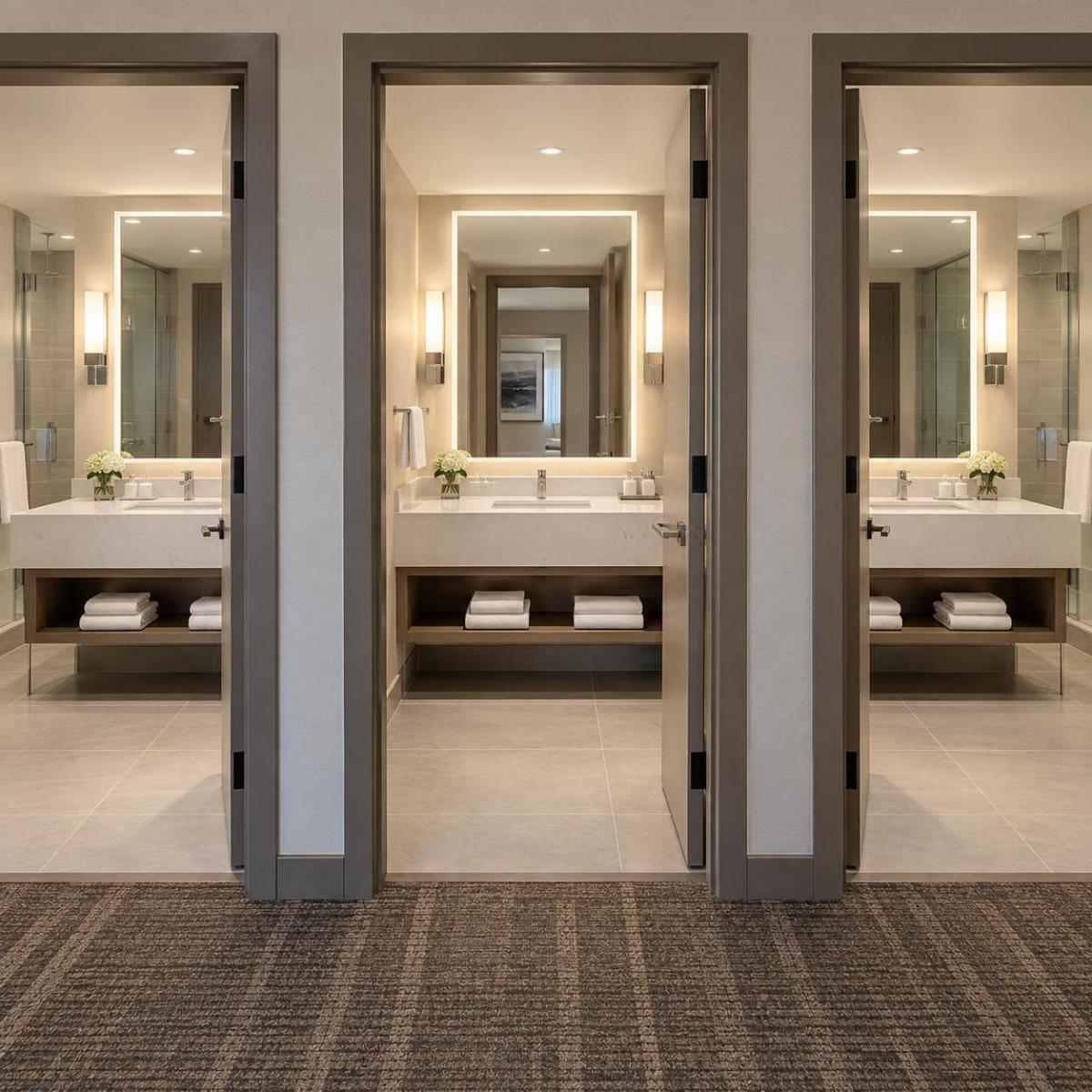
The strongest business case for quartz in hotel bathroom decoration is not that it is luxurious. It is that it often helps control lifecycle variability.
Natural stone can deliver a high-end look, but it also introduces variation in veining, porosity, and stain behavior. That is acceptable in some luxury concepts, but less attractive in chain hotels or multi-property rollouts where standardization matters. Quartz gives operators more predictability. Procurement teams can source matching slabs or colors more reliably, designers can work with repeatable patterns, and maintenance teams face fewer issues related to sealing or surface absorption.
Another factor is labor efficiency after opening. A bathroom material that requires less specialized maintenance reduces operational friction. Housekeeping teams are more likely to maintain quartz correctly because the cleaning requirements are relatively straightforward, provided harsh chemical exposure is controlled.
Guest perception also matters. Hotel bathrooms are one of the most visible indicators of cleanliness and refurbishment quality. Even when guests do not know what material is installed, they notice surface gloss, stain marks, joints, chips, and discoloration. Quartz helps preserve a “newer” appearance for longer in many commercial settings, which supports room-rate positioning.
The limits of quartz that decision-makers should not ignore
Quartz is often described as durable, but that description becomes misleading when buyers assume it is problem-free in every hospitality application.
One common misunderstanding is heat performance. Quartz generally handles everyday bathroom conditions well, but direct exposure to excessive heat can damage resin-bound surfaces. In hotel bathrooms, this issue can arise around styling tools such as curling irons or hair straighteners placed directly on the countertop. If the hotel guest profile suggests frequent use of such items, designers should consider protective detailing, guest accessories, or a layout that reduces direct thermal contact risk.
Another point is UV exposure. In most enclosed hotel bathrooms this is not a major issue, but in resort properties, open-air bathrooms, or bathrooms with strong direct sunlight, color stability should be reviewed carefully. Not all quartz products are equally suitable for such environments.
There is also the matter of joint design and edge damage. Quartz slabs may be strong, but hotel bathrooms create concentrated impact zones, particularly at exposed corners and around sinks. Poor edge profiles, thin unsupported overhangs, or weak cutout design can lead to chipping. In practice, many failures come from fabrication shortcuts rather than inherent material weakness.
Procurement and specification: what actually matters
For buyers and project teams, selecting quartz for hotel bathroom decoration should go beyond color cards and showroom samples.
Supply consistency is critical. Large hotel projects require batch control, lead-time reliability, and replacement availability. A surface that looks acceptable in one mock-up may become a commercial risk if the supplier cannot support future maintenance stock or additional project phases.
Technical documentation should also be reviewed carefully. That includes thickness options, recommended applications, fabrication guidance, cleaning compatibility, and warranty limitations. Fire performance, VOC-related documentation, and hygiene-related claims should not be assumed. Requirements vary by market, and any certification claim should be checked against project location and intended use. If a supplier references compliance with a regional standard, project teams should request the exact document rather than relying on general statements.
For international sourcing, buyers should also assess packing quality, breakage risk, after-sales support, and claim resolution speed. Quartz is a finished decorative surface, so small quality deviations can become highly visible once installed. This raises the importance of pre-shipment inspection, approved samples, and fabrication tolerances.
Quartz versus other common bathroom materials
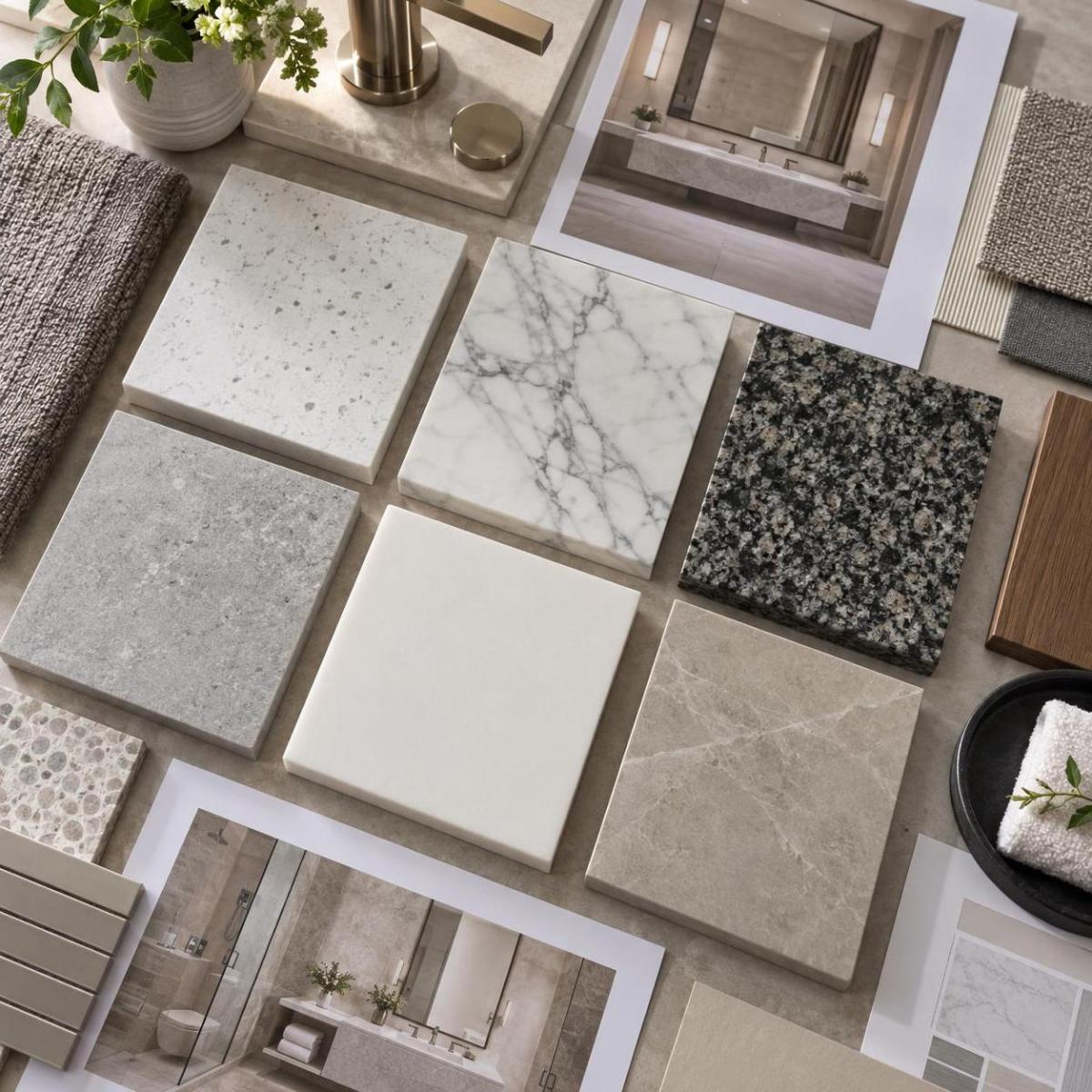
Quartz competes most directly with natural stone, porcelain slabs, solid surface materials, and compact laminate solutions in certain vanity applications.
Against marble, quartz usually offers easier maintenance and better stain resistance, but it may not satisfy projects seeking one-of-a-kind natural veining. Against granite, the comparison depends on the design brief; granite may offer better heat resistance, while quartz often provides more controlled color consistency. Against porcelain slabs, quartz can be easier for some fabricators to process in countertop applications, though porcelain may perform better in high-heat and UV-exposed conditions. Against solid surface materials, quartz often wins on scratch resistance and perceived premium value, while solid surface may offer easier seamless repair in some configurations.
So the material choice is rarely about which product is “best” in general. It is about which product creates the lowest mismatch between design ambition, operating realities, and budget discipline.
Market direction: why quartz remains relevant in hospitality
Current hospitality renovation trends continue to favor surfaces that combine design flexibility with lower maintenance burdens. This supports ongoing demand for quartz, particularly in business hotels, branded residential hospitality, and urban upscale properties where renovation speed and appearance consistency are priorities.
At the same time, specifiers are becoming more selective. Sustainability scrutiny is increasing, and buyers are asking tougher questions about recycled content, emissions, fabrication waste, worker safety in processing, and long-term replacement planning. These issues do not eliminate quartz from consideration, but they do mean that surface selection is being evaluated within a broader risk and compliance framework.
Another notable shift is the rise of large-format visual design. Hotels increasingly want fewer joints, cleaner lines, and integrated vanity concepts. Quartz remains competitive here, especially when paired with disciplined fabrication and installation standards.
What a sound selection decision looks like
Quartz application in hotel bathroom decoration makes the most sense when the project values three things: visual consistency across multiple rooms, predictable maintenance after opening, and a polished finish that holds up under heavy use. It is less suitable when the project ignores heat risk, treats all quartz grades as equivalent, or assumes a decorative sample is enough to judge long-term suitability.
For decision-makers, the right approach is practical rather than trend-driven. Review the guest usage pattern, cleaning regime, replacement strategy, edge design, and supplier reliability before finalizing the specification. In hotel bathrooms, material problems rarely come from one factor alone. They come from a gap between product capability, detailing quality, and operating conditions.
When quartz is selected with that full context in mind, it can be a highly effective hospitality surface—not because it is fashionable, but because it fits the performance and management logic that modern hotel projects increasingly demand.
Hotel bathrooms are a moisture-and-traffic environment, so Waterproof and Moisture-Proof Performance of Quartz Stone and the Engineered Quartz Wall Panel and Floor Application Guide are the most relevant next reads.
Related Articles
- How We Control Color Difference in Bulk Quartz Orders
- Stain Resistance Performance of High-Grade Quartz Slabs
- Maintenance Guide for Quartz Countertops
- Quartz vs Granite: Pros and Cons for Project Use
Quartz Slabs Supplier for Hospitality and Hotel Projects
We supply engineered quartz slabs for hotel bathrooms and hospitality fit-outs with controlled batch consistency across rooms and phases, non-porous stain-resistant surfaces, full technical documentation, and reliable repeat-order and replacement support. Contact us for samples, spec sheets, and project pricing.
📱 WhatsApp: +86 198 6115 3736
📧 Email: raykelee@hyquartzslabfactory.com
Send Us A Message