
Maintenance Guide for Quartz Countertops
Maintenance Guide for Quartz Countertops
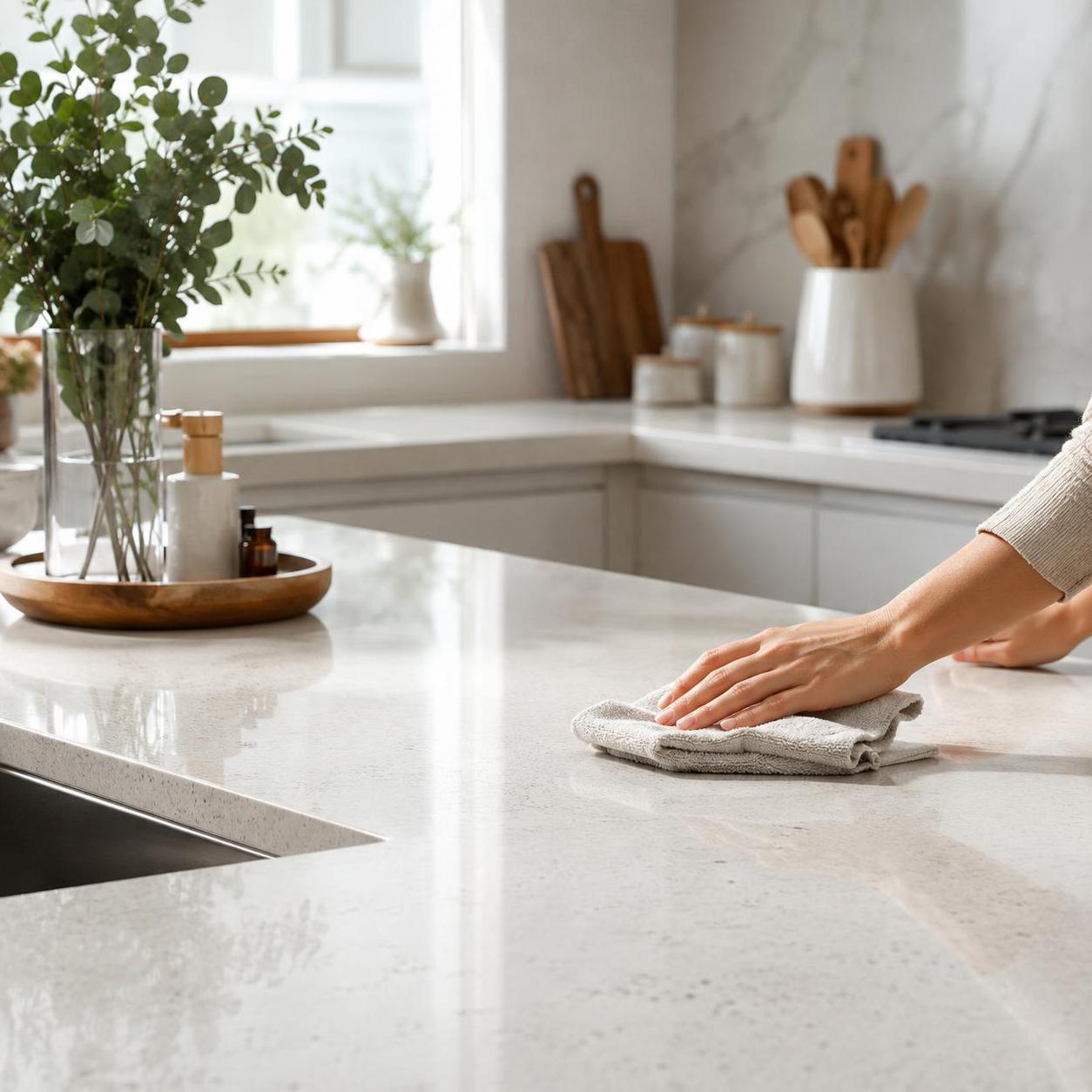
Quartz Countertop Maintenance: A Practical Guide for Long-Term Use
Quartz countertops are prized for their durability, elegant appearance, and low-maintenance performance, making them a popular choice in modern interior and building decoration projects. However, proper daily care is still essential to preserve their shine and extend their service life. In this maintenance guide for quartz countertops, you will learn practical cleaning tips, prevention methods, and simple habits that help keep surfaces beautiful, hygienic, and long-lasting.
What Most Readers Really Need to Know About Quartz Countertop Maintenance
The core search intent behind a maintenance guide for quartz countertops is practical, not theoretical. Readers usually want clear instructions on how to clean quartz safely, what products to avoid, and how to prevent stains, dullness, or heat damage in daily use.
They are often homeowners, designers, contractors, property managers, or renovation buyers comparing upkeep requirements before making a material decision. Their biggest concern is simple: how to keep quartz looking premium without creating damage through the wrong cleaning habits.
The most helpful content is specific guidance they can apply immediately. That includes daily cleaning methods, responses to common accidents, rules for avoiding harsh chemicals, and realistic advice on what quartz can and cannot tolerate over time.
Because of that, this article focuses on maintenance actions, prevention, and decision-making value. It gives less space to generic praise about quartz and more space to the exact care steps that protect appearance, hygiene, and long-term performance.
Why Quartz Countertops Are Easy to Maintain but Not Maintenance-Free
Quartz countertops are engineered surfaces made from natural quartz combined with resins and pigments. This composition creates a dense, non-porous surface that resists many common household stains better than materials that require regular sealing.
That low-porosity structure is one reason quartz is popular in kitchens, bathrooms, hospitality projects, and modern commercial interiors. It does not usually absorb liquids quickly, and routine cleaning is generally faster than with more porous stone surfaces.
Still, low maintenance does not mean zero maintenance. Resin binders can react poorly to excessive heat, strong alkaline or acidic chemicals, and abrasive scrubbing. Over time, careless habits can reduce gloss, create discoloration, or shorten the countertop’s service life.
The right expectation is this: quartz is durable and user-friendly, but it performs best when owners follow simple, consistent care rules. A few correct habits are usually enough to preserve both appearance and functionality for many years.
How to Clean Quartz Countertops Every Day Without Damaging the Surface
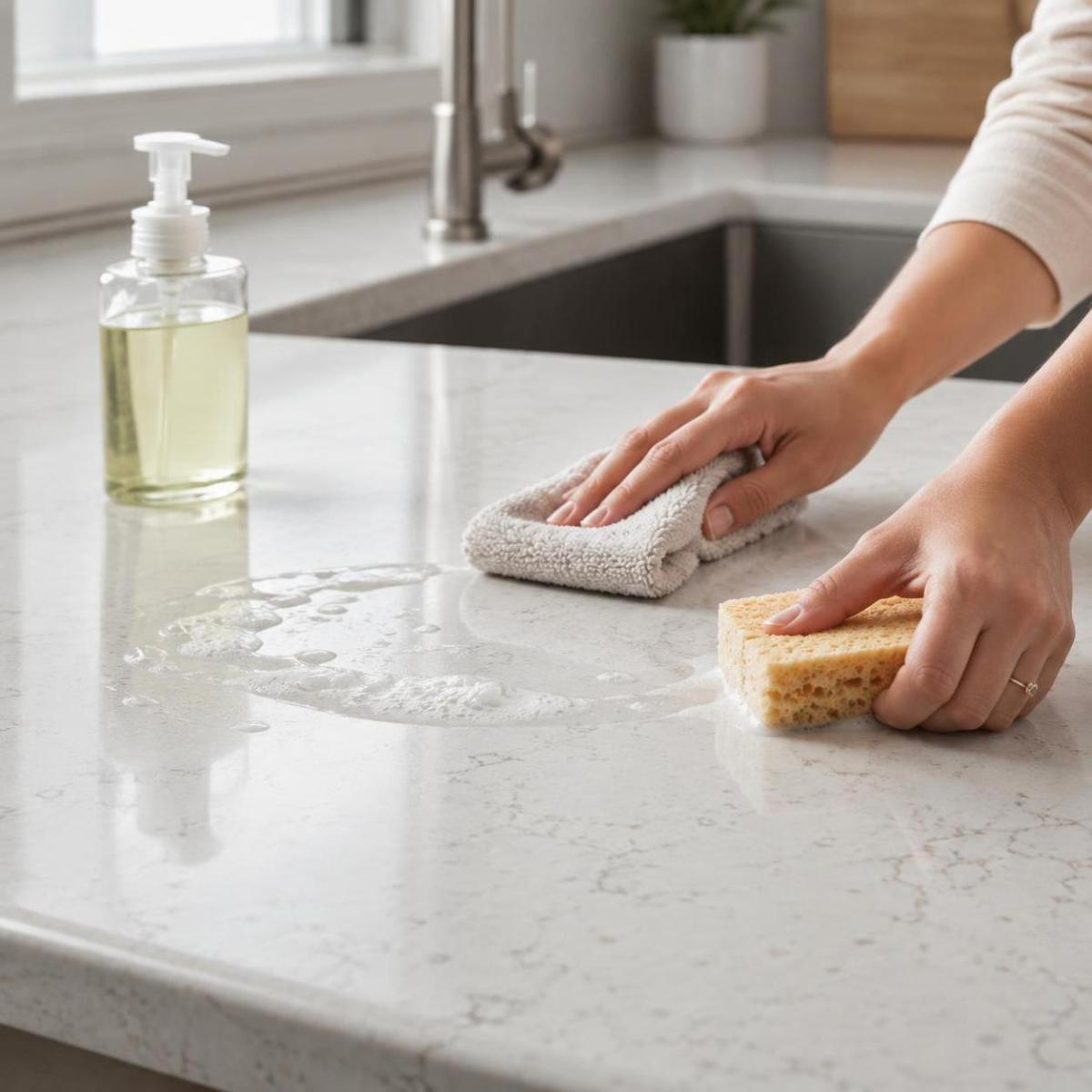
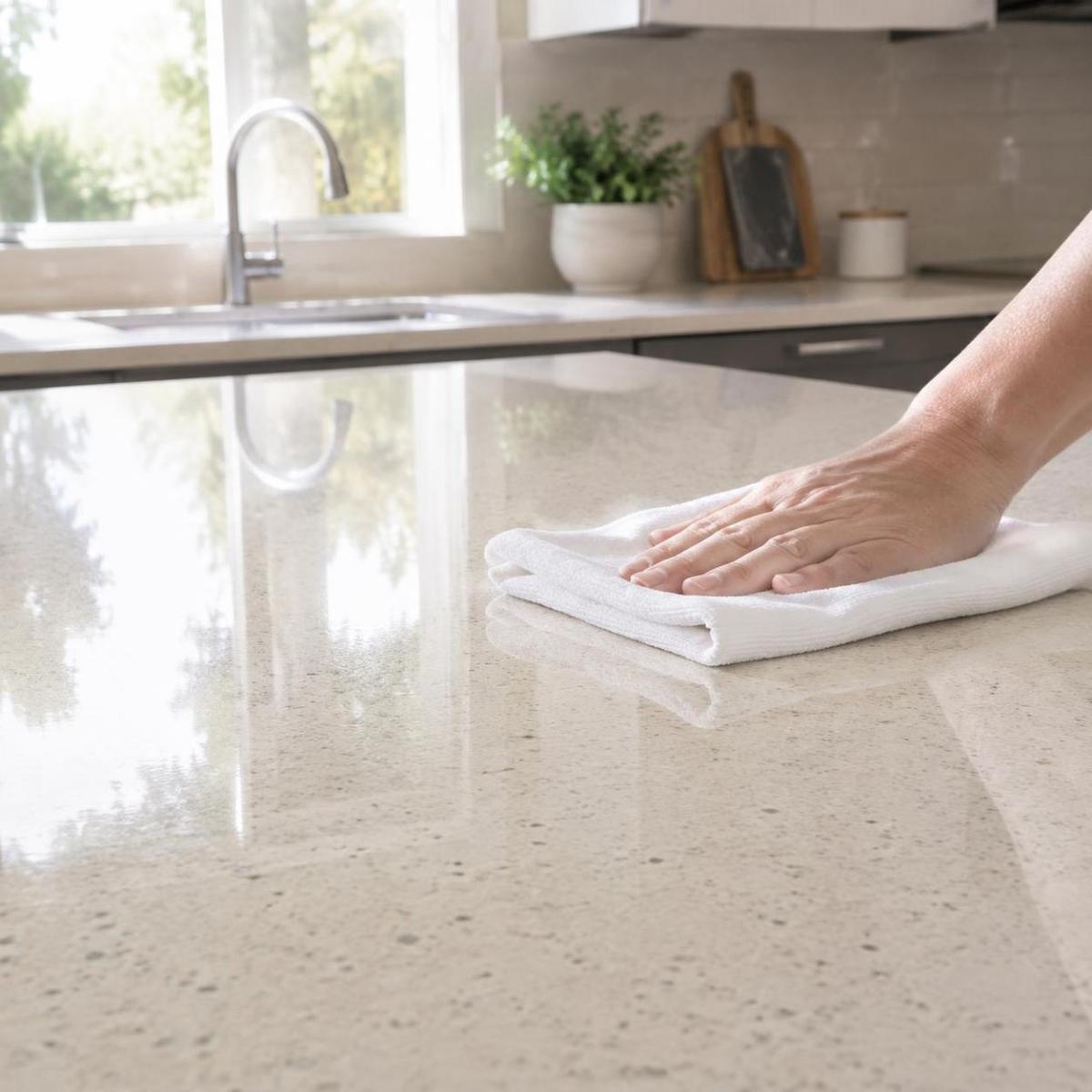
For everyday cleaning, use a soft cloth or sponge with warm water and a small amount of mild dish soap. This is usually sufficient to remove food residue, fingerprints, light grease, and normal household dust without stressing the surface.
After wiping the countertop, rinse with clean water if needed and dry with a soft microfiber cloth. Drying matters more than many people realize because it helps prevent water spots, soap film, and a cloudy appearance on darker colors.
A pH-balanced stone-safe cleaner can also work well for routine care, especially in busy kitchens or commercial spaces. The product should be non-abrasive and specifically suitable for engineered stone rather than a harsh multipurpose degreaser.
Avoid rough scouring pads, steel wool, or powdered cleaners for daily use. Even when quartz does not scratch easily, repeated abrasion can gradually affect the finish and make the surface look older than it actually is.
What Cleaning Products Should Never Be Used on Quartz
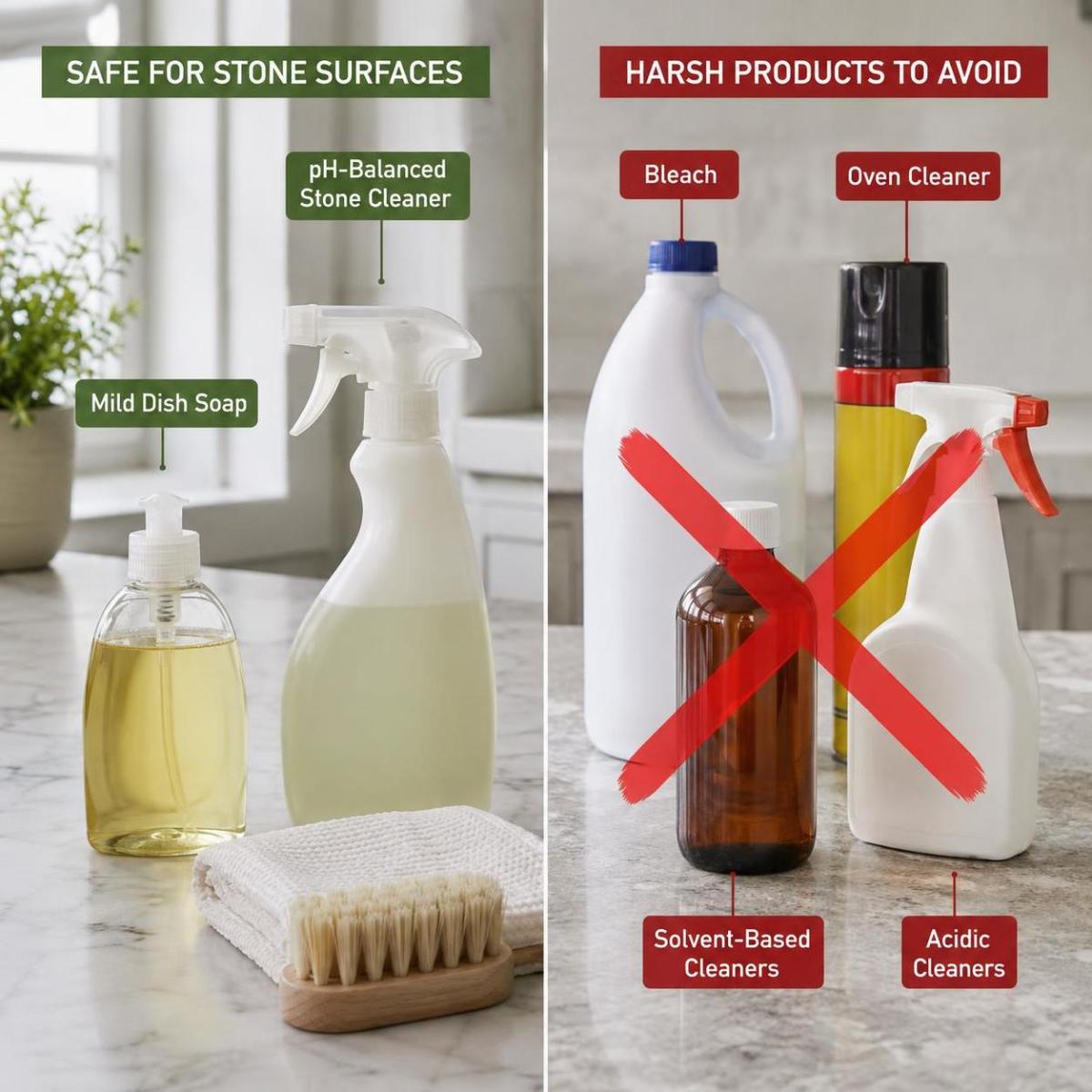
Many maintenance problems begin with the wrong cleaner rather than with the countertop itself. Products containing bleach, oven cleaner, paint remover, strong solvents, drain chemicals, or highly concentrated disinfectants should be kept away from quartz surfaces.
Very high-pH or very low-pH cleaners can attack the resin component and leave dull spots or discoloration. The same caution applies to products marketed for heavy industrial cleaning unless the manufacturer clearly states they are safe for quartz countertops.
Glass cleaners are sometimes used casually, but frequent use is not always ideal. Some formulas can leave residue or gradually affect surface clarity, especially when they contain additives not intended for engineered stone maintenance.
If a stronger cleaner is needed for a sticky mess, test it in an inconspicuous area first. When in doubt, the safest approach is to follow the quartz manufacturer’s care recommendations rather than relying on generic internet cleaning shortcuts.
How to Remove Common Stains, Grease, and Dried Residue
Most fresh spills can be removed easily if cleaned quickly. Wipe coffee, tea, wine, juice, oil, or sauces as soon as possible using a damp cloth and mild soap to prevent residue from drying and becoming harder to lift.
For dried food, adhesive residue, or hardened grease, use a plastic scraper gently instead of a metal blade. This helps loosen buildup without cutting into the surface or creating visible marks along the countertop finish.
If a stain lingers, apply a quartz-safe cleaner and let it sit briefly according to product directions. Then wipe with a soft cloth using moderate pressure. Repeating a gentle process is usually safer than using one aggressive cleaning attempt.
In bathrooms, soap scum and cosmetic residue may require more frequent attention. Consistent light cleaning is better than occasional harsh treatment, because buildup becomes more stubborn when it is allowed to remain for long periods.
Can Quartz Countertops Handle Heat, Scratches, and Heavy Daily Use?
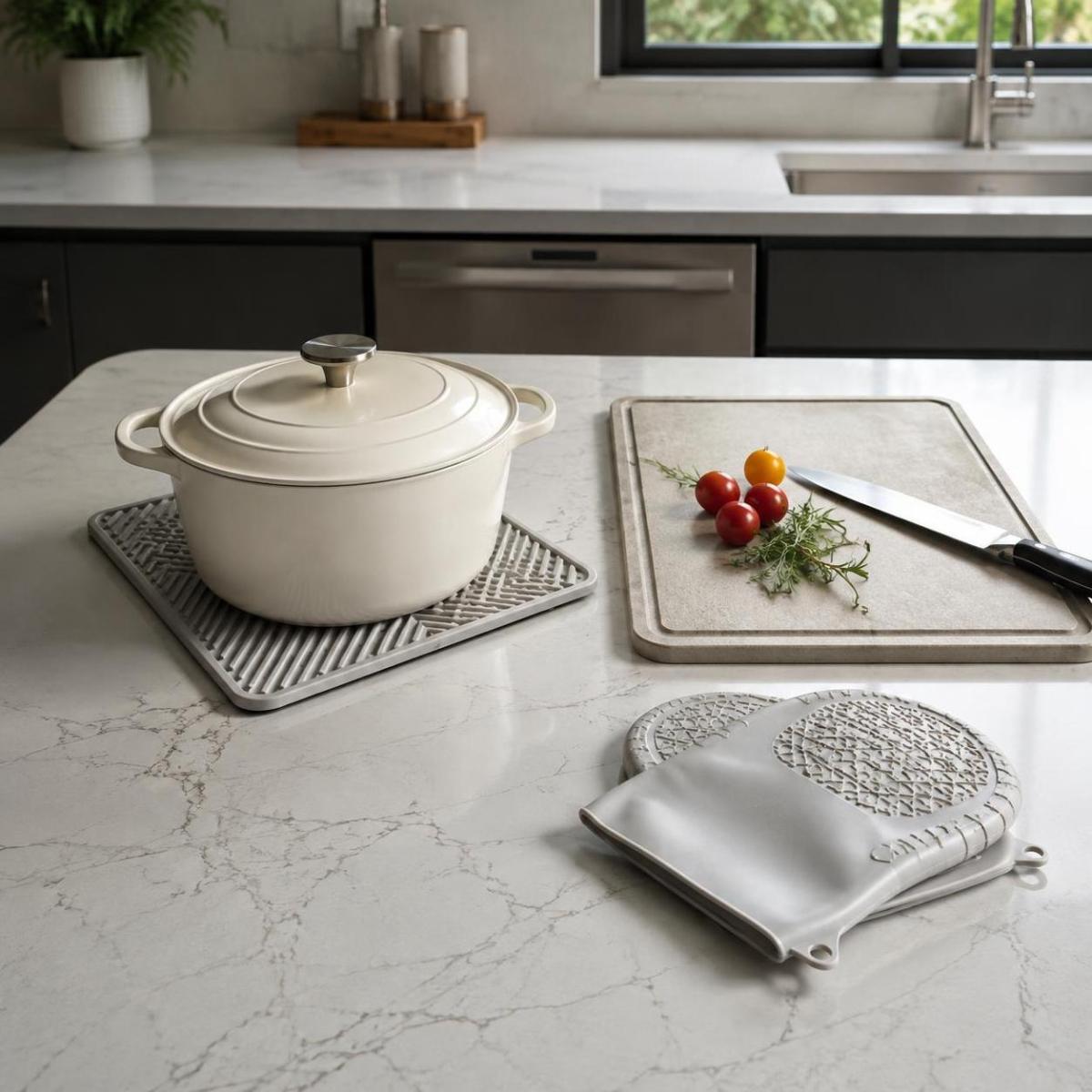
Quartz countertops are durable, but they are not invulnerable. One of the most common misunderstandings is heat resistance. Quartz can tolerate normal use, but direct contact with hot pans, baking trays, or electric appliances may damage the resin binder.
That damage may appear as discoloration, thermal shock marks, or surface warping in severe cases. Trivets and heat pads are simple preventive tools that cost very little compared with repairing or replacing a damaged countertop section.
Quartz is also resistant to many scratches, but cutting directly on the surface is still a poor habit. Knife use can leave marks on the finish over time, and it also dulls the blade. A cutting board protects both the countertop and kitchen tools.
In high-use environments such as family kitchens, rental properties, or hospitality spaces, maintenance success depends less on occasional deep cleaning and more on everyday protective behavior. Small habits have the biggest effect on long-term visual quality.
Simple Preventive Habits That Extend the Life of Quartz Countertops
The best quartz countertop maintenance strategy is prevention. Clean spills early, use trivets for hot cookware, place cutting boards under knives, and avoid leaving strong chemicals, dyes, or solvent-based products on the surface unnecessarily.
It is also wise to use mats or trays under toiletries, oils, and frequently used kitchen items. This reduces ring marks, sticky residue, and repeated exposure to substances that may not cause immediate damage but can affect appearance over time.
Do not stand or sit on quartz countertops, especially around unsupported spans or sink cutouts. Structural stress can create cracks that are unrelated to the material’s surface quality but still lead to costly repairs or replacement work.
For commercial or multi-user settings, maintenance instructions should be communicated clearly to cleaning staff and occupants. Even a high-quality quartz installation can deteriorate prematurely if different users apply inconsistent or unsuitable care methods.
How to Maintain Shine and Keep Quartz Looking New
Many people search for polishing methods when quartz begins to look less vibrant. In most cases, the problem is not a need for polishing but a buildup of residue from soap, grease, hard water, or improper cleaners.
Regular cleaning with the right materials usually restores the clean, crisp look quartz is known for. Drying the surface after cleaning also helps maintain clarity, especially on polished dark slabs where haze and streaks are more visible.
Avoid waxes and topical polish products unless the quartz manufacturer specifically recommends them. These treatments can leave films that attract dirt or create an uneven sheen, making the countertop look worse rather than better.
If the surface has persistent dull areas, the first step is to identify the cause. It may be chemical damage, residue buildup, or wear in a localized zone. Correct diagnosis matters because the wrong remedy can make the issue harder to solve.
When Maintenance Issues Require Professional Help
Some countertop problems cannot be solved with routine cleaning alone. Chips, cracks, burn marks, deep etching-like dullness, or permanent discoloration may require assessment by the fabricator, supplier, or a qualified stone surface specialist.
This is especially important in commercial building decoration projects, where appearance standards, hygiene expectations, and replacement costs are higher. Early professional evaluation can prevent a minor issue from developing into a larger visible defect.
Before using restoration products or repair kits, confirm that they are appropriate for engineered quartz rather than natural stone in general. Product mismatch is a common cause of failed repairs and inconsistent surface appearance.
Good maintenance includes knowing when to stop experimenting. If routine methods do not resolve the problem, professional guidance is usually the most efficient and cost-effective next step.
Final Thoughts on Quartz Countertop Care
Quartz countertops earn their reputation because they combine strong visual appeal with relatively easy upkeep. Still, their long-term performance depends on informed maintenance, not on the assumption that the surface can tolerate every cleaner, spill, or heat source.
The most effective care routine is straightforward: clean daily with mild products, remove spills quickly, avoid harsh chemicals, protect the surface from heat, and use simple preventive accessories where needed. These habits preserve both beauty and hygiene.
For homeowners and project decision-makers alike, the value of quartz becomes clearer when maintenance expectations are realistic. It is a durable and practical material, but the best results come from consistent care and correct product use.
When treated properly, quartz countertops can remain elegant, sanitary, and dependable for years. A small investment in the right maintenance habits pays back through better appearance, longer service life, and fewer avoidable repair concerns.
For the surface behaviour behind these habits, see Stain Resistance Performance of High-Grade Quartz Slabs and Waterproof and Moisture-Proof Performance of Quartz Stone.
If you are weighing upkeep across materials, quartz vs marble for kitchen countertops puts sealing, etching and daily cleaning side by side.
Related Articles
- Stain Resistance Performance of High-Grade Quartz Slabs
- Glossiness Standard of Polished Quartz Countertops
- How Long Does Engineered Quartz Slab Last?
- High-Temperature and Freeze Resistance of Engineered Quartz
Easy-Care, Low-Maintenance Quartz Slabs for Long-Term Projects
Our dense, non-porous engineered quartz slabs are designed for simple daily care, strong stain resistance, and lasting finish in kitchens, bathrooms, and commercial interiors. Follow the right cleaning routine and they stay elegant and hygienic for years. Contact us for samples, care guidance, and project pricing.
📱 WhatsApp: +86 198 6115 3736
📧 Email: raykelee@hyquartzslabfactory.com
Send Us A Message