
Stain Resistance Performance of High‑Grade Quartz Slabs
Stain Resistance Performance of High‑Grade Quartz Slabs
Stain Resistance Performance of High‑Grade Quartz Slabs
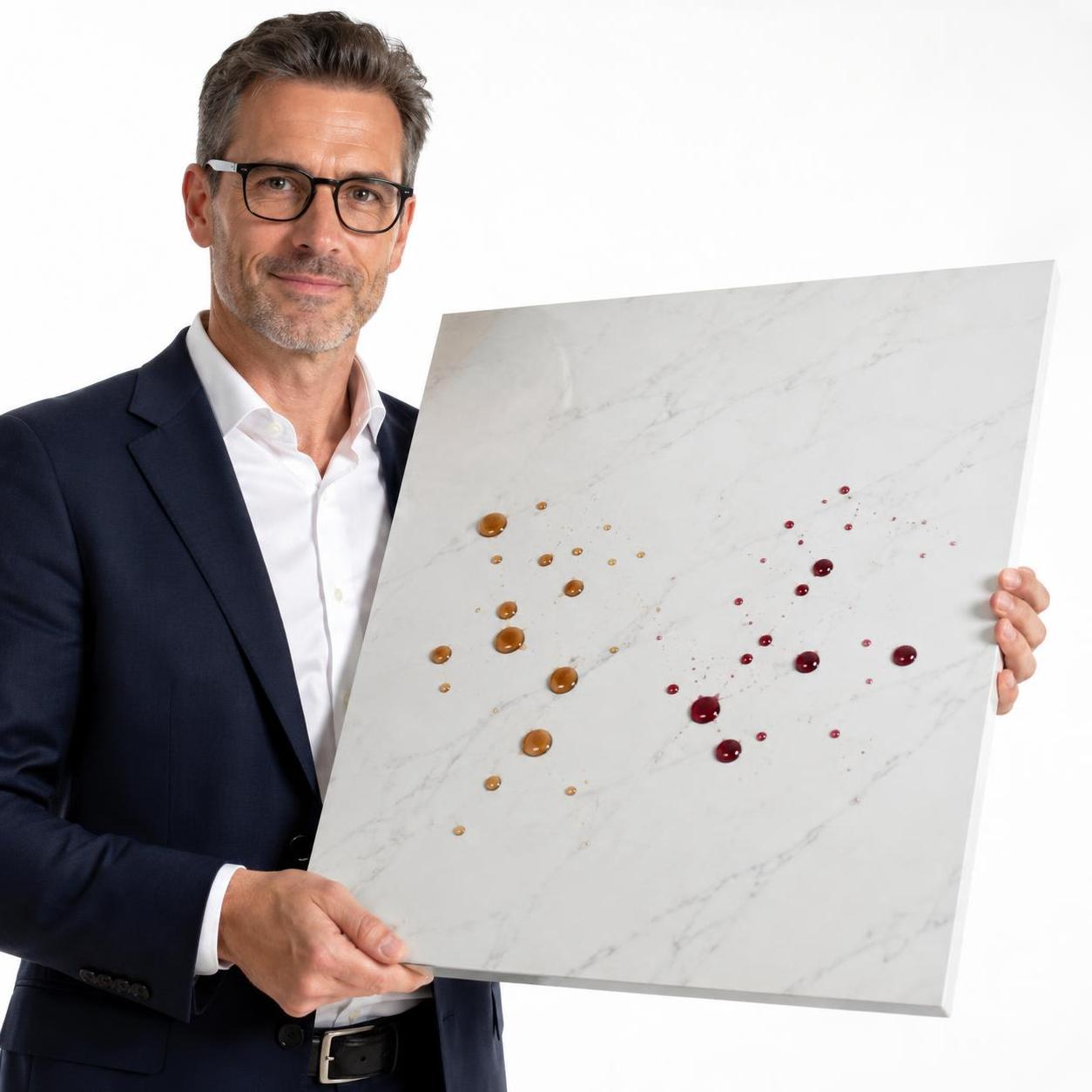
In building and decorative materials, the stain resistance performance of high‑grade quartz slabs is a key factor influencing both aesthetics and long‑term value. From kitchen countertops to commercial interior surfaces, these premium slabs are designed to resist common spills, pigments, and daily wear. Understanding how high‑grade quartz slabs perform against staining helps architects, designers, and buyers make more informed material selections.
That sounds straightforward until a project moves from brochure language to actual use. A slab may look dense and polished in a showroom, yet perform very differently when exposed to coffee, red wine, cooking oils, cosmetics, food acids, ink, or aggressive cleaning routines. In practice, stain resistance is not just about whether a surface marks easily. It is about how the material is engineered, how the finish behaves, how maintenance is handled, and whether the slab remains visually stable after years of contact with ordinary contaminants.
Why quartz is usually strong against staining
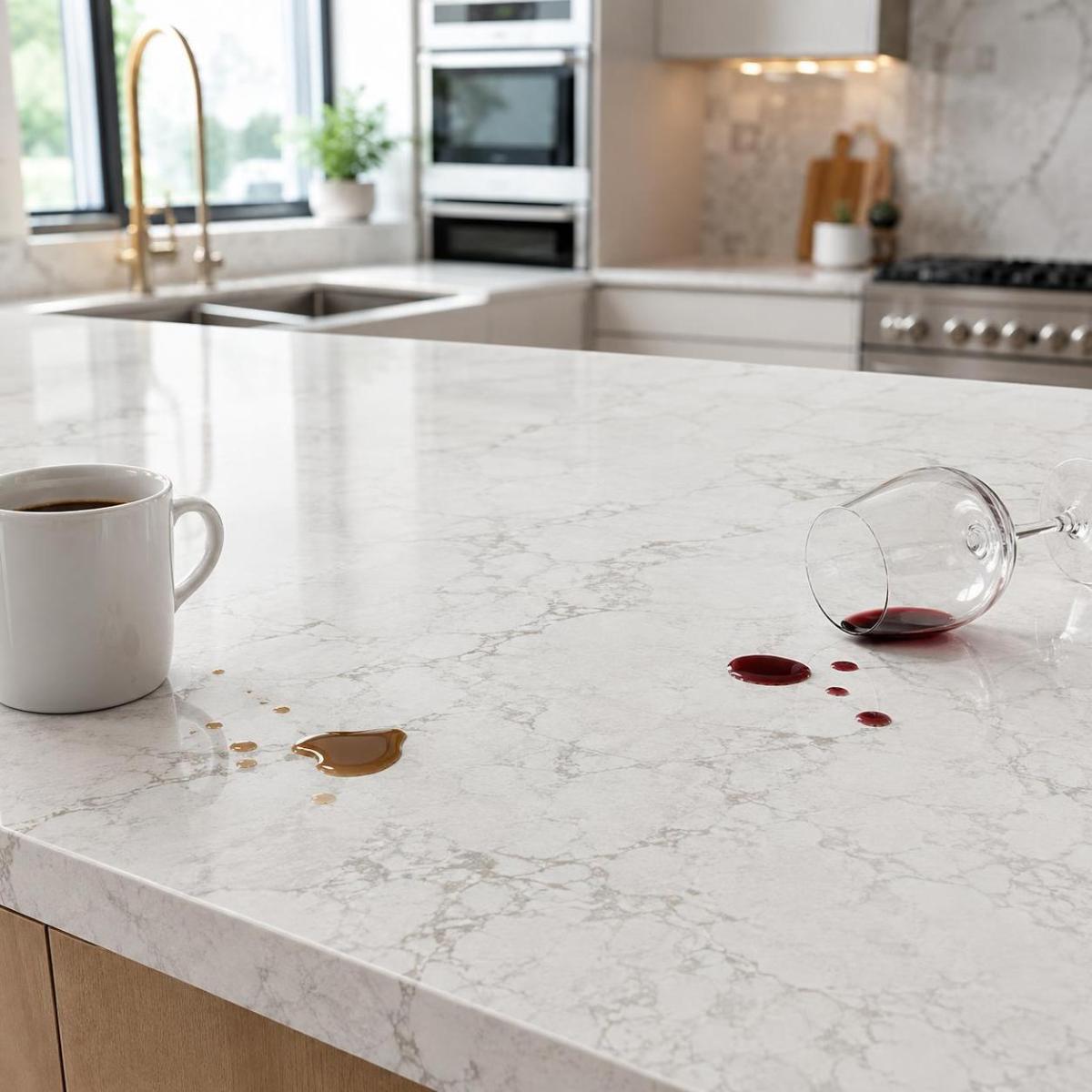
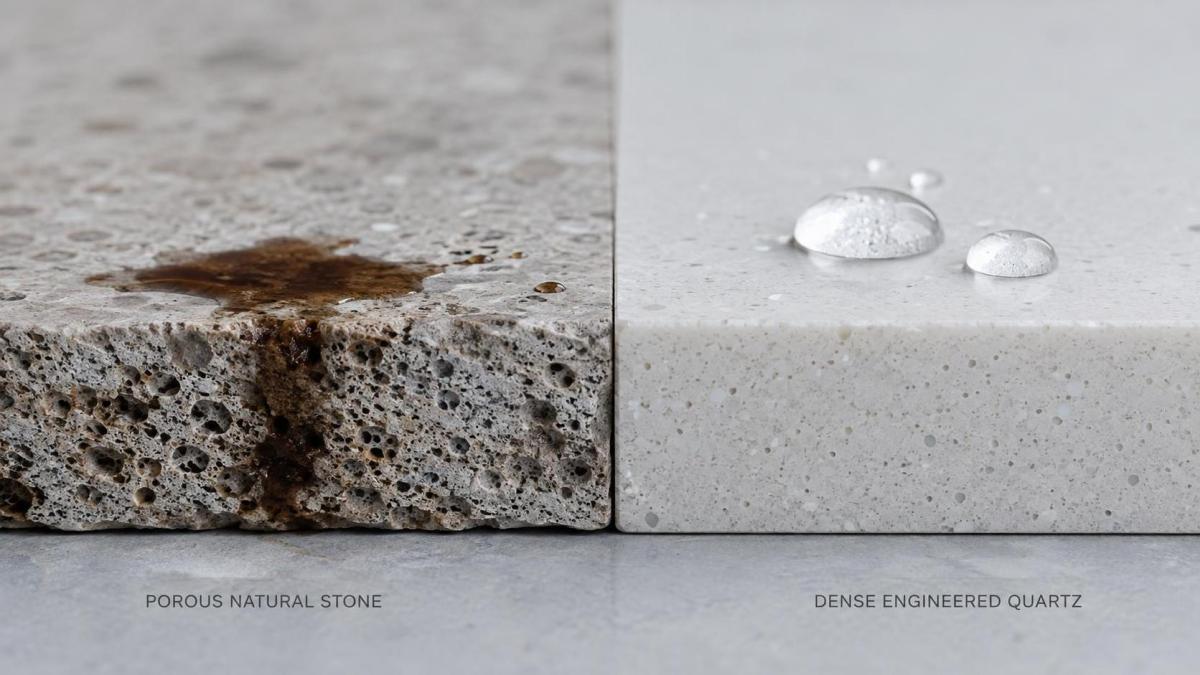
High‑grade quartz slabs are engineered materials made primarily from natural quartz particles combined with resin and pigments. Their reputation for stain resistance comes largely from their low porosity. Unlike some natural stones that can absorb liquids if not sealed properly, quartz surfaces are generally manufactured to be dense and less likely to let staining agents penetrate below the surface.
For specifiers, the key word is “generally.” Low porosity does not mean immunity. Dark pigments, strong dyes, oxidizing chemicals, or prolonged exposure to residue can still leave visible traces, especially on lighter colors or textured finishes. A slab can be marketed as stain resistant and still show problems if the resin quality is inconsistent, the pressing process is weak, or the finishing layer creates microtexture that traps contaminants.
What “high‑grade” should mean in real selection work
In the quartz slab market, “high‑grade” is often used loosely, so buyers should translate it into technical and production questions. Better stain performance usually correlates with tighter raw material control, more uniform particle distribution, stable resin systems, proper vacuum vibrocompression, and a well-executed curing process. These details are not cosmetic. They affect whether liquids remain on the surface long enough to be cleaned off or begin interacting with the slab finish.
It is also worth checking whether the supplier can provide consistent batch quality. Stain resistance is not only a laboratory property. It is a production consistency issue. A sample panel may perform well, while delivered slabs from a different batch may vary in gloss, density, or resin behavior. For large projects, that difference matters more than marketing language.
Common staining age
nts and how quartz typically responds
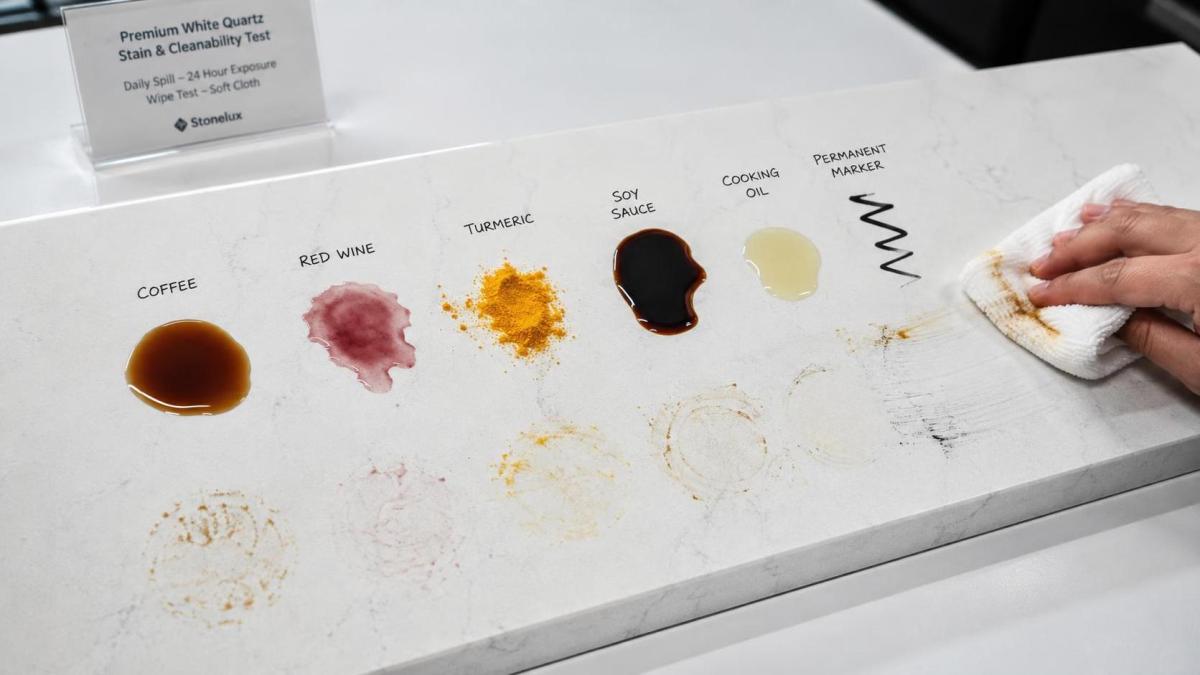
In residential kitchens, the usual concerns are coffee, tea, wine, turmeric, soy sauce, cooking oil, tomato products, and household cleaners. In hospitality and retail interiors, cosmetics, hair dye, marker ink, and heavy foot traffic contamination may be more relevant. In healthcare or laboratory-adjacent spaces, cleaning chemicals can become as important as food stains.
Most high‑grade quartz slabs perform well against short-term exposure to routine food and beverage spills if they are cleaned in a reasonable time. Oil-based residue is often less of a penetration issue than a surface film issue. Pigmented substances are trickier. Turmeric, certain artificial dyes, permanent markers, and some harsh chemicals can create discoloration that is difficult to remove, not always because the slab absorbed the stain deeply, but because the surface resin or finish reacted.
This distinction is useful during material selection. A visible mark does not always mean the slab is porous. Sometimes it means the contaminant chemically altered the finish, especially on polished white or very pale surfaces where contrast makes any change obvious.
Surface finish changes the result
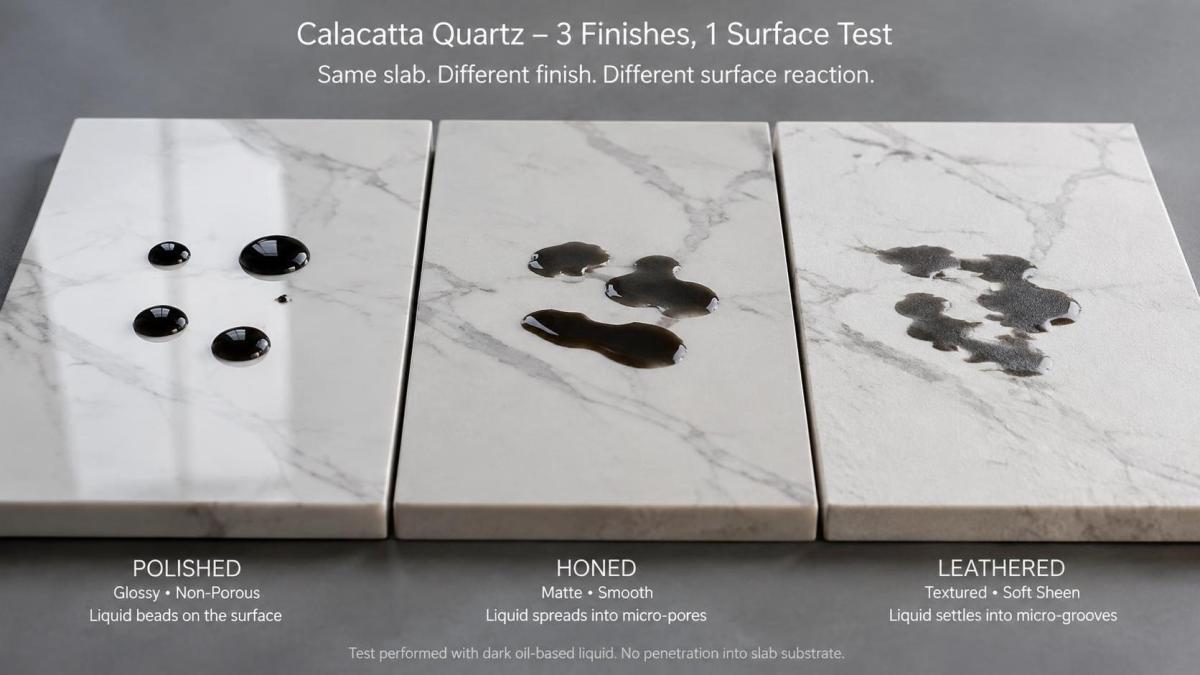
Polished quartz is usually easier to clean than honed, leathered, or heavily textured versions. The reason is simple: texture creates more contact area and more places for pigments or grease to sit. Designers may prefer softer or matte finishes for visual reasons, but those surfaces often require more realistic maintenance planning.
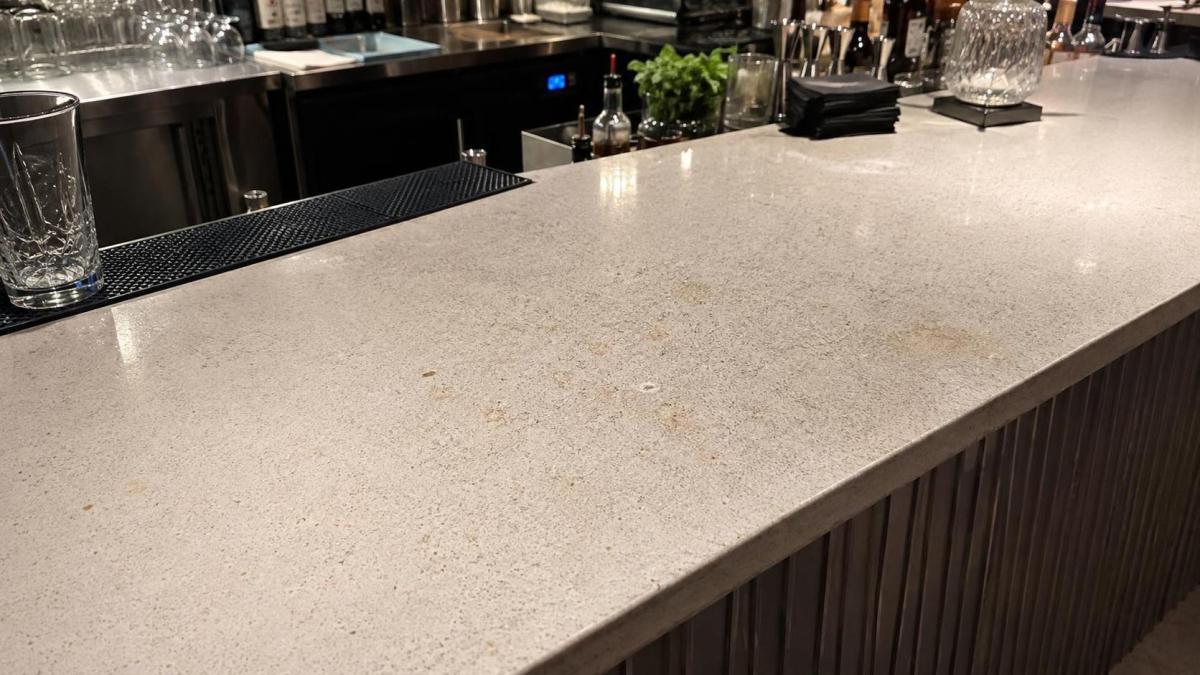
This is one of the more common specification mistakes. The project team approves a textured light-colored quartz for a bar top, service counter, or pantry surface because it looks refined under sample lighting. Later, the operator finds that syrup, oils, cosmetics, or colored liquids are harder to remove from the microtexture than expected. The slab itself may still be good quality; the issue is the mismatch between finish and use condition.
How to judge stain resistance beyond sales claims
When comparing suppliers, it helps to ask more specific questions than “Is it stain resistant?” A better discussion usually includes:
- What types of staining agents were considered during testing or internal quality checks
- Whether the slab finish is polished, honed, or textured, and how that affects cleanability
- Whether care instructions restrict contact with dyes, solvents, alkaline cleaners, or oxidizers
- How consistent the surface appearance and density are across batches
- Whether mock-up testing can be done for the actual application environment
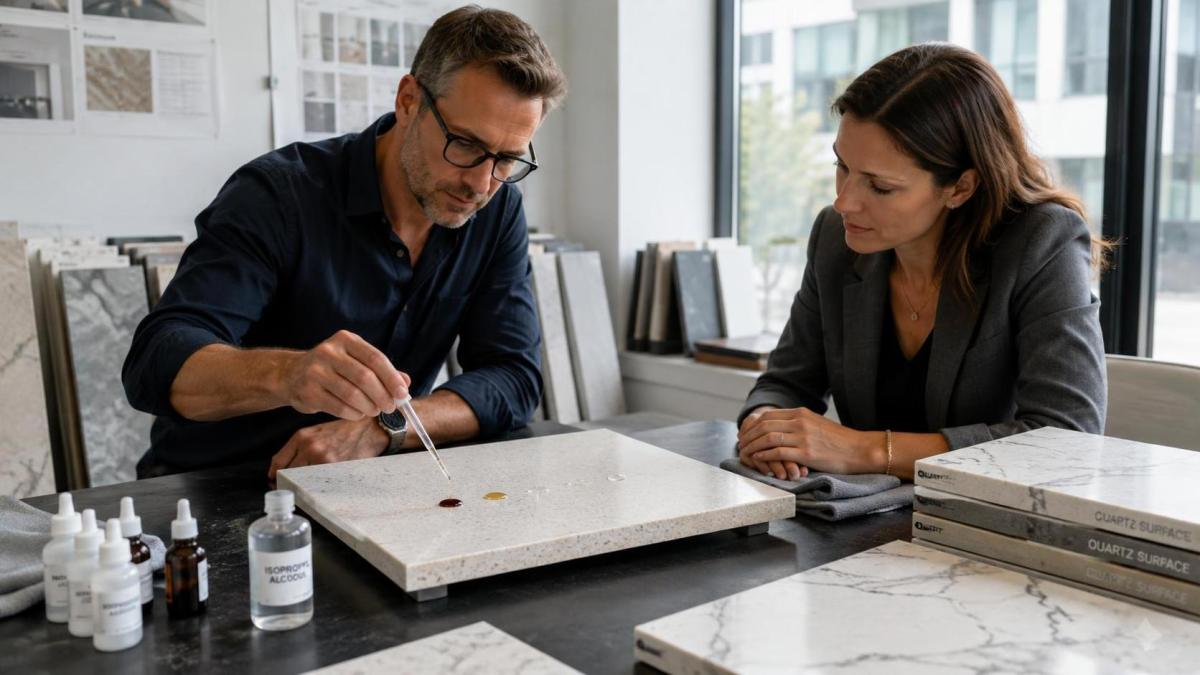
For commercial projects, mock-up testing is often more useful than abstract performance language. Applying likely contaminants to the exact color and finish under consideration, then observing removal after a realistic dwell time, gives far more relevant insight than relying on generalized claims. This is especially true for white, beige, and marble-look quartz designs, where visual cleanliness is part of the specification intent.
Where problems usually come from
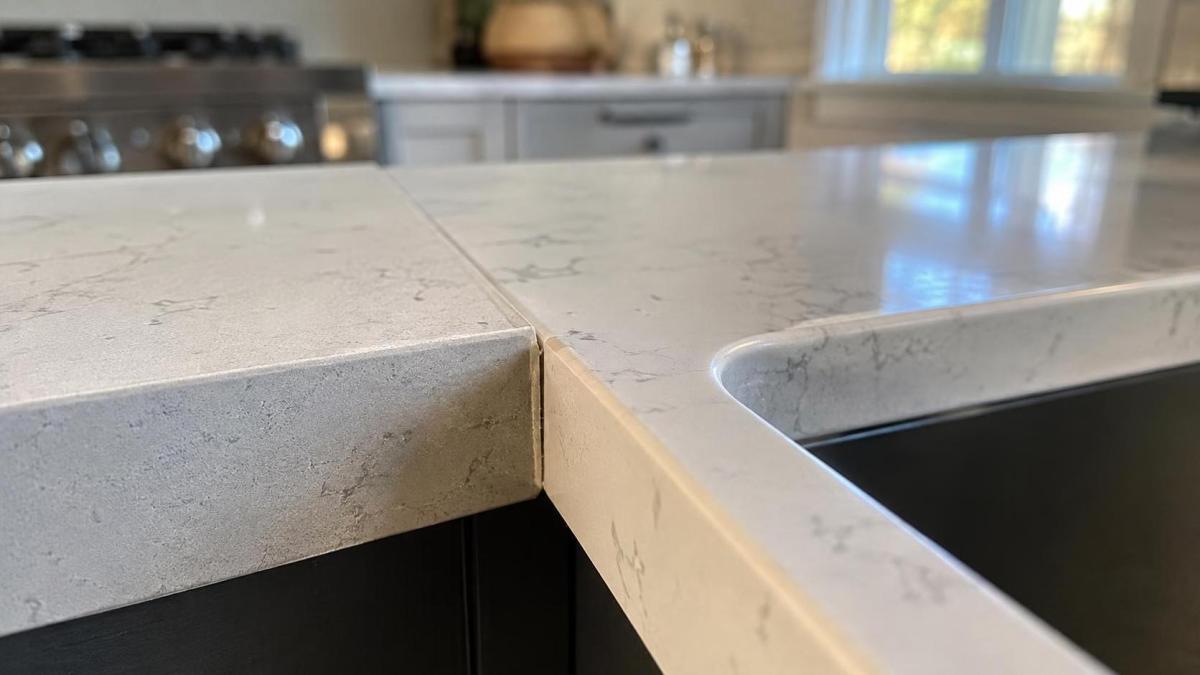
When staining complaints appear, the root cause is often one of four things: low material consistency, unsuitable surface finish, cleaning delay, or chemical misuse. Bleach mixtures, paint removers, oven cleaners, and strongly alkaline or acidic products can do more harm than the original spill. In other cases, fabricated joints, cutouts, or edges may behave differently from the factory face if finishing work on site was uneven.
Another practical issue is expectation management. Some buyers assume quartz is maintenance-free in the literal sense. It is lower maintenance than many porous materials, but that does not mean every contaminant can be left for hours or days without consequence. Good stain resistance reduces risk; it does not erase the need for timely cleaning.
Quartz compared with other decorative surface materials
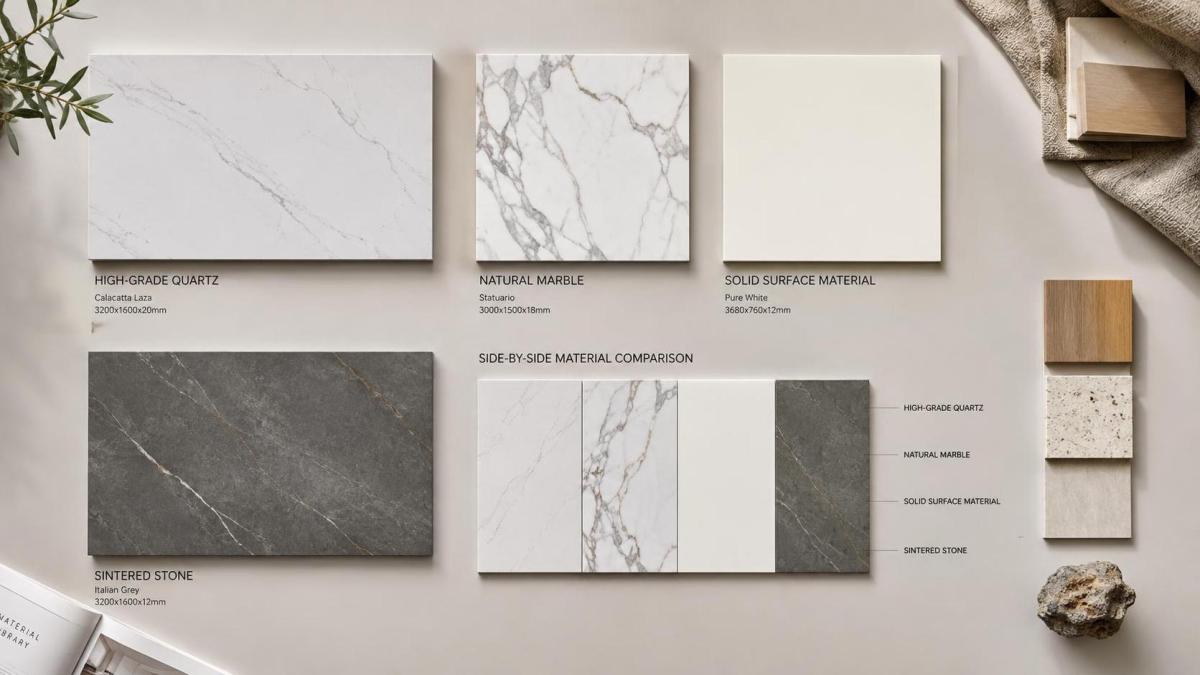
Against many natural stones, high‑grade quartz often offers more predictable stain resistance because it does not depend on periodic sealing in the same way. Compared with some solid surface materials, quartz may offer a different balance of hardness, repairability, and chemical behavior. Sintered stone is also frequently discussed in the same selection process, particularly where heat and UV exposure are major concerns.
That is why stain resistance should not be judged in isolation. In indoor decorative applications, quartz remains a strong choice where clients want a refined appearance, stable day-to-day maintenance, and reliable resistance to ordinary household or commercial staining. But in a project exposed to direct outdoor weathering, strong UV, or unusual chemical conditions, the broader performance profile may lead the team to compare alternatives more closely.
A more useful way to specify the material
Instead of treating stain resistance as a generic product feature, it is better to write it into the project decision process. Match the slab color, finish, and maintenance expectations to the use scenario. Ask for care guidance before approval, not after installation. If the application involves high staining risk, review an actual sample under likely site conditions. If the project is large, confirm batch consistency and replacement lead times as part of procurement planning.
High‑grade quartz slabs can perform very well against everyday staining, and in many interior applications that performance is one of the reasons they remain so widely specified. The important point is not to stop at the label. The finish, fabrication quality, maintenance regime, and intended use all shape the real outcome. When those factors are aligned, quartz usually delivers the cleanability and visual stability that designers and buyers expect. When they are ignored, even a premium slab can become a source of avoidable complaints.
Stain performance is closely tied to moisture behaviour, so it is worth reading Waterproof and Moisture-Proof Performance of Quartz Stone alongside our Maintenance Guide for Quartz Countertops.
Related Articles
- Maintenance Guide for Quartz Countertops
- Hardness and Wear Resistance Advantages of Engineered Quartz
- Glossiness Standard of Polished Quartz Countertops
- Complete Engineered Quartz Slab Production Process
Dense, Low-Porosity Quartz Slabs Built to Resist Stains
Our high-grade quartz slabs are engineered with stable resin systems, uniform particle distribution, vacuum vibrocompression, and controlled curing for a dense, non-porous surface that handles everyday spills and stays easy to clean across batches. Contact us for samples, technical specs, and project pricing.
📱 WhatsApp: +86 198 6115 3736
📧 Email: raykelee@hyquartzslabfactory.com
Send Us A Message