
Quartz vs Solid Surface Countertops: Which to Specify
Quartz vs Solid Surface Countertops: Which to Specify
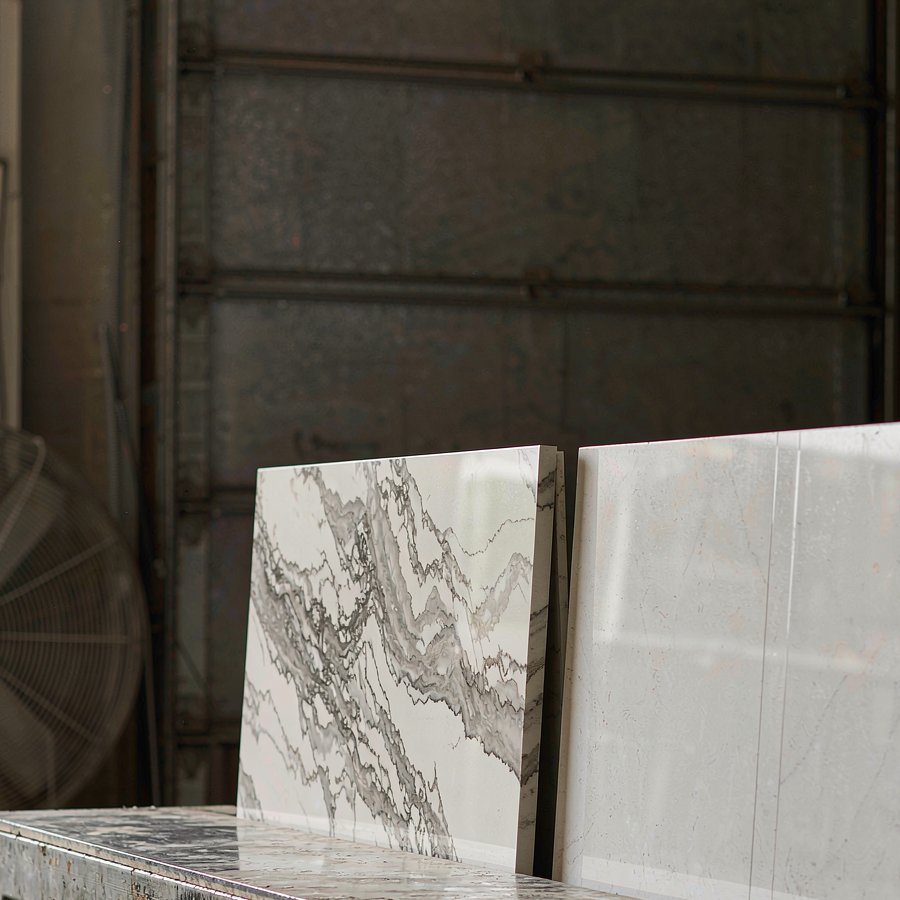
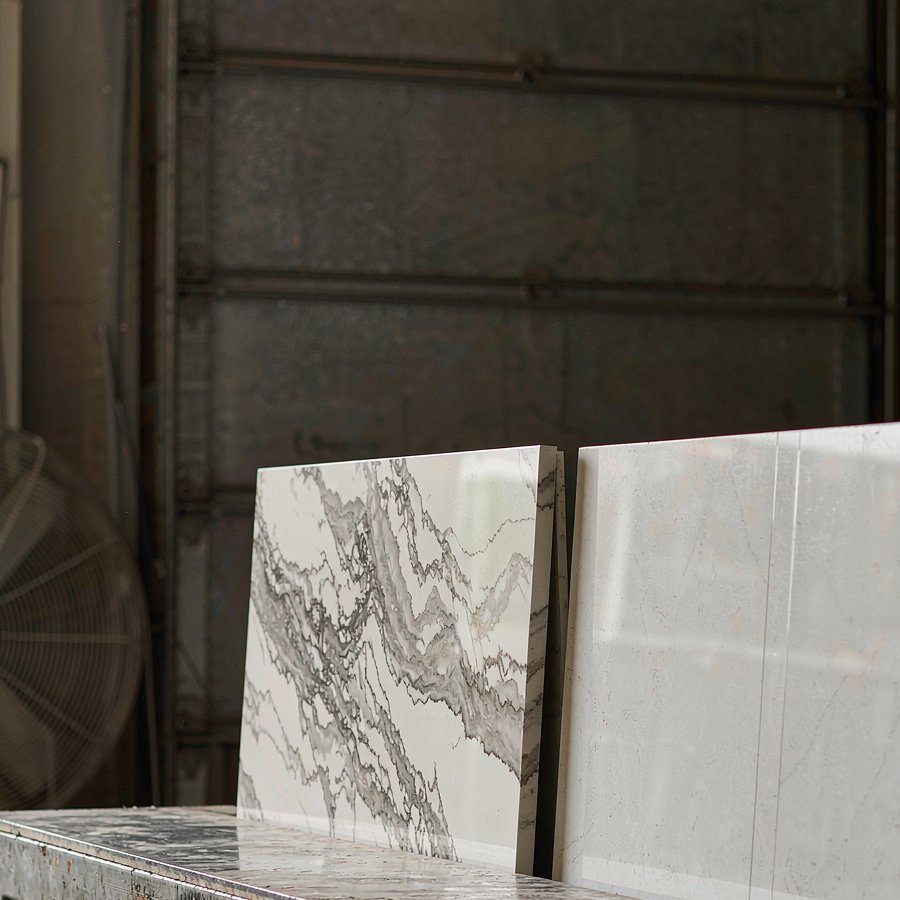
Ask a room full of designers whether quartz is a solid surface and most hands go up. In trade terms that answer is wrong, and the confusion is expensive. A quartz vs solid surface comparison is a choice between two different material categories. Solid surface — the family Corian belongs to — is a mineral filler bound in acrylic or polyester resin and cast into sheets. Quartz is engineered stone: roughly 90% quartz aggregate bonded with a small percentage of resin under vacuum and vibration. They look similar in a sample box and behave nothing alike on a counter.
Almost every quartz vs solid surface decision that reaches our desk starts with that same mix-up. This guide is written from the production floor of an engineered quartz slab factory, so it says plainly where solid surface is the better specification and where quartz is.
What Each Material Is Made Of
Engineered quartz begins as crushed quartz, mixed with polyester resin, pigments and a small amount of additive, then compacted under vacuum and cured into a slab. The quartz content produces the finished surface: Mohs 6 hardness, water absorption around 0.02%, and a face dense enough that spills sit on top instead of soaking in. Those three numbers decide most of the performance differences in a quartz vs solid surface brief.
Solid surface is a different chemistry. A mineral filler, usually aluminium trihydrate, is bound in acrylic or polyester resin and cast into sheets of about 12 mm. Because the material is cast rather than compacted, it is homogeneous from face to back — sand through the surface and you find the same colour underneath. Almost everything solid surface does well follows from that one property.
One naming point clears up the confusion before it starts. In casual speech "solid surface" gets applied to anything non-porous, quartz included. In specifications it means the cast acrylic and polyester family — the category DuPont commercialised as Corian and that many manufacturers now produce generically. So is quartz a solid surface? Not in the technical sense: quartz is engineered stone. That single distinction is why so many quartz vs solid surface briefs begin on the wrong footing.
The Comparison at a Glance: Quartz vs Solid Surface
Hardness, Heat and Scratch Resistance
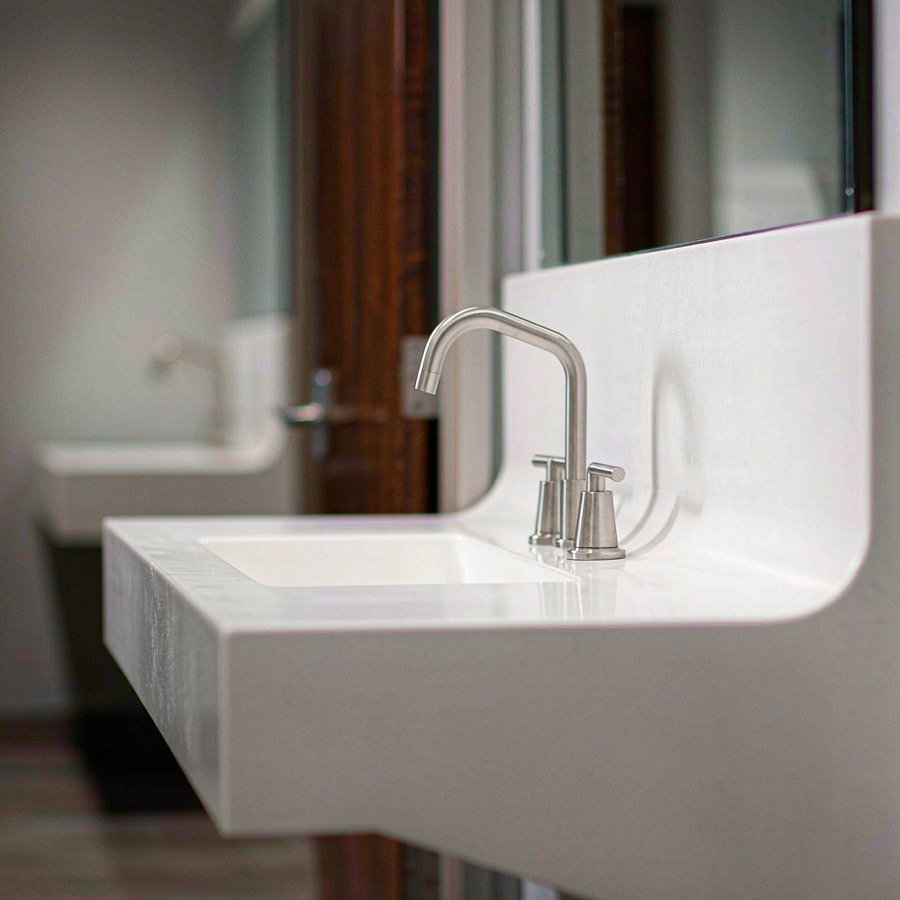
Hardness is the first axis of any quartz vs solid surface comparison. Quartz at Mohs 6 resists the daily abuse of a working counter: cutlery, ceramic plates, keys, cleaning equipment. Solid surface sits two to three steps softer, so a knife drawn across it leaves a line. That is not a defect in the material, it is what the material is — but it changes how the surface must be used across a project.
Heat is where the quartz vs solid surface difference gets practical. Engineered quartz is heat resistant, not heat proof, and the resin is always the limiting component: a hot pan set directly on the surface can mark it permanently. Solid surface has a lower threshold still and will scorch or deform well before quartz does. Neither material should be specified against the heat load of a commercial cooking line without a barrier.
Stain resistance brings the quartz vs solid surface comparison close to a tie, with one difference in mechanism. Quartz is non-porous at 0.02% water absorption, so wine, oil and turmeric stay on the surface and wipe off. Solid surface is also non-porous, but its softer face holds the fine scratches that trap grime over time — which is precisely where its repairability turns from weakness into advantage.
Repairability and Seam Visibility
This is solid surface's strongest argument in the quartz vs solid surface debate. A bonded and sanded solid surface joint is close to invisible, and a scratched or scorched surface can be sanded back and refinished in place, which is why the material dominates hotel bathrooms, hospital counters and laboratory benching. It also thermoforms, so coved backsplashes and curved reception desks can be produced as one continuous piece with no joint at all.
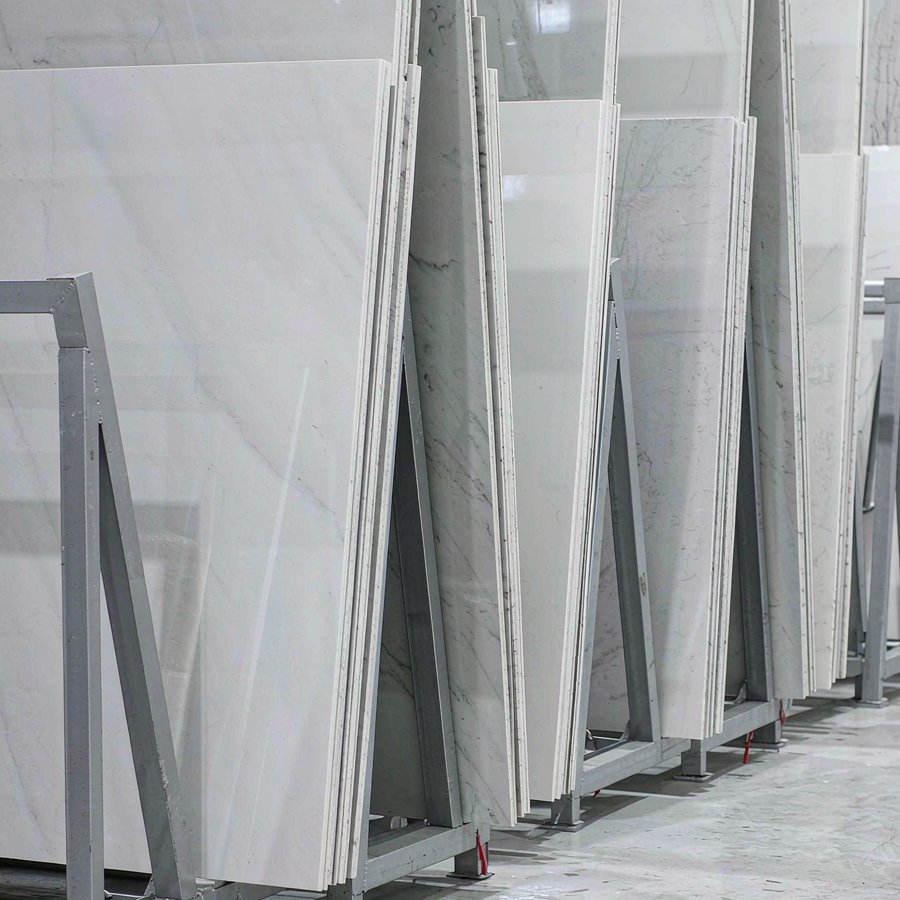
Quartz cannot be thermoformed and cannot be sanded on site. A quartz seam reads as a fine line, and a deep chip needs a specialist repair. Two things offset that in practice. First, quartz resists the damage that would require repair. Second, we produce quartz in large formats — 3200 × 1800 mm and an oversized 1800 × 3500 mm — and a bigger slab means fewer seams to hide in the first place. On a large contract, specifying 3200 × 1800 mm quartz can remove junctions a solid surface layout would have to disguise. That is the trade at the centre of the quartz vs solid surface question.
Hygiene and Commercial Use
Both materials are used in hygienic environments, for the same reason: neither absorbs liquid. In a quartz vs solid surface specification for a commercial kitchen or a clinic, quartz carries a specific advantage, because it is dense and hard enough that the surface does not accumulate the damage that harbours residue. Our slabs are produced under ISO9001 with NSF food-contact and SGS environmental and fire certification, which is what commercial kitchens, healthcare projects and laboratory work typically ask to see.
Solid surface is also widely specified in healthcare because joints can be made seamless and the material can be refinished to remove contamination rather than replaced. The trade-off is temperature: solid surface is generally not rated for the heat exposure of a commercial cooking environment.
Cost Comparison
Quartz vs solid surface cost is where most of the argument inside a procurement meeting actually happens. Solid surface usually carries a lower material cost per square metre, and fabrication is simpler — no diamond tooling, no waterjet, and joints are glued and sanded by hand. Quartz costs more as a raw slab and needs harder tooling, but it often narrows the total installed gap on large projects, because a larger slab format reduces the number of cuts, joints and labour hours on site.
The honest way to read a quote is to compare the total installed square-metre figure, not the sheet price: material, fabrication, edge work, cut-outs, transport and expected breakage. Published retail price ranges for both categories are widely available from third-party sources, and they vary enormously by country, thickness and finish, so treat any public figure as an indication rather than a budget. What we will not do is claim that published quartz vs solid surface price bands decide the question — a mid-range quartz and a premium solid surface can land within a few percent of each other on the same kitchen.
Where Each Material Wins
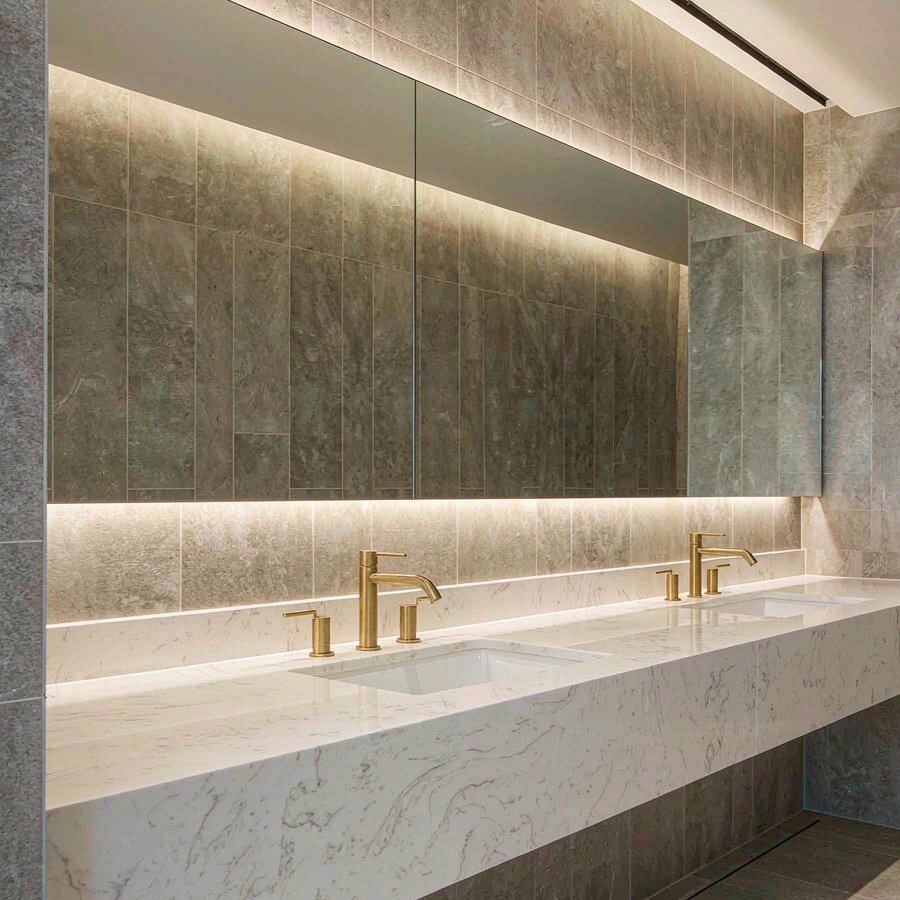
Where each material wins is the practical half of the quartz vs solid surface decision. Specify solid surface for commercial washrooms, laboratory benching, hospital and clinic counters, service desks that must be sanded back into condition, and any design where a continuous coved or curved form matters more than hardness. Its seam-free, renewable surface is genuinely the right answer in those places, and no amount of quartz durability replaces it.
Specify engineered quartz for kitchen counters, hotel bathroom vanities, restaurant and café surfaces, retail counters, wall cladding and interior flooring — anywhere the surface takes scratch, heat and stain abuse from the public and still has to look new after a season of use. In those settings the quartz vs solid surface choice is rarely close. The same logic applies outdoors in covered applications; our guide on whether quartz countertops can be used outdoors covers the limits in detail.
Specifying Checklist for Trade Buyers
A specification is only as good as the six lines behind it. Before quoting a project, confirm the intended use and expected traffic, the required thickness, the slab format available in the specified design, the finish and edge profile, the certificates the client must see, and the delivery window. Those six lines resolve a quartz vs solid surface decision faster than any sample can. They are also exactly what a factory needs in order to answer properly. We have written the full buying process, from sample to loading plan and quality control, in our guide on sourcing quartz slabs from China.
For the material comparison itself, the two decisions that matter most are hardness and repairability. They move in opposite directions, and picking the one your project cannot live without settles the rest.
Common Mistakes and Myths
Most quartz vs solid surface mistakes come from assuming the two materials are variants of one product. They are not.
"Quartz is a solid surface." Not in specification terms. Solid surface is the cast acrylic and polyester family; quartz is engineered stone. Mixing the two in a tender document invites substitutions that will not perform as intended.
"Solid surface is always the cheaper option." Often true on material price, less often on installed cost, and sometimes false entirely once edge work, cut-outs and site labour are counted.
"Harder is always better." Hardness is why quartz resists scratching and also why quartz cannot be sanded back. Solid surface gives up hardness to buy repairability, which is the correct trade in some buildings.
"Seams do not matter on a big job." They do. On a long counter run, seam count is a design decision — and specifying 3200 × 1800 mm or 1800 × 3500 mm quartz formats is one of the few ways to reduce it without changing the material.
"Either material can go anywhere." Neither should sit unprotected under a hot pan, and solid surface should not be specified against the heat load of commercial cooking equipment.
Frequently Asked Questions
Is quartz a solid surface?
No. In trade specification, solid surface refers to cast sheets of mineral filler bound in acrylic or polyester resin — the category Corian belongs to. Quartz is engineered stone, made from quartz aggregate bonded with resin and compacted under vacuum. They are separate categories with different hardness, heat tolerance and repairability.
Is Corian the same as quartz?
No. Corian is a brand name for a solid surface material, not for quartz. A Corian counter and a quartz counter share one property — being non-porous — and differ in almost everything else: hardness, heat resistance, seam visibility, and whether the surface can be sanded back into condition.
What is the difference between quartz and solid surface?
The short version is hardness against repairability. Quartz is harder, more heat tolerant and more scratch resistant, with visible seams and limited on-site repair. Solid surface is softer and more heat sensitive, but joints can be made nearly invisible and the surface can be refinished in place.
Is solid surface cheaper than quartz?
Material cost is usually lower for solid surface, and fabrication is simpler. On an installed basis the gap narrows, because quartz's larger slab formats reduce the number of joints and site hours. Compare total installed cost per square metre rather than sheet price.
Which is better for commercial bathrooms — quartz or solid surface?
Both are specified successfully, for different reasons. The quartz vs solid surface answer turns on maintenance policy: solid surface wins where seamless joints and in-place refinishing matter, and where the surface will be sanded back rather than replaced. Quartz wins where the vanity takes heavy daily scratch, heat and stain abuse and has to stay visually intact with minimal maintenance.
Conclusion
The quartz vs solid surface question has a clean answer once the priority is named. If the project needs a surface that can be sanded back into condition and joined without a visible line, solid surface is the right specification. If it needs a surface that resists scratching, staining and ordinary heat without maintenance, engineered quartz is the safer choice — and it is the material most working kitchen and vanity counters in the world are made from.
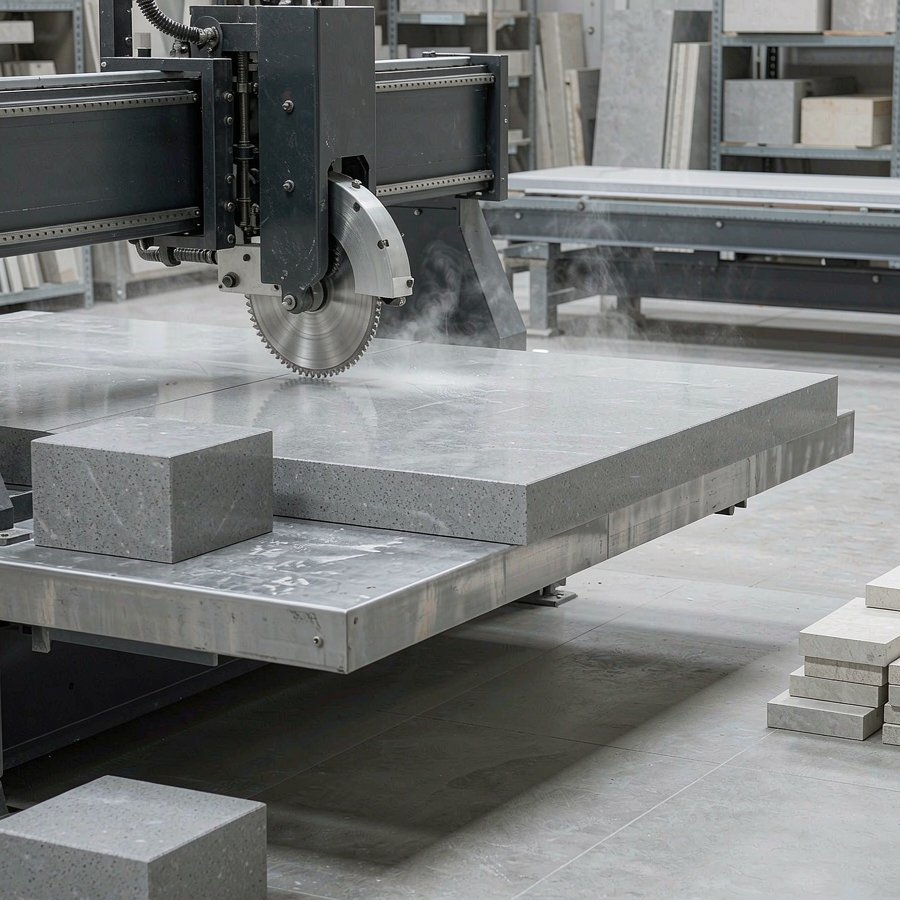
Choosing between them is not a question of which material is better in the abstract, but of which property the building cannot do without. Specify that property first, and the material usually names itself. For a wider view of how quartz compares with the surfaces it is quoted against, see our companion comparisons on quartz vs marble and quartz vs quartzite.
Laminate is the other common budget alternative — see our quartz vs laminate countertop comparison for the full durability and cost picture.
Related Articles
- Quartz vs Marble: Which Is Better for Kitchen Countertops?
- Quartz vs Porcelain vs Sintered Stone
- Quartz vs Quartzite: Engineered vs Natural Stone
- How to Buy Quartz Slabs from China: The Buying Guide
Specifying Quartz Slabs for a Commercial Project? Send Us the Brief
We press and finish engineered quartz slabs in-house for importers, fabricators, distributors and project buyers — from marble-look designs such as Marble Golden Thread to dark statement slabs, in 3200 × 1800 mm and oversized 1800 × 3500 mm formats, 18 mm and 20 mm, backed by ISO9001, NSF food-contact and SGS certification. Tell us the format, thickness, finish, colour direction and volume, and where your quartz vs solid surface decision is stuck — we will come back with a loading plan, the technical data sheet, current certificates and an indicative quotation.
📱 WhatsApp: +86 198 6115 3736
📧 Email: raykelee@hyquartzslabfactory.com
Send Us A Message