
Quartz vs Laminate Countertops: Durability, Cost & Looks Compared
Quartz vs Laminate Countertops: Durability, Cost & Looks Compared
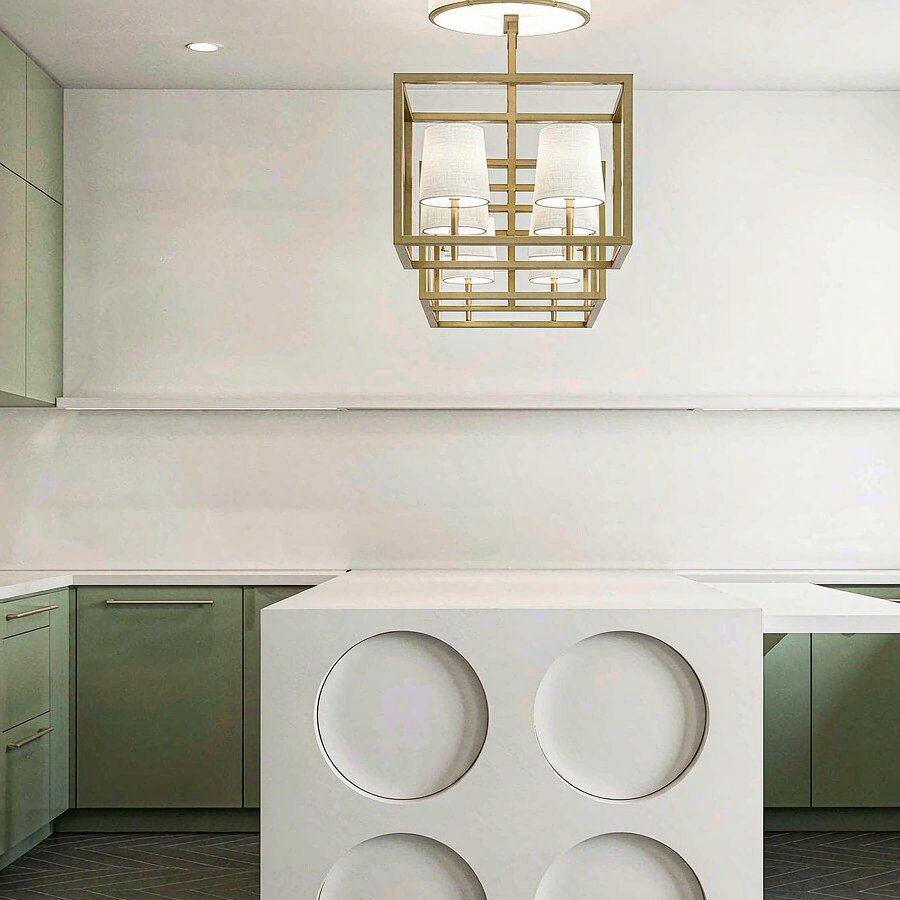
Quartz vs laminate is the comparison most homeowners and landlords make at least once during a renovation. Laminate is the budget hero of kitchen showrooms, while quartz carries the premium reputation. The real question is not which looks better on day one, but which surface costs less over five, ten or fifteen years of daily use. In this guide we compare quartz vs laminate head-to-head on durability, moisture, heat, maintenance, installation and resale, so you can specify the right material for the project budget.
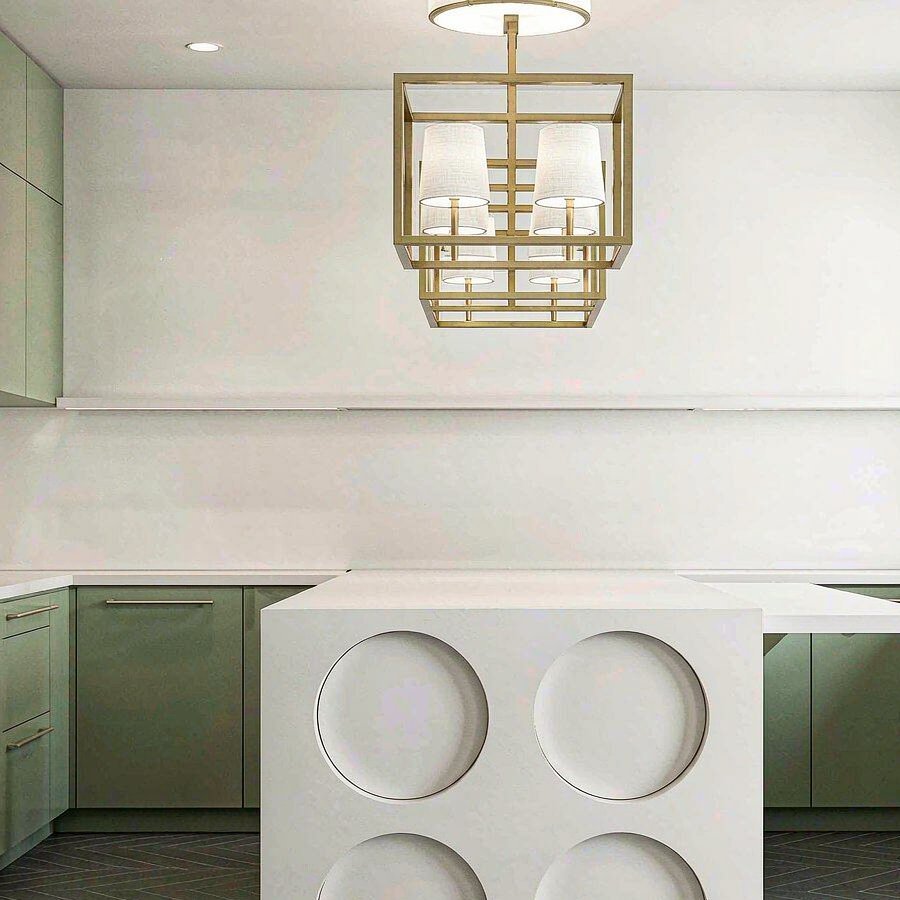
What Are Quartz and Laminate Countertops?
Quartz countertops are engineered stone slabs made from roughly 90% ground natural quartz bound with resin and pigments, then pressed and cured into large sheets. Laminate countertops are a particle-board or MDF core wrapped in a decorative plastic layer, sealed with a melamine surface. The difference in composition is the entire story: one is a mineral-based solid surface, the other is a veneer over a soft substrate.
Because quartz is non-porous and dense, it behaves like a solid stone slab. Because laminate is a thin film over wood fibre, it behaves like a hard-wearing piece of furniture. That distinction drives every comparison below.
Durability: Scratch, Chip and Impact
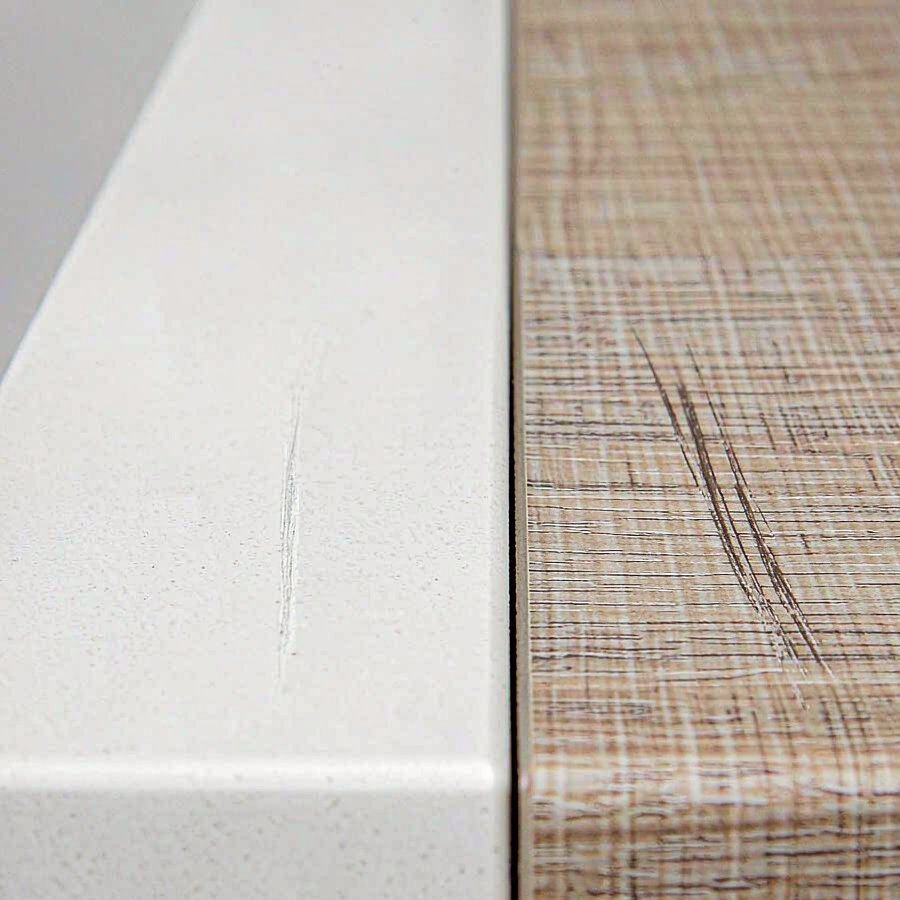
In the quartz vs laminate durability contest, quartz wins on hardness and chip resistance. Engineered quartz rates around Mohs 6 — harder than most kitchen knives and significantly harder than laminate's melamine topcoat. Daily knife contact will eventually scar laminate, while quartz resists ordinary slicing. Dropped pots and pans are another separator: laminate edges chip or delaminate when struck, exposing the brown core; quartz may chip at the edge if hit hard, but the damage is usually local and repairable.
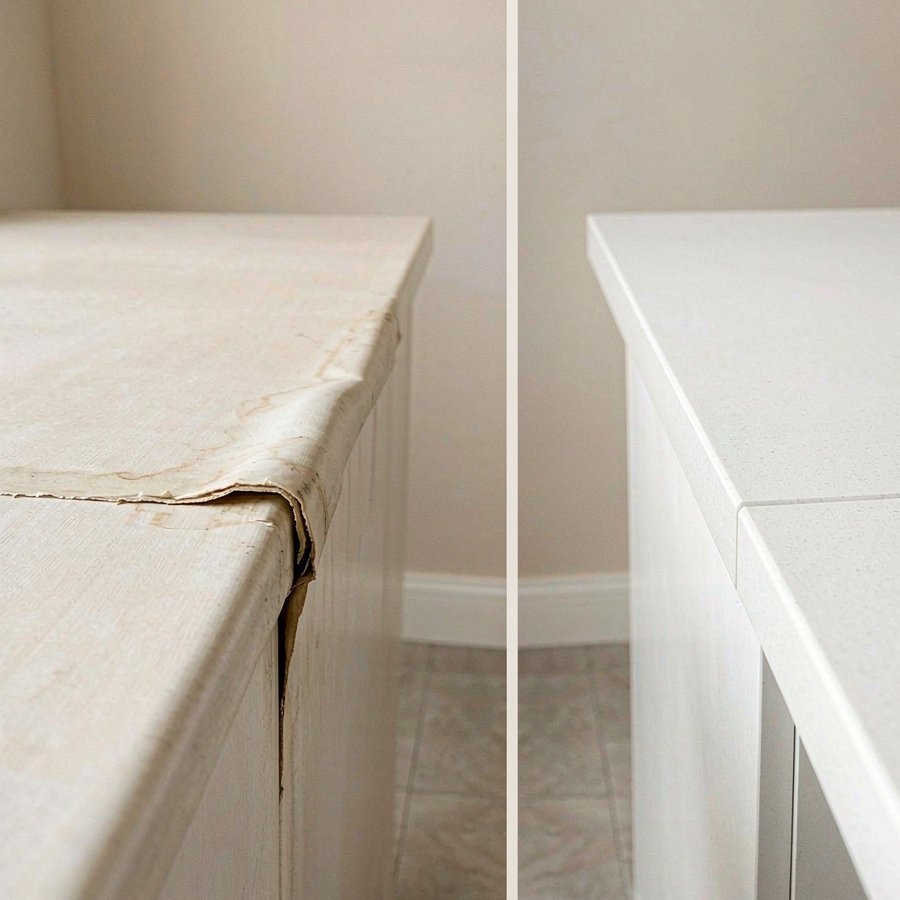
The real weakness of laminate is at the seams and edges. Water creeping into a seam swells the particle core, causing the surface to bubble. Once that happens, the only fix is replacement. Quartz seams are sealed with matching adhesive and will not swell. For rental units or heavy-use kitchens, quartz vs laminate durability is usually the deciding factor.
Water, Heat and Stain Resistance
Quartz is non-porous, so it does not absorb water, wine, oil or coffee. Laminate's melamine face resists stains for years, but any scratch, seam or chip opens a path to the particle core, where moisture causes swelling and discolouration. In bathrooms, this is critical: a leaking faucet base or standing water around a sink will eventually ruin laminate, whereas quartz simply wipes dry.
Heat is a different story. Neither material loves a hot pan straight off the stove, but laminate suffers faster: the melamine surface can scorch or bubble under temperatures above 150 °C. Quartz can tolerate brief contact with hot cookware better, though manufacturers still recommend trivets to protect the resin. For the average kitchen, quartz is the more forgiving choice around heat.
Looks and Design Flexibility
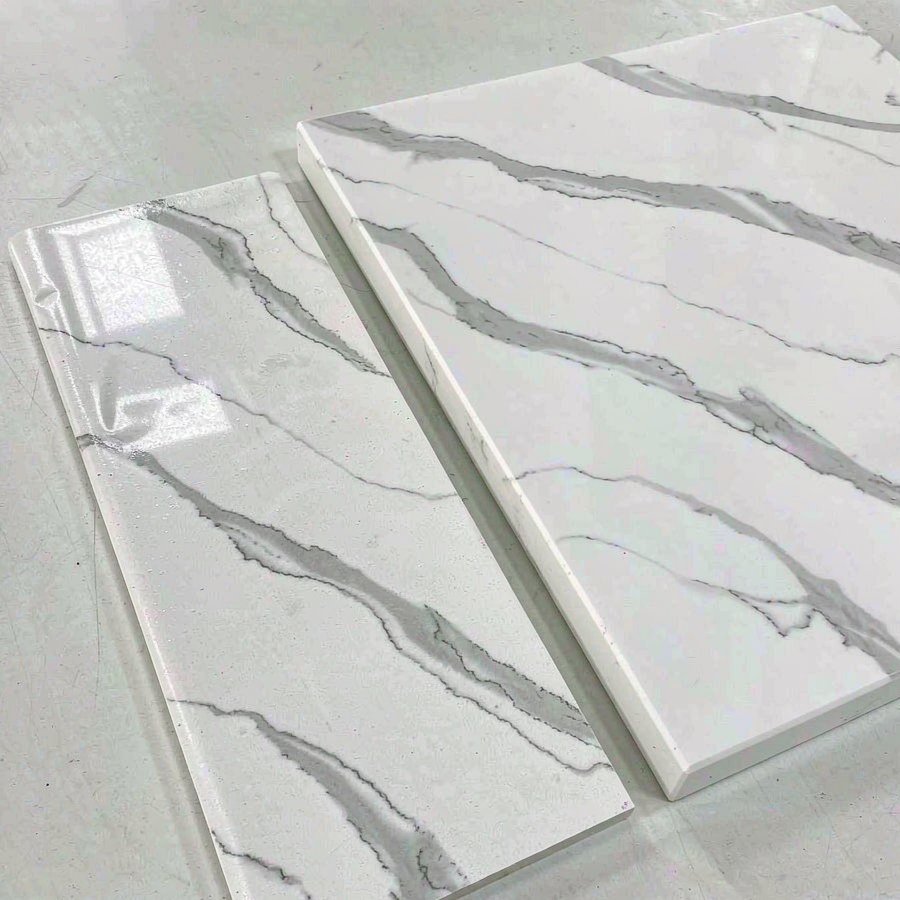
Modern laminate prints can mimic wood, stone and even marble convincingly from a distance. Up close, the tell-tale seam, edge strip and repeated pattern give it away. Quartz offers continuous veining through the full thickness of the slab, so edges and cut-outs show the same pattern as the top surface. It also supports undermount sinks, integrated drainboards and custom edge profiles that laminate cannot match cleanly.
For landlords and short-term flips, laminate's wide colour range and low cost still make sense. For owner-occupied homes, hospitality projects and spec homes, quartz is the safer visual bet because it reads as "real stone" even under scrutiny.
Cost and Lifetime Value
Upfront, laminate is clearly cheaper — often one-third to one-half the material cost of quartz. Installation is also faster because laminate is lighter and easier to cut on site. The trade-off shows up in lifespan. A well-cared-for laminate counter lasts 10–15 years in a residential kitchen; quartz commonly lasts 20+ years and often carries manufacturer warranties of 10–15 years.
When you factor in replacement, quartz vs laminate lifetime cost narrows considerably. In a rental where turnover and damage are high, replacing laminate every decade may still be cheaper. In a home you intend to keep, or a commercial space where downtime is expensive, quartz pays for itself.
Installation and Maintenance
Laminate countertops are DIY-friendly and can be cut with standard woodworking tools, which keeps labour costs low. Quartz must be templated, cut with diamond blades and installed by experienced fabricators; the slab weight — 248.8 kg for a standard 3200 × 1800 × 18 mm sheet — makes professional handling essential.
Maintenance is where quartz pulls far ahead. Laminate needs careful cleaning to avoid scratching the melamine layer, and it cannot be sanded or refinished. Quartz needs only soap and water, and minor repairs are possible with colour-matched epoxy. For most users, the quartz vs laminate maintenance difference is worth the higher initial cost.
Resale and Project Value
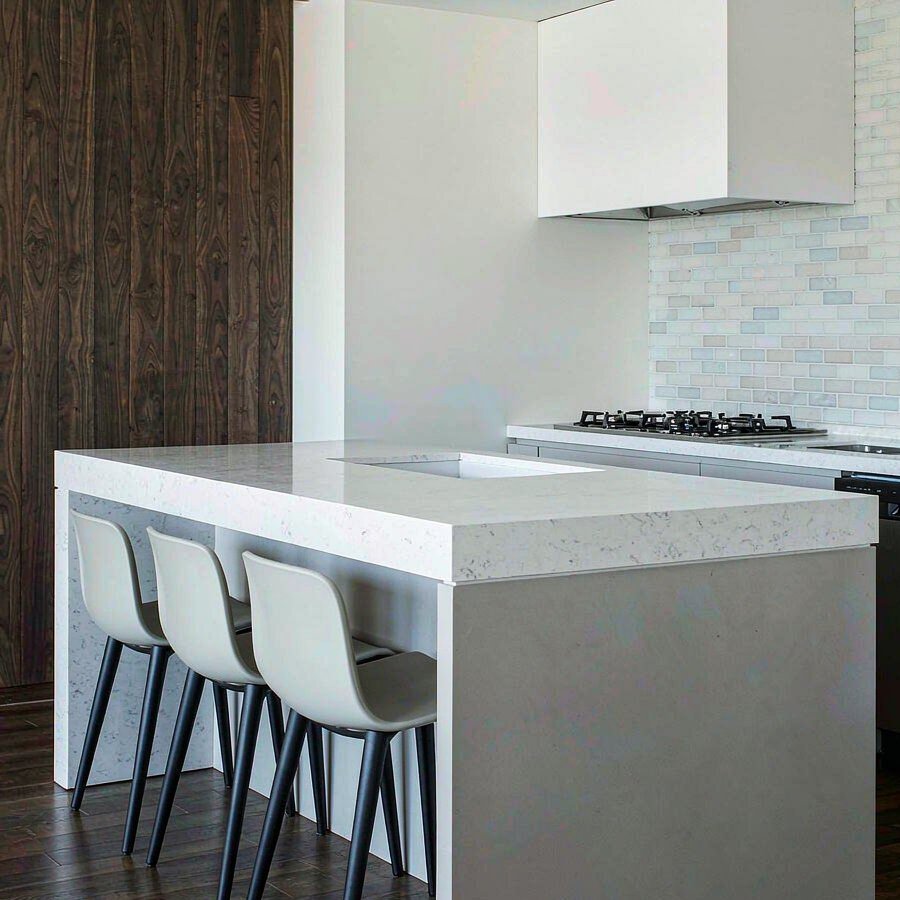
Real estate agents consistently list "quartz countertops" as a selling point, while laminate is rarely mentioned. For spec homes, investment flips in the mid-to-upper price range, and commercial fit-outs where first impressions matter, quartz adds perceived value that laminate cannot match. If the project is a budget rental or a temporary solution, laminate is a rational choice; otherwise, quartz is the better specification.
Frequently Asked Questions
Is quartz more durable than laminate? Yes. Quartz is harder, more chip-resistant and does not swell at the seams like laminate.
Can laminate look as good as quartz? From a distance, yes. Up close the edge strip, seams and repeated pattern usually reveal it as laminate.
Which is better for a rental kitchen? Laminate if upfront cost is the only concern; quartz if you want fewer replacements and higher tenant appeal.
Can you put a hot pan on quartz or laminate? Neither loves direct heat. Laminate scorches faster; quartz tolerates brief heat better but still needs trivets.
How do you clean quartz vs laminate? Quartz handles most cleaners; laminate needs non-abrasive products to avoid scratching the melamine surface.
Conclusion
Quartz vs laminate is ultimately a choice between short-term savings and long-term performance. Laminate wins on initial cost and install speed; quartz wins on durability, water resistance, heat tolerance, maintenance and resale value. For busy kitchens, bathrooms and commercial spaces, quartz is the lower-risk specification. For tight budgets and temporary applications, laminate still has a place. To see how engineered stone compares with other surfaces, read our guides on quartz vs solid surface and quartz vs marble.
Related Articles
- Quartz vs Solid Surface Countertops
- Quartz vs Granite: Pros and Cons for Project Use
- Quartz vs Marble: Which Is Better for Kitchen Countertops
- Maintenance Guide for Quartz Countertops
Quartz Countertop Supplier for Commercial & Residential Projects
Shandong Hongyue Quartz Stone Co., Ltd. manufactures engineered quartz slabs for developers, fabricators and retailers worldwide. Whether your project needs the premium look of quartz or guidance on quartz vs laminate for a budget fit-out, we supply samples, specifications and direct factory pricing with ISO 9001, NSF and SGS certification.
📱 WhatsApp: +86 198 6115 3736
📧 Email: raykelee@hyquartzslabfactory.com
Send Us A Message