
Quartz vs Quartzite: Engineered vs Natural Stone
Quartz vs Quartzite: Engineered vs Natural Stone
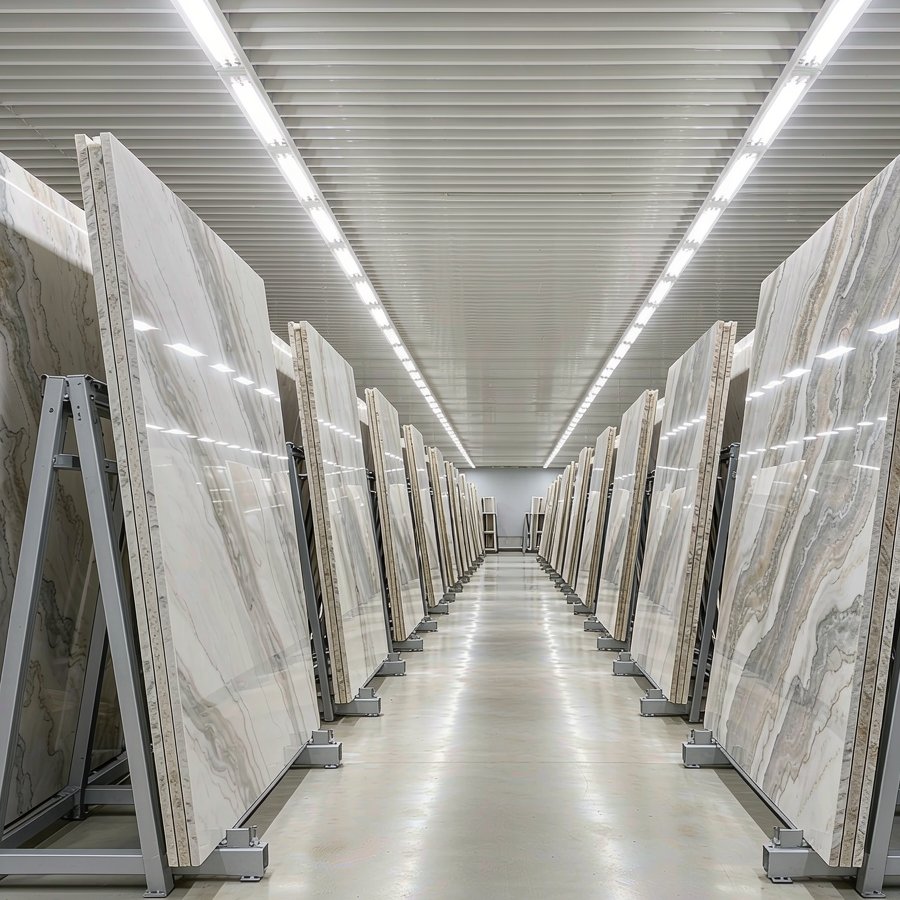
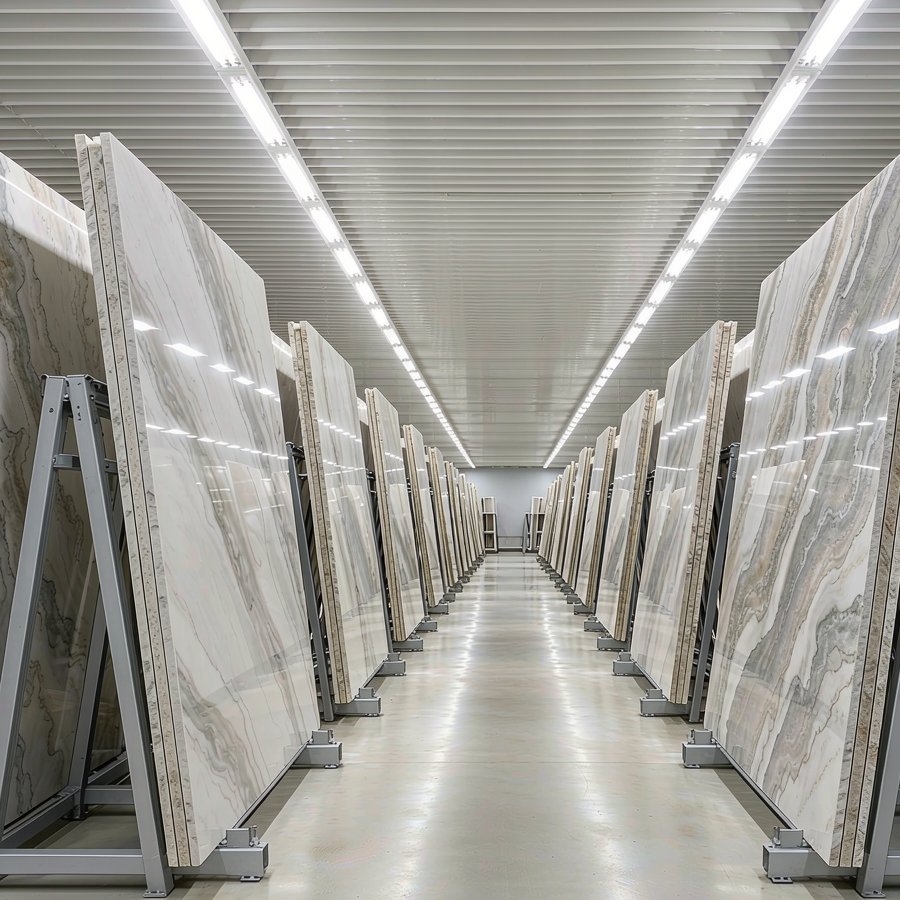
No two material names cause more confusion in a stone showroom. A quartz vs quartzite decision is not a choice between two versions of the same product: quartzite is a natural metamorphic rock quarried from the earth, while engineered quartz is a manufactured slab of quartz aggregate bonded with resin. One is mined, one is made — and almost everything else in a quartz vs quartzite comparison follows from that single fact.
This guide is written from the production floor of an engineered quartz slab factory, so it says plainly where quartzite is the better material and where engineered quartz is the better specification.
Quartz vs Quartzite: The Short Answer
Quartzite is natural stone. Sandstone is buried, heated and compressed until its quartz grains recrystallise into a hard, interlocking rock, which is then quarried in blocks and sawn into slabs. Engineered quartz is manufactured: roughly 90% crushed quartz aggregate combined with resin and pigment, vacuum-vibrated, pressed and polished. In a quartz vs quartzite comparison, natural quartzite usually wins on hardness and on the uniqueness of each slab; engineered quartz wins on consistency, sealing, stain resistance and predictable supply.
The honest question is not which material is better in the abstract, but which failure mode the project can tolerate: an unpredictable colour match across a large order, or a surface sealed for life.
Where the Names Come From
The confusion is earned. Both materials are mostly silicon dioxide and both are called "quartz" in trade language, so what separates them is origin. Quartzite is a rock: it leaves the quarry in blocks, and no two blocks are identical. Engineered quartz is a product: it leaves a press, and next month's plate can be matched to this month's.
That is why "quartz" alone is ambiguous on a specification sheet and should always be rewritten. Ask for the body composition — natural quartzite and engineered quartz take different fixings, different sealing regimes and different lead times. Is quartz vs quartzite the same stone? No, and the two are not interchangeable in a specification.
Hardness and Durability
Natural quartzite is harder. A typical quartzite sits around 7 on the Mohs scale against 6 for engineered quartz, so it resists scratching better and holds a polish longer on a low-traffic surface.
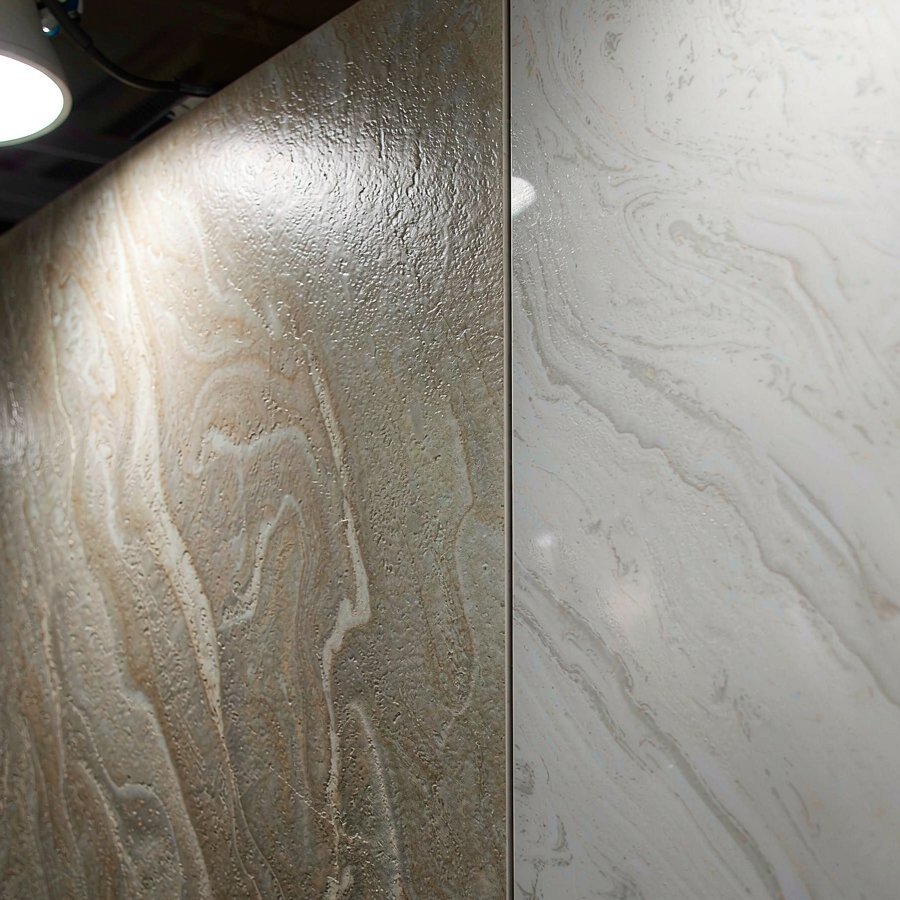
Hardness is also the least useful single number in a quartz vs quartzite comparison, because Mohs measures abrasion resistance, not impact or stain resistance. Engineered quartz is non-porous, with water absorption around 0.02%, so wine, oil and turmeric wipe off a surface that never needs sealing. Quartzite is naturally porous, so it absorbs unless it is sealed and re-sealed.
On impact the two are closer than the hardness numbers suggest. Quartzite is brittle the way natural stone is: a hard knock at a sink cut-out can chip it, and the chip is hard to disguise. Engineered quartz, supplied at 18 mm and 20 mm, has a thicker resin-bonded body that tolerates cut-outs, overhangs and daily traffic on a working counter.
Maintenance and Sealing
This is where the running cost of a quartz vs quartzite specification is decided, and it is rarely priced into the first quote.
- Quartzite — sealed at installation and re-sealed at intervals, typically every one to two years depending on traffic and the slab's porosity. Unsealed quartzite can be stained by oil, wine and acidic spills.
- Engineered quartz — sealed in the factory by its resin binder, at around 0.02% water absorption. No routine sealing; soap and water. Heat is the one thing to manage — it is heat-resistant, not heat-proof, and a pan straight from the hob can leave a mark that will not polish out.
Over ten years the maintenance difference can exceed the price difference between them, which is why a quartz vs quartzite comparison that looks only at slab price is incomplete.
Cost and the Price Difference
Quartzite is usually the more expensive material, and the cost sits in the yield. Quartzite blocks carry natural variation, fissures and colour shifts, so a significant part of every block is unusable for a matched countertop run; extraction, block transport and slab finishing add further cost. Natural stone is sold in the slab you can see — if a project needs eight matching slabs and six are available, the project changes.
Engineered quartz is produced in controlled batches, so the waste rate on a 3200 mm slab is predictable and price can be quoted per square metre against a known format. That predictability is a real advantage on multi-unit work.
We do not publish prices. A quotation only becomes comparable when it states format, thickness, finish, volume and Incoterm together — a quote that omits packing, waste allowance and destination charges is not cheaper, it is incomplete.
Slab Size, Formats and Availability
Natural quartzite comes in large slabs, but availability is the constraint: format depends on the block, colour lots run out, and lead time is set by quarry output rather than a production schedule. A buyer who needs forty matched slabs is exposed to whatever the quarry releases that quarter.
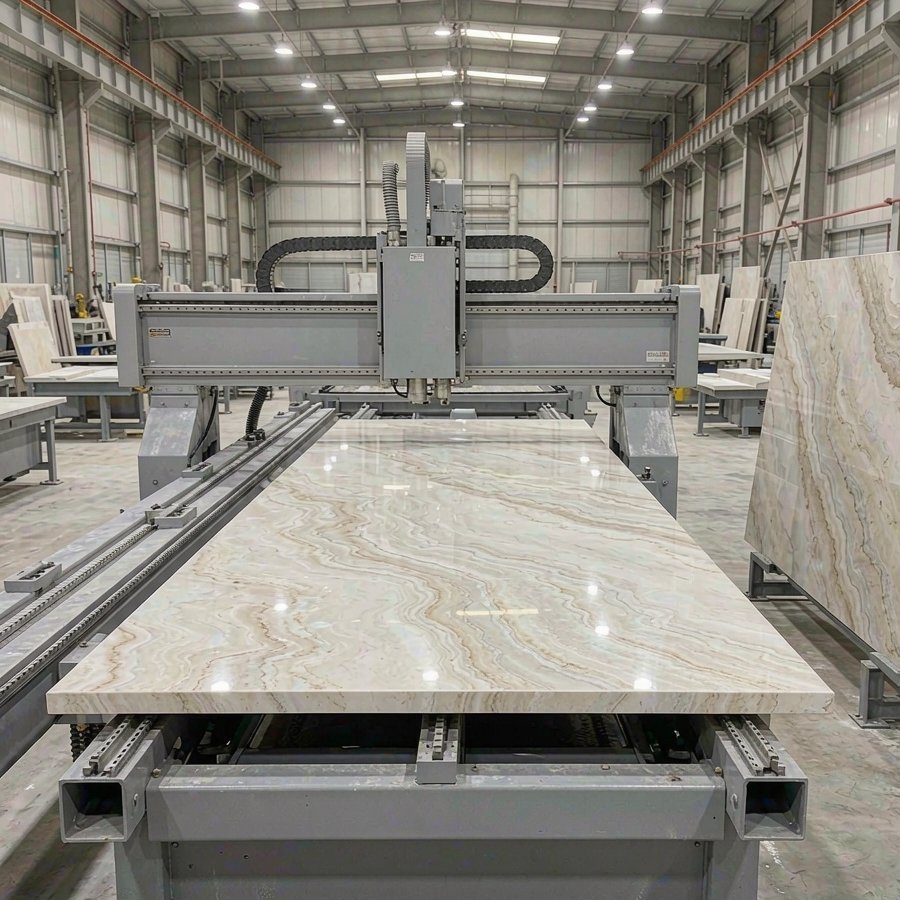
Engineered quartz is the opposite. Our slabs are produced in 3200 × 1800 mm, 3200 × 1600 mm and 3200 × 750 mm formats, plus an oversized 1800 × 3500 mm slab for islands and full-height panel work, in 18 mm and 20 mm. Weight is published rather than estimated: a 3200 × 1800 × 18 mm slab is approximately 248.8 kg, the same format in 20 mm approximately 276.4 kg. Standard production runs two to four weeks, and the same design can be reordered months later.
For a quartz vs quartzite specification on a multi-unit project, that reorder capability is usually worth more than the hardness difference.
Colour and Batch Consistency
Quartzite's greatest strength and its greatest risk are the same thing: every slab is unique. On a feature wall or a one-off island that is exactly what the client is paying for; across twenty hotel bathrooms the slabs will differ, and the client will notice.
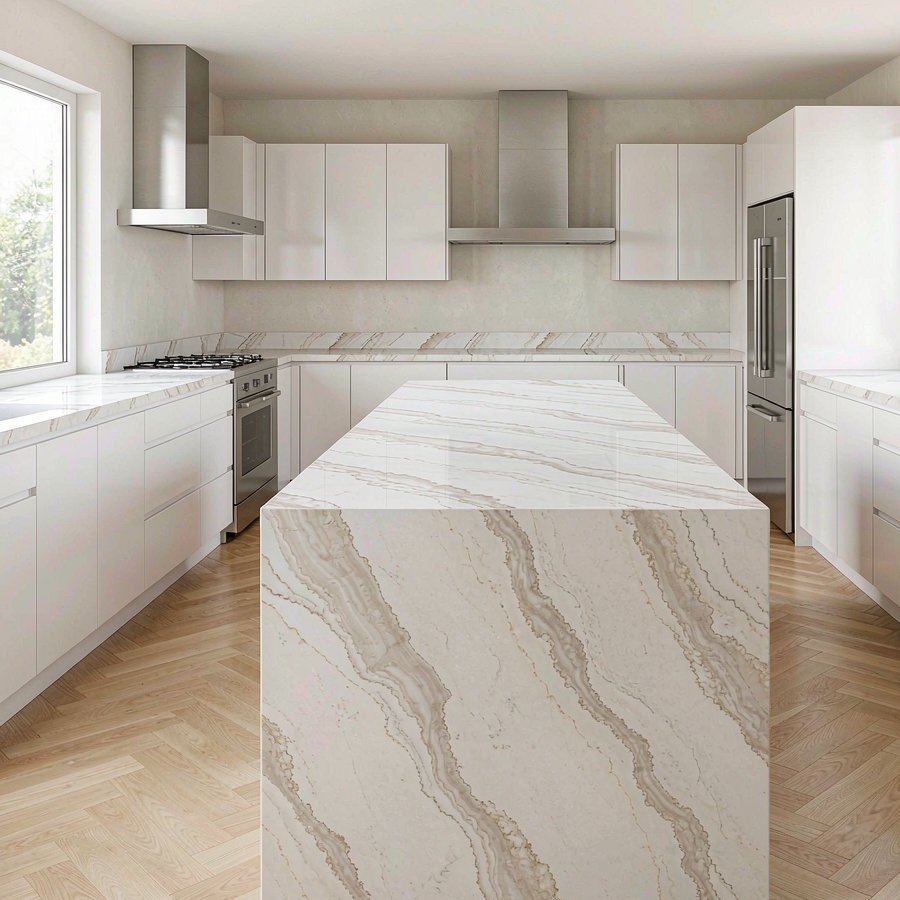
Engineered quartz is made to a reference, so a design can be reproduced across batches with controlled tonal and veining variation. Our range covers eleven designs, from marble-look whites such as Marble Golden Thread to dark statement slabs and warm ivory tones.
It also makes it possible to specify a quartzite look without buying quartzite. When the brief chases a specific natural aesthetic — Taj Mahal being the obvious one — our guide to quartz that looks like Taj Mahal quartzite works through the closest engineered alternatives and how close they actually get.
When to Choose Which
Strip the marketing away and a quartz vs quartzite decision resolves into one of four briefs:
- One-off feature surface, uniqueness wanted — natural quartzite. Accept sealing and accept that the delivered slab may differ from the sample.
- Kitchen counters and commercial counters in daily use — engineered quartz: non-porous, cut-out tolerant, no routine sealing, standard stone tooling.
- Multi-unit residential or hotel projects needing matched slabs — engineered quartz, for batch consistency and reorderability.
- Large runs where natural quartzite is non-negotiable — reserve the full quantity from one block before committing, and inspect the actual slabs, not a sample.
If the real requirement is the look of natural quartzite with the behaviour of engineered stone, that is a specification conversation rather than a materials argument — and it is the one we have most often.
Buyer Checklist for Trade Buyers
Importers, fabricators and distributors settle a quartz vs quartzite question with six lines on a purchase order:
- Body composition — natural quartzite or engineered quartz, stated explicitly, plus declared crystalline silica content, which matters for compliance in Australia, the UK and parts of the United States.
- Format and thickness in millimetres — the exact slab size and finished thickness, not "standard".
- Finish — polished or honed; the same design in two finishes reads as two different products.
- Sealing requirement — for quartzite, who seals it and how often; for engineered quartz, written confirmation that no sealing is required.
- Tolerance and batch colour control — a working range of ±0.5 mm on nominal thickness, measured across the slab rather than at one point.
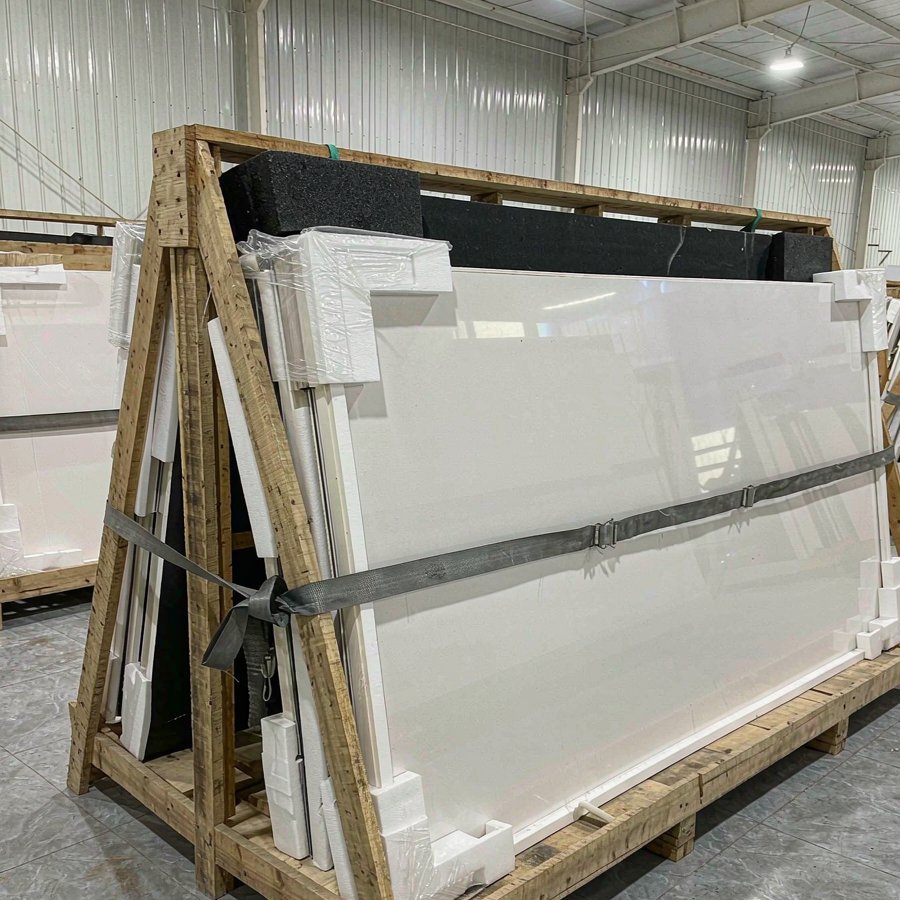
- Packing standard and Incoterm — EXW, FOB or CIF plus the crate specification, because packing decides whether the material arrives as ordered.
Our guide to buying quartz slabs from China walks through MOQ, samples, inspection, payment terms and lead time on the same six-line structure. Read it before the first container rather than after it.
Common Mistakes and Myths
- "Quartzite is just natural quartz." In origin terms it is the other way round: quartzite is the natural rock, engineered quartz is the manufactured slab. In a quartz vs quartzite comparison the manufactured product is the more consistent one, not the lesser one.
- "Harder means better for a worktop." Hardness resists scratching. It does nothing for staining, cut-outs or impact — the failures that actually happen in a kitchen.
- "Quartzite never needs sealing." Most quartzite needs periodic sealing. Assume it does until that specific slab is tested.
- "Quartz is heat-proof." It is heat-resistant. Sustained heat above roughly 150 °C can dull the surface permanently.
- Ordering a multi-unit project from photographs. Slab-to-slab variation is the largest source of claims on both materials.
Frequently Asked Questions
Is quartzite the same as quartz?
No. Quartzite is a natural metamorphic rock, quarried in blocks and sawn into slabs. Engineered quartz is a manufactured slab of quartz aggregate bonded with resin. Both contain quartz, which is where the confusion starts, but they are different materials.
Is quartzite more expensive than quartz?
Usually yes. Quartzite carries higher extraction, transport and finishing cost, and its lower yield pushes up the delivered price per square metre. Engineered quartz is produced to a controlled batch, so waste rate and price are predictable — which matters most on multi-unit orders.
Is quartzite harder than quartz?
Most quartzite sits around 7 on the Mohs scale against 6 for engineered quartz, so it resists scratching better. Hardness measures abrasion only; it says nothing about staining, impact or edge chipping, which are the failures that decide how a countertop ages.
Which is better for kitchen countertops, quartz or quartzite?
For most kitchens, engineered quartz. A working counter collects impact, stains and sink and hob cut-outs, which is where a thick non-porous body and a standard fabrication route help most — provided the surface is protected from hot pans. Quartzite suits a feature surface where uniqueness matters more than consistency.
Can engineered quartz look like quartzite?
Yes. Our marble-look and quartzite-look designs reproduce the veining and movement of natural stone while keeping the sealing-free, batch-controlled behaviour of engineered quartz.
Conclusion
Natural quartzite and engineered quartz are not competitors in the same category, and treating them as one is what makes this decision hard. Quartzite is a quarried rock: harder, unique, demanding on maintenance discipline, and limited by what the block gives you. Engineered quartz is a manufactured slab: non-porous, cut-out tolerant, reproducible batch to batch and reorderable — which is why it carries most of the world's working kitchen counters.
If the project needs a surface that will be touched, cut, stained and used, engineered quartz is the safer specification. If it needs a surface that is genuinely unique and the budget allows for sealing and slab variation, quartzite is the better material. The quartz vs quartzite question only has a wrong answer when neither brief has been written down.
Related Articles
- Quartz vs Marble: Which Is Better for Kitchen Countertops?
- Quartz vs Granite: Pros and Cons for Project Use
- Quartz vs Porcelain vs Sintered Stone
- Quartz That Looks Like Taj Mahal: Quartzite Alternatives
Specifying Natural Stone or Engineered Quartz? Send Us the Brief
We press and finish engineered quartz slabs in-house for importers, fabricators, distributors and project buyers — from quartzite-look designs such as Marble Golden Thread to dark statement slabs at 3200 × 1800 mm and oversized 1800 × 3500 mm, in 18 mm and 20 mm, backed by ISO9001, NSF food-contact and SGS certification. Send the format, thickness, finish, colour direction and volume, and tell us where your quartz vs quartzite decision is stuck — we will come back with a loading plan, the technical data sheet, current certificates and an indicative quotation.
📱 WhatsApp: +86 198 6115 3736
📧 Email: raykelee@hyquartzslabfactory.com
Send Us A Message