
Quartz That Looks Like Taj Mahal: Quartzite Alternatives Explained
Quartz That Looks Like Taj Mahal: Quartzite Alternatives Explained
Quartz That Looks Like Taj Mahal: Quartzite Alternatives Explained
If a client has walked into your showroom holding a photo of Taj Mahal quartzite, you already know the conversation: the look sells itself, but the material brings sealing, slab-to-slab variation and unpredictable supply into the quote. This guide is written from the manufacturing side of the table, for the people who have to specify, price and order the slab — importers, fabricators, showroom managers and specifiers. It covers what Taj Mahal quartzite actually is, why engineered quartz has become the most practical alternative, which quartz designs come closest to the Taj Mahal palette, and the specifications to confirm before you place an order.
What Taj Mahal Quartzite Actually Is
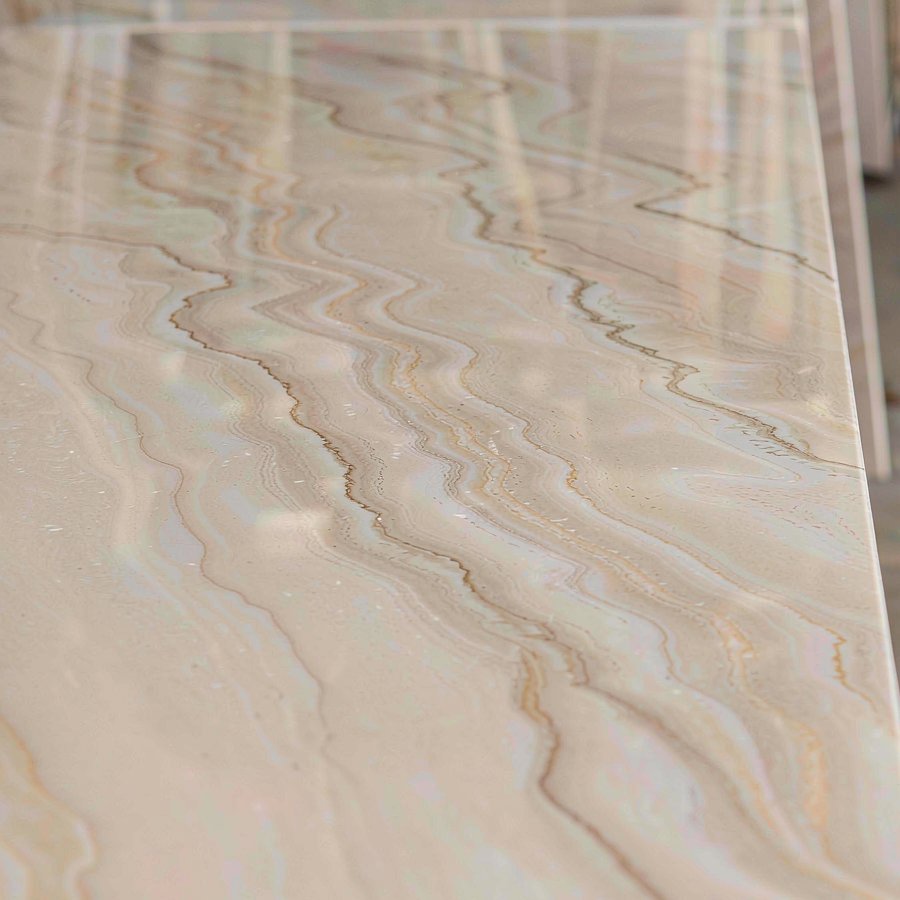
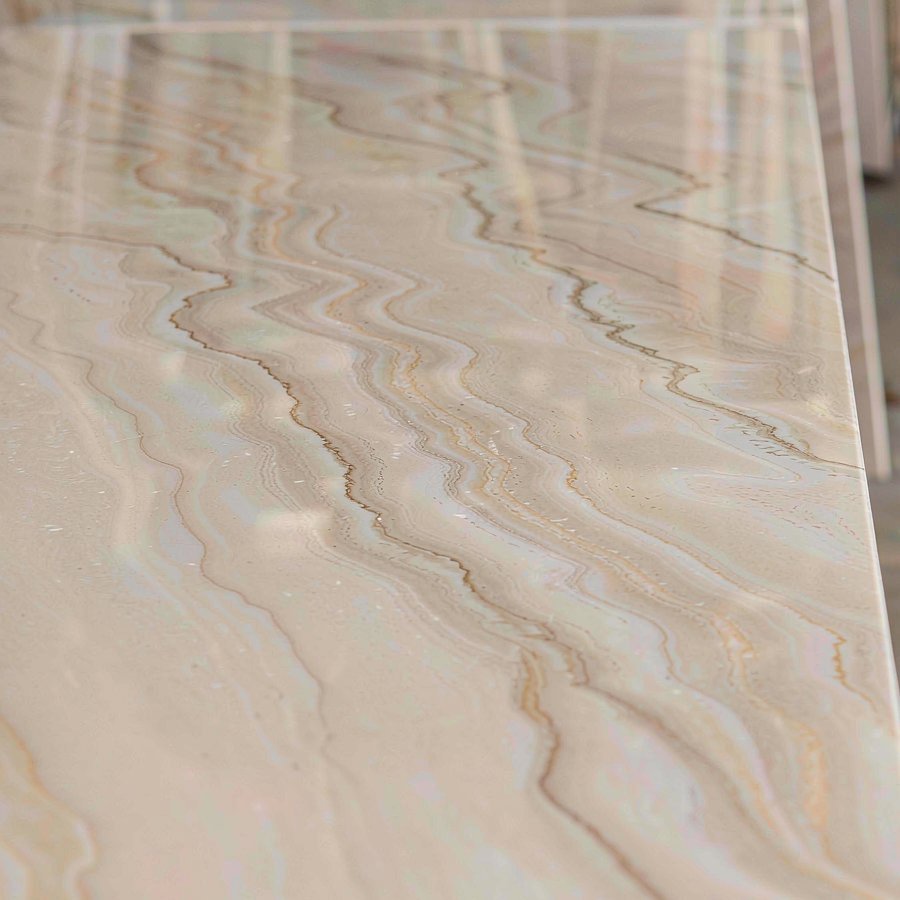
Taj Mahal is a natural quartzite quarried in Brazil. Its appeal is specific and easy to describe: a warm cream-to-ivory field, soft taupe and gold movement that runs in long, quiet lines, and a surface that reads closer to marble than to granite in character. As a quartzite it sits around 7 on the Mohs scale, which makes it harder and more scratch-resistant than marble in daily use.
What it is not is maintenance-free. Quartzite is a natural, porous stone. It needs periodic sealing — commonly on a 12 to 18 month cycle depending on use — and it stands up poorly to acidic spills once the seal has worn. It is also geologically unique by definition: every slab is different, and the piece you approve this month may not exist next month. That uniqueness is the selling point and the operational problem at the same time.
Why Buyers Look for a Quartz Alternative
Four reasons come up again and again in project quotes.
- Maintenance. Quartzite has to be sealed and cleaned with pH-neutral products. Engineered quartz does not. For a rental portfolio, a hotel or a chain of retail units, that difference is a line item forever.
- Predictability. With quartzite you approve a physical slab, not a design. On a multi-unit project, that means every unit can look slightly different — which is either the charm or the complaint, depending on who signed the purchase order.
- Cost. North American showrooms commonly quote Taj Mahal quartzite in the region of USD 70 to 120 per square foot installed, and that range moves with quarry availability and grade. Engineered quartz pricing is set by the production line, not by what came out of the quarry this quarter.
- Lead time. Quarry shipments are infrequent and lumpy. Factory production is scheduled, batched and repeatable.
Taj Mahal Quartzite vs Engineered Quartz at a Glance
Neither column wins outright. The question is which set of trade-offs the project can live with.
What You Are Actually Trying to Match
Before comparing products, write down what the client actually likes about Taj Mahal. A useful brief is far more specific than "cream stone":
- Warm light base — cream or ivory rather than a cold blue-white
- Quiet movement — long soft veins and cloudy depth, not high-contrast drama
- Warm secondary tone — taupe, soft gold or greige
- Slab scale — enough coverage for an island, a panel end, or a multi-area scheme
- Finish — polished for shine, or honed and matt for the softer read Taj Mahal often shows in photographs
A product name such as "Taj Mahal", "Taj Royale" or "warm Calacatta" describes a design direction, not a material standard. Always verify the composition and the technical data of the exact item being specified.
Quartz Designs That Come Closest to Taj Mahal
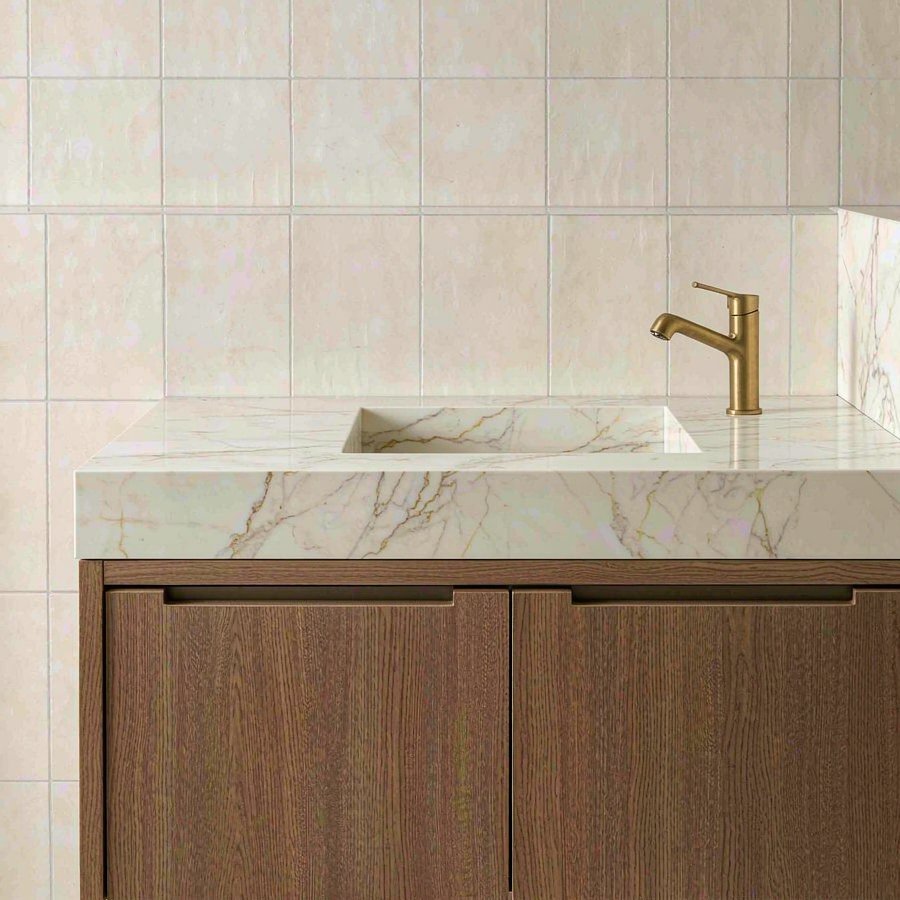
Engineered quartz cannot reproduce the geological randomness of a quartzite — that is the honest starting point. What it can reproduce is the read: a warm light base, low-contrast movement, and enough slab scale to run across an island without a visible break.
Here are the designs in our own range that map onto that brief, described accurately rather than flatteringly:
- Marble Golden Thread — a soft white base with gentle light gold flowing veins. This is the closest match in our range to the warm, restrained movement that makes Taj Mahal popular.
- Shimmering Spring Stream — a crisp light white base with hazy light grey, cloud-like veins. The right choice when what the client loves is Taj Mahal's quiet grey movement rather than its gold.
- Cloud Jade Gold Vein and Gold Vein — a pure white base with bold deep brown-gold veins. These read closer to a Calacatta Gold direction: higher contrast, more drama, less quiet.
- Rustic Teak Rock — a light grey-green base with hazy off-white and light brown mottling. Worth showing when the scheme is warm and earthy rather than strictly cream.
- Spruce Whitewood — a light grey-white base with layered horizontal lines. A different pattern language, but it lands in the same warm, quiet design family used in Japandi and minimalist interiors.
One caveat worth saying out loud: if the brief is specifically "warm beige", a cream-base quartz is a near match, not a replica. Put a physical sample next to the client's reference photograph. That comparison settles the discussion faster than any colour name on a chart.
Specifications to Confirm Before You Order
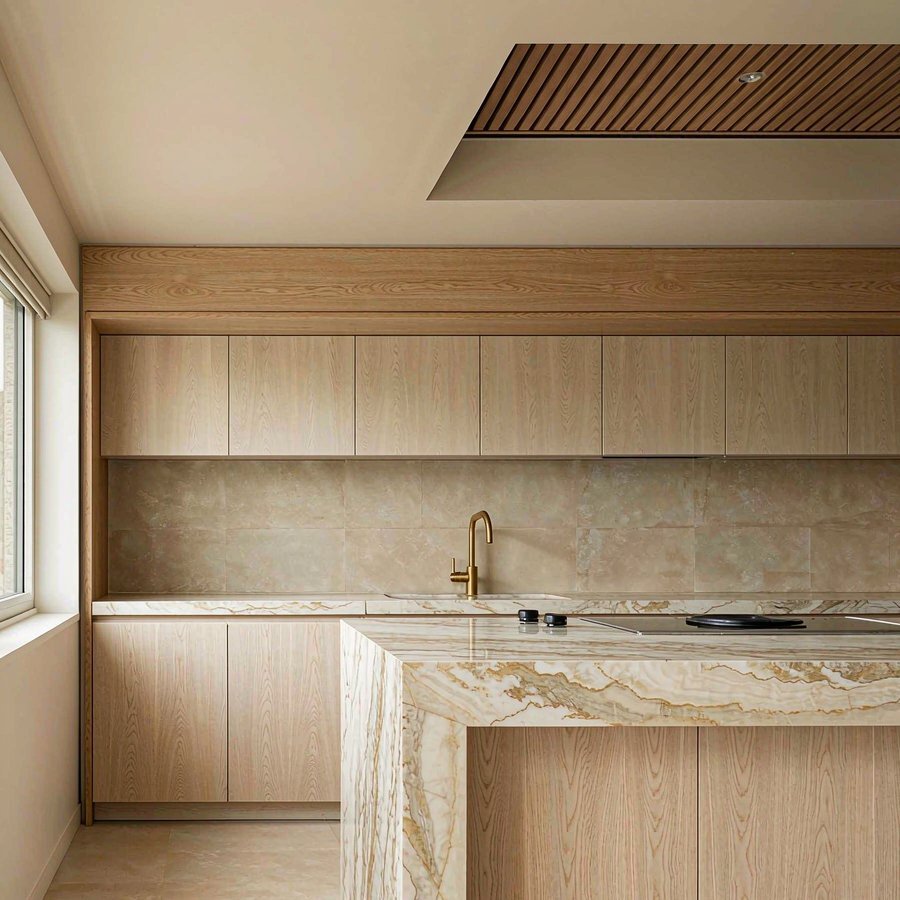
The look gets you to the table; the specification closes the order.
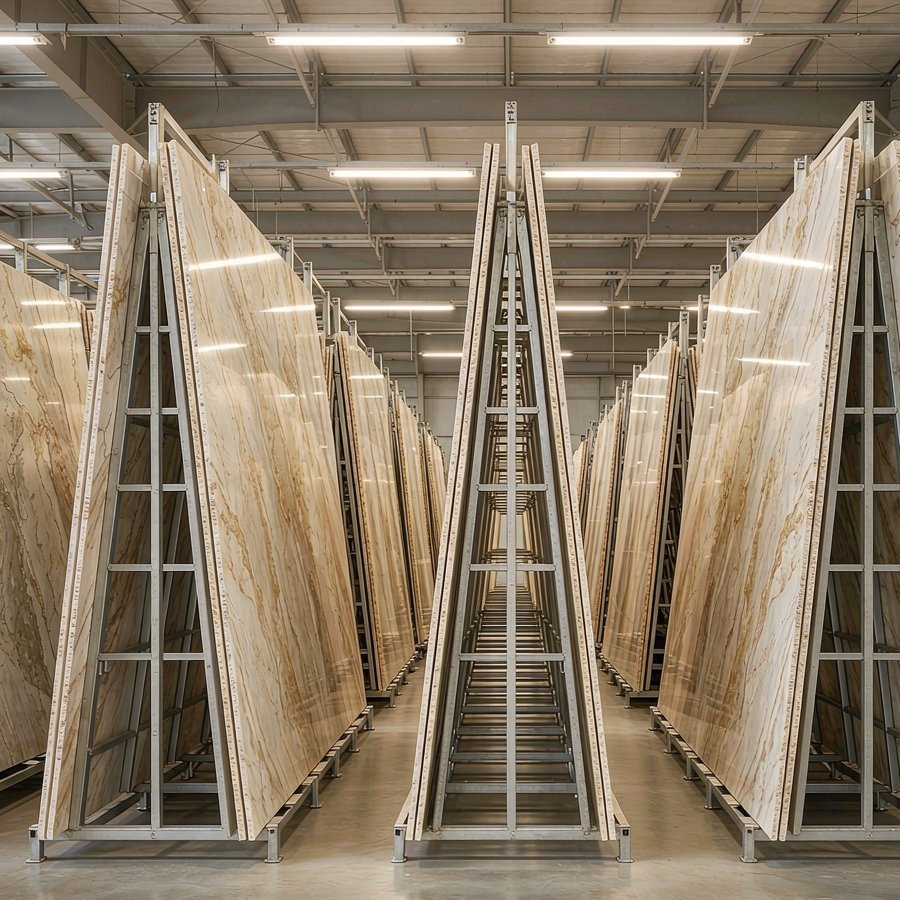
- Format. Standard slabs of 3200 × 1800 mm and 3200 × 1600 mm, plus an oversized 1800 × 3500 mm format for islands and panel applications where fewer seams matter.
- Thickness and weight. 18 mm and 20 mm are the working options. A 3200 × 1800 × 18 mm slab weighs approximately 248.8 kg; the same format at 20 mm weighs approximately 276.4 kg. That figure drives freight brackets, site handling and substrate planning.
- Hardness. 6 on the Mohs scale. It resists everyday scratching from knives and cookware. It is not scratch-proof, and no engineered surface is.
- Water absorption. Our slab tests at 0.02% moisture content, which is what makes the non-porous claim meaningful rather than marketing.
- Certification. ISO9001 for the quality system, NSF for food-contact safety, and SGS for environmental and fire safety. Ask for current certificates rather than a brochure line.
- Lead time. Standard orders typically run 2 to 4 weeks depending on volume and specification.
Where Engineered Quartz Wins — and Where It Does Not
Engineered quartz wins on maintenance, design consistency, repeatability and price predictability. On a multi-unit or commercial project those four points usually decide the specification on their own.
It does not win on heat. Engineered quartz is heat-resistant but it is not heat-proof. Because the slab contains resin, sustained direct heat — a pan straight off a hob, placed down without a trivet — can mark the surface. Trivets are not optional, and any supplier who tells you otherwise is setting up a complaint.
It also does not win on continuous UV exposure. For permanent exterior installations, quartzite and porcelain are the more defensible choices. If the project is covered, shaded, or outdoors only intermittently, read our separate guide on whether quartz countertops can be used outdoors before specifying engineered quartz.
Saying this plainly is not a weakness in a sales conversation. A specifier who discovers a limitation after installation is a lost account; a specifier who was warned about it is a repeat customer.
How to Specify a Taj Mahal-Inspired Quartz Project
- Approve a physical sample, then a photograph of a full slab — never a colour chart alone.
- Decide vein direction before templating. It determines whether the island reads matched or random.
- Plan seams against the panel ends and appliance cut-outs, not across the middle of the island.
- Fix the thickness, edge profile and finish in writing. The same colour in polished and matt looks like two different products.
- If the project repeats — hotel rooms, chain retail, serviced apartments — reserve stock from a single production batch.
- Confirm the packing standard for the shipping route before the order is released.
Sourcing Notes for Importers and Fabricators
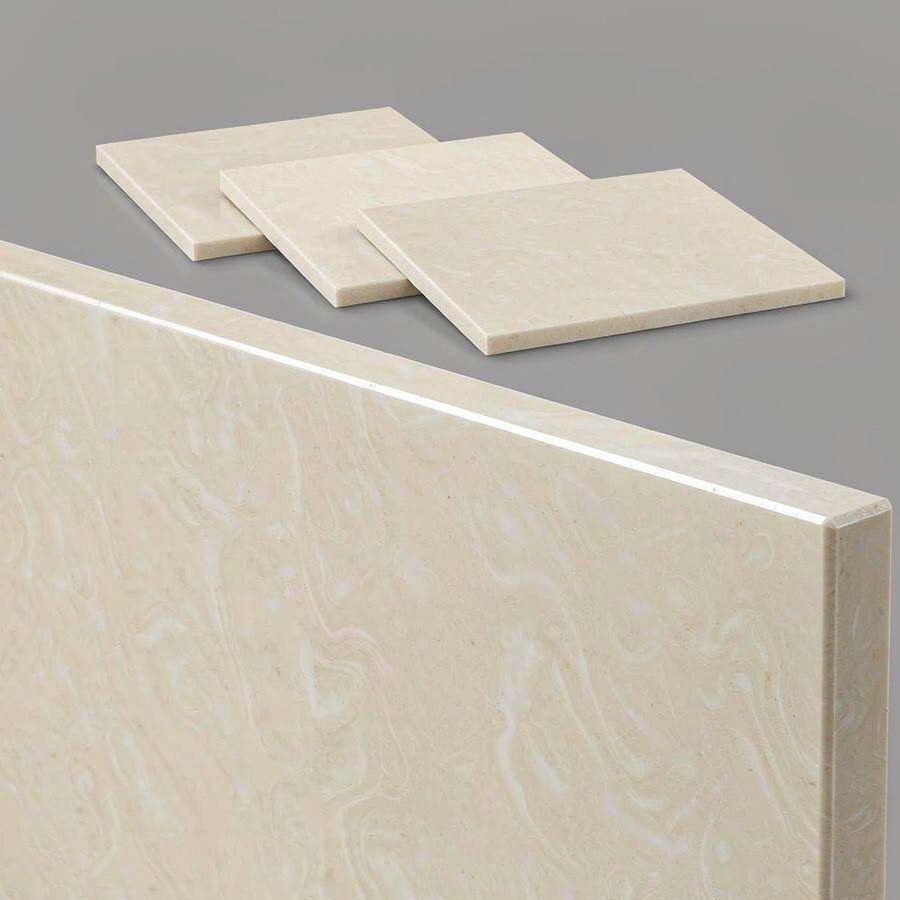
We press and finish quartz slabs rather than reselling them, which changes what you can reasonably ask for:
- Custom development. Sizes, colours and surface patterns can be developed to a brief. The designs above were developed in-house rather than licensed from a third-party brand, which means a project-specific colour is a conversation rather than a dead end.
- Order discipline. Specification, batch and packing standard are agreed before production starts — not after the slabs are cut.
- Documentation. Quality and safety certificates are issued with the order.
- Container planning. Slab weight per format is known in advance, so load planning is arithmetic rather than estimation.
If you are comparing suppliers, ask three questions: does the supplier press the slab itself, what is the batch colour-control procedure, and what is the packing standard for your route?
Frequently Asked Questions
What quartz looks most like Taj Mahal quartzite?
Look for a warm light base with low-contrast taupe or soft gold movement. In our range, Marble Golden Thread is the closest match for warmth, and Shimmering Spring Stream is the closest for quiet grey movement. Always compare a physical sample against the client's reference photograph.
Is Taj Mahal quartz or quartzite?
Taj Mahal is a natural quartzite quarried in Brazil — not engineered quartz. The confusion is common because both materials contain quartz mineral.
Is engineered quartz cheaper than Taj Mahal quartzite?
Usually yes on a like-for-like installed basis, because quartzite pricing follows quarry availability and grade while engineered quartz pricing follows the factory specification. Ask each supplier for a landed-cost comparison rather than comparing unit prices.
Can engineered quartz be used outdoors like quartzite?
For permanent, continuously exposed exterior work, quartzite and porcelain are the safer specifications. Engineered quartz is best kept to interior and covered applications; discuss the specific installation before committing.
Can a Taj Mahal look be produced in a larger slab format?
Yes. Our oversized 1800 × 3500 mm format exists precisely for islands and panel applications where reducing the number of seams changes the finished look.
Conclusion
Quartz that looks like Taj Mahal is not a compromise on design — it is a swap of one set of trade-offs for another. Quartzite delivers the warm cream field and quiet movement naturally, and brings sealing, slab-to-slab variation and quarry-dependent pricing with it. Engineered quartz delivers the same design direction with a non-porous surface, batch-controlled consistency and a scheduled lead time, provided the specification is right and the heat limitation is understood. If you are sourcing for a project, send us the reference photograph along with the required format, thickness and volume, and we will come back with the closest match in our range and the technical data to support it.
Choosing between stone types usually starts from the same question. Our comparison of quartz vs marble for kitchen countertops shows how a veined natural look behaves against engineered quartz in daily kitchen use.
If the decision is between the natural stone and the engineered slab rather than between two vein patterns, our quartz vs quartzite comparison works through hardness, sealing, cost and slab availability side by side.
If the look you are chasing is a quiet white rather than a dramatic one, the vein tone decides how warm or cool it reads. Our guide to white quartz countertops with gold, grey and blue veining compares the three tones and shows how each behaves against timber, paint and hardware.
Taj Mahal is not the only marble name buyers ask for by brand. Our guide to Calacatta quartz explains how the engineered version of the classic white-and-gold marble is made, which vein styles exist, and what to check before ordering slabs for a project.
Related Articles
- Quartz vs Marble for Kitchen Countertops
- Best Quartz Colors for Modern Kitchen Projects
- Maintenance Guide for Quartz Countertops
- Quartz vs Granite: Pros and Cons for Project Use
Looking for the Taj Mahal Look in Engineered Quartz?
We press and finish engineered quartz slabs for importers, fabricators and project specifiers. Send the reference photo, the format you need (up to 1800 × 3500 mm) and your volume — we will come back with the closest match in our range, the technical data sheet and current ISO9001, NSF and SGS certificates.
📱 WhatsApp: +86 198 6115 3736
📧 Email: raykelee@hyquartzslabfactory.com
Send Us A Message