
Can Quartz Countertops Be Used Outdoors
Can Quartz Countertops Be Used Outdoors
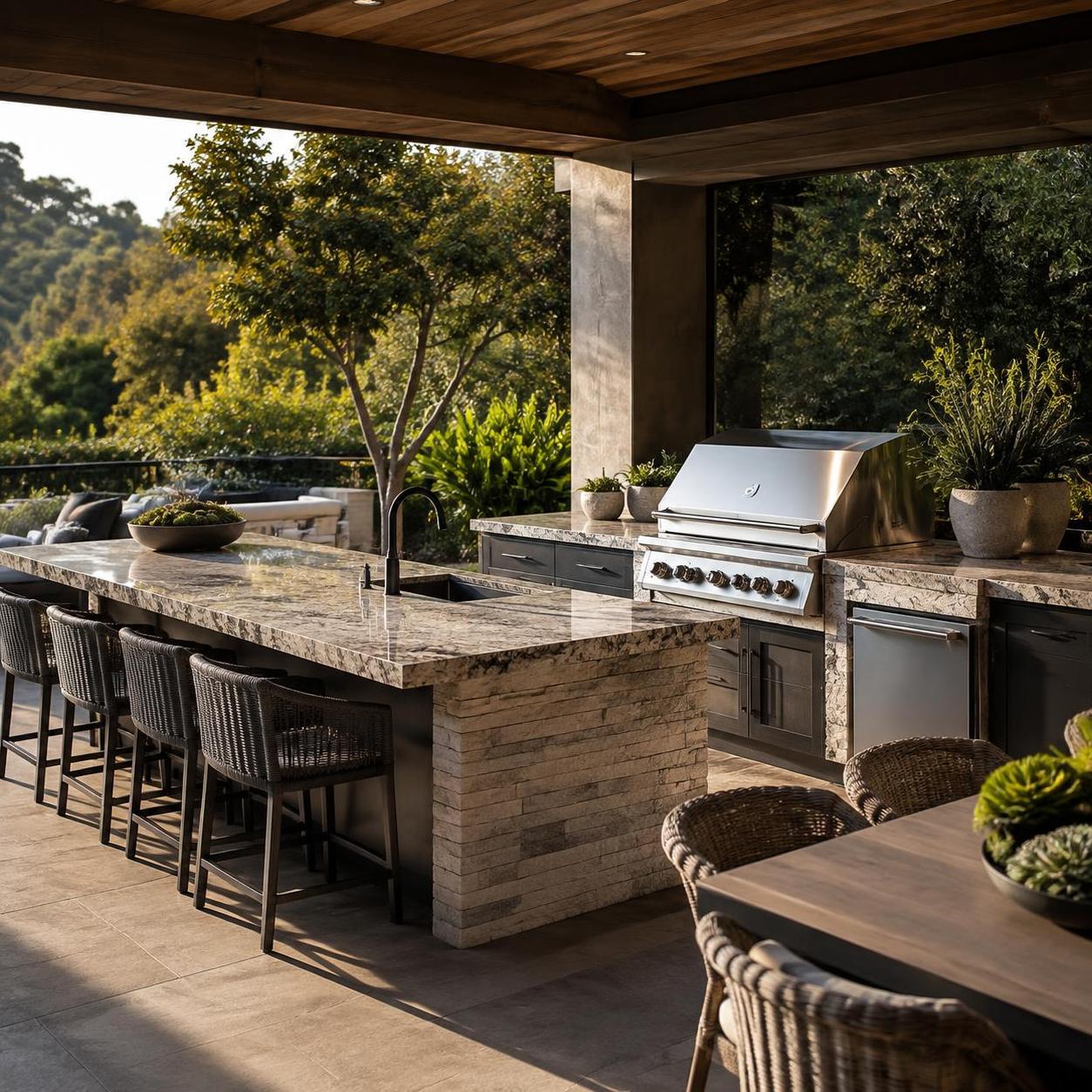
Can Quartz Countertops Be Used Outdoors? What You Should Know
Someone planning an outdoor kitchen often gets stuck at the countertop stage. Indoors, quartz feels like an easy answer: it looks clean, resists stains better than many natural materials, and does not ask for much day-to-day maintenance. Then the project moves outside, and the question changes. Can quartz countertops be used outdoors, or will that polished indoor choice become a problem on a sunny patio or exposed grilling area?
This question matters because an outdoor countertop is not just decorative. It sits through long sun exposure, temperature swings, humidity, cooking grease, and occasional bad weather. Choosing the wrong surface can lead to fading, discoloration, warping concerns, or disappointment with appearance after installation. If you are comparing materials for a backyard kitchen, covered terrace, or semi-open bar area, it helps to judge quartz by actual conditions instead of assuming indoor performance will automatically carry over outdoors.
Why quartz performs differently outside
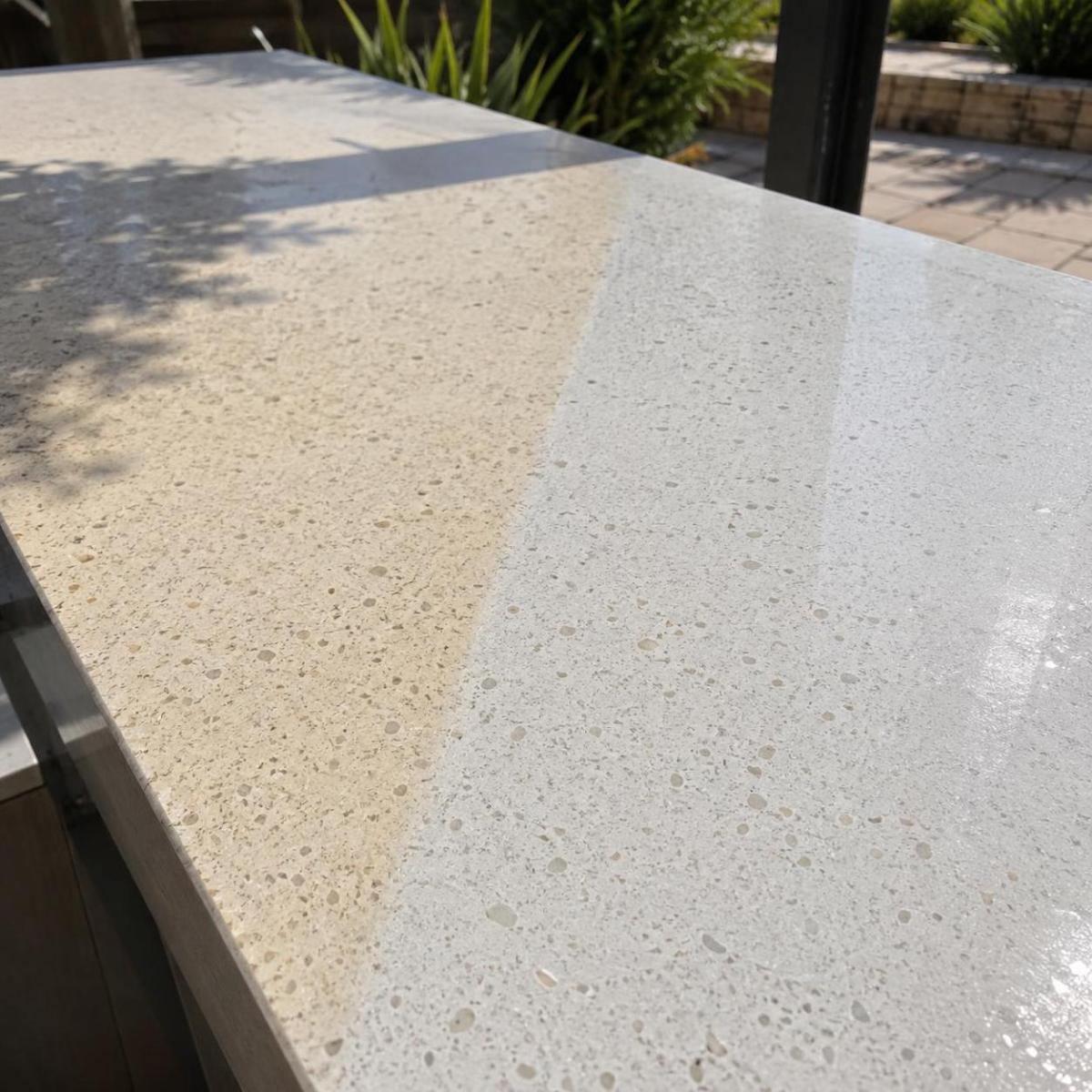
Quartz countertops are engineered surfaces. They usually combine ground quartz with resins and pigments. That composition is exactly why many people like them indoors: the surface can be uniform, stylish, and easier to maintain than some porous stones. But the same resin content that works well in kitchens and bathrooms can become a weak point outdoors.
Direct ultraviolet exposure is the main issue. In an exterior setting, prolonged sunlight can affect the resins and pigments over time, which may lead to yellowing, fading, or uneven color change. This is especially relevant in areas without shade. Even if the slab remains structurally sound for a period, the finish may not look the same as it did on installation day.
Heat is another concern. Outdoor cooking spaces often include grills, pizza ovens, smokers, or dark surfaces that absorb strong sun. Quartz is not usually the first choice for handling combined radiant heat and weather exposure all year. Moisture alone is not the biggest problem, but moisture mixed with freeze-thaw cycles, changing temperatures, and constant exposure can add stress.
Where people usually get confused
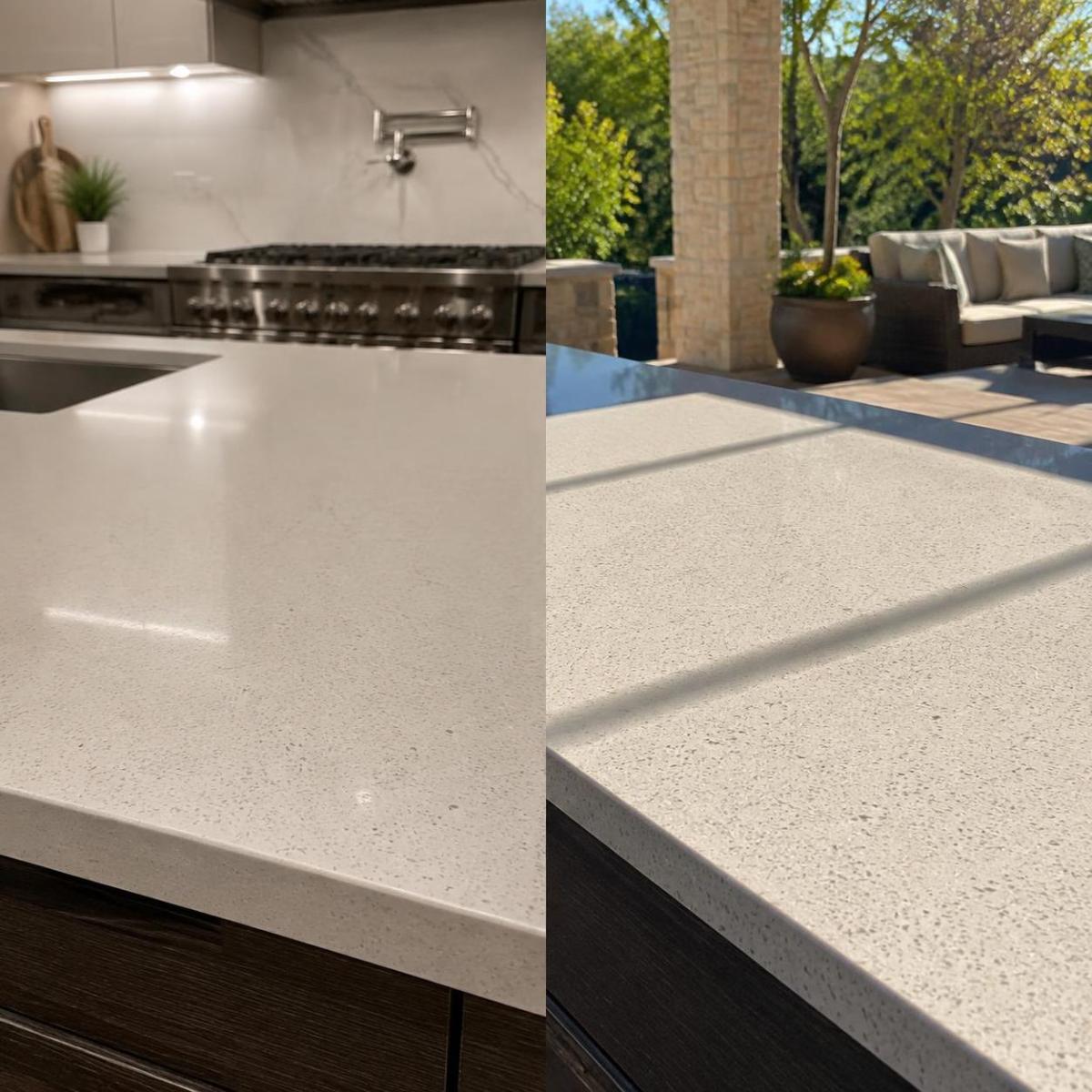
A common misunderstanding is that “durable” means “good everywhere.” Quartz is durable in many indoor applications, but outdoor use is a separate decision. Another mistake is assuming that if a space has a roof, it counts as indoor-like. In reality, a covered patio may still receive reflected UV light, summer heat buildup, wind-driven rain, and winter cold.
Many homeowners also compare quartz with granite by maintenance only. They think, “Quartz needs less sealing, so it must be easier for an outdoor kitchen.” That sounds logical at first, but outdoor material selection is less about indoor cleaning habits and more about long-term stability under exposure. A surface that asks for occasional sealing can still be the safer exterior option if it handles sunlight and weather better.
When quartz might still be considered
The answer is not always a flat no. Quartz countertops can sometimes be used outdoors in very limited conditions, but the setting has to be judged carefully. If the area is highly protected from direct sunlight, shielded from strong weather, and not exposed to excessive heat, some people still consider it for specific design reasons.
For example, a fully covered outdoor entertaining area with minimal UV exposure may seem closer to a transitional living space than a true open-air kitchen. Even then, caution is important. Not every manufacturer treats exterior use the same way, and not every slab formulation responds the same way to light and heat. Before moving forward, the practical question is not “Can it physically be installed outside?” but “Will it keep its appearance and stability in this exact environment?”
If you are set on quartz for visual consistency with an adjacent indoor kitchen, it becomes even more important to ask for technical guidance tied to the actual installation conditions. Shade level, orientation, climate, nearby heat sources, and seasonal exposure all matter more than the catalog photo.
A more reliable way to decide
Instead of starting with the material name, start with the outdoor conditions.
Look at how much direct sun the countertop will get during the hottest part of the day. Check whether the slab will sit near a grill lid, burner, or fire feature. Notice if the countertop edge is fully sheltered or partly exposed to blowing rain. Think about whether the space stays humid, whether winter temperatures swing sharply, and whether the design includes dark colors that may absorb heat more aggressively.
This approach usually makes the decision easier. In spaces with full sun, frequent heat exposure, and year-round weather contact, quartz is generally not the safest pick. In lightly exposed, covered areas, it may still come up in discussions, but only after careful review of product-specific guidance and installation details.
Materials that are often better suited to exterior use
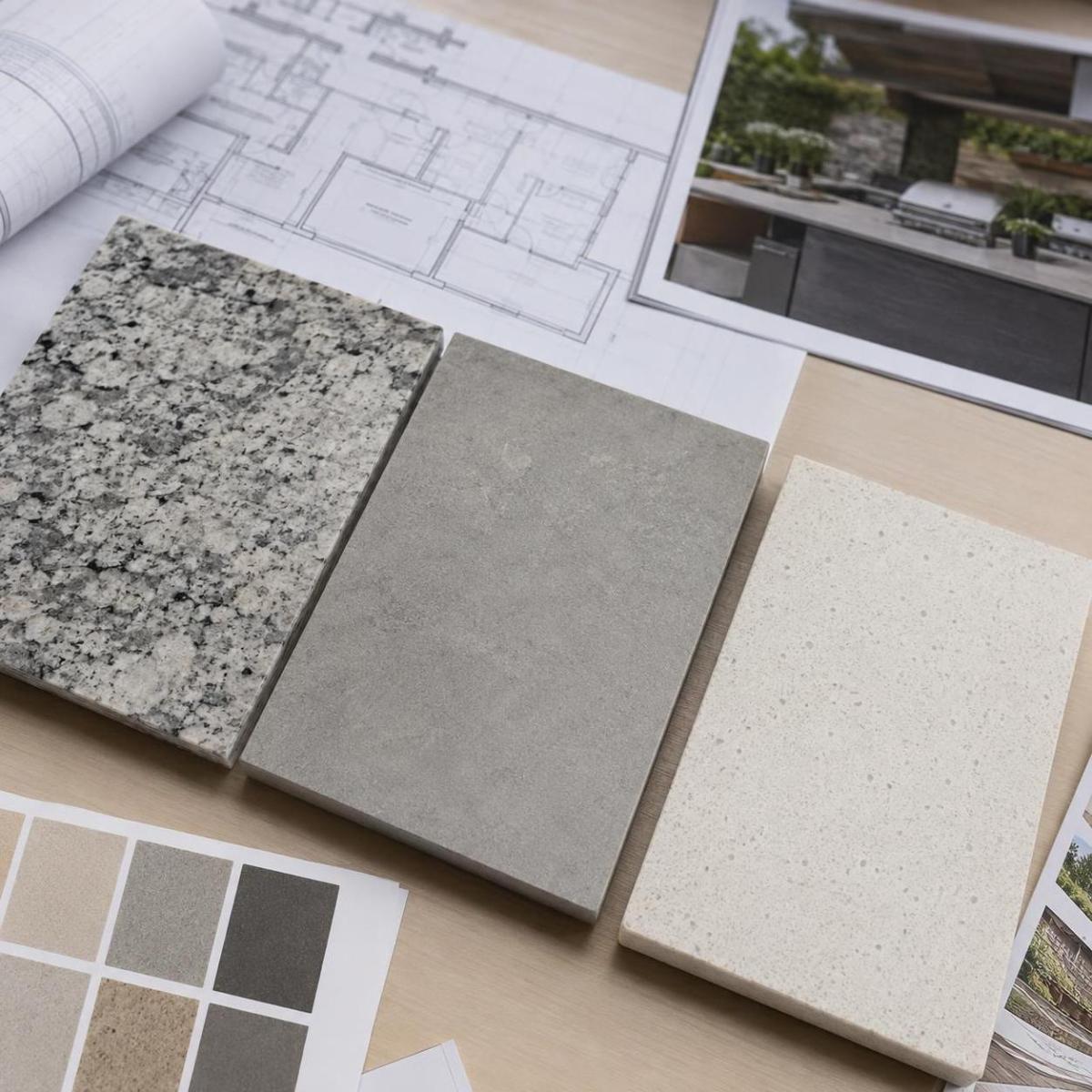
If your main goal is a countertop that can stay outside with less worry, natural stone usually enters the conversation quickly. Granite is one of the most common alternatives because it tends to tolerate outdoor conditions better than quartz. It is not maintenance-free, and sealing may still be recommended depending on the stone, but it is generally better aligned with sun and weather exposure.
Other options may include porcelain slabs or certain concrete applications, depending on the design and use pattern. Each comes with trade-offs. Porcelain can offer strong UV resistance and a modern look, but edge detailing and fabrication requirements need attention. Concrete can fit custom designs well, though installation quality and crack control are important. Natural stone can vary by slab, so choosing the right type matters.
The point is not that quartz is a bad material overall. It is that outdoor kitchens ask different questions than indoor kitchens do. Once that is clear, the shortlist often changes.
If you are already leaning toward quartz, pause and verify these points

First, confirm whether the specific product is actually recommended for outdoor use. General assumptions are risky here. Some people hear that “engineered stone” is strong and stop there, but exterior acceptance depends on the product, not the category name alone.
Second, measure the amount of direct sunlight honestly. Morning shade and afternoon sun are not the same as full cover all day. Reflected light from nearby glass, water, or pale walls can also matter more than expected.
Third, review the heat layout. A countertop section directly beside a grill can face more stress than a serving counter several feet away under the same roof. If the design places hot cookware, grill tools, or heated trays on the surface regularly, that should influence the decision.
Fourth, ask yourself how much appearance change you would tolerate. Some buyers are mainly worried about cracking, while others would be unhappy with subtle yellowing or uneven fading. Outdoor material selection is partly technical and partly about expectations.
Practical guidance for mixed indoor-outdoor projects
One situation that comes up often is a home renovation where the indoor kitchen opens directly to a patio, and the owner wants the same countertop look to continue outside. Visually, that can be appealing. In practice, it may be wiser to match the color mood rather than the exact material.
Using quartz indoors and a more weather-stable surface outdoors can protect the project from avoidable problems while still keeping the design cohesive. Similar tones, edge profiles, or cabinet finishes can create continuity without forcing one material into a setting where it may not perform well.
This is usually the more balanced solution when the outdoor area is truly exposed. It avoids treating an aesthetic preference as if it were the only decision factor.
So, can quartz countertops be used outdoors?
They can be installed outdoors in some cases, but that does not mean they are usually the best choice. For areas with direct sun, heat, and regular weather exposure, quartz countertops are generally a risky option because UV light and exterior conditions can affect color and long-term appearance. That is why many professionals steer outdoor kitchen projects toward materials with stronger exterior performance.
If your space is highly protected and you are still considering quartz, the safest move is to evaluate the exact exposure conditions and confirm product-specific guidance before making the final call. A countertop in a backyard kitchen has to do more than look good on day one. It has to handle the setting it lives in.
In most open-air installations, the better question is not whether quartz is possible, but whether another surface would be more sensible. For many outdoor projects, that small shift in thinking prevents a much bigger problem later.
Heat and freeze cycles are the real test outdoors: see High-Temperature and Freeze Resistance of Engineered Quartz for the material behaviour, and the Engineered Quartz Wall Panel and Floor Application Guide for where quartz is better placed instead.
Related Articles
- High-Temperature and Freeze Resistance of Engineered Quartz
- Quartz vs Granite: Pros and Cons for Project Use
- How Long Does Engineered Quartz Slab Last?
- Why Does Quartz Stone Warp and How We Control It
Not Sure If Quartz Fits Your Project Conditions? Ask Us
Quartz is an excellent choice for indoor kitchens, vanities, wall panels, and commercial interiors, while outdoor suitability depends on shade level, UV and heat exposure, climate, and the specific product formulation. Share your project conditions with us, and we'll help you judge whether quartz fits, or recommend a more suitable option. Contact us for technical guidance and samples.
📱 WhatsApp: +86 198 6115 3736
📧 Email: raykelee@hyquartzslabfactory.com
Send Us A Message