
Quartz Slab Warping: 5 Causes and How to Prevent It
Quartz Slab Warping: 5 Causes and How to Prevent It
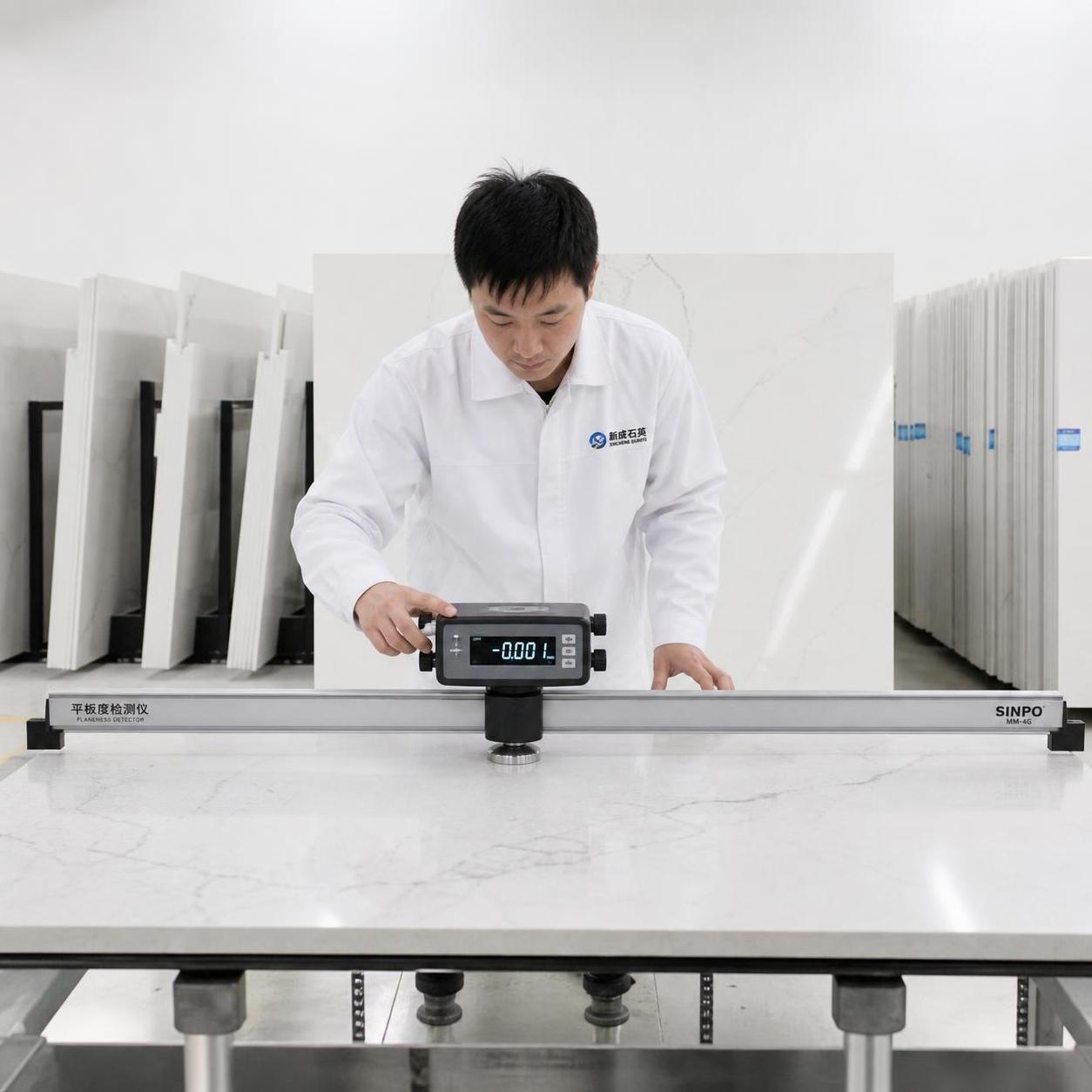
Quartz Stone Warp: Causes and How We Control It in Production
Quartz stone warp is usually not caused by one single mistake. In most cases, it comes from stress that builds up during production, poor curing control, uneven cooling, resin behavior, slab thickness variation, or incorrect storage after the slab is made. If you are checking quartz surfaces for a kitchen, vanity, wall panel, or commercial interior project, this matters because even slight warping can create visible gaps, poor joint alignment, and difficult installation.
A lot of people assume a warped quartz slab must be a low-grade product. That is not always true. Even engineered stone made with good raw materials can deform if the process is not controlled tightly. In decorative materials, flatness is not only about appearance. It affects cutting accuracy, seam quality, edge polishing, transport safety, and how well the finished top sits on cabinets or support frames.
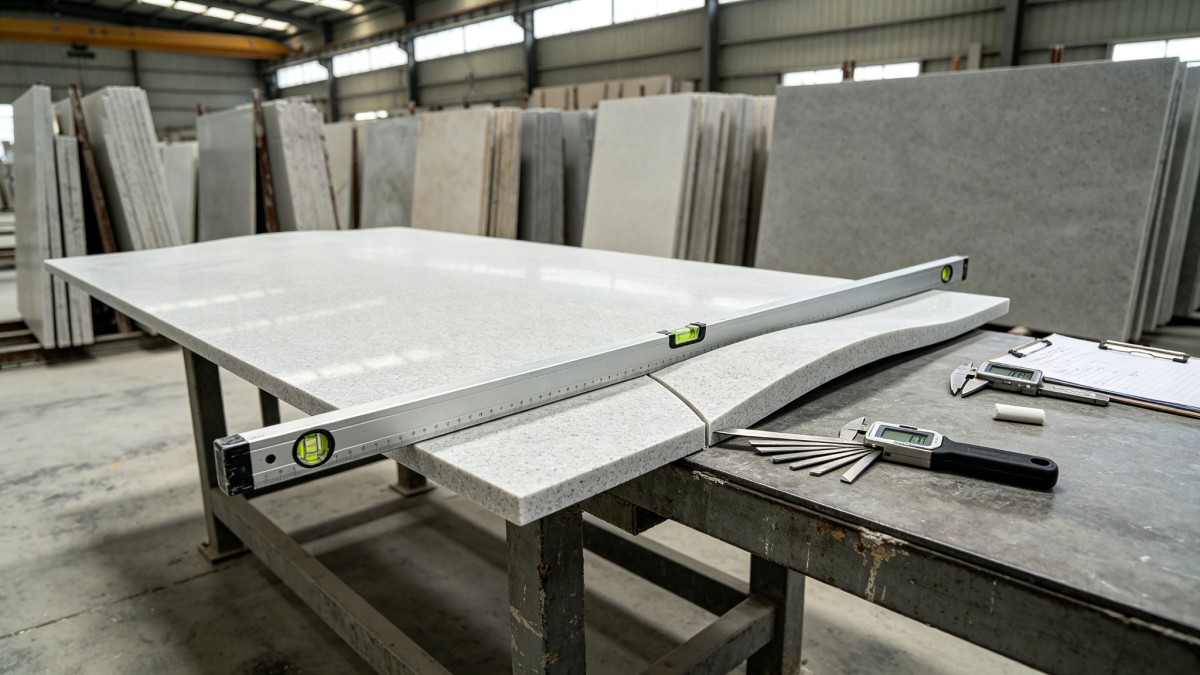
What quartz stone warp really means
When people say a slab has “warped,” they may be describing a bow, a twist, or an uneven rise across the surface. These are not exactly the same problem, but they usually point to internal stress or uneven conditions somewhere between mixing, pressing, curing, cooling, handling, and storage.
In practical terms, fabricators care about one thing first: can the slab lie flat enough to be processed and installed without forcing it? Once a slab needs correction during fabrication, risk goes up. Seams become harder to close cleanly, cutouts are more vulnerable, and installers may end up compensating on site instead of working with a stable panel.
Why quartz stone warps
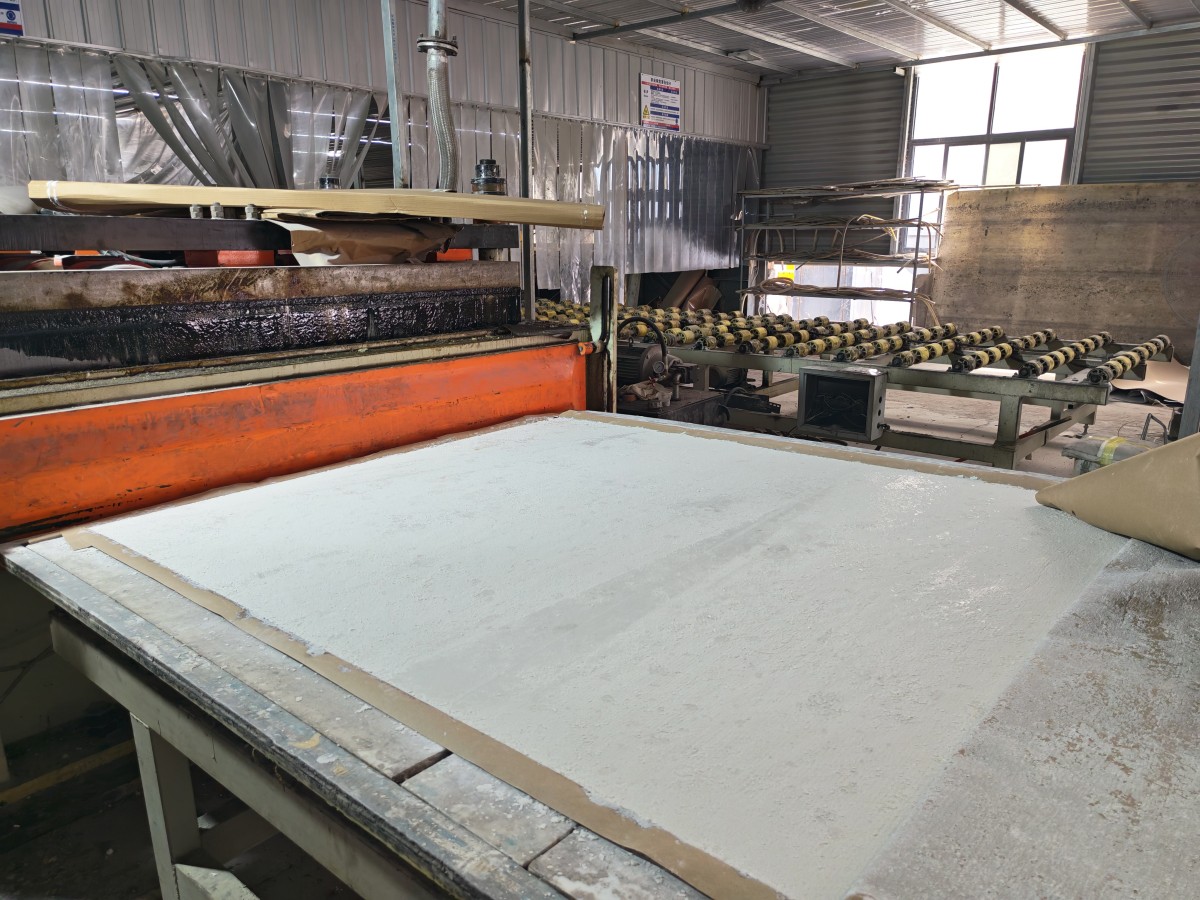
The first common cause is uneven curing. Quartz stone is made from quartz aggregates, resin, pigments, and additives. After pressing, the slab needs controlled curing so the binder system sets evenly. If heat distribution is inconsistent, one part of the slab may shrink or stabilize at a different rate than another. That difference can leave internal tension inside the board. At first, the slab may look acceptable. Later, after cutting, transport, or installation, the shape change becomes easier to notice.
Resin ratio also plays a role. Many buyers focus only on quartz content, but the resin system deserves equal attention when discussing deformation. Too much resin, poor resin quality, or an unstable formulation can increase thermal movement and shrinkage sensitivity. This does not mean “more quartz” automatically solves everything. A slab still needs a balanced formula and a process that matches it.
Another issue is particle distribution. If coarse and fine materials are not blended consistently, density can vary across the slab. That uneven structure may not be obvious on the polished face, but it can affect how the slab responds to pressure, heat, and curing. In manufacturing, this is one of those details that ordinary buyers rarely see, but experienced processors pay attention to it because it affects predictability.
Pressing conditions matter too. If vacuum vibration and pressing are not uniform, the slab may trap minor internal differences in density and stress. Those differences are enough to create bowing later, especially in larger formats. Bigger slabs look impressive, but they also demand better process control. The wider the slab, the less forgiving the production line becomes.
Then there is cooling. This part is often underestimated. A slab that leaves curing at the wrong cooling rate can develop stress simply because one side or one zone loses heat faster than another. The result may not show up immediately on the production line. It may appear after storage, shipping, or fabrication.
Thickness variation is a bigger problem than many buyers realize
When slab thickness is inconsistent, flatness becomes harder to maintain. Thin zones and thick zones react differently under stress. During handling, stacking, cutting, and installation, those areas do not behave the same way. That is why a slab can seem fine in one warehouse inspection but become troublesome later at the fabrication shop.
This is especially important for applications that need long visual lines, such as island tops, reception counters, wall cladding, and large vanity surfaces. In those cases, even moderate quartz stone warp can become visible once the slab meets a straight cabinet line, a metal frame, or another panel.
Storage and transport can make a stable slab become unstable
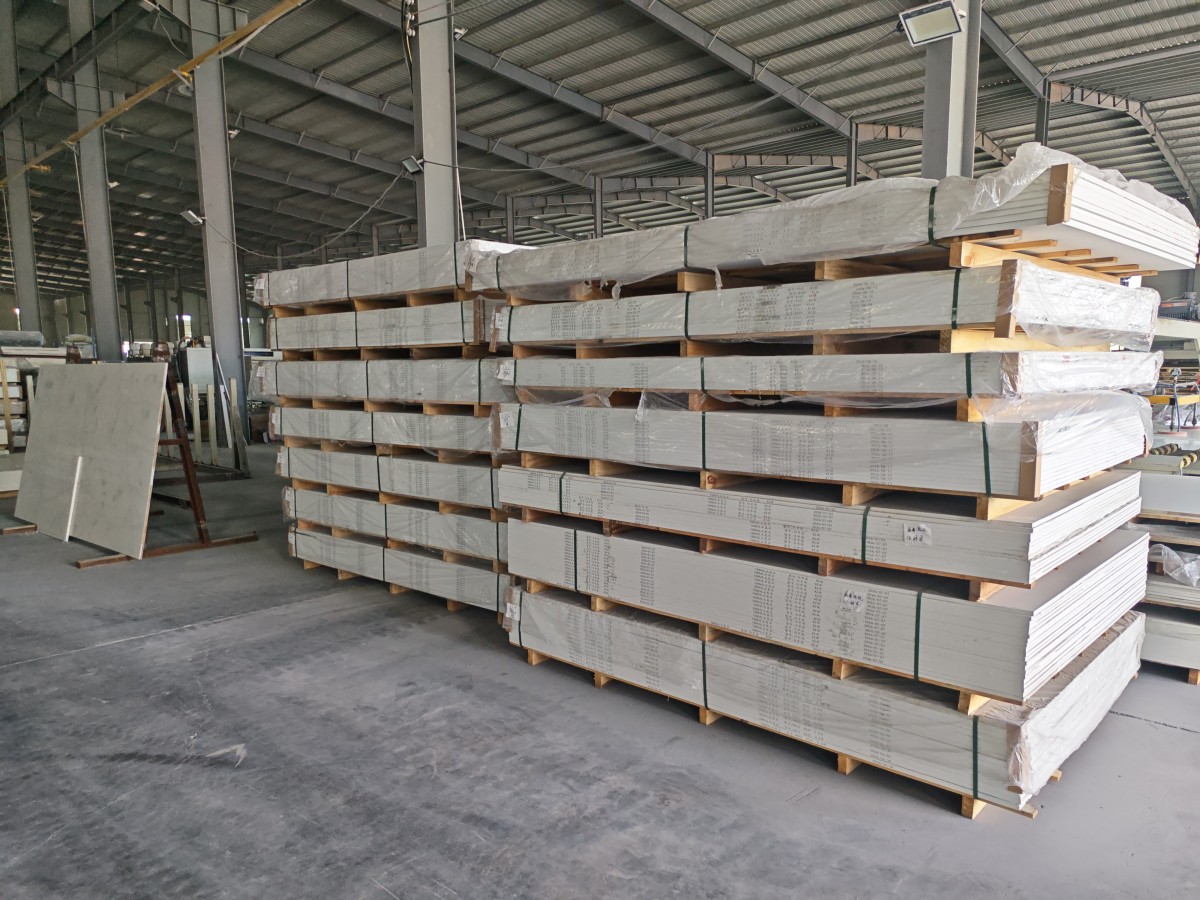
Not every warp problem starts in the factory. A reasonably stable slab can deform if it is stored badly. Leaning at the wrong angle for too long, poor support points, rough transport, or exposure to strong sun and uneven temperature can all worsen stress inside the slab.
This is one of the most common misunderstandings in real projects: people blame only the manufacturer, while the slab may also have been mishandled by distributors, processors, or site teams. Quartz stone is durable in service, but slabs still need disciplined storage before installation.
A short answer here is useful: quartz stone warps when internal stress is created or released unevenly, and that stress usually comes from production control gaps, formulation imbalance, thickness inconsistency, or improper handling after manufacture.
How we control quartz stone warp in professional production
Control starts with raw material consistency. Quartz particle grading, resin quality, and additive compatibility should be stable from batch to batch. If the input materials vary too much, flatness problems become harder to predict and harder to fix later.
Next comes process discipline. In well-run production, mixing time, vacuum vibration, pressing pressure, curing temperature, and curing duration are not treated as rough targets. They need repeatable control. Small fluctuations can create large differences once thousands of kilograms of material are being formed into large slabs.
Cooling and post-curing management are just as important. Rushing slabs too quickly into the next stage may help output, but it can work against dimensional stability. Manufacturers that take flatness seriously usually build checks into the full line, not only at the final inspection table.
Quality control should also include flatness inspection at more than one point. A slab that passes right after polishing is not the only standard that matters. It is better to check after curing, after cooling, and before packing, because some deformation shows up only after the slab has had time to stabilize.
For buyers and fabricators, this is a useful sign of a reliable supplier: they can explain their warp control logic in practical terms. Not fancy language, but clear answers about curing, thickness tolerance, storage method, and inspection frequency.
What to check before you approve a slab
If you are selecting quartz stone for a project, do not look only at color and surface finish. Ask to inspect flatness across the full slab, especially on large formats. Check whether the slab sits evenly, whether corners lift, and whether long straight edges show bowing.
It also helps to confirm:
- Thickness consistency across the slab
- Whether slabs are stored on proper supports
- Whether the supplier has defined flatness inspection standards
- Whether the material is intended for the application you are planning
This last point matters. Some applications are less forgiving than others. A small vanity top can sometimes tolerate minor deviation that would be unacceptable on a long island or a book-matched wall installation.
Common mistakes when judging warp
One mistake is checking only the polished face and ignoring the slab’s overall geometry. Another is assuming installation can “pull the slab straight.” Sometimes it can, but forcing a slab into place can transfer stress to seams, cabinets, adhesive lines, or cutout areas.
Another common mistake is treating all warp as identical. A slight bow in storage is different from a twisted slab with internal stress. The first may be manageable. The second is more likely to cause trouble during processing.
And one more point that deserves attention: once cutouts for sinks, hobs, or outlets are made, the slab often becomes more sensitive. If there was hidden stress before fabrication, it may reveal itself more clearly after material is removed.
FAQ
Can warped quartz stone be corrected during installation?
Sometimes minor deviation can be adjusted, but forced correction is risky. It may affect seams, support, and long-term stability.
Is quartz stone warp more common in large slabs?
Yes. Larger formats place more demand on production uniformity, handling, and storage, so flatness issues are easier to expose.
Does higher quartz content always reduce warping?
No. Material balance matters more than one number alone. Resin quality, curing, and cooling control are all critical.
Should a slightly warped slab always be rejected?
Not automatically. It depends on the degree of warp, slab size, fabrication plan, and final application. The judgment should be practical, not purely visual.
Can poor storage after delivery cause quartz stone warp?
Yes. Incorrect leaning angle, uneven support, heat exposure, and rough transport can worsen or reveal deformation.
In the end, quartz stone warp is not just a factory term. It is a real performance issue that affects fabrication efficiency, installation quality, and the finished look of a project. The best control comes from the full chain: stable raw materials, disciplined production, careful inspection, and proper storage. If you are comparing suppliers, this is one of the clearest areas where manufacturing quality shows up in real-world results.
Because warp often appears after the slab leaves the line, How We Pack Quartz Slabs for Safe Export explains the storage and transport side, while Strict Batch Inspection Standard for Export Quartz Orders covers the checks that happen before release.
Warping is a factory-floor question, not a fitting-room one. The batch inspection standard we apply to every export quartz order covers flatness, thickness and cure time for each slab before it is packed and shipped.
Related Articles
- Complete Engineered Quartz Slab Production Process
- Strict Quality Control System for Export Quartz Slabs
- Thickness Tolerance Standard for Export Quartz Slabs
- How to Avoid Bubbles and Porosity in Quartz Stone
Flat, Stable Quartz Slabs With Full-Process Warp Control
We control quartz slab flatness through stable raw material grading, repeatable pressing and curing parameters, managed cooling, and multi-stage flatness inspection before packing, especially for large-format slabs. Contact us for samples, technical specs, and project pricing.
📱 WhatsApp: +86 198 6115 3736
📧 Email: raykelee@hyquartzslabfactory.com
Send Us A Message