
Strict Quality Control System for Export Quartz Slabs
Strict Quality Control System for Export Quartz Slabs

Inside Our Quality Control System for Export Quartz Slabs
For global buyers of quartz slabs, “strict quality control” only matters if it changes real project outcomes: fewer color disputes, fewer breakages, fewer installation delays, and fewer claims after delivery. In export business, that is the real test. A factory can present polished samples, send attractive test reports, and still create problems when batch consistency, packing discipline, and shipment protection are weak. In the building and decorative materials trade, quality control is not a slogan attached to manufacturing. It is the operating system behind whether the slabs arriving on site still match the slabs approved at quotation stage.
This is why experienced buyers rarely look at one inspection point in isolation. They want to know whether the supplier controls the full chain: raw materials, pigment ratios, pressing and curing, surface finishing, dimensional tolerance, packaging, loading, and document traceability. If one link is loose, the project risk moves downstream and usually becomes more expensive to solve.
Why export quartz slab quality control deserves closer attention
Quartz slabs are not purchased like generic commodities. In many projects, they are specified for kitchen countertops, vanity tops, wall cladding, commercial fit-outs, or hospitality interiors where color uniformity and fabrication performance matter as much as basic strength. A slab that looks acceptable in a warehouse may still fail in actual use if it chips too easily during cutting, shows unexpected shade variation under project lighting, or arrives with edge damage after long-distance transport.
For export orders, the quality issue is even broader than the slab itself. Different markets may require different expectations on dimensions, finish consistency, silica-related processing guidance, labeling, or packaging standards. Buyers are not simply purchasing material; they are purchasing predictability across production and delivery. A strict system reduces uncertainty at scale, especially when the order includes multiple containers, phased shipment schedules, or repeat batches over several months.
What a real quality control system looks like
In practice, a credible control system is not defined by how many times a supplier says “100% inspection.” It is defined by whether controls are built into each production stage and whether records can be checked later. The most reliable manufacturers usually separate quality management into incoming inspection, in-process control, finished-product inspection, and pre-shipment verification.
1. Raw material control
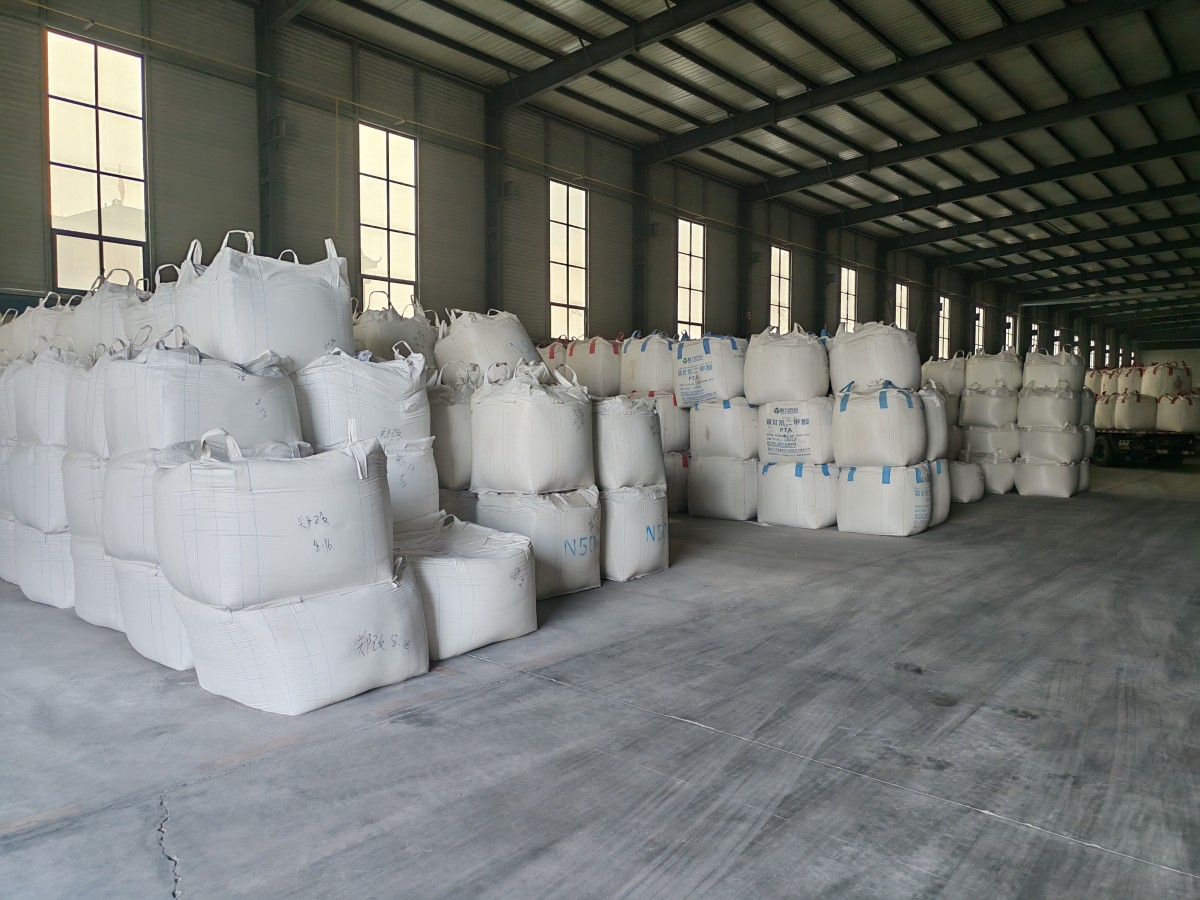
Quartz slab consistency starts long before polishing. The purity and stability of quartz powder, resin quality, pigments, and additives all influence final appearance and performance. If the source of raw materials changes frequently without tight controls, buyers may see color drift, pattern inconsistency, or performance variation between batches.
At this stage, stronger factories typically verify supplier lots, moisture levels, contamination risks, and formula consistency. For buyers, this matters because many later defects are not really “surface” issues. They are process outcomes rooted in unstable inputs.
2. Production process monitoring
Once the mix enters forming and pressing, control becomes more technical. Pressing pressure, vacuum conditions, curing temperature, and production timing can all influence slab density, internal compactness, and resistance to cracking or deformation. A strict plant does not rely on operator experience alone. It uses routine parameter checks, machine calibration, and process records.
That point is often underappreciated by overseas customers. A slab may pass a simple visual review but still contain internal quality variation that shows up later during fabrication. When fabricators cut sink openings or polish edges, weak internal structure becomes visible very quickly.
3. Surface and dimensional inspection
For export quartz slabs, buyers usually focus first on color, gloss, thickness, and slab size, and that is reasonable. These are the most visible factors and often the easiest to dispute. But strict inspection should go beyond a quick visual check. It should include:
- Color consistency within the batch and against approved samples
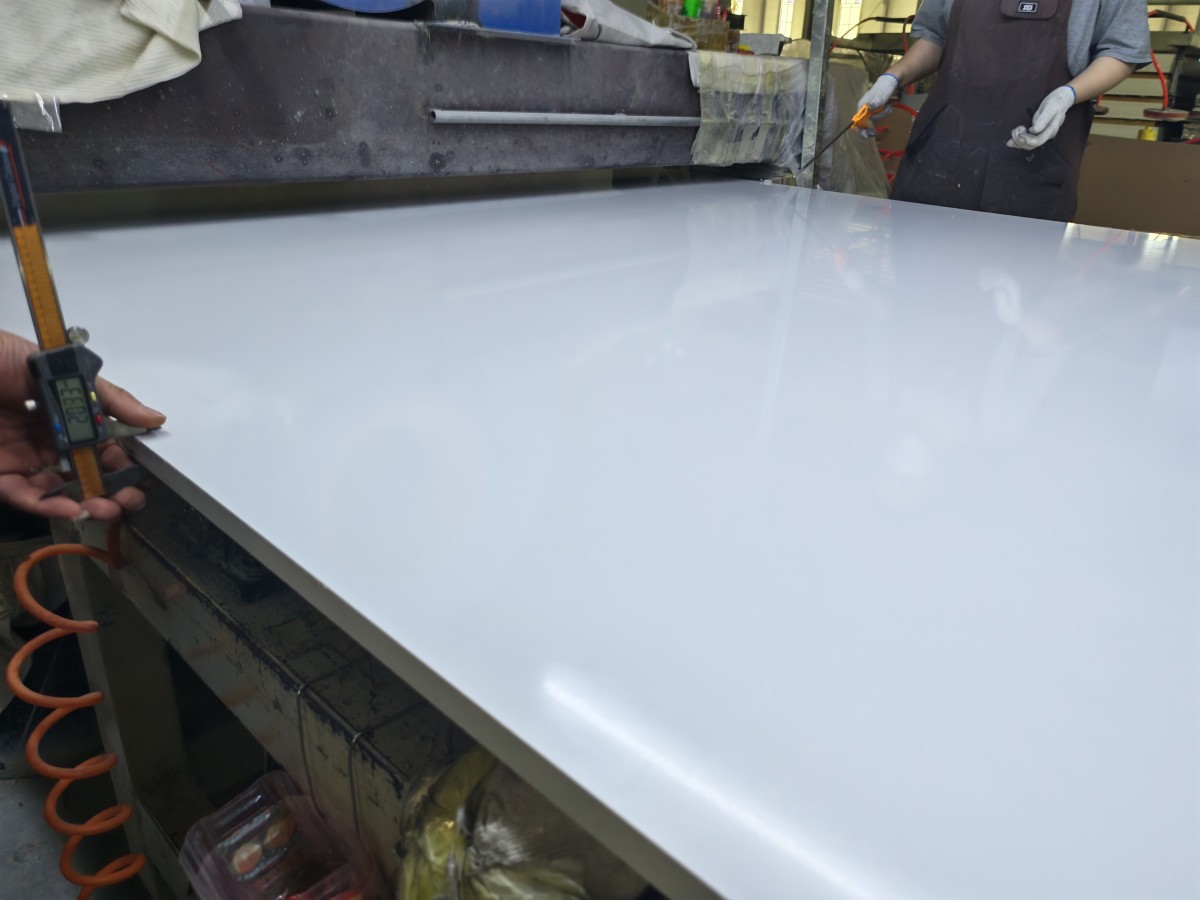
- Thickness tolerance across the slab, not just at one point
- Length, width, squareness, and flatness
- Surface defects such as pinholes, contamination points, scratches, or polishing inconsistency
- Edge condition before packing
In export projects, dimensional accuracy is not a small technical detail. If slabs are outside tolerance, downstream cutting plans can be affected, yield drops, and installers may have to adjust on site. That translates directly into labor cost and delay.
Not all “international quality” claims mean the same thing
One common misunderstanding in sourcing is to treat every certification or test statement as evidence of stable mass production. It is not. A test report may confirm certain performance items for submitted samples, but it does not automatically prove that every production batch matches that level. Likewise, a factory may claim compliance with market requirements, but buyers still need to confirm what exactly was tested, when it was tested, and whether the tested item reflects the current product line.
Where standards, certifications, or regulatory claims are involved, careful verification is necessary. Requirements can differ by country and application, and some declarations may depend on product category, indoor use conditions, or customer-specific specifications. If a supplier references performance standards, emission requirements, or safety compliance, buyers should request documentation and confirm applicability to their target market.
The hidden export risks are often outside the slab surface
Many disputes in quartz slab export are not caused by dramatic product failure. They come from avoidable operational gaps: mixed batches in one container, unclear slab coding, weak crate protection, inconsistent loading direction, incomplete inspection photos, or poor communication when replacement policy is discussed.
That is why experienced importers review the quality system together with the packing and shipping method. A factory may produce acceptable slabs yet still create losses if export packaging is not designed for long sea transit, repeated handling, and port-side impact. Strong export suppliers usually have documented crate specifications, separator materials, slab positioning rules, container loading procedures, and final photo records before sealing.
Traceability also matters more than many new buyers expect. If a complaint occurs, the supplier should be able to identify the production date, batch number, container allocation, and inspection record. Without that, root cause analysis becomes guesswork, and repeat orders become risky.
How buyers should evaluate a supplier beyond the sample room
When reviewing export quartz slab suppliers, the most useful question is not “Do you have quality control?” Every supplier will say yes. The better question is how quality is controlled when volume increases, pattern complexity rises, or shipment deadlines tighten.
Buyers can usually get a clearer picture by checking a few practical points:
- Whether batch approval is based on actual production slabs rather than only showroom samples
- Whether inspection records include measurable tolerances and not just “OK” remarks
- Whether the supplier can maintain consistency across repeat orders
- Whether packaging specifications are standardized for export loads
- Whether claim handling terms are defined before order confirmation
- Whether third-party inspection is accepted for key shipments
These checks are especially important for distributors, project contractors, prefab processors, and stone fabricators who cannot afford unpredictable material behavior. For them, the cost of one failed container is often much higher than the price gap between suppliers.
Quality control should match the application, not just the catalog
Another point often missed in procurement is that not every project needs the same control focus. For high-volume residential distribution, batch consistency and packing efficiency may be the top concern. For hospitality or retail fit-out projects, appearance matching across multiple spaces may be more important. For processor customers, workability during cutting and edge finishing can be decisive. A supplier with a “strict system” on paper may still be a weak fit if its controls are not aligned with the buyer’s actual application.
This is where communication before production becomes part of quality management. Approval standards should cover finish, allowable shade variation, slab orientation if veining is relevant, tolerance expectations, and replacement logic. If these are vague, quality arguments tend to surface only after cargo arrives, when the room to solve them is already small.
Why stricter control is becoming a competitive requirement
In the export market for decorative materials, buyers are under pressure from tighter project schedules, more demanding end users, and rising claim sensitivity. That means quality control is no longer just a factory-side concern. It is part of commercial reliability. Suppliers that can maintain stable quality, clear records, and disciplined delivery tend to retain customers longer, even if they are not the cheapest option in the initial quote comparison.
For buyers, the implication is straightforward. When sourcing quartz slabs for export business, it is not enough to compare color cards, prices, and lead times. The safer decision usually comes from understanding how the supplier controls variation before it becomes your problem. In this sector, a strict quality control system is less about presentation and more about whether the material performs consistently from approval sample to installed project.
Two companion pieces go deeper: Strict Batch Inspection Standard for Export Quartz Orders covers the documents behind these claims, and Large Batch Quartz Slabs Ready for Shipment shows how a verified lot is staged before dispatch.
Related Articles
- Complete Engineered Quartz Slab Production Process
- Thickness Tolerance Standard for Export Quartz Slabs
- How We Control Color Difference in Bulk Quartz Orders
- How to Avoid Bubbles and Porosity in Quartz Stone
Source Export Quartz Slabs From a Strictly Controlled Factory
We run full-chain quality control across raw materials, in-process monitoring, finished-product inspection, and pre-shipment verification, with measurable inspection records, batch traceability, and export-standard crate packaging. Contact us for product specifications, samples, and project pricing.
📱 WhatsApp: +86 198 6115 3736
📧 Email: raykelee@hyquartzslabfactory.com
Send Us A Message