
How to Avoid Bubbles and Porosity in Quartz Stone
How to Avoid Bubbles and Porosity in Quartz Stone
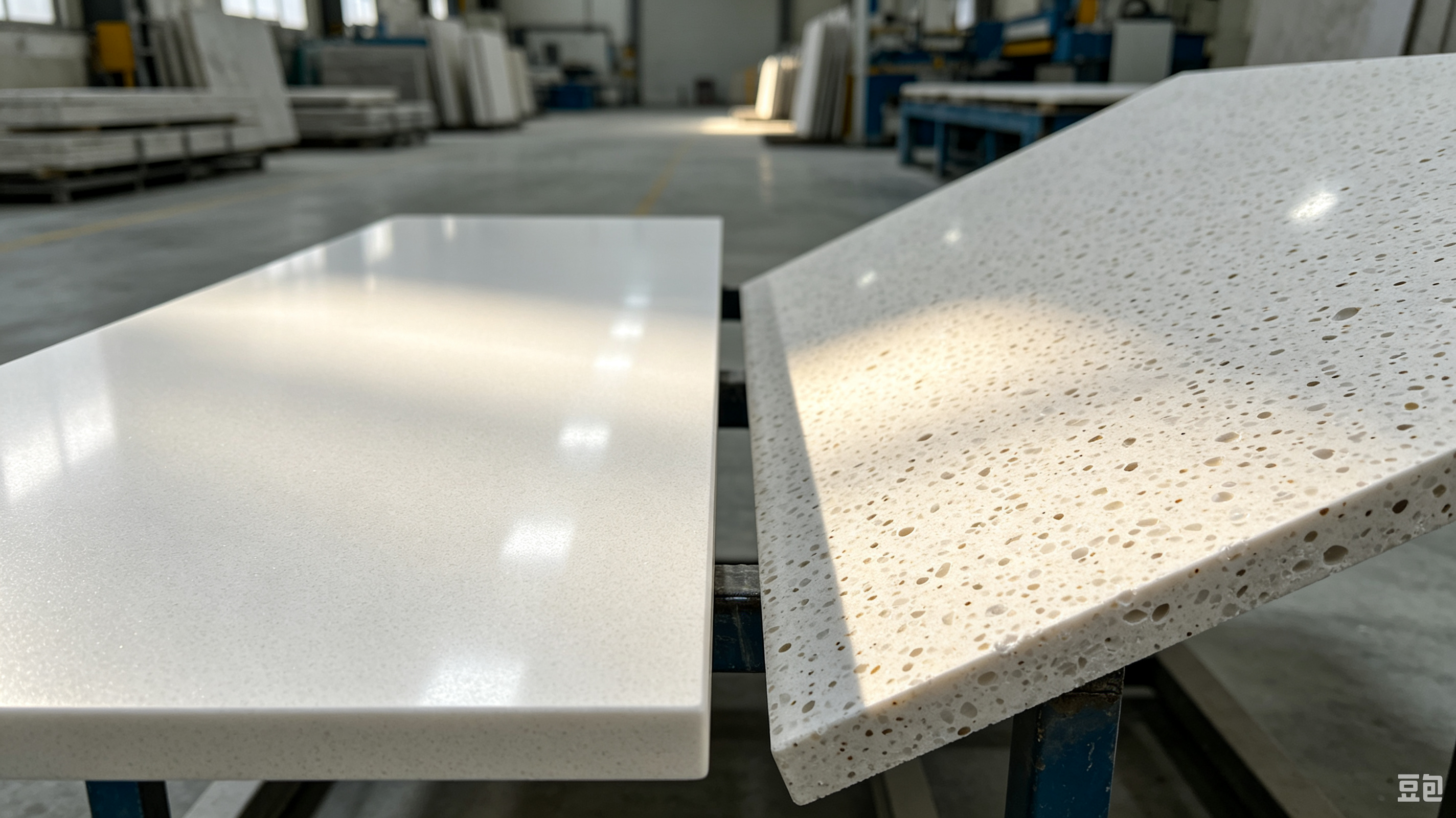
Bubbles and Porosity in Quartz Stone: Causes and How to Avoid Them
Bubbles and porosity in quartz stone can seriously affect both appearance and long-term performance, making prevention essential in architectural and decorative applications. Understanding how to avoid bubbles and porosity in quartz stone helps manufacturers, fabricators, and project buyers improve surface quality, structural stability, and overall product value. This guide explores the key causes behind these defects and practical ways to achieve denser, smoother, and more reliable quartz stone results.
Why Bubbles and Porosity Matter More Than Many Buyers Expect
In quartz stone, bubbles and porosity are not only visual defects. They can weaken internal density, reduce polishing quality, increase staining risk, and shorten service life in demanding interior applications.
For manufacturers and fabricators, these defects often mean higher rejection rates, more rework, unstable product quality, and customer complaints. For buyers, they can lead to inconsistent slabs and avoidable project risk.
The practical conclusion is clear: preventing bubbles and porosity must start early, from raw material selection to mixing, vacuuming, pressing, curing, and final inspection.
What Usually Causes Bubbles and Porosity in Quartz Stone
Most porosity problems come from trapped air, uneven resin distribution, moisture contamination, poor particle grading, or insufficient compaction during production. These issues often interact rather than appearing separately.
If quartz aggregates are not properly graded, fine particles cannot fill the gaps between larger particles efficiently. That leaves internal voids, which later show up as pores or small surface bubbles.
Moisture is another common cause. Wet raw materials or humid production conditions can interfere with resin bonding and generate voids during curing, especially when process control is inconsistent.
Inadequate vacuum conditions also matter. If air is not removed effectively before or during pressing, it becomes trapped inside the slab and creates internal porosity or visible surface defects.
Resin viscosity and mixing quality are equally important. If the resin is too thick, too thin, or not distributed uniformly, the slab will struggle to achieve a dense and homogeneous structure.
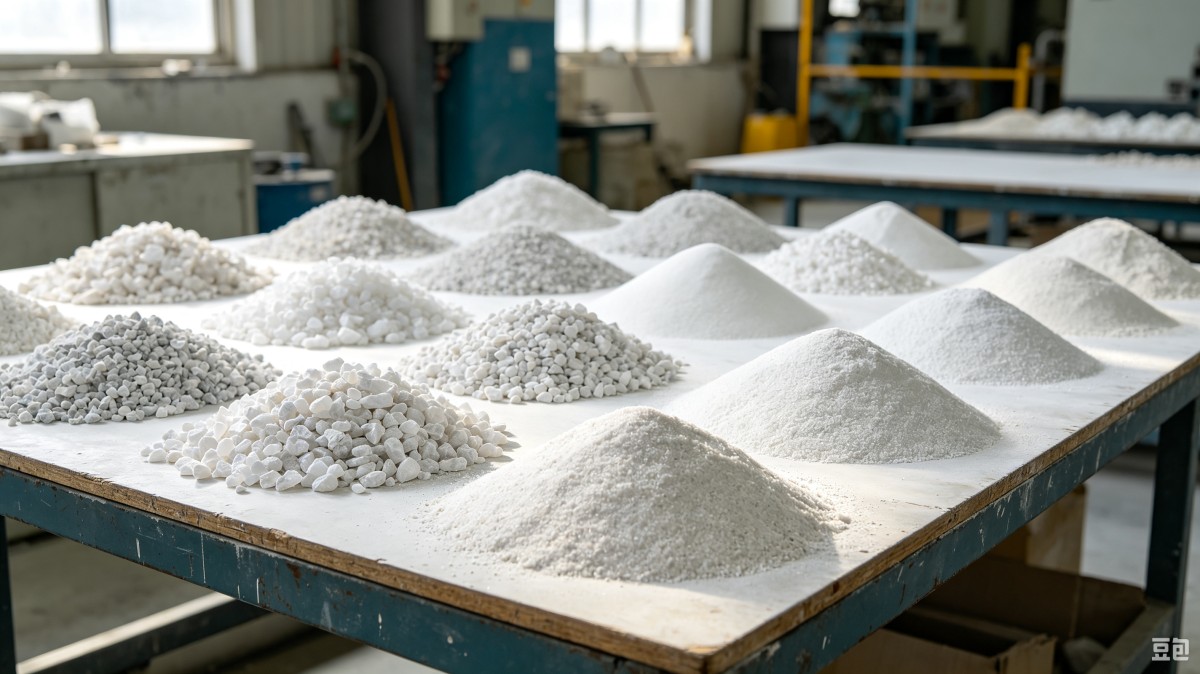
How to Control Raw Materials for a Denser Quartz Slab
Raw material control is one of the most effective ways to avoid bubbles and porosity in quartz stone. Good process results are difficult to achieve when input materials are unstable.
Quartz powder and granules should be clean, dry, and sized according to a tested particle distribution formula. A balanced gradation helps reduce empty spaces and improves compaction efficiency.
Resin quality should also be consistent. Manufacturers need resin systems with suitable flow behavior, curing response, and compatibility with fillers, pigments, and additives used in engineered stone production.
Fillers and pigments should be added in controlled proportions. Overloading fine powder or using unstable additives can affect flow, trap air, and create weak zones inside the slab.
Material storage deserves attention as well. Even high-quality quartz and resin can become problematic if stored in humid environments or exposed to contamination before entering production.
Why Mixing and Vacuum Treatment Are Critical
Many quartz stone defects begin during the mixing stage. Even when raw materials are good, poor blending can trap air and create local differences in resin content and particle packing.
The goal of mixing is not simply to combine ingredients. It is to distribute resin evenly across the quartz particles while minimizing air inclusion and preserving a workable consistency.
Vacuum mixing or effective degassing is especially valuable because it removes entrapped air before the slab reaches the pressing stage. This directly lowers the chance of bubbles and internal voids.
Mixing time must be controlled carefully. Too short, and the batch remains uneven. Too long, and the material may heat up, change viscosity, or reintroduce process instability.
Operators should also watch batch loading levels. Overfilled mixers often produce incomplete blending and poor air release, which later appears as density inconsistency across the finished slab.
How Pressing Conditions Affect Porosity
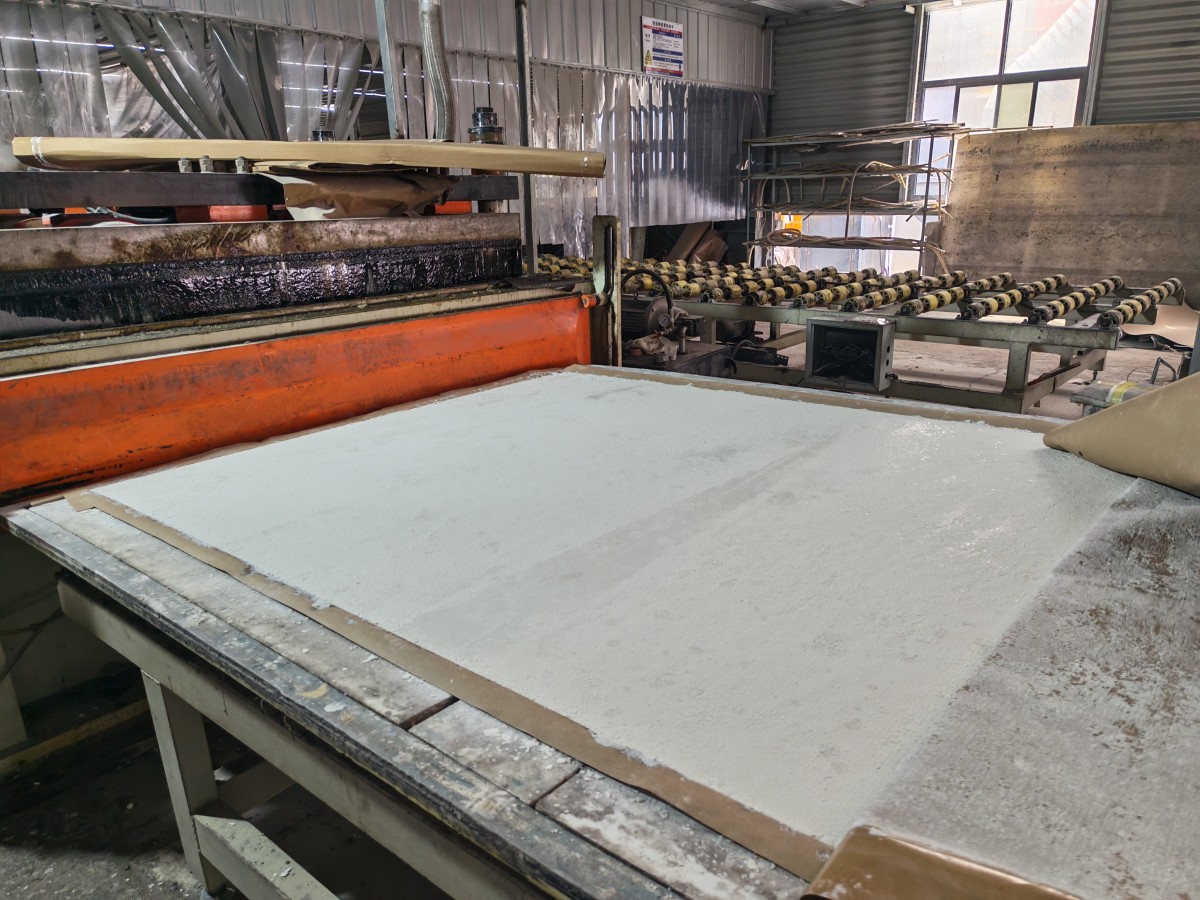
Pressing is where the material structure becomes compact and stable. If pressure is uneven or insufficient, internal gaps remain and porosity becomes difficult to remove later.
In vibrocompression systems, the combination of vibration, vacuum, and pressure is what creates a dense slab. If one of these factors is weak, overall compaction quality drops noticeably.
Uniform material feeding is important before pressing begins. If the mat thickness varies, pressure distribution becomes inconsistent, which can lead to localized pores or weak polishing behavior.
Equipment calibration should be checked regularly. Even a good process design can fail if pressing parameters drift over time or if vacuum seals and vibration systems are not maintained properly.
For buyers evaluating a supplier, slab consistency across multiple batches is a useful indicator. Stable pressing conditions usually show up in repeatable density, gloss, and edge integrity.
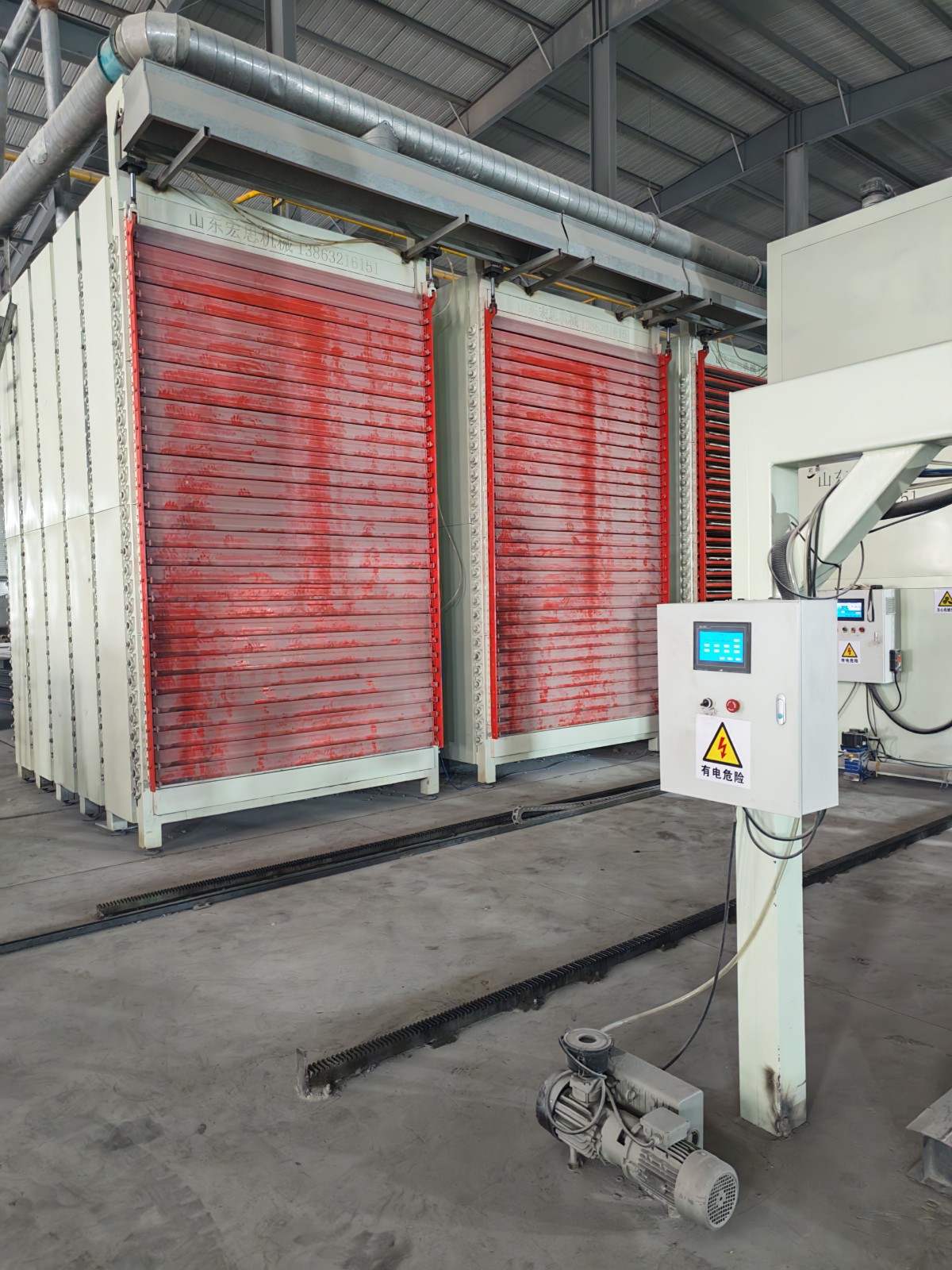
Why Curing and Temperature Control Cannot Be Ignored
Curing determines how well the resin network forms and locks the quartz structure together. Poor curing can leave internal weaknesses that make pores more visible during cutting or polishing.
Temperature that is too low may cause incomplete curing, while excessive heat can create internal stress, volatile release, or surface instability. Both situations can contribute to defect formation.
Manufacturers need curing schedules matched to their resin system, slab thickness, and production speed. A curing profile that works for one formulation may not work well for another.
Temperature consistency across the slab also matters. Uneven heating can create areas with different hardness and density, which may reveal themselves during finishing or later in end use.
What Fabricators and Buyers Should Check Before Accepting Quartz Stone
Even when you are not producing quartz stone yourself, you can still reduce risk by checking the right quality indicators before purchase or fabrication begins.
Start with surface inspection under strong lighting. Look for pinholes, irregular gloss, small crater-like marks, and edge defects, because these often suggest internal porosity or process inconsistency.
Ask suppliers about raw material control, vacuum pressing capability, moisture management, and batch consistency. Reliable producers can usually explain their defect-prevention process clearly and specifically.
It is also useful to compare polished surfaces, cut edges, and sink cutout areas. Porosity often becomes easier to detect in these sections than on the broad slab face.
For larger commercial or residential projects, requesting samples from the same production batch can reduce color and density variation while improving confidence in long-term performance.
Practical Steps to Reduce Defects Across the Entire Process
The most effective strategy is to treat bubble prevention as a full-process discipline rather than a single machine setting or isolated inspection step.
Control moisture in all incoming materials, maintain a tested particle grading formula, and use resins with stable viscosity and curing behavior. These measures create a stronger process foundation.
Apply consistent vacuum mixing, avoid overloading equipment, and monitor mixing time closely. Then support that with stable vibrocompression, calibrated pressure systems, and dependable vacuum performance.
Finally, verify curing conditions and inspect slabs at multiple stages instead of relying only on final appearance. Early detection is usually less costly than correcting finished material defects.
Conclusion
To avoid bubbles and porosity in quartz stone, the most important factors are dry and well-graded raw materials, uniform resin distribution, effective vacuum treatment, proper pressing, and controlled curing.
These defects are rarely caused by one issue alone. They usually reflect a chain of small process weaknesses that reduce slab density and surface quality over time.
For manufacturers, better control means lower waste and more reliable output. For buyers and fabricators, it means stronger visual consistency, fewer installation problems, and better long-term value from quartz stone products.
Most porosity problems are decided long before the final check. Quartz Production Line Upgrade for Higher Slab Quality covers the equipment side, and Strict Batch Inspection Standard for Export Quartz Orders covers how density is confirmed batch by batch.
Related Articles
- Complete Engineered Quartz Slab Production Process
- Strict Quality Control System for Export Quartz Slabs
- Why Does Quartz Stone Warp and How We Control It
- Glossiness Standard of Polished Quartz Countertops
Dense, Low-Porosity Quartz Slabs From a Controlled Production Line
Our quartz slabs are produced with dry well-graded raw materials, vacuum mixing, stable vibrocompression, and controlled curing to minimize bubbles and internal porosity, delivering dense, smooth, and fabrication-friendly surfaces for global projects. Contact us for samples, technical specs, and project pricing.
📱 WhatsApp: +86 198 6115 3736
📧 Email: raykelee@hyquartzslabfactory.com
Send Us A Message