
How We Pack Quartz Slabs for Safe Export
How We Pack Quartz Slabs for Safe Export
How We Pack Quartz Slabs for Safe Export
Quartz slabs travel thousands of kilometres by truck and ocean freight before they reach a fabricator or a project site. Along the way they face vibration, stacking pressure, humidity and rough handling at ports. The single biggest factor that decides whether they arrive intact is not the shipping line — it is how we pack quartz slabs for safe export at the factory gate. This article walks through our packing process step by step, explains the materials we rely on, and shows buyers what to look for in loading photos.
Why Packing Decides Whether Slabs Arrive Intact
A quartz slab is a heavy, rigid panel. It cannot bend like timber or flex like sheet metal, so any uneven pressure concentrates at a single point and can start a crack that spreads across the whole face. Packing exists to spread that pressure evenly and to stop slabs from moving against each other. When quartz slab packaging for export is done properly, the slabs behave as one solid block inside the crate and absorb the ship's movement together.
Most transit damage we see in the industry does not come from a single impact. It comes from small movements repeated over days at sea: a slab sliding a few millimetres, an edge rubbing against wood, a corner chipping against a neighbour. That is why how we pack quartz slabs for safe export matters more than any single protective product — the goal is to remove freedom of movement, not just to add more material.
The Materials We Use to Protect Every Slab
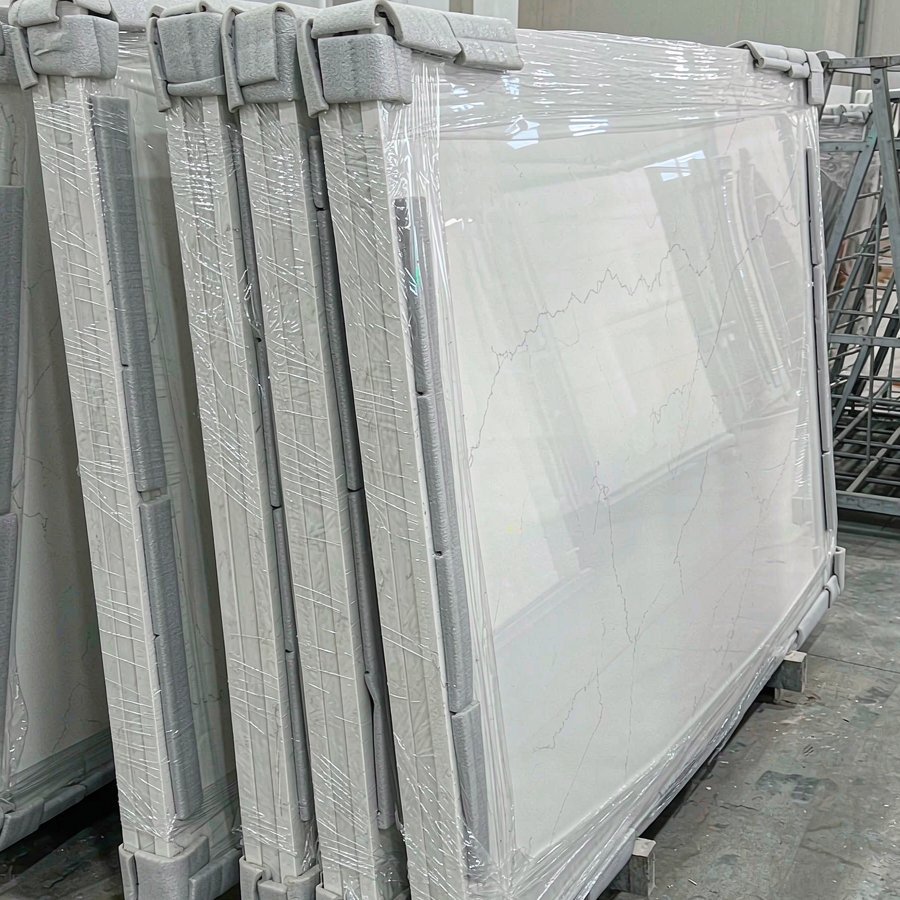
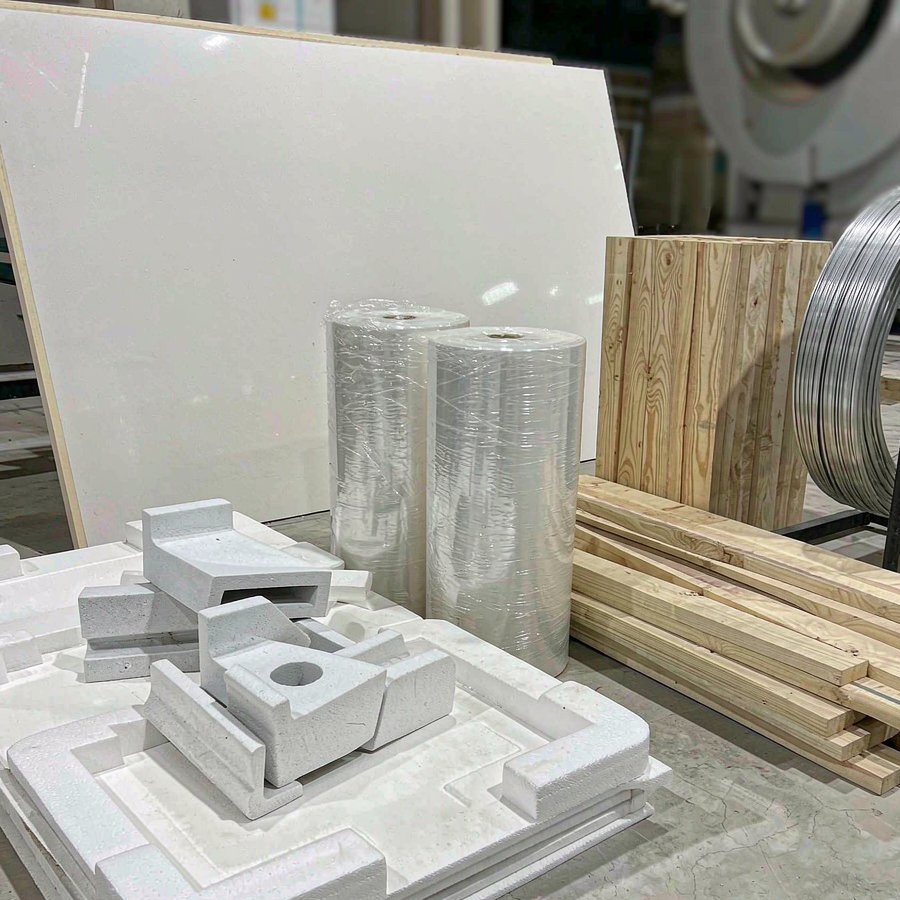
We keep the material list short and proven. Foam sheets go between slabs and on the outer faces, so polished surfaces never touch wood or each other. Edge protectors wrap the long sides and corners, which are the thinnest and most vulnerable parts of a slab. Each slab is then wrapped in stretch film or a foam bag to keep dust and moisture away from the surface. For long sea routes we add a moisture barrier inside the crate. Every item is chosen because it directly supports how we pack quartz slabs for safe export without adding unnecessary weight or cost.
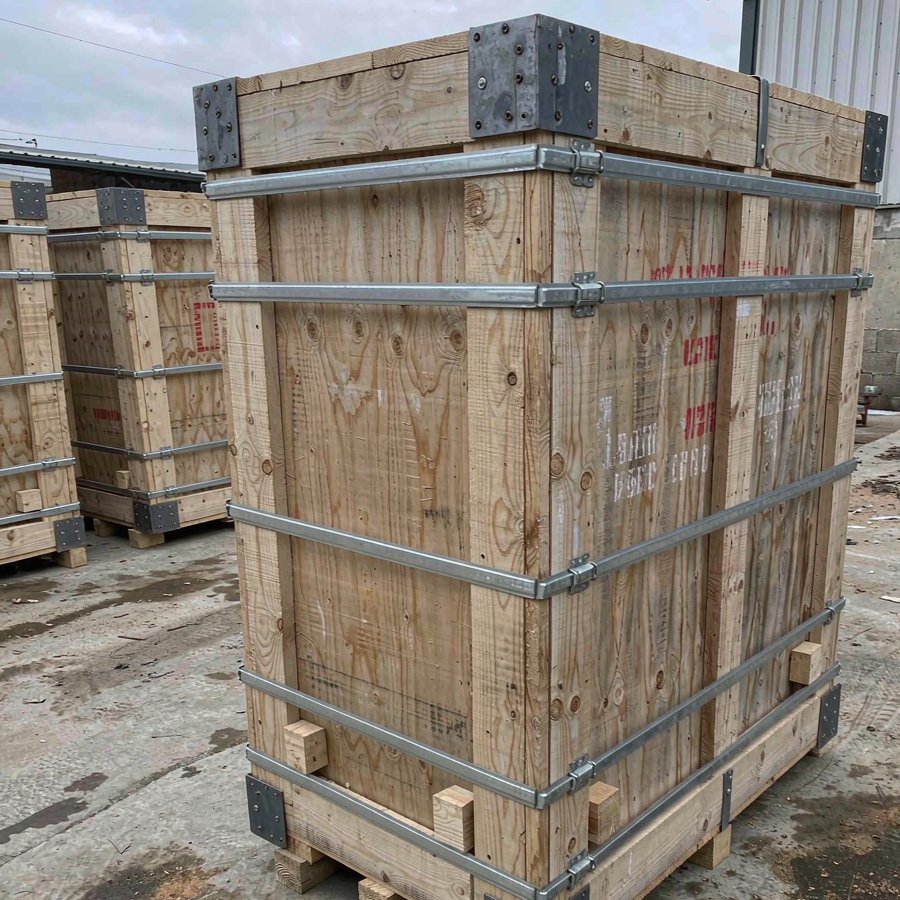
The wooden crate itself is built from kiln-dried timber and reinforced with steel strapping. Kiln-dried wood is important because untreated wood can warp or carry pests, both of which cause problems at customs. Every crate is sized to the slab format being packed, so there are no large empty gaps for the load to slide into. A crate that fits the load is the first layer of protection for quartz slab packaging for export.
Step One: Edge Guarding and Surface Protection
Packing starts on the slab itself. Our team runs a gloved hand along each edge to feel for chips that inspection may have missed, then fits a foam or plastic edge guard over the full length of both long sides. Corners receive a thicker, L-shaped protector because they take the first contact in any collision. Only after the edges are guarded do we wrap the face.
This order matters. If a slab is wrapped first and guarded later, the film traps grit that can scratch the polish during the wrapping process itself. Guarding before wrapping is a small detail inside how we pack quartz slabs for safe export, but it prevents scratches that would otherwise appear the moment the buyer unwraps the crate.
Step Two: Building the Wooden Crate
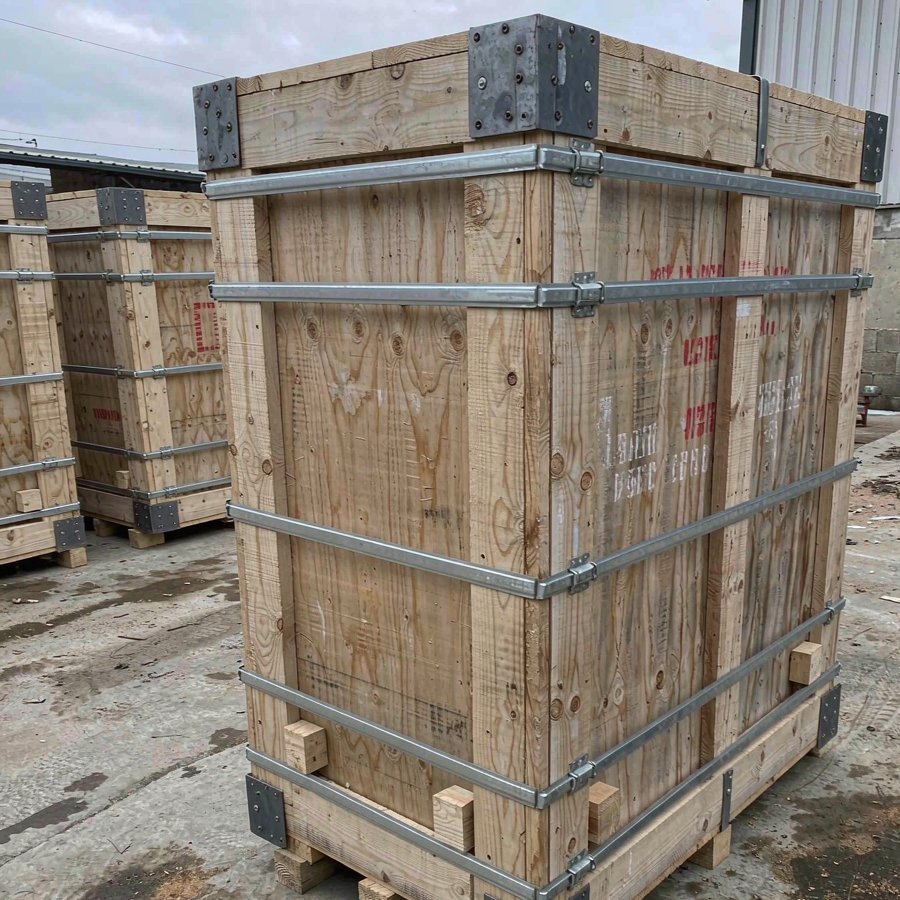
With the slabs prepared, the crate is assembled around them. We use a solid timber base that can be lifted by forklift from all four sides, vertical side battens to hold the stack upright, and a top frame that locks the slabs in place. Steel straps bind the crate vertically and horizontally, and metal corner plates stop the straps from cutting into the wood.
The crate is designed for vertical transport, matching the way quartz is stored in the warehouse and loaded into the container. Keeping the slab vertical throughout the journey avoids the flex that comes from laying it flat. It is a small design decision that removes a whole category of breakage, and it is central to safe export packing for quartz slabs.
Step Three: Loading Slabs Vertically Inside the Crate
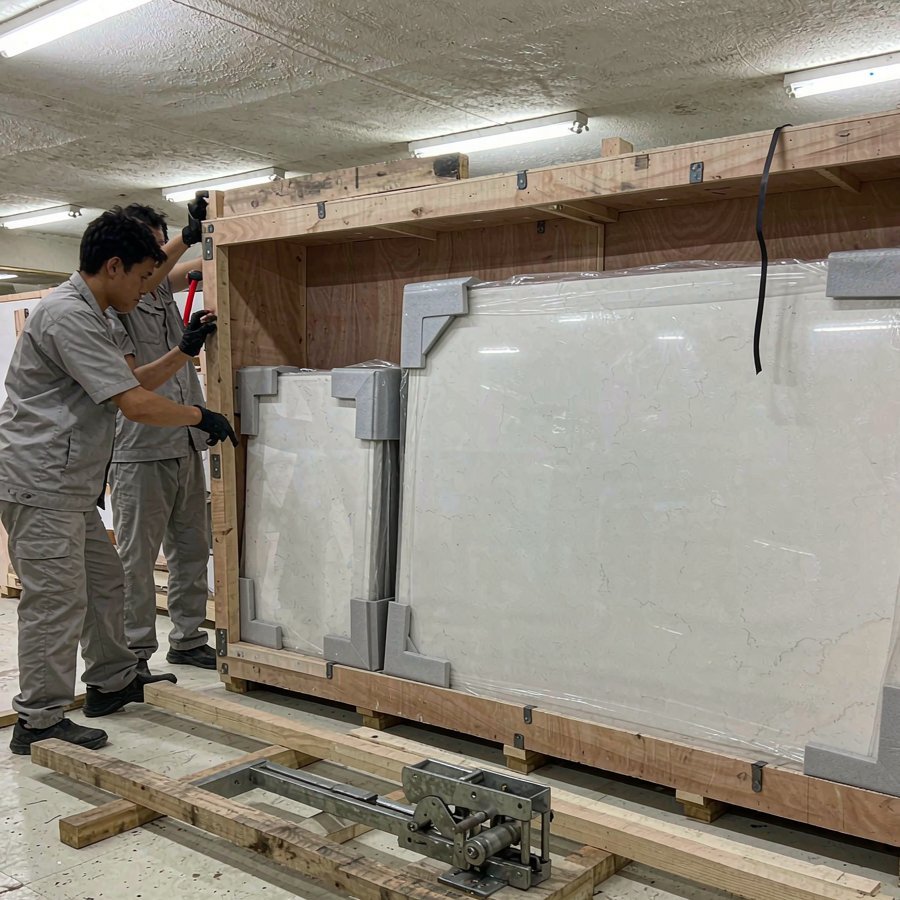
Slabs go into the crate one by one, standing on their long edge. We keep the faces parallel and the stack tight, adding a thin foam separator between each pair. The first and last slabs sit against a padded board so the polished faces never rest directly on the timber frame. Pushing a slab into the crate is done by two workers and never dropped into position, because a single hard landing can chip an edge that took a full shift to polish. This careful handling is part of how we pack quartz slabs for safe export, not a separate step.
We also record the order of loading. If a container carries several colours or formats, each crate is labelled with its own batch number and slab list, so a buyer can see exactly which slabs sit where. Traceability inside the crate is part of the service, not an afterthought, because it makes any later claim or stock check simple.
Step Four: Bracing, Gap Filling and Sealing
Once the crate is full, every remaining gap is filled with foam blocks or inflatable bags. This is the step that stops the load from developing momentum inside the crate. The lid goes on, the steel straps are tensioned, and the crate is marked with its number, format, colour code and destination. We then take a photograph of the closed crate next to its packing list.
A crate that is well braced feels solid when tapped and does not move under light pressure. If a crate still rattles, we reopen it and add material rather than risk the shipment. That test is quick, and it is the last chance to catch an under-packed crate before it leaves the yard. Reliable safe export packing for quartz slabs depends on refusing to ship anything that fails this check.
Step Five: Container Loading and Weight Distribution
Crates are loaded heaviest-first, centred over the container axles, with load bars and timber blocking against the container walls. Nothing is allowed to touch the doors, and the gap at the end is filled so the load cannot shift when the container brakes or pitches at sea. Forklifts use the crate's own lifting slots so no strap is ever used as a lifting point.
Weight distribution is planned before loading, not improvised on the dock. We calculate the total weight and the centre of gravity using the slab list, then decide the crate sequence in advance. A balanced container is easier for the shipping line to handle and reduces the stress that reaches the crates in heavy weather, which is another reason how we pack quartz slabs for safe export starts long before the container arrives.
Step Six: Photos, Lists and Export Documents
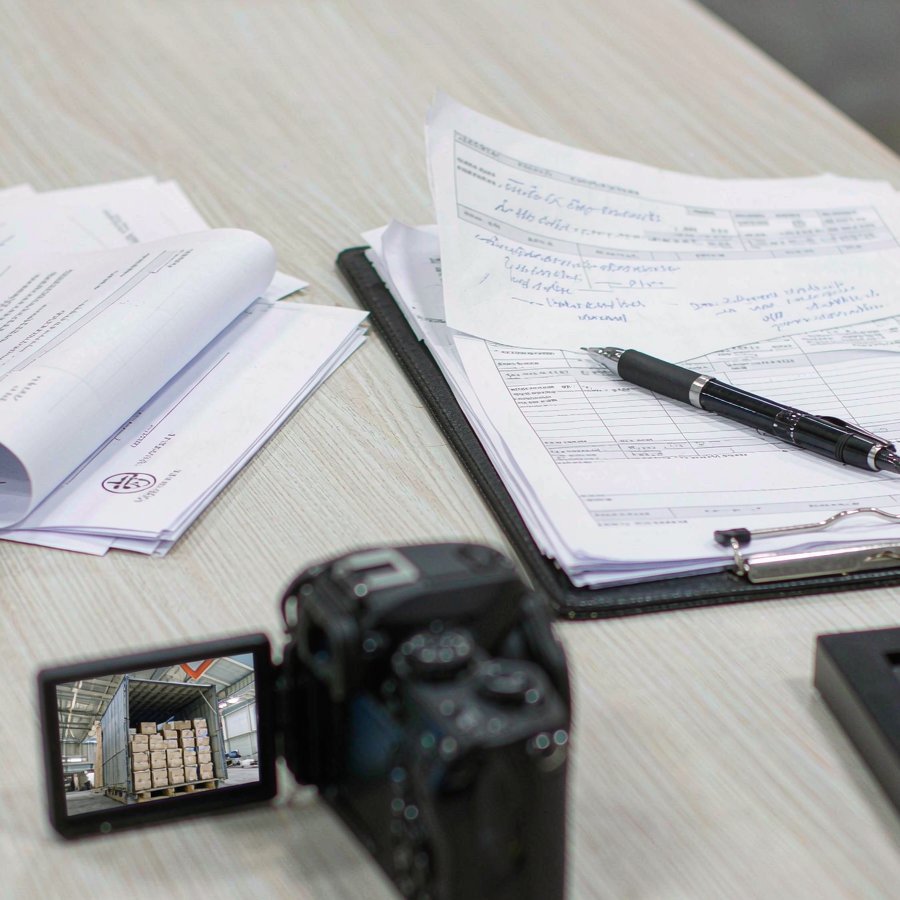
After loading we photograph the container interior from several angles, note the seal number, and file the packing list against the crate numbers. The same package goes to the buyer: loading photos, seal number, packing list and the commercial documents prepared for the destination. This record turns a physical shipment into something the buyer can verify before the vessel even sails.
Good documentation also protects both sides if a problem appears at the port of discharge. With dated photos and a matching packing list, it is easy to see whether damage happened during loading, at sea, or during the buyer's own handling. Documentation is therefore as much a part of how we pack quartz slabs for safe export as the foam and timber.
How Packing Changes for Small and Large Orders
For a single sample crate, the packing method stays the same but the paperwork is lighter. For full-container bulk orders, we scale the same system across many crates and stagger the crate numbering so the buyer can follow the load from the packing list. Large orders also get a packing schedule, because packing capacity, not pressing, is often the real bottleneck before shipment.
Buyers with unusual formats or very thin slabs should tell us early. Thin slabs need additional separators and tighter bracing, and unusually long slabs may need a custom crate. Adjusting the design before packing starts costs nothing; adjusting it after the crate is built costs time and material, so planning ahead keeps how we pack quartz slabs for safe export consistent across every order size.
Common Questions About Quartz Slab Packing
Do you pack slabs flat or vertical? Vertically, standing on the long edge. This matches how quartz is stored and avoids the flex that can crack a slab laid flat, and it is a basic rule of how we pack quartz slabs for safe export.
Is the wood treated for export? Yes. We use kiln-dried timber and, where the destination requires it, provide fumigation or heat-treatment certificates.
Can I request my own crate marking? Yes. We can print your logo, crate numbers or handling symbols on the crate, provided the details reach us before packing begins.
Conclusion
Packing is the quiet part of the export process, but it is where a good slab is protected or lost. From edge guarding and foam separators to bracing, container balance and loading photos, every step exists to remove movement and pressure from the journey. If you want to see how we pack quartz slabs for safe export on a real order, ask for our packing photos before you book — they show more than any specification sheet.
Related Articles
- Strict Quartz Batch Inspection Standard for Export Orders
- Stable Lead Time for Global Bulk Quartz Orders
- Large Batch Quartz Slabs Ready for Shipment
- Why Choose Us for Your Quartz Slab Project
Request a Packing and Shipping Quote
Shandong Hongyue Quartz Stone Co., Ltd. handles how we pack quartz slabs for safe export end to end, from edge guarding and custom crates to container planning and export documents. Send us your colour, size, quantity and destination port, and we will reply with a packing plan, lead time and a factory-direct quotation.
WhatsApp: +86 198 6115 3736 | Email: raykelee@hyquartzslabfactory.com
Send Us A Message