
Quartz Slab Price Per Square Foot: What Actually Drives It
Quartz Slab Price Per Square Foot: What Actually Drives It
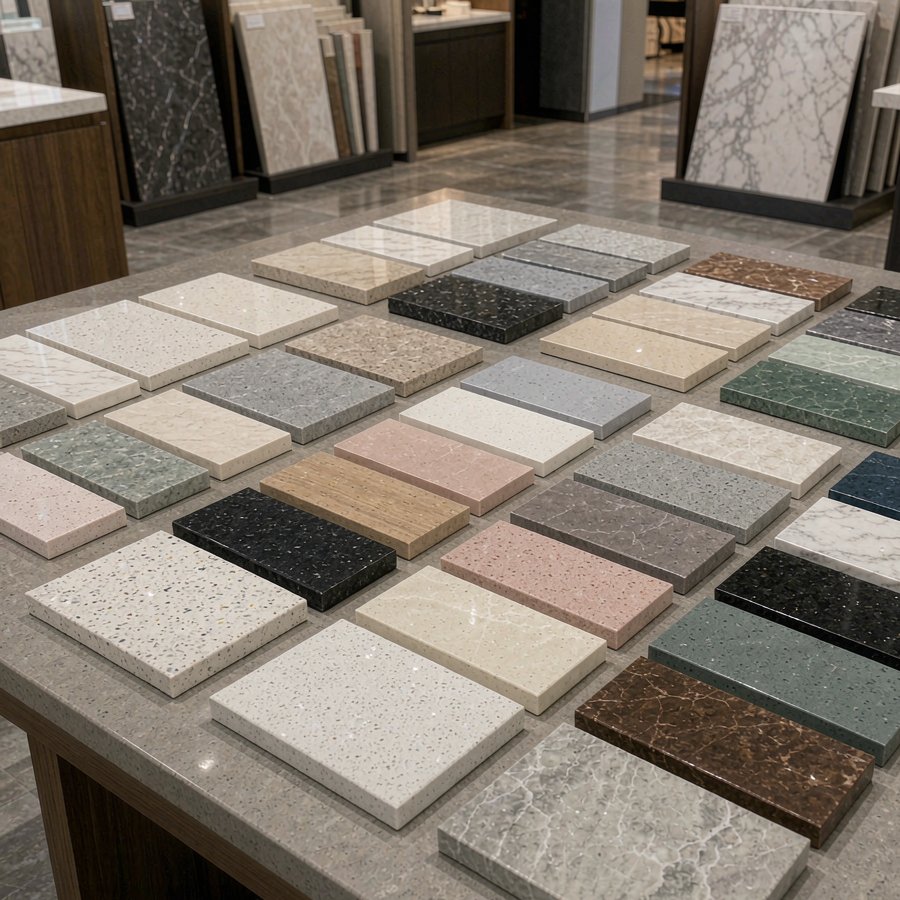
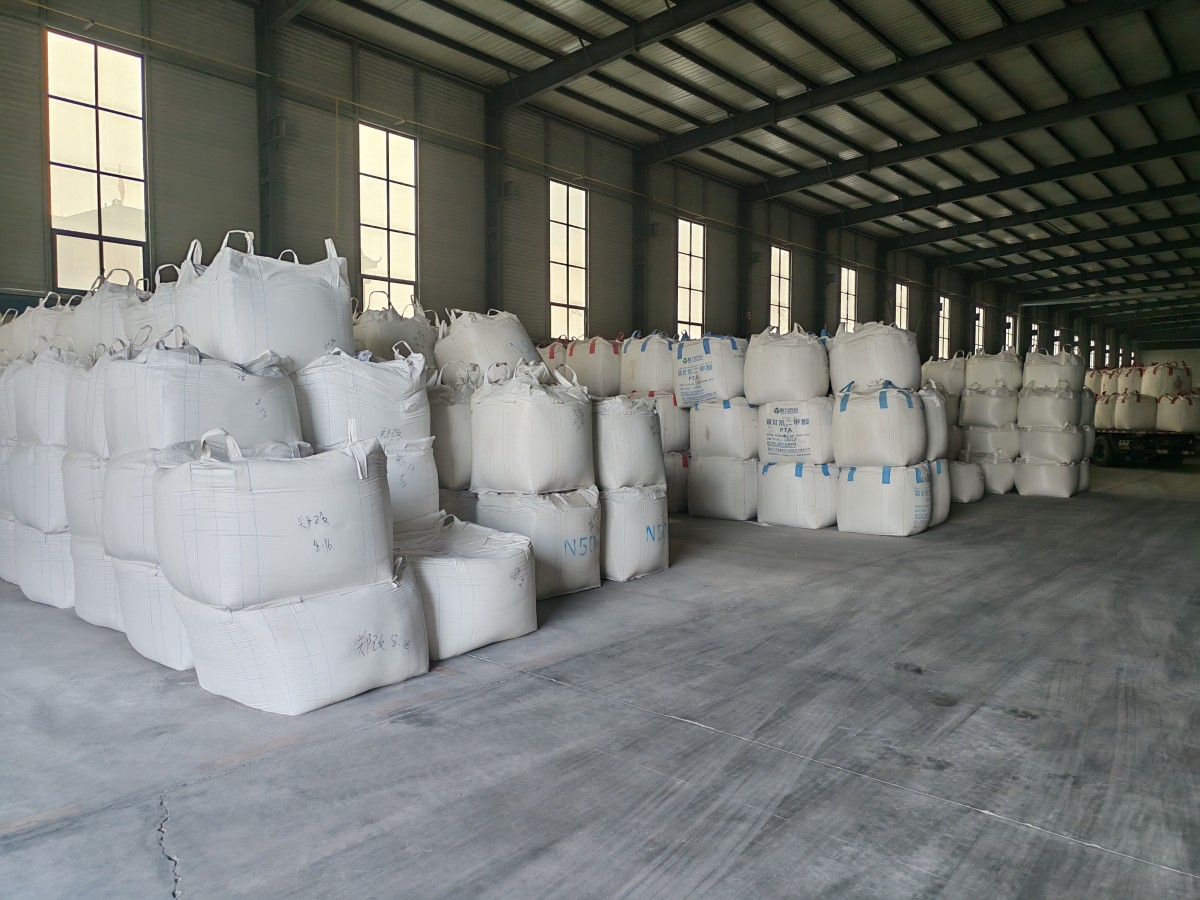
Ask ten suppliers for a quartz slab price and you will get ten numbers that appear to describe the same thing. They do not. One factory is quoting a bare slab ex-works, another a landed figure with freight and duty included, a third has quietly priced a different sheet format, and none of them is quoting the installed square-foot number the buyer is carrying around in their head from a home-improvement website.
This guide is written for importers, fabricators, distributors and project buyers who have to compare those numbers and get the decision right. It takes the quartz slab price apart into the parts that genuinely move it — sheet format, thickness, colour and finish, order volume, freight and trade terms — and sets out how to compare quotations on the same basis. Where public market ranges are mentioned, they are third-party published figures, not our own pricing.
Why the Price Per Square Foot Figure Misleads Buyers
A quartz slab price per square foot is a unit of measurement, not a product. The number a homeowner finds online for quartz countertops is an installed price: template, cutting, edge profile, sink cut-outs, installation labour and waste, all divided by the finished area. The number a slab supplier quotes is a material price for a full sheet, before any of that work happens. Those two figures can differ by a factor of two or three and both be honest.
That gap is where most comparisons go wrong. A project team collects fabrication pricing per square foot, holds it against a factory quotation per slab, and concludes that one side is expensive. The correct comparison is like for like: material against material, delivered against delivered, and both read against a nesting layout that shows how much of each sheet actually ends up in the building.
There is a second distortion. A square foot of slab and a square foot of finished countertop are not the same area. Cutting a kitchen out of a full sheet produces off-cuts, and on a small vanity run the waste can reach a third of the sheet. So when a quartz slab price is converted into a cost per installed square foot, the divisor is not the sheet area — it is the area that survives fabrication.
One further caution: quartz and quartzite share a syllable and nothing else. Quartzite is a natural quarried stone priced on block quality and pattern; quartz is an engineered slab pressed from aggregate and binder. Buyers routinely price one against the other, which is why that comparison gets its own section below.
What Actually Drives a Quartz Slab Price
Priced properly, a slab is the sum of five inputs: the mineral and resin mix, the pressing and curing process, the format and thickness pressed, the colour and finish, and the volume of the order. Everything else in a quotation — margin, freight, payment terms — sits on top of that base.
The aggregate. Quartz aggregate is the dominant fraction of the mix; industry literature commonly puts the quartz content of an engineered slab at roughly ninety per cent by weight, with the remainder resin binder, pigment and additives. The grade of that aggregate drives the base cost — washed, high-whiteness silica for a bright white surface is a different purchase from lower-grade material, and the whiteness of the finished slab follows the whiteness of the input.
Resin content and bonding. The binder is a minority fraction, but not a place to economise. An under-bonded slab presses easily and fails in service; an over-bonded one is cheaper to make and behaves more like plastic under heat.
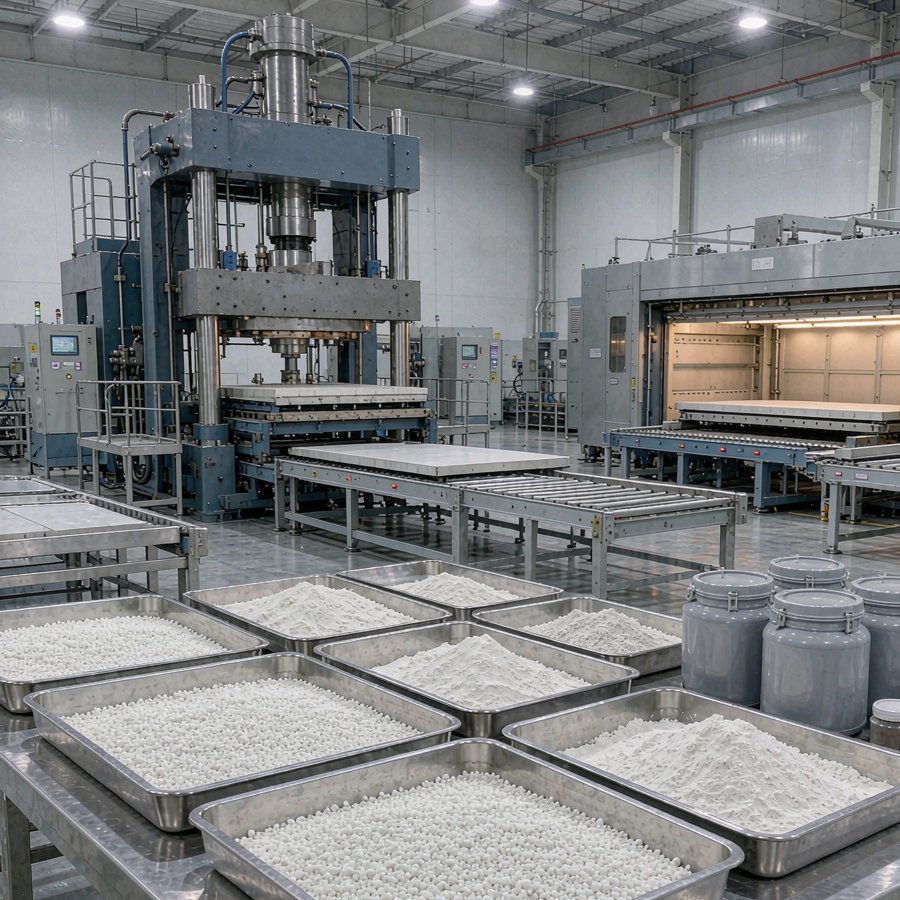
Pressing and curing. Vacuum vibro-compression plus a curing cycle sets the line time per sheet. Line time is fixed cost — press, energy, labour, supervision — spread across the sheets that come off the belt, which is one reason volume matters as much as it does later in this article.
Format and thickness. A larger or thicker sheet consumes more material and more handling per piece. These two levers interact with yield, so they are treated separately below, and they are the two lines that most often explain a quartz slab price difference between otherwise identical quotations.
Colour and finish. Veined, book-matched and deep-tone designs carry more pigment, more inspection and a higher reject rate than a plain white. They also run less often, so each production campaign carries more changeover cost per sheet.
Sheet Format and Yield: How Size Moves the Number
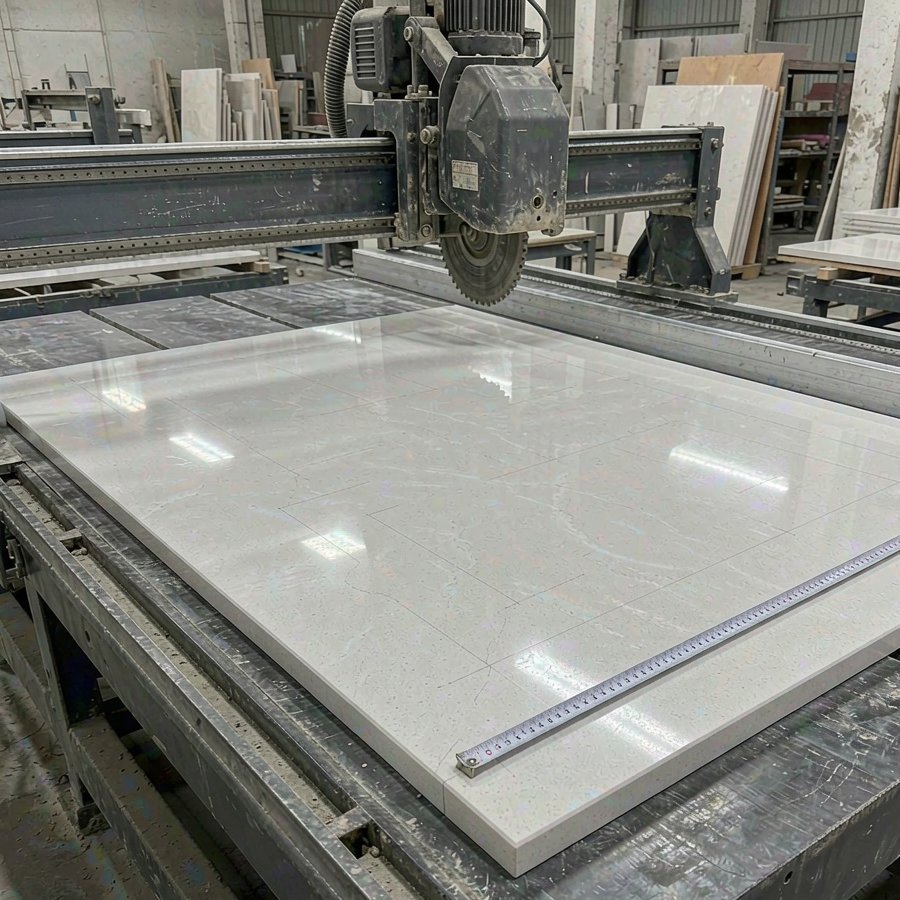
Format is the most under-priced variable in a quartz slab price. A 3200 × 1800 mm jumbo sheet carries roughly twelve per cent more surface than a 3200 × 1600 mm standard sheet, but it does not cost twelve per cent more per sheet. Wider formats cost more to press, handle and pack, and they are pressed in fewer colours, so the price step is usually smaller than the area gain. On a long counter run or a hotel vanity schedule, that is how a jumbo sheet ends up cheaper per square metre of finished work.
The mechanism is yield, not discounting. Every piece that moves to a second sheet becomes a joint, and a joint is labour, adhesive and a maintenance line for the life of the building. A specification that costs more per slab can cost less per installed square foot once the nesting is calculated properly. The honest way to read any quartz slab price is against a cutting layout rather than against the sheet dimensions — the full format range we press, with area and weight conversions, is set out in our guide to quartz slab sizes and jumbo formats.
Thickness, Colour and Finish
Thickness is a straightforward lever. A 20 mm sheet consumes about eleven per cent more material than an 18 mm sheet of the same format, and it weighs roughly 28 kg more. The quartz slab price step between the two is usually smaller than the material difference, because pressing time does not scale with thickness — but it is a real line in a quotation, and once the edge detail and substrate are fixed, it is a line that cannot be argued away at the end of the project. We press both 18 mm and 20 mm as standard, which puts buyers close to the 2 cm countertop convention used in North America.
Colour is the lever buyers notice least and pay for most. A plain white or neutral grey sells in volume, is pressed almost continuously, and sits at the low end of the price list. A Calacatta-style veined white, a metallic accent or a deep black surface involves more pigment, more line time and more inspection, and it is pressed less often, so every sheet carries a share of the changeover. Two slabs of identical format and thickness can sit at very different points on the quartz slab price list purely on design.
Finish is the smallest of the three but still real. Polished surfaces are the volume default. Honed or matte finishes add a processing step, remove the reflective gloss that hides minor colour variation, and are scrutinised harder on inspection — a modest step in the quartz slab price, and for some buyers a usefully different look.
Volume and Order Size: Why the Same Slab Prices Differently
Volume changes a quartz slab price for reasons that have nothing to do with the slab itself. A container-sized order lets a factory run a colour in a single campaign: one set-up, one press run, one colour-matching pass, one packing sequence. A one-off order is picked from a stocked line, packed and shipped as a single event, and it inherits the cost of that interruption.
This is the real content of a minimum order quantity. An MOQ is not an arbitrary rule imposed on buyers — it is the volume at which pressing a specific colour and format becomes worth running. Below that point a factory has two honest options: quote it as a special run at a higher quartz slab price, or sell from stock, which means the colours and formats someone else chose.
Two consequences follow. Mixing colours inside one order usually costs less than placing two small orders, because set-up and freight are shared. And the advantage of volume is not linear: the step from a few sheets to a full container is large, while the step from one container to three is much smaller. Buyers who assume a linear volume discount and build a budget on it are routinely disappointed.
Freight, Packing and Incoterms: Building a Landed Cost
Slabs are heavy, they travel upright, and they are packed in wooden A-frame bundles. That makes freight a first-order term in the true quartz slab price, not an afterthought. A 3200 × 1800 mm sheet weighs 248.8 kg at 18 mm and 276.4 kg at 20 mm. Because slab loads tend to cube out on weight rather than volume, the number of sheets in a container is set by weight — and that, not the sheet price, is what ultimately sets freight per square foot.
Incoterms decide which part of the journey sits inside the quotation:
Pitting an ex-works figure against a CIF figure is not a comparison of suppliers; it is a comparison of terms. Ask for the term in writing, then convert both quotations to the same one before reading anything into a quartz slab price difference.
Packing is not a detail either. Bundle count, crate dimensions and loading sequence are fixed by format and weight, and a late change of format can move all three. Our notes on preparing large quartz slab batches for shipment cover the packing and loading side in more detail.
How to Compare Quartz Slab Quotes Properly
Eight questions expose almost every hidden difference between two quotations:
1. Same format and thickness. Confirm both quotes are for 3200 × 1800 mm at 20 mm, not one at 3200 × 1600 mm at 18 mm.
2. Same trade term. Ex-works, FOB and CIF are three different products with three different prices.
3. Same unit. Per slab, per square metre, per square foot — pick one and convert both quotes to it, using the sheet area actually supplied.
4. Packing included or not. Wooden A-frame bundles, crates, edge protection and moisture barrier are sometimes quoted separately.
5. MOQ and colour-mixing rules. Ask what happens to the quartz slab price if the order splits across two designs.
6. Lead time and payment terms. A longer lead time and a heavier deposit carry a financing cost that belongs in the comparison.
7. Claims and colour tolerance. Understand what the supplier promises if a delivery runs outside its stated shade range.
8. Certification and test reports. Confirm whether ISO 9001, food-contact and environmental or fire documentation is included or charged for.
Those eight answers are also what a factory needs in order to quote an accurate quartz slab price in the first place: the wider process of sampling, MOQ, inspection, payment and lead time is set out in our guide to buying quartz slabs from China.
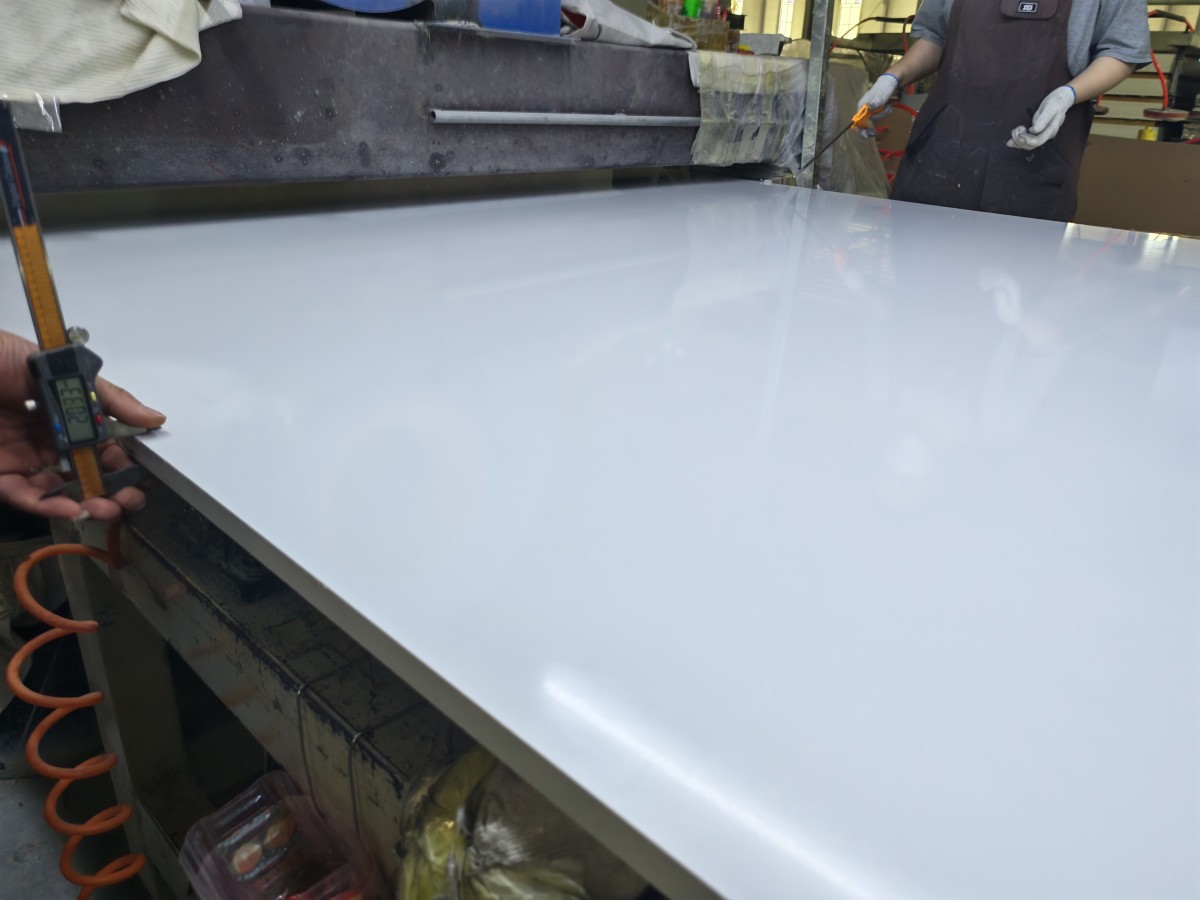
Common Pricing Mistakes Buyers Make
Comparing an installed price with a material price. The single most common error. Fabrication, installation and waste are not the supplier's cost base and should not be inside a slab quotation.
Leaving freight out until the end. On heavy slab loads, delivered cost can move more between two suppliers than the sheet price does. Get the landed number early, while there is still time to change the loading plan.
Buying on the sheet price alone. A cheap quartz slab price and a cheap countertop are not the same thing. A sheet that nests badly costs more in off-cuts, labour and joints than it saves at the factory gate. Ask for the cutting layout, not just the price list.
Assuming the biggest sheet is always the best value. Jumbo formats win on long runs and lose on small jobs, where off-cuts are simply waste and the buyer pays freight on surface that never leaves the crate.
Pricing quartz against quartzite. A natural quartzite quotation and an engineered quartz slab price describe different supply chains, different consistency guarantees and different installation expectations. The material comparison is worth doing — we set it out in detail in quartz vs quartzite — but the numbers only compare once both sides are quoted on the same term.
Treating MOQ as a negotiating position. MOQ is a production threshold, not a bluff. Working out what the threshold means for your colour and schedule gets a better answer than trying to argue it down.
Frequently Asked Questions
How much does a quartz slab cost per square foot?
Published third-party retail figures for quartz countertops are usually installed prices quoted by local fabricators, covering template, cutting, edge work, installation and waste. A factory material price for a bare slab is quoted per sheet, not per square foot, and depends on format, thickness, colour and order volume. The reliable unit for comparing suppliers is price per sheet at a stated format, thickness and trade term.
Why does the same colour cost less per square foot in a jumbo format?
Because the sheet carries about twelve per cent more area than a standard format while costing less than twelve per cent more to produce. The extra width usually removes a joint from a long counter, so the saving appears twice: once in the quartz slab price per square foot and again in fabrication labour.
Does thickness change the quartz slab price much?
Material consumption rises by roughly eleven per cent going from 18 mm to 20 mm, and weight rises by about 28 kg per sheet on a 3200 × 1800 mm format. The price step is normally smaller than the material step, because pressing time does not scale with thickness. What it does change is handling, substrate requirements and edge appearance.
Is quartz cheaper than quartzite or marble?
They are not directly comparable. Quartzite and marble are quarried materials priced on availability, block quality and vein pattern; quartz is an engineered product priced on a repeatable production cost. Engineered quartz is generally the more predictable purchase, because colour and format repeat between orders — which matters on phased projects where a later batch has to match the first.
Does the quotation include packing and freight?
Only if the trade term says so. Ex-works means the price stops at the factory gate; FOB, CIF and DDP each add a defined slice of the journey. Always confirm the term in writing, then convert both quotations to the same one before comparing the quartz slab price.
What do I need to send to get an accurate quotation?
Format and thickness, colour direction, surface finish, quantity in sheets or square metres, the trade term you want to buy on, and the destination port. With those six items a supplier can quote a real number instead of a range.
Conclusion
A quartz slab price is not a single figure waiting to be discovered. It is the visible edge of a set of decisions — format, thickness, design, volume and terms — and it moves for reasons a buyer can control. Fix the specification and the trade term first, and the numbers you receive will finally be comparable.
We press and finish engineered quartz slabs in-house for importers, fabricators, distributors and project buyers, in 3200 × 1600 mm standard, 3200 × 1800 mm jumbo and 1800 × 3500 mm oversized formats at 18 mm and 20 mm, across a veined and solid colour range that runs from Marble Golden Thread through to dark statement slabs — all under ISO 9001, with NSF food-contact and SGS environmental and fire certification.
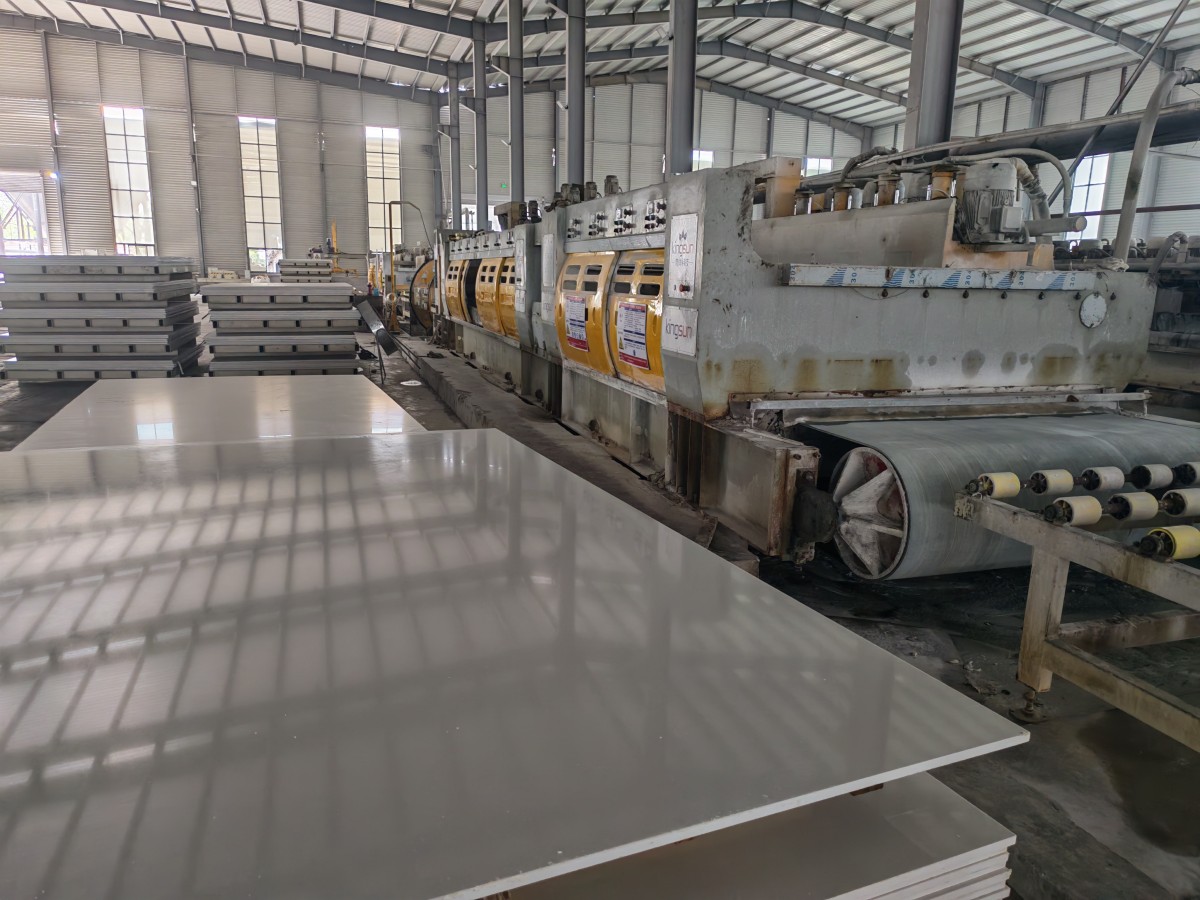
A quoted price is only as reliable as the batch behind it. Every export order we ship runs through the same strict batch inspection standard for export quartz orders before it is packed, which is why the figures above hold from the first container to the tenth.
And when the order is not a catalogue colour at all: our guide to custom quartz countertops explains how OEM colour development, private label and cut-to-size orders are quoted, and where their lead times differ from standard slabs.
Waterfall islands and book-matched panels sit at the premium end of the price spectrum. Our guide to quartz waterfall countertops explains how the slab layout, book-match pair and edge build-up drive that premium.
Related Articles
- Quartz Slab Sizes and Jumbo Formats Explained
- How to Buy Quartz Slabs from China: The Complete Buying Guide
- Large Batch Quartz Slabs Ready for Shipment
- Quartz vs Quartzite: Engineered vs Natural Stone
Need a Real Quartz Slab Price? Send the Specification
Send us the format, thickness, colour direction, surface finish and quantity, and tell us the trade term you want to buy on and the destination port. We will come back with a nesting and loading plan, the technical data sheet, current certificates and an indicative quartz slab price — quoted per sheet at a stated format and thickness, so the number you receive is one you can actually compare. Tell us what the project needs and we will confirm current availability for that design.
📱 WhatsApp: +86 198 6115 3736
📧 Email: raykelee@hyquartzslabfactory.com
Before you compare quotes, it helps to understand what a quartz slab factory actually controls — our guide to vetting a reliable manufacturer breaks down capacity, QC and the certifications buyers should ask for.
Before you negotiate price, it helps to know you are vetting a quartz slab factory that is built to last — our supplier-vetting checklist covers capacity, QC and certifications so you can compare quotes on equal footing.
If you are comparing a quartz slab FOB quote with CIF or EXW, our separate guide on FOB vs EXW vs CIF explains what each trade term means for your landed cost.
If you are comparing a quartz slab FOB quote with CIF or EXW, our separate guide on FOB vs EXW vs CIF explains what each trade term means for your landed cost.
Send Us A Message