
Quartz Slab Sizes and Jumbo Formats Explained
Quartz Slab Sizes and Jumbo Formats Explained
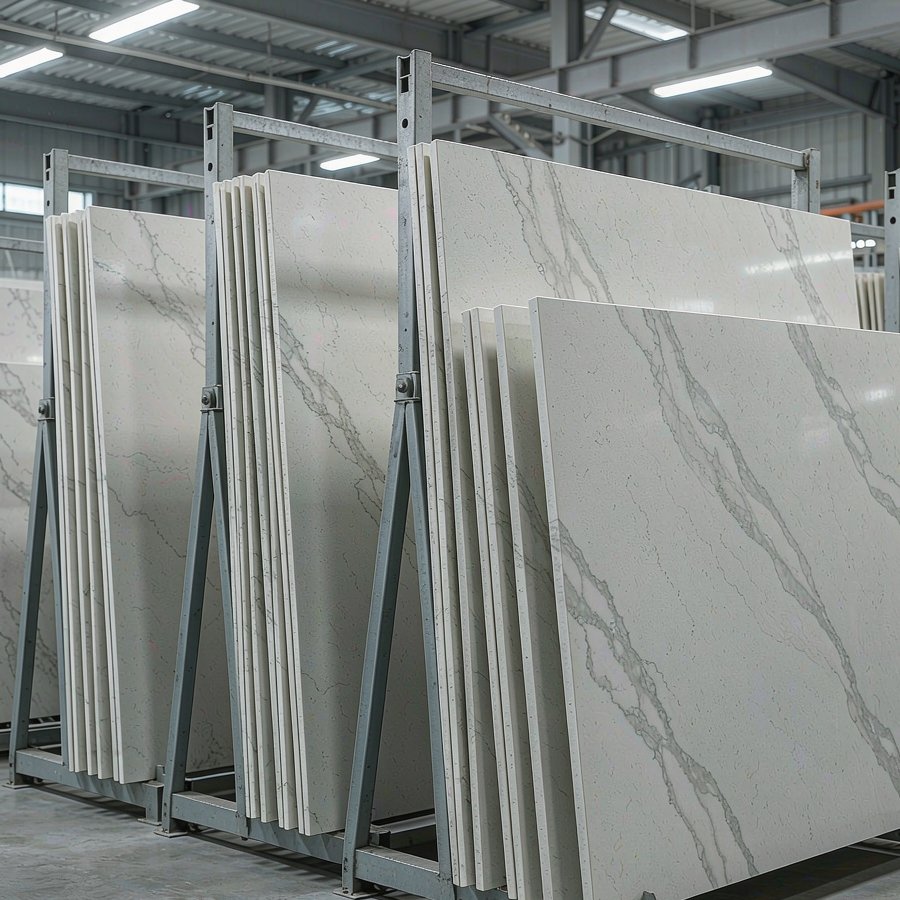
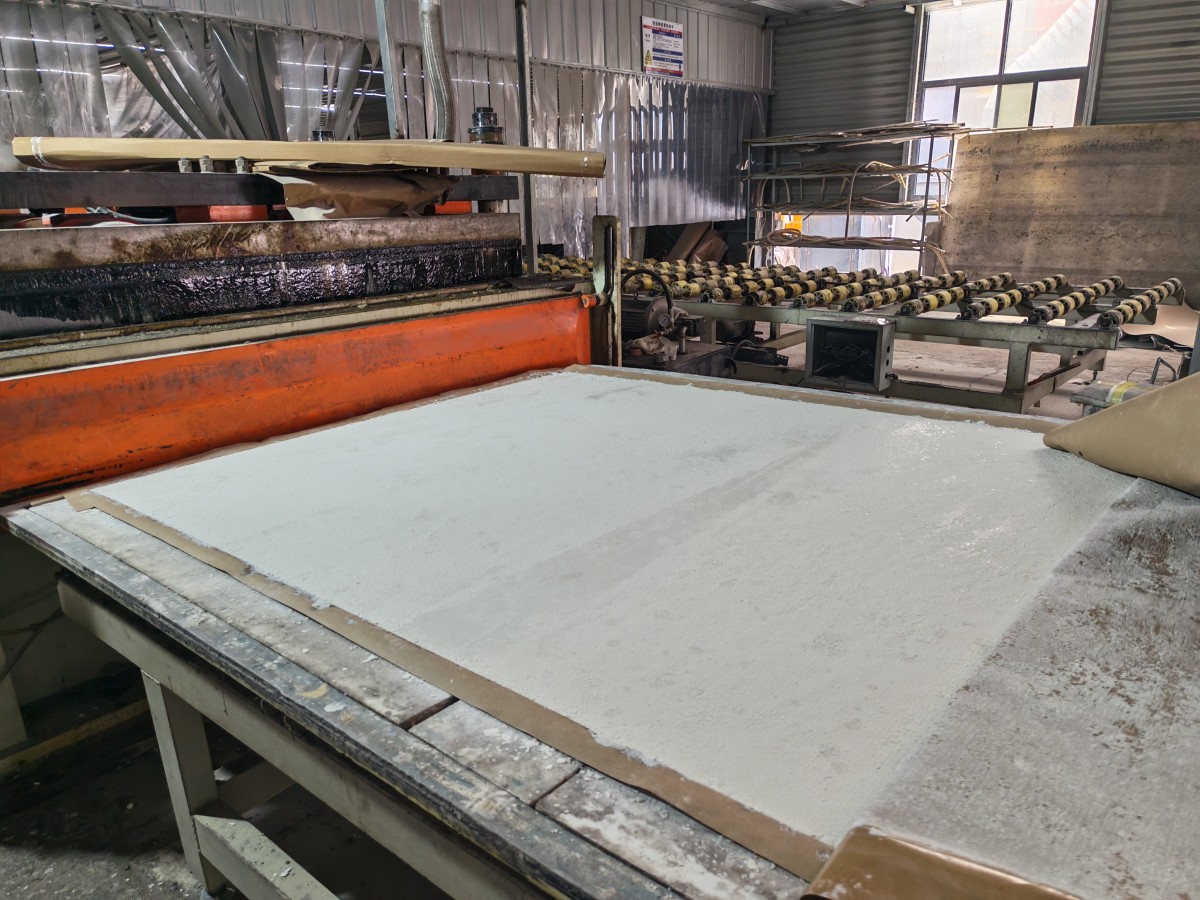
Most quartz specifications are settled around a single number, and it is usually the wrong one. A buyer will fix the colour, argue about the thickness, and let the jumbo quartz slab size fall out of whatever the supplier happens to be holding in stock. Six months later that same buyer is paying for extra seams, extra site labour and a loading plan that leaves part of a container empty.
In engineered quartz the order should be reversed. The sheet format is a design constraint, not a packaging detail. Every counter, vanity, island and wall panel on a job has to be nested inside a fixed rectangle, and the dimensions of that rectangle decide how many pieces you get, how many joints you carry, and what the freight works out to per square metre. This guide sets out the standard and jumbo quartz slab size ranges we press — in millimetres, inches, area and weight — and explains how to specify them without paying for the wrong sheet.
What “Jumbo” Means in Quartz Slab Sizes
Trade language around formats is loose, so it helps to fix the terms. In engineered quartz, a standard slab runs around 3200 × 1600 mm. A jumbo slab runs around 3200 × 1800 mm. Oversized — sometimes called super-jumbo — breaks the 3200 mm length limit altogether; in our case a 1800 × 3500 mm sheet pressed for long runs, book-matched walls and large islands.
The distinction matters because jumbo quartz slab sizes are not simply “a bit bigger”. Moving from 3200 × 1600 mm to 3200 × 1800 mm adds roughly 12 per cent more surface area at the same 3200 mm length, with no change to handling equipment, tooling or thickness. On a long counter or a hotel vanity run, that extra 200 mm of width is often the difference between a one-piece top and a top with a joint in it.
Standard, Jumbo and Oversized: The Formats We Press
These are the formats our line produces, with the conversions buyers ask for most often — area in square metres and square feet, and slab weight at both thicknesses.
Weights are calculated at approximately 2,400 kg/m³, the figure behind our own 3200 × 1800 mm slabs at 18 mm (248.8 kg) and 20 mm (276.4 kg); the other rows follow from it. Treat them as indicative for planning handling and freight, and ask for the exact figure on the grade you order.
How Jumbo Quartz Slab Size Changes Yield and Seam Count
Yield is where jumbo quartz slab sizes earn their keep. A fabricator nesting a kitchen run into a 3200 × 1600 mm sheet and into a 3200 × 1800 mm sheet is solving the same layout problem with two different budgets of surface. The wider sheet does not simply fit more — it fits different pieces. A 3200 × 1800 mm sheet will often take a three-metre counter with a 600 mm return where the narrower format forces the return onto a second slab.
Every piece that moves to a second slab becomes a joint. On a domestic kitchen, one extra joint is a cosmetic argument. On a hotel with 200 vanities, or a retail fit-out with 40 metres of counter, it is a line in the labour and adhesive budget — and a line in the maintenance schedule for the life of the building.
There is a second effect. Larger formats cut the number of off-cuts, and off-cuts are where most of a fabrication shop’s waste sits. A specification that looks more expensive per slab can come out cheaper per finished square metre once yield is calculated properly. That calculation is why a procurement team should be asking for the jumbo quartz slab size before it asks for a price.
Thickness: 18 mm and 20 mm, and What It Changes
Thickness is a separate decision from format, though the two interact. We press 18 mm and 20 mm slabs, which sit close to the 2 cm countertop standard used in North America — which is why a buyer there will often quote a jumbo quartz slab size in inches and a thickness in centimetres in the same sentence.
Thickness changes weight, load capacity and fabrication approach. A 20 mm slab can span further without a substrate in many counter applications, and it gives a heavier, more substantial edge. An 18 mm slab is lighter, easier to handle in a two-person shop, and is usually built up or eased to read as a thicker edge. On the same jumbo quartz slab size, the gap between 18 mm and 20 mm is about 28 kg per sheet — worth knowing before anyone plans a manual carry up three flights.
Weight, Handling and Container Loading
Weight is where jumbo quartz slab sizes stop being a design question and become a logistics one. At roughly 2,400 kg/m³, a 3200 × 1800 mm slab runs 248.8 kg at 18 mm and 276.4 kg at 20 mm. That is well beyond a two-person lift: it needs A-frame racks, mechanical handling and a workshop laid out to move it safely.
The same figure governs the container. Slab weight, not volume, usually sets how many sheets travel in a 20 ft or 40 ft box, and the loading plan is built around the format. Because oversized slabs such as 1800 × 3500 mm travel differently from 3200 × 1800 mm, a specification that mixes formats can move the freight per square metre by a meaningful margin. This is the point at which the jumbo quartz slab size written into a tender turns into a shipping cost. Our notes on preparing large quartz slab batches for shipment cover the packing and loading side in more detail.
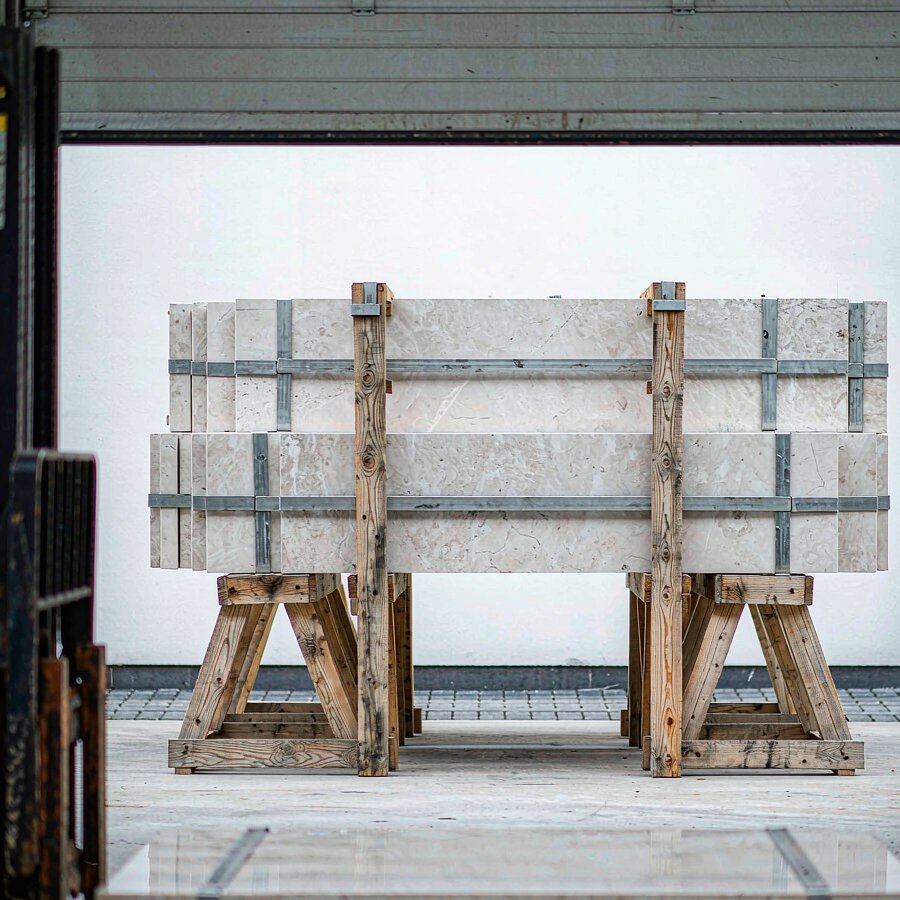
Packing follows the same logic. Slabs travel in wooden A-frame bundles, and the bundle count is driven by slab weight and format rather than by the number of pieces. A change of format late in an order can therefore move the number of bundles, the crate dimensions and the loading sequence — which is why format is best fixed before the order is confirmed, not after.
Slab Format and the Fabrication Workflow
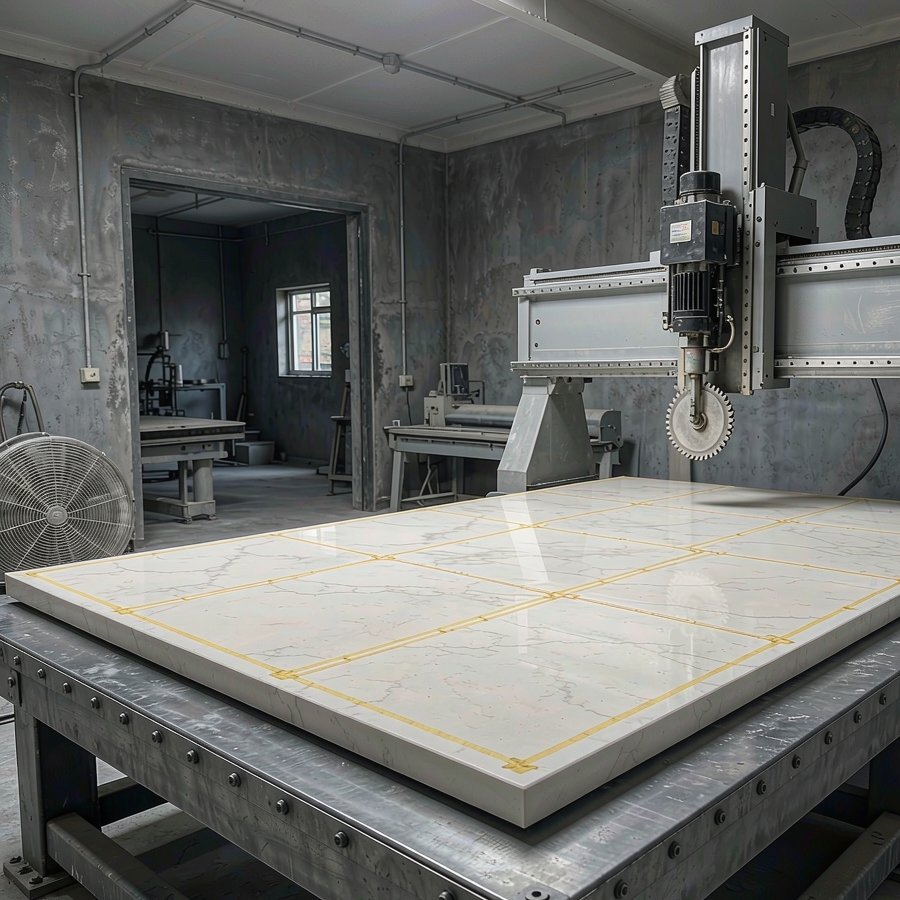
A jumbo quartz slab size is only useful if the shop can process it. Bridge saws, waterjet tables and CNC routers have bed sizes, and a 3200 × 1800 mm sheet needs a table that will take it. Vacuum lifters and A-frame trolleys need floor space to swing it. Before specifying an oversized format, confirm the fabricator can cut and move it — a slab the shop cannot handle is a slab that gets cut by hand, which is slower and less accurate.
The same logic applies to finish and layout. A larger sheet carries a vein across a longer distance, which suits book-matched walls and island fronts and is unforgiving if the design assumes a vein will meet across a joint. Give the fabricator the layout before the sheet is ordered, not after it has been cut.
There is one more practical test. Ask the fabricator to nest the actual piece list before the order is placed and to report how many sheets the layout consumes. Two formats can differ by a whole sheet on the same kitchen, and on a project of any size that difference outweighs any per-slab discount on offer.
How to Specify Slab Format: A Buyer’s Checklist
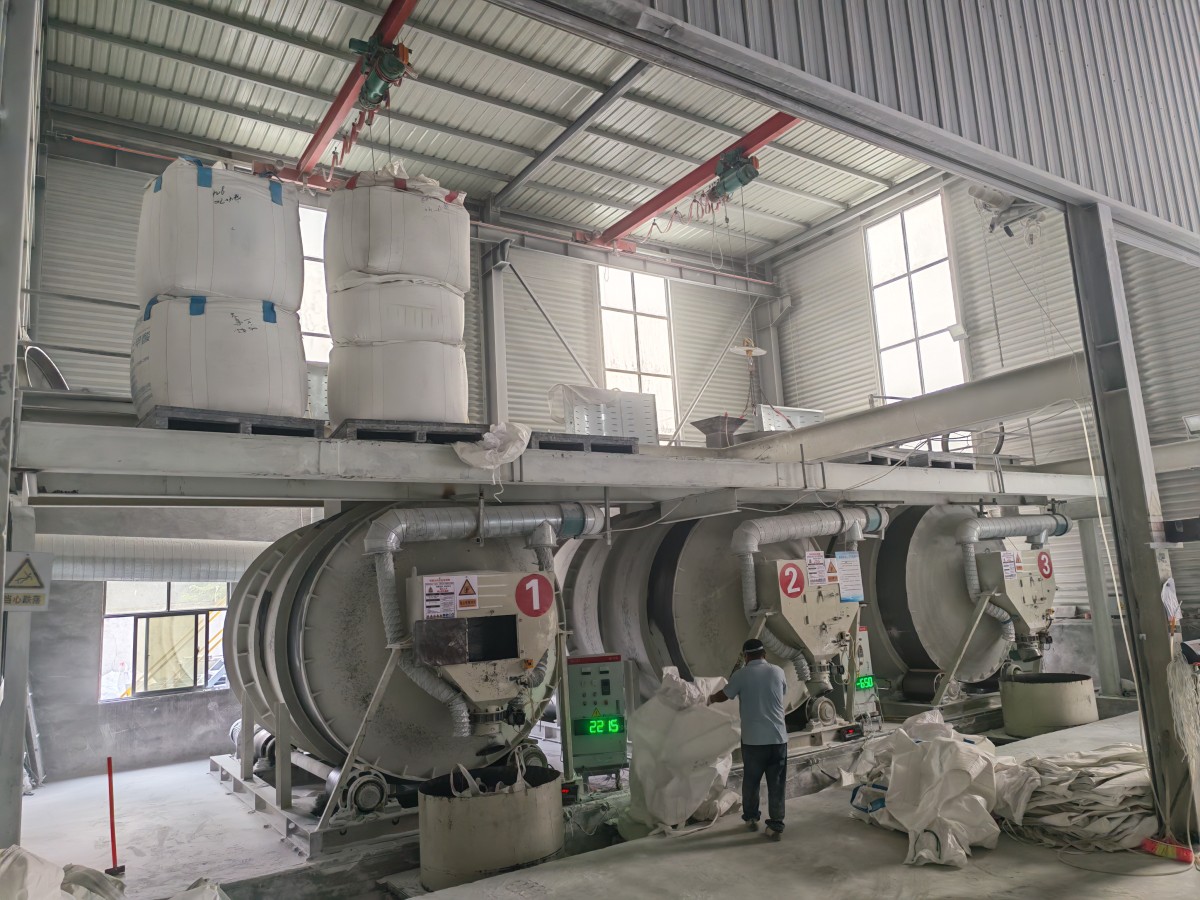
Six questions settle the format faster than any sample. Ask what the largest single rectangle each counter needs, whether those pieces fit a 3200 × 1600 mm sheet or need 3200 × 1800 mm, what thickness the substrate and edge detail assume, what the loaded weight per sheet will be, how the format affects the container plan, and whether the factory presses that size as a stocked line or only as a special. The jumbo quartz slab size decides the nesting before the price decides anything else.
Those six answers are also what a factory needs in order to quote accurately. We have written the wider process — sampling, MOQ, inspection, payment and lead time — in our guide to buying quartz slabs from China.
Common Mistakes When Specifying Quartz Slab Format
Choosing the format last. Colour and format are decided together in practice, because not every design is pressed in every jumbo quartz slab size. Fixing the colour first can leave you with a sheet too narrow for the layout.
Assuming the biggest slab is always the best value. The largest format wins on long runs and loses on small ones, where off-cuts from a jumbo sheet are effectively waste. Match the format to the piece list, not to the price list.
Quoting weight from the wrong thickness. A 20 mm jumbo slab is roughly 28 kg heavier than the 18 mm version, and that difference decides whether a job needs two people or three.
Ignoring the container. Freight follows how the formats stack, and a mixed-format order can raise cost per square metre well beyond the price gap between two formats.
Not asking what the factory actually presses. An advertised jumbo quartz slab size is meaningless if it is a one-off rather than a stocked line, because lead time and repeatability follow the line, not the catalogue.
Frequently Asked Questions
What is the standard size of a quartz slab?
In engineered quartz, the common standard format is 3200 × 1600 mm (about 126" × 63"), and the common jumbo quartz slab size is 3200 × 1800 mm (about 126" × 71"). Some factories press oversized formats beyond 3200 mm in length for long runs and book-matched work.
What is a jumbo quartz slab size?
A jumbo quartz slab is generally a full-width sheet around 3200 × 1800 mm. On our line that is 5.76 m², about 62 square feet, weighing 248.8 kg at 18 mm and 276.4 kg at 20 mm. It is the format that most often removes a joint from a long kitchen counter or a hotel vanity run.
How much does a quartz slab weigh?
At roughly 2,400 kg/m³, a 3200 × 1800 mm slab weighs 248.8 kg at 18 mm and 276.4 kg at 20 mm. A 3200 × 1600 mm slab at 18 mm is about 221 kg. Weight, not area, is usually what limits a manual lift, so plan handling from the slab weight rather than the sheet dimensions.
What is the largest quartz slab available?
Formats vary by factory. Our oversized line produces 1800 × 3500 mm sheets — 6.30 m², about 68 square feet — for long counter runs, book-matched walls and large islands. Sizes beyond this are uncommon, because pressing, handling and freight all become harder as the format grows.
Does slab format affect the price?
Yes, in both directions. A larger sheet costs more per slab but can cost less per finished square metre, because it produces fewer off-cuts and fewer joints. The honest comparison is total installed cost, which is why a quote should be read against a nesting layout rather than against the sheet price alone.
Can a jumbo slab be cut down for a small job?
It can, but it is usually the wrong purchase. Cutting a large format down for a small vanity produces off-cuts that are largely waste, and you pay freight on surface you never use. For small work, a standard 3200 × 1600 mm sheet or a half-slab format is the better buy.
Conclusion
The jumbo quartz slab size question is not really about size. It is about how many rectangles you need, how those rectangles nest into the sheet, and what the leftover costs you in seams, labour and freight. Settle the piece list first and the format usually chooses itself.
Where the layout genuinely needs a full-width sheet, our line presses 3200 × 1800 mm at 18 mm and 20 mm, plus an oversized 1800 × 3500 mm for long runs — all under ISO9001, with NSF food-contact and SGS environmental and fire certification, across every design from Marble Golden Thread through to dark statement slabs.
If you are comparing quartz with another surface at the same time, our companion guides on quartz vs solid surface, quartz vs quartzite and quartz vs marble cover the material arguments in the same depth.
Turning those dimensions into a real order? Our quartz slabs wholesale guide pairs slab formats with container planning and payment terms.
Thickness matters as much as length and width — the quartz slab thickness guide compares 18mm and 20mm slab by application.
Related Articles
- How to Buy Quartz Slabs from China: The Complete Buying Guide
- Large Batch Quartz Slabs Ready for Shipment
- Quartz vs Solid Surface Countertops: Which to Specify
- Quartz vs Marble: Which Is Better for Kitchen Countertops?
Need Slabs in a Specific Format? Send Us the Piece List
We press and finish engineered quartz slabs in-house for importers, fabricators, distributors and project buyers — 3200 × 1800 mm jumbo and 1800 × 3500 mm oversized formats at 18 mm and 20 mm, backed by ISO9001, NSF food-contact and SGS certification. Send us the piece list, thickness, finish, colour direction and volume, and tell us which jumbo quartz slab size you are planning around — we will come back with a nesting and loading plan, the technical data sheet, current certificates and an indicative quotation.
📱 WhatsApp: +86 198 6115 3736
📧 Email: raykelee@hyquartzslabfactory.com
Send Us A Message