
Custom Quartz Countertops: OEM & Private Label Guide
Custom Quartz Countertops: OEM & Private Label Guide
Most buyers arrive at a quartz factory with two very different questions. The first is "which of your standard colours can you ship me next month?" The second, less often asked out loud but far more consequential, is "can you build a colour that nobody else has?" This guide is about the second question. It explains how custom quartz countertops actually work on the production side — what OEM colour development involves, how private label differs from an open catalogue, what cut-to-size fabrication covers, and what a factory genuinely needs from you before the first mixed batch of resin and stone goes into the press. It is written from our own line, where the same presses that run our Fish Belly White and Luxury Stone catalogue also run customer-owned colours, so every claim below comes from orders we have actually produced.
What "Custom" Actually Means in Quartz Manufacturing
The word custom gets stretched across three different services, and mixing them up causes most of the disappointment in this market. Clear definitions matter because the market for custom quartz countertops quotes these three services on completely different schedules, so be clear about which of the three you are buying before comparing offers.
All three fall under the umbrella of custom quartz countertops, but they differ enormously in lead time, minimum order and risk. A private label order can follow the same schedule as a catalogue order — our standard production and delivery window is two to four weeks. A genuine OEM colour runs longer, because formulation and approval loops sit in front of mass production. Cut-to-size sits in between: the colour already exists, but every piece is dimensioned to a drawing, so the schedule follows the shop drawings rather than the slab list.
One more distinction matters at contract time. "Exclusive colour" means different things in different factories. In the strictest form, the formulation, the master batch records and the customer moulds are tied to your contract and are not quoted to other buyers. In the loosest form, a factory simply agrees not to sell that exact colour into your country. Ask which version is on the table before signing, because the difference is enforceable only in the first case — and enforceable exclusivity is one of the main reasons buyers accept the longer schedule of custom quartz countertops over an open catalogue design.
OEM Colour Development: From Reference Sample to Full Slab
Colour development is where a quartz factory earns the word custom. The process has five gates, and each one exists to stop a problem from reaching the next stage.
Gate 1 — Design input. You supply a reference. The best references are physical: a marble or quartzite sample, a competitor slab, or a previous production piece. Pantone references and high-resolution photographs also work, but they start the process one round later, because colour in quartz is judged against real mineral pigments, not screen values. This is the stage where custom quartz countertops diverge most from catalogue purchasing: you are co-authoring a design, not selecting one. If your target is a natural stone look, expect the first conversation to be about which veins carry the design and which are noise — a faithful copy of every character of a natural slab usually looks artificial at full size, as we explained in our Calacatta quartz guide.
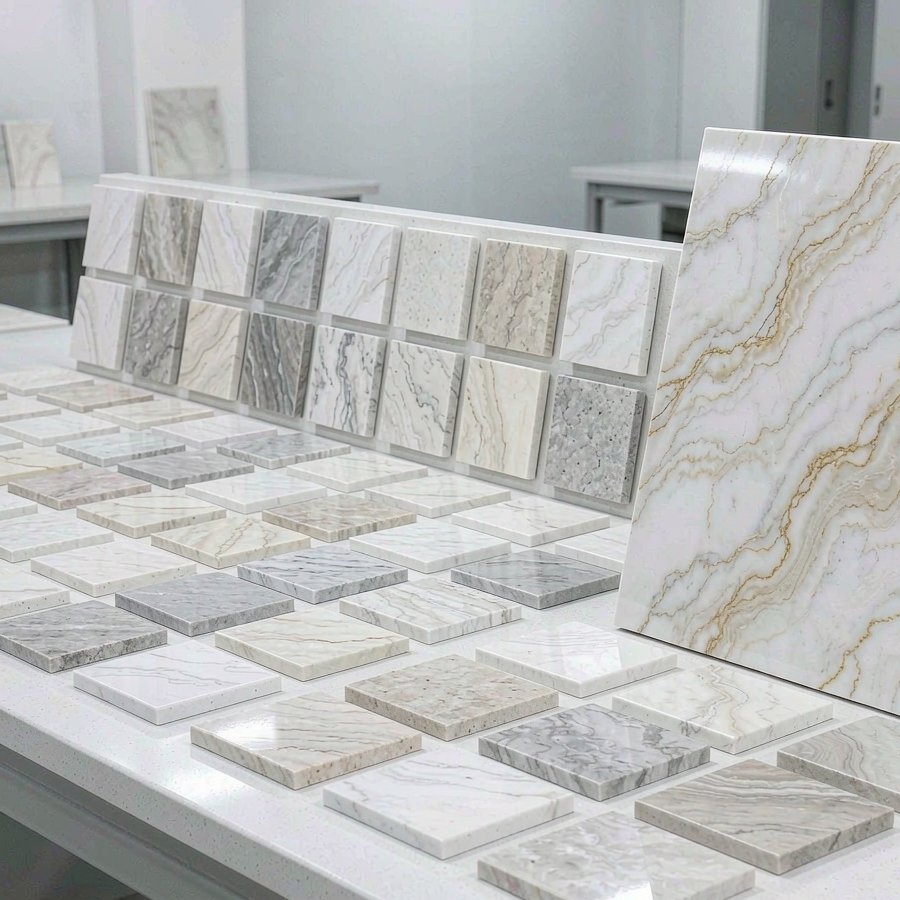
Gate 2 — Lab sample. Our lab produces small pressed samples, roughly the size of a large coaster, using the proposed pigment ratios and particle grading. A realistic custom quartz countertops program plans for two to three lab rounds. Adjusting a vein tone by a few percent is quick; matching a translucent quality in the background takes longer, because it involves glass and mirror particle selection rather than pigment alone.
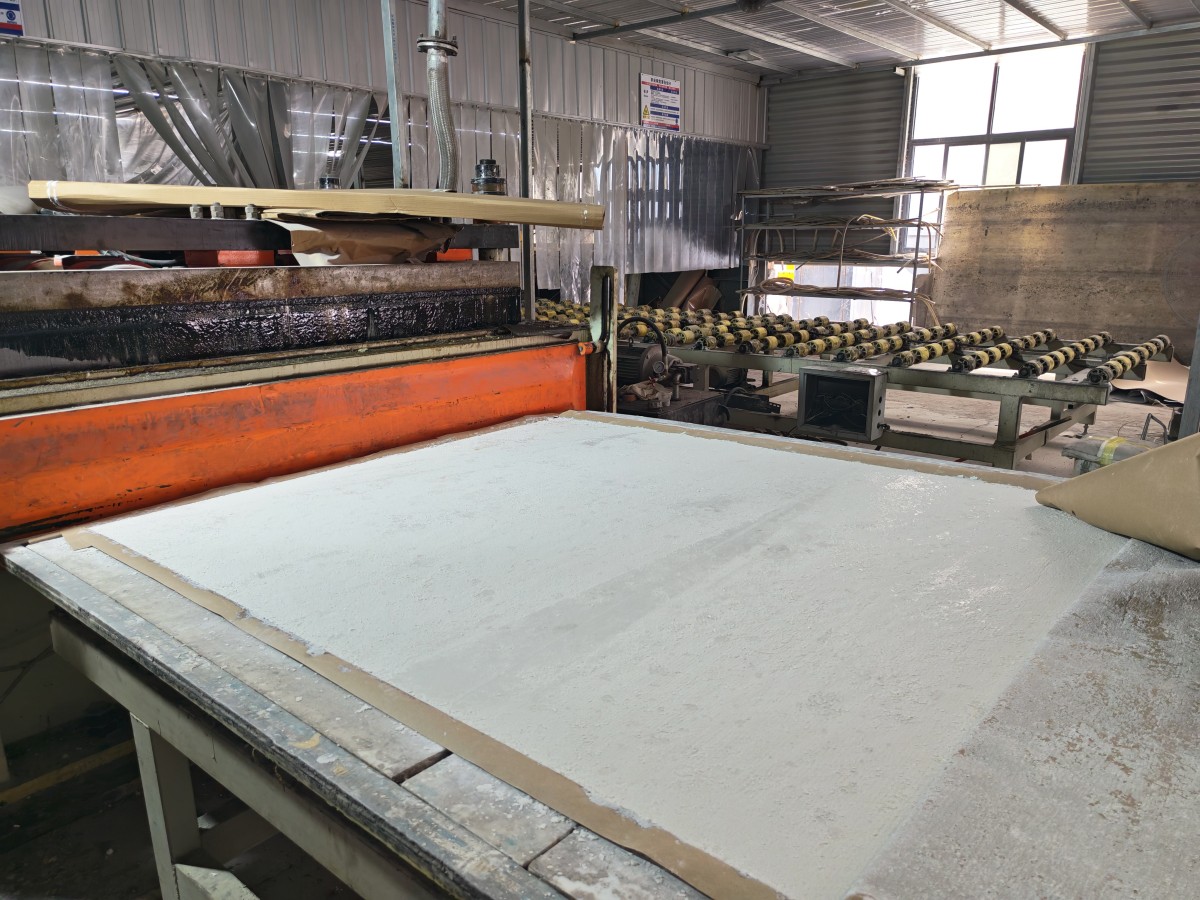
Gate 3 — Slab trial. The approved lab recipe is scaled up to a full press run. This step exists because colour can shift slightly between a hand-pressed sample and a machine-pressed slab: vacuum level, pressing pressure and curing temperature all influence the final tone. The slab trial is what you should inspect, not just the lab sample, and it is also the point where you can judge veining continuity across a full 3200 × 1800 mm format.
Gate 4 — Approval and record. Once you sign off the trial slab, the recipe, the raw material batch references and the process parameters are written into a production record tied to your colour code. This is the document that makes repeat orders possible a year later, and it is worth asking any prospective partner how they store it. Record discipline is what keeps custom quartz countertops repeatable as a product line rather than a one-off achievement.
Gate 5 — Mass production. The colour joins the production calendar like any other design. From here the quality conversation shifts from "do we like it" to "is every slab in this batch the same" — the checks that keep custom quartz countertops consistent from run to run, covered further below.
Private Label: Your Brand on a Proven Colour
Not every importer needs a new colour. Many need the opposite: a proven, popular design shipped under their own brand, with their label on the bundles, their branding on the protective film and their name on the invoices. That is private label, and it trades exclusivity for speed and certainty.
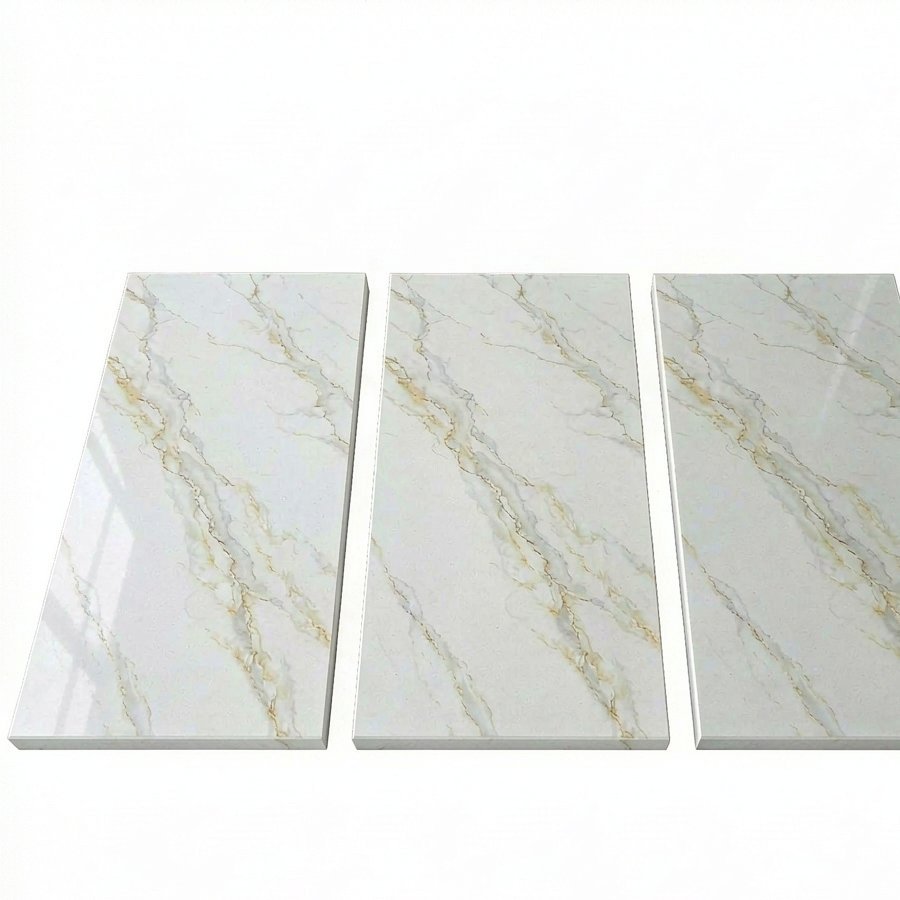
The practical value shows up in three places, and each one explains why many importers start their custom quartz countertops program here. First, the colour risk is gone — a design that has run for years will match its reference. Second, the lead time matches catalogue orders, two to four weeks in our case, because nothing needs formulating. Third, your marketing can use photography and physical samples that already exist. For a distributor entering a new market, private label is usually the correct first step, with OEM development following once sales data shows which direction your own range should take. Our Gold Vein design, a bold warm vein on a bright white field, is a frequent starting point for exactly this reason — it is proven in export markets and reads clearly at trade-fair distance, as you can see on its Gold Vein product page.
What can carry your brand on a private label order: the bundle labels and barcodes, the PE film or cork pads printed with your logo, the crate stencilling, and the shipping documents. What cannot change is the colour itself — that is the boundary between private label and OEM. Factories that blur this line, offering "your brand" with a colour they also quote to three other importers in your city, are telling you something useful about how they will handle your custom quartz countertops program later, when the stakes are higher.
Cut-to-Size and Project Fabrication
The third custom service takes finished slabs and converts them to project geometry: countertop blanks with finished edge profiles, stair treads and risers, vanity tops with pre-formed basins, wall cladding panels, threshold pieces. For contractors this converts the supply chain from "slabs plus a local fabricator" into "finished pieces ready to install", which matters on remote projects where local fabrication capacity is thin. Cut-to-size is also the quiet workhorse of the custom quartz countertops trade — less glamorous than colour development, but the largest share of project tonnage.
Dimensional control is the whole game here. Our standard tolerance on cut-to-size work is ±0.5 mm, which is tight enough for concealed-joint installation on cabinetry built to metric drawings. Slab thickness comes in 18 mm and 20 mm; the 3200 × 1800 mm and 3200 × 1600 mm formats cover most countertop and island layouts, the 3200 × 750 mm strip format suits bars, vanities and stair work, and the jumbo 1800 × 3500 mm format opens up book-matched cladding. What our jumbo quartz slab size guide covers in detail, a fabricator would otherwise have to compute by hand: yield per slab, vein matching across pieces, and whether a layout fits the pressed format at all.
Two practical notes follow from the veined design. First, vein continuity consumes yield: positioning the pattern across island fronts and return legs means the fabricator needs spare area, so ordering strictly to net square metres often leaves the layout short. Second, veined designs justify buying the larger format even when the cut pieces are small, because the pattern can be floated across pieces instead of restarted on each one. Our slab sizes guide works through both calculations with worked examples.

MOQ, Lead Time and Pricing for Custom Quartz Countertops
Custom orders price differently from catalogue orders, and the differences are structural, not negotiable theatre. Here is what actually moves the number on a custom quartz countertops quotation:
Batch position. A press run that switches between colours costs changeover time and carries a higher risk of transition slabs. Colours that can share a press window with similar designs run cheaper than colours that need a dedicated run. This is why an OEM colour's unit price improves in steps as volume rises — the factory is amortising the changeover across more square metres.
Raw material selection. Veined designs on a bright white base use higher-whiteness quartz powder and finer glass grading than utility colours. The raw material spread between a basic speckled design and a fine-veined premium design is real, and it shows up before any margin is added.
Format and thickness. Jumbo formats and non-standard thicknesses change the pressing and handling plan. The price conversation is cleaner when it starts from a standard format and deviates only where the project truly requires it.
Order structure. Full-container orders price very differently from mixed or LCL shipments, and factory-direct pricing excludes the distributor margin that retail slabs carry. Our quartz slab price guide breaks down the EXW, FOB, CIF and DDP layers so quotes can be compared on the same basis.
On minimum order quantities, honest factories answer "it depends on the design" and then explain the dependence. A private label order in an existing colour follows standard MOQ logic. An OEM colour typically needs enough volume to justify a dedicated press run and the raw material it ties up. Lead time stacks accordingly: formulation and approval sit in front of the standard two-to-four-week production window, so a realistic calendar for a first custom colour from first drawing to shipped container is measured in months, not weeks. That is the honest arithmetic of custom quartz countertops at the factory door, and factories that promise OEM colour in three weeks are promising to skip a gate described above — usually Gate 3 — with the surprise arriving at container opening.
What Your Supplier Needs From You: The Tech Pack
Custom projects stall in documentation more often than in production. A complete technical package moves a quotation from days to hours for any custom quartz countertops program, and it is the single best filter of supplier professionalism — watch what a factory does with a complete package and you will learn more than any factory tour can show you.
A workable tech pack contains: dimensioned drawings with the pieces numbered (PDF and, ideally, CAD), the edge profile for each piece type, the cut-out positions for sinks and hobs with corner radii, the target colour reference with any physical sample you can ship, thickness and finish specification, and the packaging standard you require — crate orientation, piece separation, bundle height. For OEM colours, add the exclusivity territory and the planned annual volume; factories use both to decide how to slot your colour into the production calendar.
The drawings deserve one paragraph of their own. The most common delay in cut-to-size projects is a drawing that shows overall dimensions but not which dimension is critical. A vanity top that must sit flush between two walls is dimensioned differently from one that will be scribed on site. Mark the critical dimensions and the tolerance you need on each, and the shop can plan the saw path accordingly. Good drawings are what turn custom quartz countertops from a negotiation into a production order.

Batch Consistency and Quality Control for Custom Production
Custom colours carry a quality risk that catalogue colours do not: there is no long production history to fall back on. The first mass-production run of a new colour is also its quality baseline, which is why batch consistency checks matter more here than anywhere else in the process.
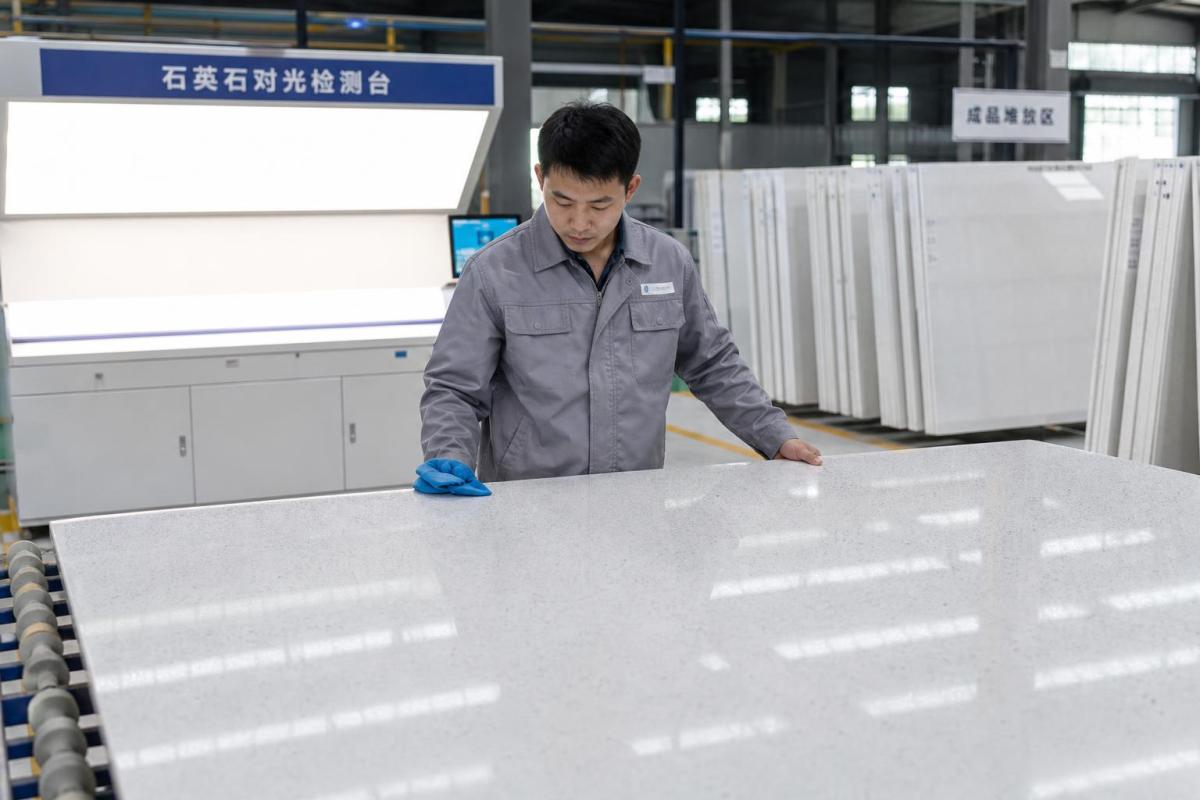
Our export inspection standard works through this systematically: slabs from the same batch are compared side by side under controlled lighting for background tone, vein density and veining direction; polished surface flatness and gloss level are measured rather than judged; and edge chips, pinholes and dimensional tolerance are checked against the ±0.5 mm standard. For custom colours we sample more densely on the first runs, because the process is still settling. Our batch inspection standard describes the full protocol we apply to custom quartz countertops, and we recommend that any buyer of custom production read it — or demand the equivalent from whoever they choose.
The other risk to manage is the repeat order, twelve months later. This is where the production record from Gate 4 earns its keep. When the record exists, a repeat batch starts from pigment batch numbers and pressing parameters, not from memory. Ask prospective partners directly: "if I reorder this colour in a year, what document do you open first?" The answer tells you whether your colour is a system entry or a favour. Repeat consistency, not the first sample, is the real test of any custom quartz countertops supplier.
How to Vet a Custom Quartz Manufacturer
Choosing a partner for custom quartz countertops is less about the sample and more about the system around the sample. Four checks separate the factories that can sustain a custom program from the ones that can produce one good first shipment.
Check the certification stack. ISO 9001 for the management system, NSF for food-contact safety, SGS test reports for the physical performance — these are baseline documents, and any factory producing for export should produce them without hesitation. For the US market in particular, buyers of custom quartz countertops inherit their customers' compliance questions, so verify the certificates are current and issued in the factory's own name.
Check the colour department. A factory that develops colours for custom quartz countertops has a lab with pressing capability, a pigment library and staff whose job is formulation. Ask how many customer colours are currently in the production calendar. One or two suggests the capability is theoretical; a healthy list suggests the workflow is routine.
Check the record discipline. The Gate 4 question above, asked verbatim, costs nothing and reveals everything.
Check the reference projects. Ask for two custom programs shipped in the last year, with contactable references if possible. Our own buying guide for quartz slab manufacturers in China walks through this evaluation in more detail, including the questions that reliably separate trading companies from factories.
Frequently Asked Questions
Can I get custom quartz countertops with my own brand without developing a new colour?
Yes — that is private label. Existing catalogue colours ship with your branding on labels, film, crates and documents, on the standard two-to-four-week production schedule. It is the fastest route to a branded range.
How long does OEM colour development take?
Formulation and approval typically run two to three lab rounds plus a full slab trial before mass production, and the production window itself is the standard two to four weeks. Plan the first custom colour in months, not weeks, and treat any shorter promise as a sign that a quality gate will be skipped.
What is the minimum order for a custom colour?
MOQs for custom quartz countertops depend on the design's press requirements, so they are confirmed case by case rather than quoted as a universal number. Send the design and target volume; the answer comes back with the reasoning, which matters more than the number itself.
Can custom colours be made exclusive to my company?
Yes, by contract — but the enforceable version ties the formulation and production records to your agreement, not just a verbal promise about one market. Put the territory, the exclusivity scope and the record ownership in writing.
Do cut-to-size pieces cost more per square metre than slabs?
The material for cut-to-size custom quartz countertops may price similarly, but fabrication adds value — cutting, edge profiling, cut-outs, inspection and individual packing. What you save is on-site labour and risk, which on remote projects usually exceeds the fabrication charge.
Can I visit the factory during my custom production run?
Yes, and for a first custom quartz countertops program we encourage it — particularly around the slab trial, when you can see the trial slabs beside the lab samples and approve the production baseline in person.
Custom work is not limited to full slabs and kitchen surfaces. The same routes apply to bathroom programs: our guide to quartz vanity tops explains how pre-fab sizes, integrated basins and custom vanity grids are manufactured and quoted.
Custom colours and patterns are especially powerful on waterfall islands, where the vein flows continuously down the cabinet face. Our guide to quartz waterfall countertops shows how book-matching and waterfall layout turn a custom slab into a statement island.
Related Articles
- Quartz Slab Manufacturers in China: A Buying Guide
- Quartz Slab Price Per Square Foot Explained
- Quartz Slab Sizes and Jumbo Formats Explained
- Large Batch Quartz Slabs Ready for Shipment
Start Your Custom Quartz Program
If you are planning custom quartz countertops for your market — a signature colour, a private label range or a cut-to-size project package — send the drawings, the colour reference and your target volumes to Rayke Lee at raykelee@hyquartzslabfactory.com, or message +86 198 6115 3736 directly for the fastest reply. We will confirm which of the three custom routes fits, give you a realistic calendar with the approval gates included, and quote on the same basis as the price guide above — so the decision you make is built on production facts, not sales lines.
WhatsApp: wa.me/8619861153736
Email: raykelee@hyquartzslabfactory.com
Send Us A Message