
Quartz Vanity Tops: Sizes, Sinks & Edge Profiles
Quartz Vanity Tops: Sizes, Sinks & Edge Profiles
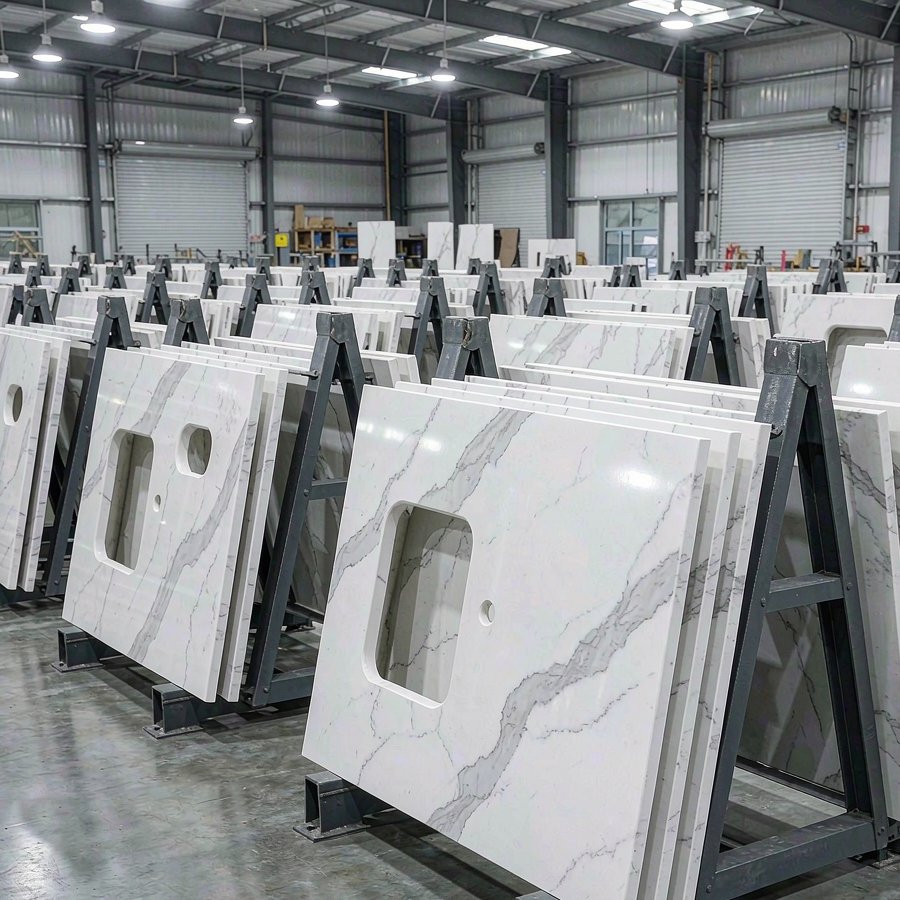
Bathroom programs are the quiet workhorse of the countertop trade. A kitchen project buys ten slabs once; a hotel, an apartment tower or a vanity-top wholesale line buys the same top forty, four hundred or four thousand times — and it keeps reordering. This guide explains how we manufacture quartz vanity tops for export programs: which sizes the market actually buys, how sink integration works on a production line, which edge profiles move in volume, and what a factory needs from you to quote and run a custom vanity program. It is written from our own cutting and polishing lines, where vanity tops ship alongside full slabs every week, so the numbers below come from orders we have actually produced.
Why Quartz Works So Well in Bathrooms
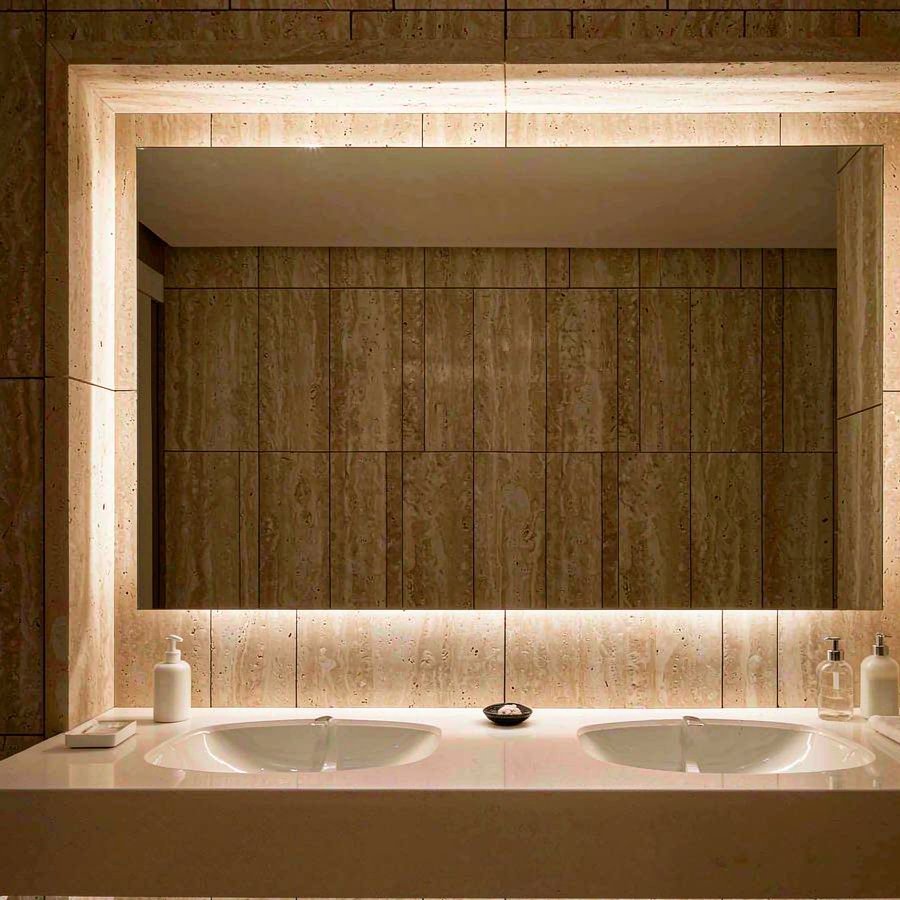
A bathroom is a harder environment on a countertop than a kitchen in several specific ways. Standing water sits on the surface for hours. Cosmetics, hair dyes and nail products contain solvents and pigments that stain natural stone. Cleaning happens daily, often with aggressive chemicals. Quartz answers all three, which is why quartz vanity tops have taken over this category: the material is non-porous, so water cannot absorb and leave mineral rings; it resists the common staining agents found in a bathroom; and it tolerates the mild cleaners that hotels and households actually use.
Moisture is the issue most worth explaining to your own customers, because it is where cheaper materials fail visibly. We covered the full waterproofing behaviour of the material in our guide to the waterproof and moisture-proof performance of quartz stone — the short version is that a properly cured slab absorbs almost nothing, which is why a quartz vanity top keeps its sealant lines and its surface finish intact in a room that is humid every single day. Cultured marble and lower-grade engineered surfaces yellow and blister in the same conditions, which is exactly the failure that importers get blamed for.
There is also a design argument. Bathrooms are small, so the surface is seen up close and in large proportion to the room. A clean, bright quartz vanity top with one elegant vein reads as premium in a way that busy speckled materials do not — one of the reasons white and light-veined designs dominate vanity specifications, exactly as they do in the white quartz countertop market generally.
Standard Quartz Vanity Tops Sizes
Size discipline is where vanity programs are won or lost. Unlike kitchen work, which is fabricated per project from slabs, a large share of the market runs on standard pre-fabricated quartz vanity tops — pieces produced in repeat, packed flat and shipped by the container. The North American market centres on a 22-inch (560 mm) standard depth over a 24-inch (610 mm) cabinet, with lengths stepping in fixed increments:
Two practical notes follow from the size table. First, the 61-inch top is the most versatile SKU in the whole range: it sells as a wide single-bowl top and as the standard double, so stocking it deeply covers two demand patterns at once. Second, dimensional tolerance matters more on quartz vanity tops than on cut-to-size kitchen pieces, because tops are fitted to cabinet lines that were never measured by the same person who measured the top. We hold length and width within ±1.0 mm on pre-fab tops, and diagonal squareness within the same band, so a container mixes and matches without surprises on site. How these formats relate to full slab sizes and jumbo formats is covered in our slab sizes guide, which matters when a program mixes pre-fab tops with custom pieces.
Single Sink or Double: Choosing the Bowl Layout
Bowl layout is a commercial decision more than a technical one. Single-bowl quartz vanity tops dominate the 25″–49″ range and keep fabrication simple: one cut-out, one bowl, one tap hole. Double layouts take over from 61″ upward, where two bowls under one slab give a master bathroom its symmetric look and, commercially, let a distributor sell one SKU into both the “wide single” and “double” searches.
Whatever the layout, bowl placement on quartz vanity tops is engineered, not eyeballed. The bowl position must leave sufficient front apron for the edge profile, sufficient rear deck for the tap and backsplash, and balanced overhangs left and right so the top sits square on the cabinet. On double tops the two bowls are positioned symmetrically about the centreline of the slab, which is the detail that separates a factory-made top from an improvised one — and it is checked with jigs on every piece, not sampled.
Sink Integration: Undermount vs Integrated Basin
There are two ways a sink meets a quartz vanity top, and they are different products with different price points.
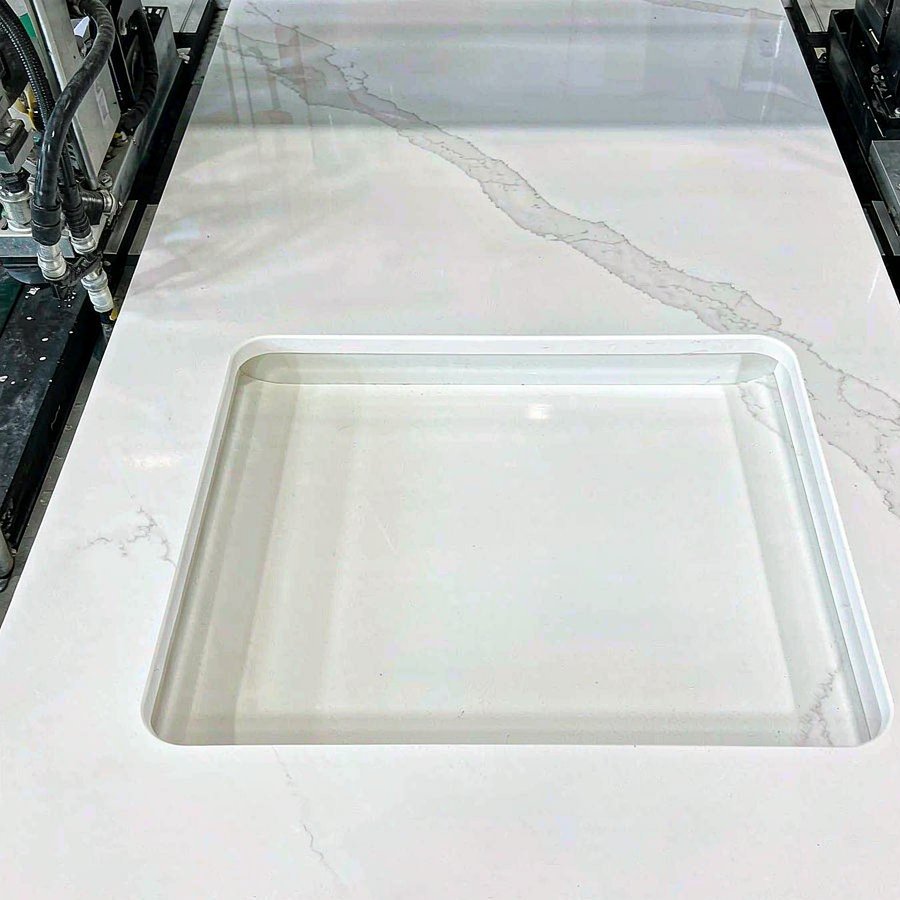
Undermount. A separate ceramic, porcelain or stainless bowl is fixed beneath the slab through a precision cut-out. The cut-out edge is polished all round, because with an undermount install it is fully visible. This is the specification most North American and Australian buyers ask for, and the search language reflects it — “vanity tops with undermount sink” is one of the highest-intent phrases in the category for quartz vanity tops. Production-wise, the cut-out is water-jet or CNC cut, then hand-polished; radius corners are standard, and the bowl is attached with brackets and cured adhesive so the joint carries load without relying on silicone alone.
Integrated basin. The bowl is moulded from the same quartz material as the top, as one piece. There is no joint at all, no cut-out to seal, and cleaning is simply continuous. Integrated-basin quartz vanity tops are cast in dedicated moulds, so they suit programs running one proven design at volume — hotel chains are the classic buyer. The trade-offs are real: mould tooling locks the geometry, repair of a chipped basin rim means replacing the top, and the design range is limited to the moulds the factory owns. We run both configurations; for a distributor building a retail line, undermount covers the broad market, while an integrated-basin SKU is a differentiator worth discussing once volumes justify it.
Trough sinks — one long rectangular basin spanning a 61″ or 73″ top — sit between the two and have grown fast in the last few seasons. They undermount like a standard bowl but read visually like an integrated feature, and they use the slab area efficiently.
Edge Profiles That Move in Bathroom Programs
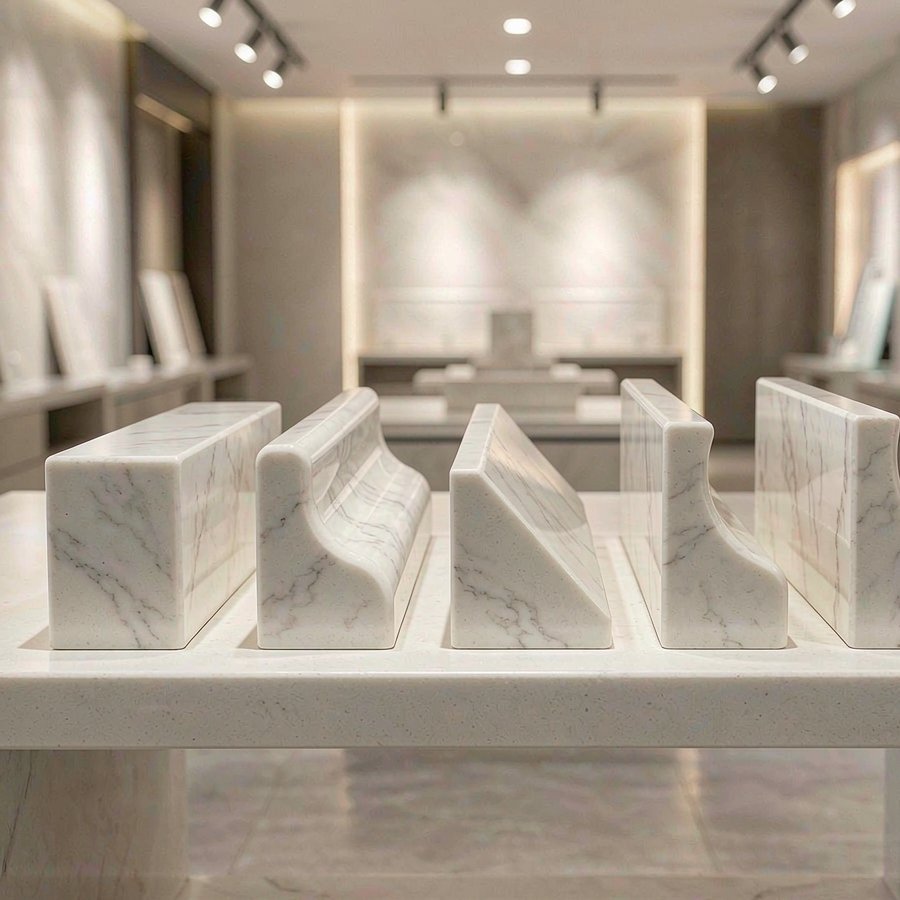
Edge choice sounds cosmetic but decides both cost and perceived value. The profiles that actually ship in volume on quartz vanity tops:
Eased edge. Slightly softened square corner. Cheapest to produce, most contemporary look, and the default for hotel and rental programs.
Half bullnose. Fully rounded top edge, no sharpness anywhere, easy to clean. The safest profile for family and healthcare specifications.
Bevelled. A 45-degree cut across the top arris. Reads crisp and architectural; shows chips more than bullnose if mishandled, so it asks for better packing.
Ogee and half-ogee. The decorative S-curve profile that sells at retail because it photographs as “expensive”. Higher fabrication cost, more polishing time per metre, and it suits the traditional and transitional designs where a visible vein carries the look.
Coved backsplash. Not strictly an edge profile but produced on the same line: the quartz vanity top curves up into an integral low backsplash in one piece. It eliminates the grout line behind the top, which is the first place cheap installs fail in a wet room, and it is a genuine selling point for hotel refurbishment programs.
On a mixed container it is common to run one design across two or three edge profiles, so a distributor can serve both the modern and the traditional shelf from the same colour stock. That is a planning question we settle at order confirmation, because edge tooling changes line speed.
Cut-to-Size and Custom Vanity Programs
Pre-fab sizes cover the volume market, but a large share of enquiries are for quartz vanity tops outside the standard grid: European depths, furniture-style vanities, odd lengths for renovation chains, or a colour made for one customer only. That work runs through our custom quartz countertops program — the same OEM and private-label routes described for slabs apply to vanity tops, with two differences worth knowing.
First, dimensions are freer but quantities price differently. A container of one hundred identical 37″ tops runs efficiently; a container of twenty different sizes runs like a cut-to-size project, with nesting, individual labelling and more handling per piece. Both are routine, but they quote differently, and our price guide explains why per-piece cost moves with batch uniformity. Second, custom vanity work usually mixes colour development with fabrication, so the approval gates from the colour program sit in front of the first production run — plan the calendar accordingly.
Quality Checks Specific to Vanity Tops
A quartz vanity top fails in the field in ways a slab never does, so the inspection protocol differs. Every pre-fab top passes the batch-level checks that apply to all export production — our batch inspection standard describes the full protocol — plus piece-level checks unique to quartz vanity tops:
Cut-out accuracy. Bowl cut-outs are checked against the bracket set of the specified bowl, not just against the drawing, because a two-millimetre drift that would pass on a kitchen hob cut-out will hang a bowl visibly off-centre.
Flatness over the cabinet rails. A quartz vanity top spans two cabinet rails and must sit flat across them; we check straightness with a straightedge along and across the piece. A warp that is invisible on a 3200 mm slab becomes a rocking top on a 940 mm one.
Edge polish continuity. The polished edge is inspected under raking light for the wave that hand polishing can leave. On a vanity top the edge sits at eye level and catches bathroom lighting, so a defect that a kitchen would hide is visible here.
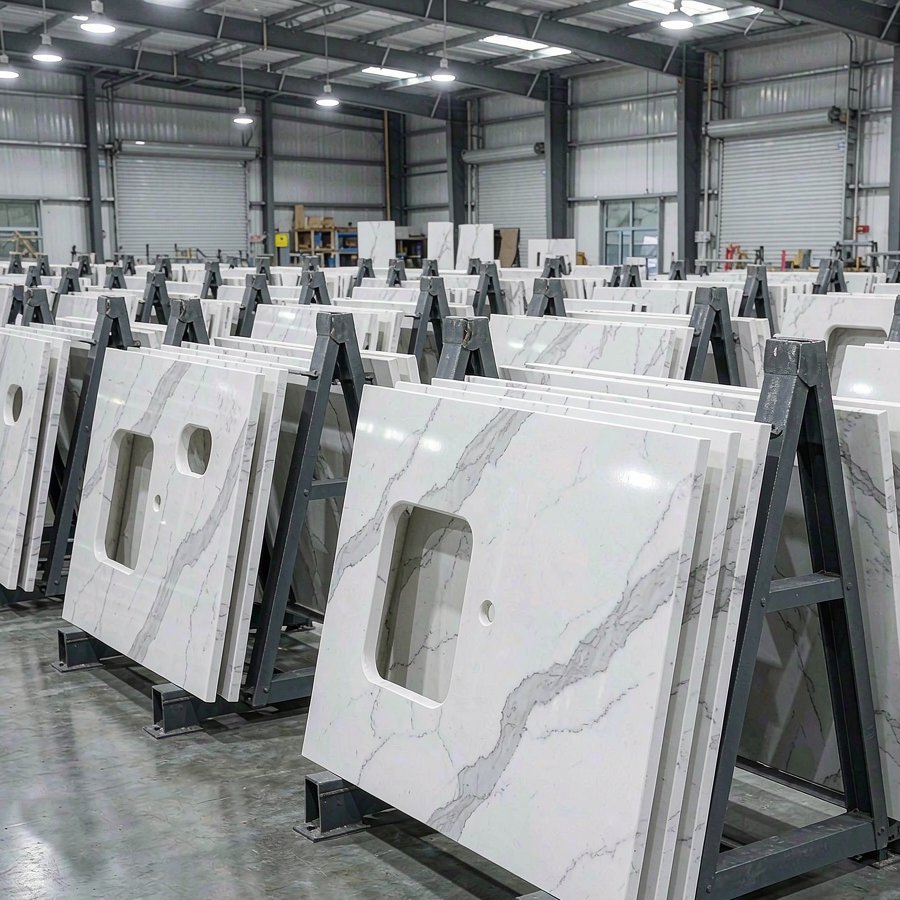
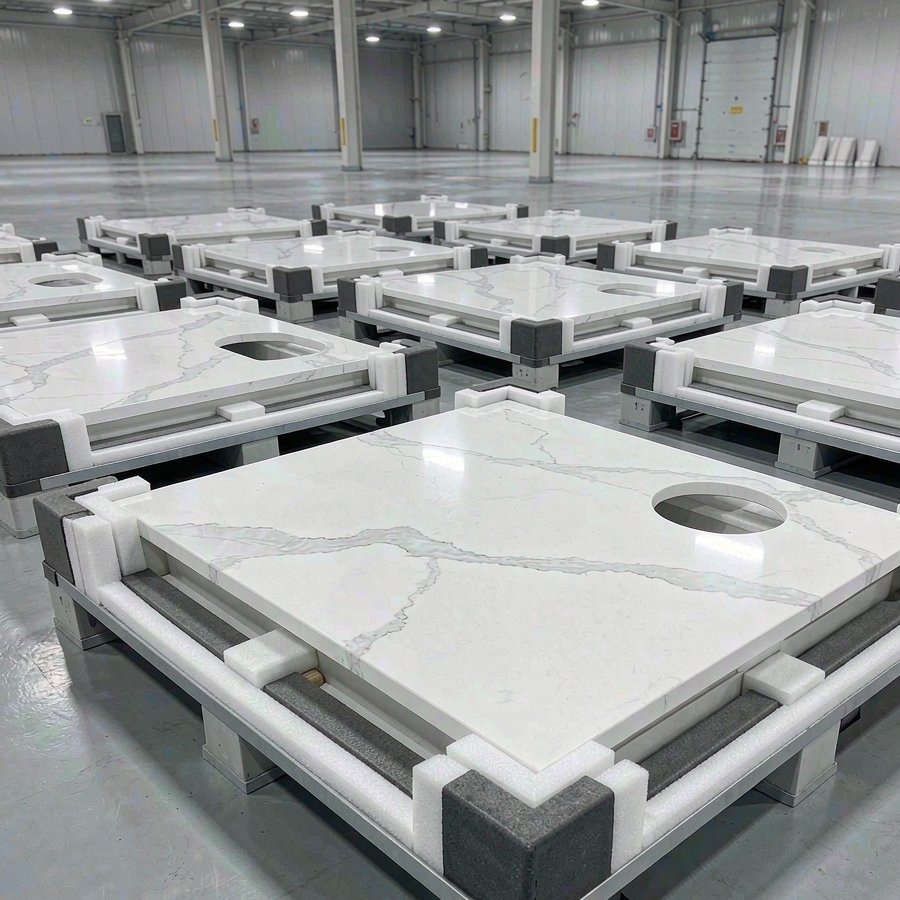
Packing for flat stock. Tops ship vertically in A-frames or flat on edge-protected cradles with foam between pieces; carton design is part of the quotation, because a chip in transit is a claim against the program, not a one-off.
What Drives Vanity Top Pricing
Buyers comparing quotes across factories should compare like with like, and the cost structure of a pre-fab top differs from slab pricing in three ways. Material is charged on the cut piece plus yield loss, and the small-format nesting of tops actually wastes less than island cut-outs do — one reason quartz vanity tops carry healthy margin at competitive retail. Fabrication adds real value: cut-outs, edge profiles, bowl fitting and individual packing each add handling. And standardization is the quiet discount: a repeat size in a repeat colour runs without engineering time, which is why committed programs quote better than one-off mixes.
The currency, incoterm and volume-tier logic is the same as for slabs, and our quartz slab price guide covers that layer in detail. For planning purposes, treat a pre-fab vanity program as a fabrication business built on slab material: the more uniform the SKUs, the closer the price sits to material-plus-margin, and the more the program can absorb freight swings without re-quoting.
Choosing Colours for a Vanity Line
Vanity colour selection rewards discipline. Whites and near-whites dominate bathroom specifications because they photograph clean, match sanitaryware and suit small rooms; the veined whites from our Fish Belly White family — the bold Gold Vein and the quieter Marble Golden Thread and Shimmering Spring Stream — all run in quartz vanity tops alongside the slab lines. Greys suit hotel work because they flatter chrome fittings and hide water spotting better than pure white. Darker designs appear mostly in premium hospitality, where the contrast against light tile is the point; White Realm Black Mark, with its fine black veining on white, serves the buyer who wants the dark look without the maintenance of a true black surface.
One production note: light tops show polish quality more than dark ones, so a vanity line built on whites benefits from the same raking-light edge inspection described above being run at higher sampling. It costs almost nothing and it is the difference between a container that reorders and one that generates claims.
Frequently Asked Questions
What is the most popular size for quartz vanity tops?
For North American programs, the 37″ × 22″ single-sink top is the volume leader, with 61″ × 22″ close behind because it serves both wide-single and double-bowl layouts. European specs run deeper tops and metric lengths, so we confirm the grid per market before quoting tooling.
Is quartz good for bathroom vanity tops?
Yes — it is non-porous, so standing water, cosmetics and daily cleaning do not stain or degrade it the way they do natural marble or lower-grade engineered surfaces. The honest caveat is heat: a quartz vanity top is not heat-proof, and a hair tool laid on the surface can mark it, which is why hotel specs pair the top with a rated heat pad or specify darker finishes.
Can quartz vanity tops be made with an integrated sink?
Yes. The basin is cast from the same material as the top in a dedicated mould, producing a one-piece unit with no joint to seal. Integrated-basin quartz vanity tops suit volume programs on a proven design, typically hotel chains, and we confirm the mould geometry and MOQ case by case.
What is the minimum order for pre-fabricated quartz vanity tops?
Standard sizes in catalogue colours ship from one pallet, but container economics start around a full mixed container. For custom sizes or custom colours the number is set by tooling and press scheduling, so send the size list and target volume and the answer comes back with the reasoning.
How are quartz vanity tops packed for export?
Individually foam-faced and shipped either vertically in A-frames or flat on edge-protected cradles, with carton design agreed at quotation. Pre-fab tops are crated to be unloaded and racked directly into distribution, because every extra rehandle in the destination warehouse is a chip risk.
Can I mix vanity tops and slabs in one container?
Yes, and it is the normal pattern for distributors building both lines: slabs in A-frames, pre-fab tops in cradles, weight distributed so the container stays within road limits. Tell us the mix at order stage so the loading plan and the documents reflect it.
The edge you pick also depends on slab thickness — our quartz edge profiles guide matches eased, bevel, bullnose and ogee edges to real applications.
Related Articles
- Quartz Slab Sizes and Jumbo Formats Explained
- Quartz Slab Price Per Square Foot Explained
- Custom Quartz Countertops: OEM & Private Label Guide
- Waterproof and Moisture-Proof Performance of Quartz Stone
Start Your Quartz Vanity Tops Program
If you are building a line of quartz vanity tops for your market — standard pre-fab sizes, a custom size grid, or an integrated-basin program — send the size list, the colour reference and your target volumes to Rayke Lee at raykelee@hyquartzslabfactory.com, or message +86 198 6115 3736 directly for the fastest reply. We will confirm which sizes fit your cabinet standards, quote the pre-fab and cut-to-size routes side by side, and support the first container with the piece-level inspection described above — so the program you launch is built on production facts, not sales lines.
WhatsApp: wa.me/8619861153736
Email: raykelee@hyquartzslabfactory.com
Send Us A Message