
Quartz Edge Profiles: A Spec Guide for Fabricators and Designers
Quartz Edge Profiles: A Spec Guide for Fabricators and Designers

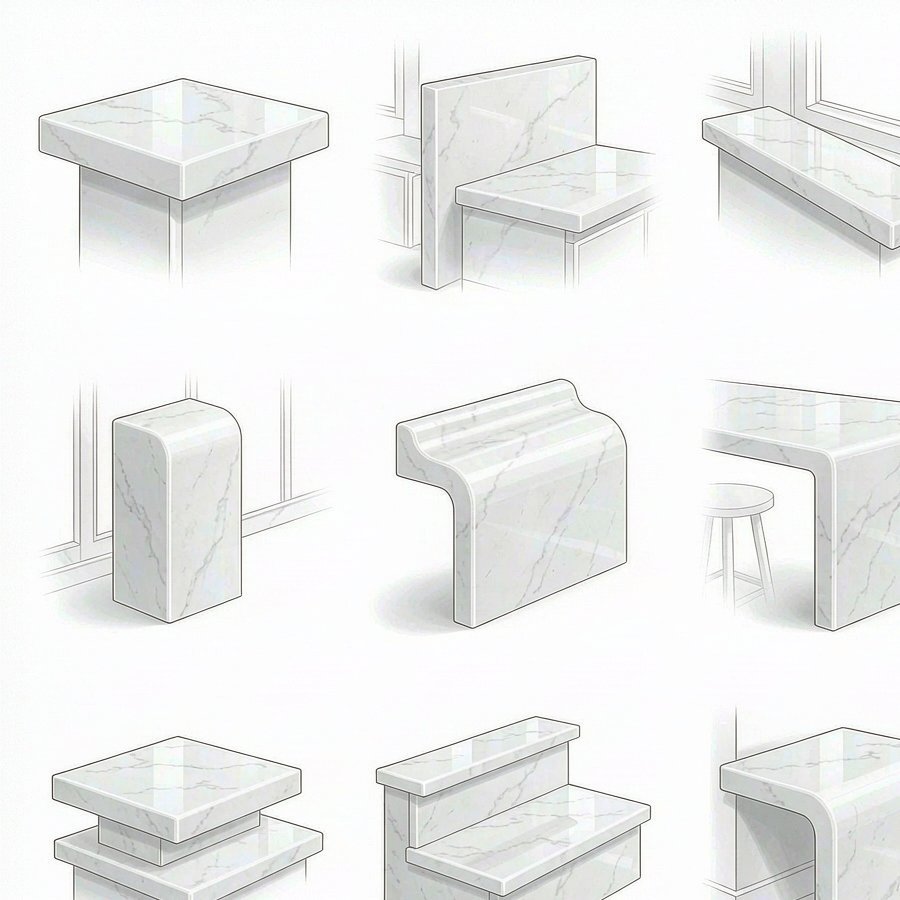
Quartz edge profiles are the detail that turns a flat slab into a finished countertop. The same colour and thickness can look completely different depending on whether the edge is squared, rounded, bevelled or built into a waterfall. For fabricators and designers, choosing quartz edge profiles means balancing aesthetics, safety, cleaning and fabrication cost. In this guide we walk through the most common quartz edge profiles, where they work best, and how slab thickness influences what is possible.
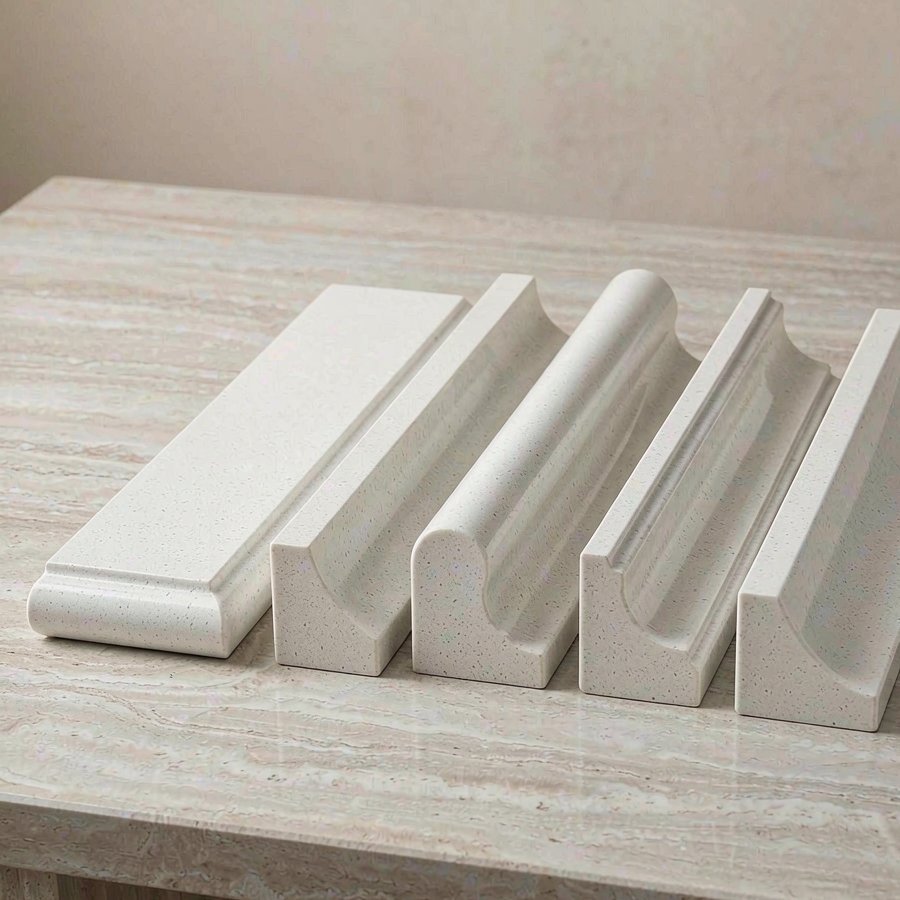
Why Quartz Edge Profiles Matter
The edge of a countertop is the part people touch, see and bump into every day. A sharp 90-degree edge feels crisp but can chip and is uncomfortable to lean against. A rounded edge is safer and easier to clean. A decorative profile like ogee or dupont adds visual weight and suits traditional or high-end kitchens. The right quartz edge profiles protect the slab, complete the design language and can even hide or reveal the thickness of the material.
From a fabrication standpoint, edge profiles also affect labour time and tooling. A simple eased edge can be produced quickly on a CNC router; a complex ogee needs more passes and more polishing. When quoting a project, fabricators should separate the edge-profile labour from the slab cost so the client understands where the money goes.
Standard Quartz Edge Profiles
These are the profiles most commonly requested for residential and commercial countertops. They are well within the capability of any experienced quartz fabricator.
Eased Edge
The eased edge is a square edge with the top and bottom corners slightly rounded. It gives a clean, modern look without the sharpness of a full 90-degree corner. Eased edges are the default for contemporary kitchens because they are simple, safe and show off the thickness of the slab. They also cost less to produce than decorative profiles.
Bevel Edge
A bevel edge cuts the top corner at a 45-degree angle, creating a chamfered line that catches light. It adds a subtle shadow line and works well in transitional kitchens. Bevel edges are slightly more labour-intensive than eased edges because the angle must be consistent around the perimeter, but they are still considered a standard profile.
Bullnose Edge
Bullnose edges are fully rounded, either on the top only (half bullnose) or on both top and bottom (full bullnose). They are the safest profile for homes with children and the easiest to wipe clean because there are no corners for dust to collect. Half bullnose is the more common choice because it preserves a flat top surface while rounding the exposed edge.
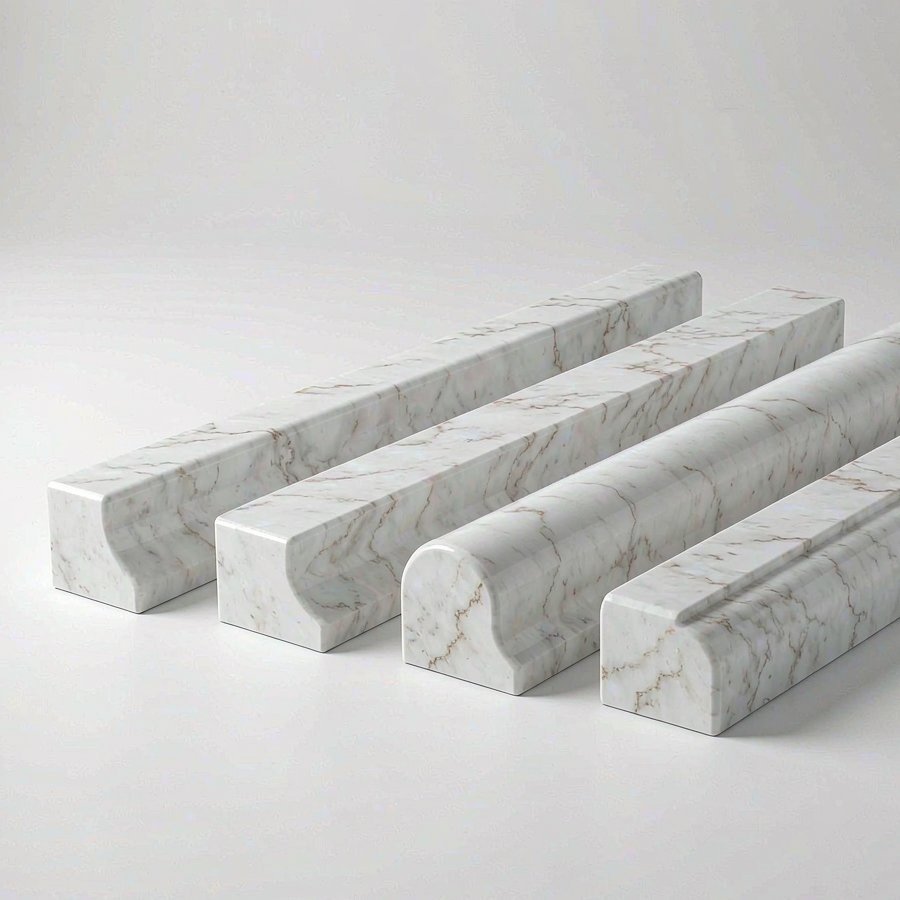
Decorative Quartz Edge Profiles
Decorative quartz edge profiles add character and are usually chosen for statement pieces like islands, reception desks or traditional kitchens.
Ogee Edge
The ogee is an S-shaped curve that creates a classic, elegant profile. It is most often used in traditional or transitional kitchens and on furniture-style islands. Ogee edges require more machining and polishing than standard profiles, so they carry a higher fabrication cost. They also need a 20 mm or thicker slab to look proportionally correct.
Dupont Edge
Dupont is a bolder variation of the ogee with a more dramatic step. It reads as high-end and is often paired with ornate cabinetry. Like the ogee, it is best on 20 mm slabs and is one of the more expensive quartz edge profiles to produce.
Cove Edge
A cove edge scoops inward at the top, creating a soft groove. It is less common but works well in Art Deco or vintage-inspired spaces. The groove can collect crumbs, so it is not ideal for heavy-use kitchens, but it is a distinctive choice for feature pieces.
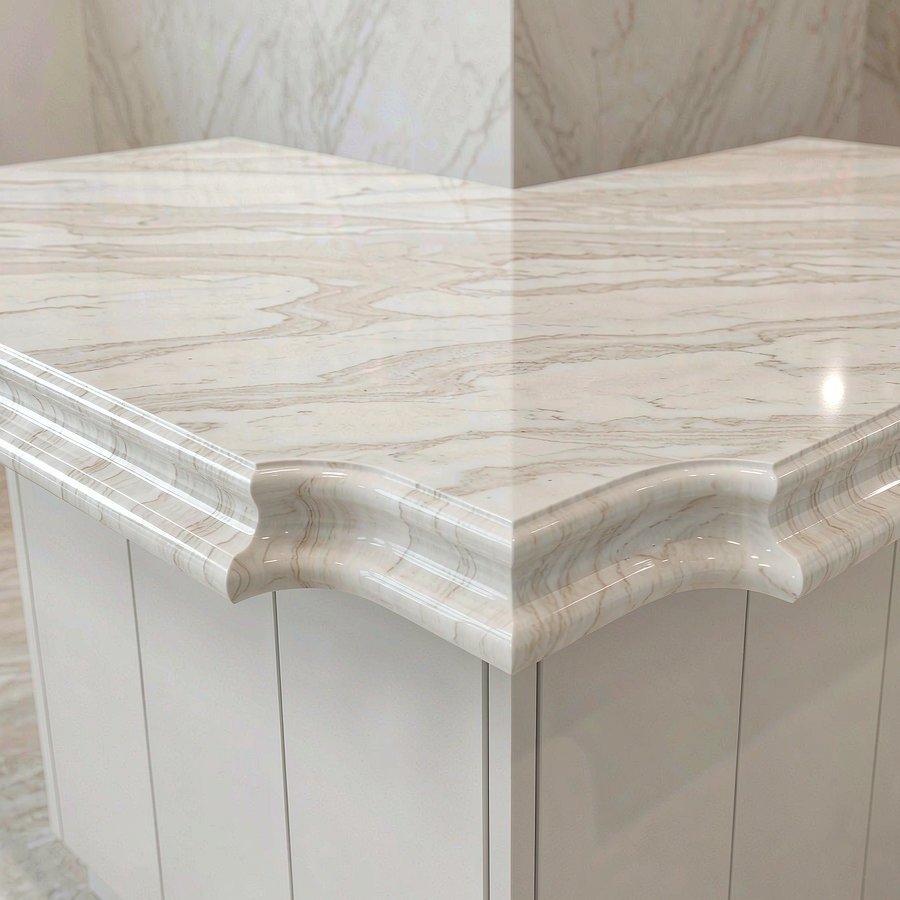
Modern Quartz Edge Profiles
Modern kitchens increasingly use quartz edge profiles that emphasise the slab as a single monolithic plane.
Waterfall Edge
A waterfall edge extends the countertop material down the side of an island or cabinet, creating the appearance that the stone is "pouring" over the edge. It requires book-matched or continuous slabs and careful alignment of the veining. Waterfall edges are usually built with 20 mm or 30 mm mitred material for a clean side face. For a full planning guide, see our article on quartz waterfall countertops.
Mitred Edge
A mitred edge joins two pieces of material at a 45-degree angle to create the illusion of a much thicker slab. It is the standard way to build a 40 mm or 60 mm edge from 20 mm stock. Mitred edges look crisp and contemporary but demand precise cutting and alignment; any gap in the mitre is immediately visible.
Chiseled / Rock-Face Edge
This edge mimics the rough texture of a natural stone edge. It is unusual in quartz because the engineered material does not naturally fracture, but special tooling can create a textured finish. It is best used on feature walls or rustic-style bars, not on kitchen countertops where the rough surface is hard to clean.
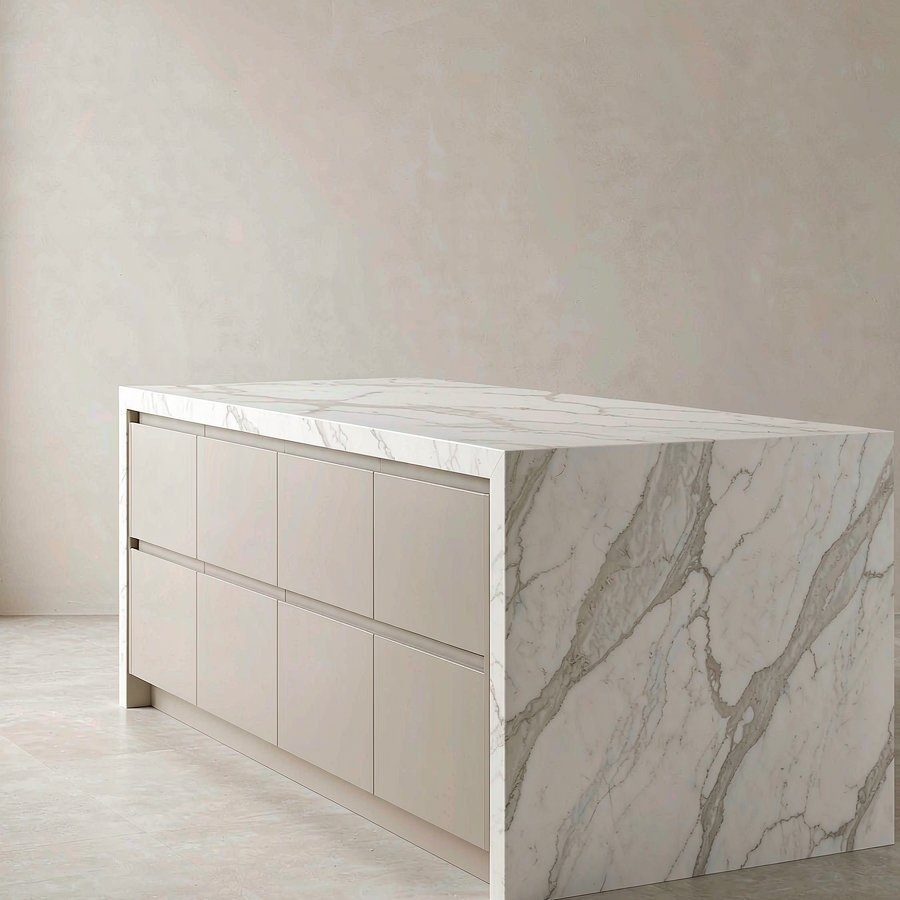
How Slab Thickness Affects Edge Profiles
Quartz edge profiles are limited by the thickness of the slab. An 18 mm slab can carry eased, bevel and small bullnose profiles, but it does not have enough depth for a full ogee or a substantial mitred build-up. A 20 mm slab is the standard for decorative profiles and is the minimum for a convincing waterfall leg.
For edges that need to read as 40 mm or 60 mm thick, fabricators use mitred build-ups. The visible top is the full slab, and the edge is built from a second piece joined at 45 degrees. This technique works best with consistent veining and is most commonly done with marble-look colours where the edge pattern should continue the top design.
Choosing the Right Profile by Application
For bathroom vanities, the same logic applies. Half bullnose is popular because it is easy to wipe and safe around children, while eased edges work in modern bathrooms. See our quartz vanity tops guide for more on sink and edge combinations.
Frequently Asked Questions
What is the most common quartz edge profile? The eased edge is the most common. It is modern, safe and affordable to fabricate.
Can 18mm quartz have a waterfall edge? Technically yes, but 18 mm looks thin on a waterfall leg. 20 mm or a mitred build-up is strongly recommended.
Which edge profile is easiest to clean? Eased and half bullnose edges have the fewest corners where grime collects. Ogee and cove edges require more attention.
Do edge profiles add much to the cost? Standard profiles add modest cost. Decorative profiles like ogee and dupont, plus waterfall mitres, add significant fabrication and installation time.
Can quartz edges be repaired if chipped? Small chips can often be repaired with colour-matched epoxy by a professional fabricator, but prevention is easier than repair.
Conclusion
Quartz edge profiles are where design meets fabrication. The right profile protects the slab, completes the kitchen or bathroom aesthetic and can make a standard countertop feel custom. For busy residential kitchens, eased or half bullnose profiles are the safe choice; for statement islands and luxury projects, waterfall, mitred or decorative profiles deliver the visual impact. Always confirm slab thickness and fabrication capability before finalising the profile. For more on thickness, see our quartz slab thickness guide; for slab sizes, read the sizes guide.
Related Articles
- Quartz Waterfall Countertops: Book-Match Guide
- Quartz Vanity Tops: Sizes, Sinks and Edge Profiles
- Quartz Slab Sizes and Jumbo Formats Explained
- Quartz Slab Price Per Square Foot Explained
Quartz Slab Supplier for Custom Edge Profiles
Shandong Hongyue Quartz Stone Co., Ltd. supplies quartz slabs in 18 mm and 20 mm thickness for eased, bevel, bullnose, ogee, waterfall and mitred edge profiles. We work with fabricators and designers worldwide, providing ISO 9001, NSF and SGS-certified slabs with samples, cut-to-size support and direct factory pricing.
📱 WhatsApp: +86 198 6115 3736
📧 Email: raykelee@hyquartzslabfactory.com
Send Us A Message