Sintered Stone vs Quartz: Cost, Durability & Which to Choose
Sintered Stone vs Quartz: Cost, Durability & Which to Choose
Sintered Stone vs Quartz: Which Surface Should You Actually Specify
Sintered stone vs quartz is the comparison more buyers ask about every year, because both are marketed as premium, low-maintenance alternatives to marble and granite. They look similar on a showroom slab but are made completely differently, and those differences change the price, the fabrication, and the best room for each. This guide answers the real question — sintered stone vs quartz, which wins for your project — with a clear comparison, third-party price ranges, and a decision checklist you can hand to a fabricator.
What Sintered Stone Actually Is
To judge sintered stone vs quartz you first need to know what sintered stone is. It is an ultracompact surface made by baking natural minerals — silica, feldspar, clay — at roughly 1200 degrees Celsius under extreme pressure, with no resin binder. The result is a through-body, almost zero-porosity slab that is genuinely heat-proof and UV-stable. Brands such as Dekton and Neolith popularised it. Because there is no resin, sintered stone can sit in direct sun and beside a hot pan without a second thought, which is the single biggest advantage in the sintered stone vs quartz debate.
What Engineered Quartz Actually Is
The other half of sintered stone vs quartz is engineered quartz: roughly 90 to 93 percent ground natural quartz bound with about 7 to 10 percent polymer resin. That resin is what makes quartz non-porous, consistent in color, and easy to fabricate, but it is also why quartz is sensitive to sustained high heat. Quartz is the more established, more widely fabricated option, with thousands of colors and a mature supply chain. In a sintered stone vs quartz decision, quartz usually wins on availability, price consistency, and fabrication cost.
Sintered Stone vs Quartz: The Side-by-Side
The fastest way to see sintered stone vs quartz is a direct table. Neither is "better" in every column; the right pick depends on where the slab goes and who installs it.
Cost: Is Sintered Stone More Expensive Than Quartz?
On price, sintered stone vs quartz is closer than many assume but sintered usually lands higher at the premium end. Third-party US retail data commonly places installed sintered or porcelain slabs around $60 to $120 per square foot, while installed quartz runs about $55 to $150 per square foot depending on color and thickness. The material itself can look similar, but sintered stone's harder fabrication and the specialist labor it demands push total installed cost up, so for a typical kitchen sintered stone vs quartz often means a 10 to 30 percent premium for sintered. These are third-party public ranges, not our factory prices; your quoted number depends on color, thickness, and local labor.
Heat, Scratch and Stain: Where They Differ Most
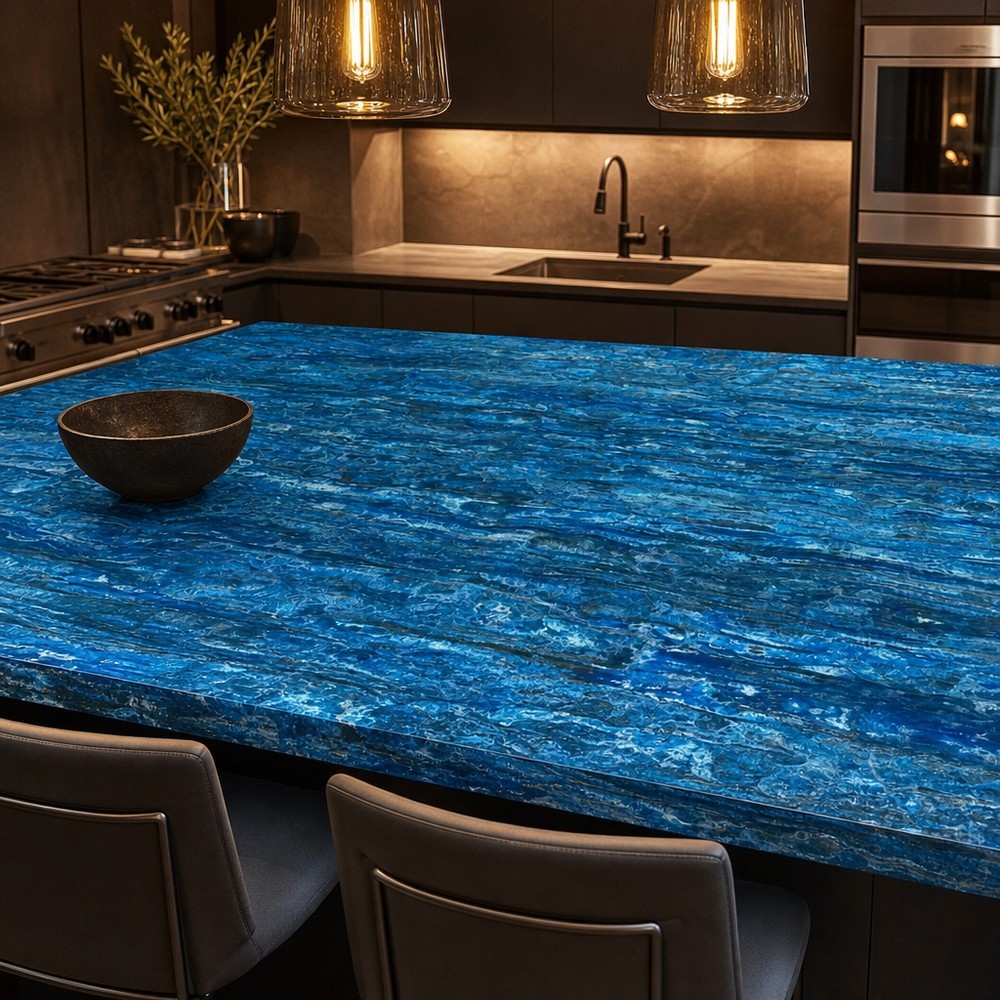
The practical split in sintered stone vs quartz shows up in the kitchen. Sintered stone shrugs off a hot roasting pan and direct sun on an outdoor kitchen; quartz wants a trivet and stays indoors. Both resist stains well because neither has open pores, so wine and oil wipe clean. On scratch resistance both are strong, though sintered stone's higher density can be slightly harder to cut and more brittle at thin edges. For indoor countertops used normally, sintered stone vs quartz is a near tie on daily durability; the heat gap only matters if you cook without trivets or build outdoor spaces.
Fabrication and Installation
A less obvious part of sintered stone vs quartz is who can install it. Quartz is cut on standard bridge saws in almost every city, so fabrication quotes are competitive and lead times short. Sintered stone is denser and more brittle, so it needs diamond tooling and experienced fabricators; fewer shops handle it, which lengthens schedules and raises labor. If your project is on a tight timeline or in a smaller market, the sintered stone vs quartz question may be settled by who is available locally rather than by the material itself.
Which Should You Choose?
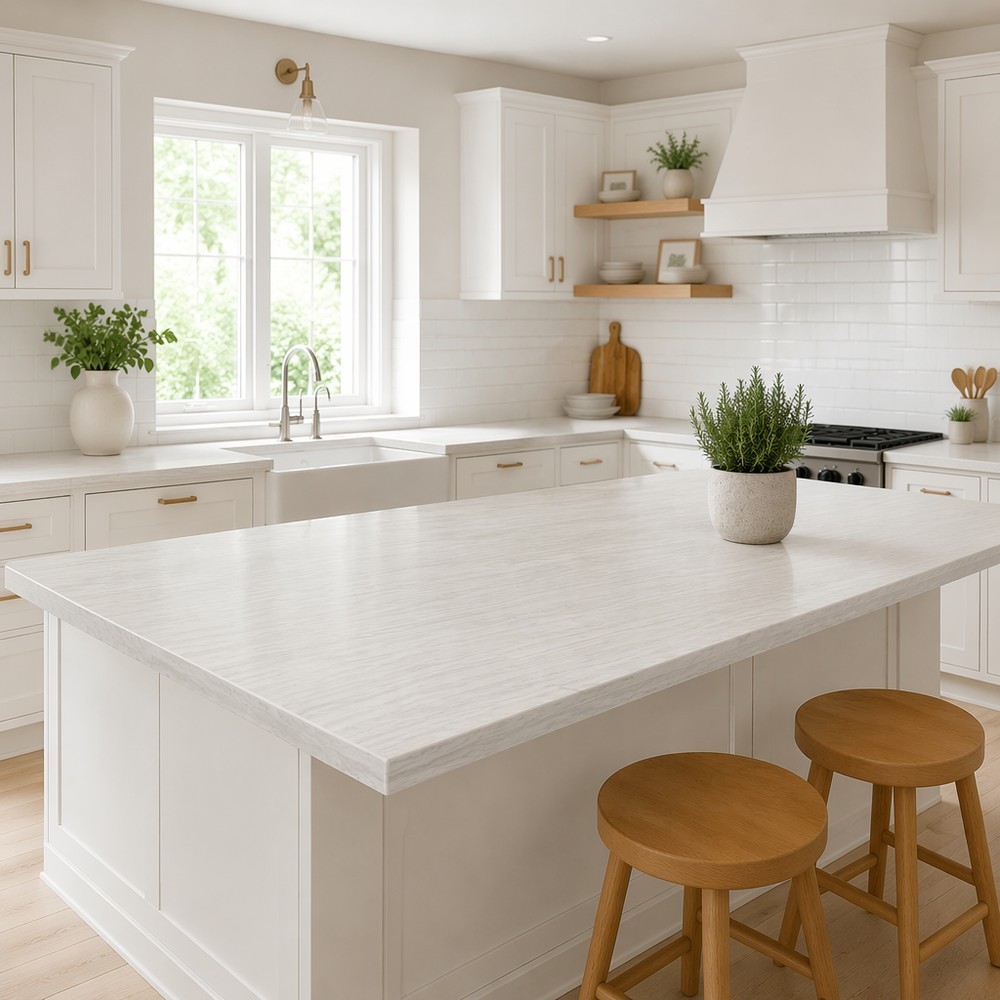
The sintered stone vs quartz decision comes down to three questions. First, is any part outdoors or in direct sun? If yes, sintered stone. Second, do you cook with hot pans straight onto the surface? If yes, sintered stone. Third, do you want the widest color range, easiest fabrication, and the best price consistency? Then quartz. For most indoor kitchens, bathrooms, and commercial interiors, quartz is the pragmatic winner; for outdoor kitchens, sun-exposed walls, and heat-heavy prep, sintered stone earns its premium. Either way, the sintered stone vs quartz debate ends with the room, not the showroom.
Frequently Asked Questions
Is sintered stone more expensive than quartz? Usually yes at the premium end — third-party installed prices for sintered often run 10 to 30 percent above quartz once fabrication is included, though material prices overlap.
Can quartz be used outdoors instead of sintered stone? Not recommended. Quartz resin can shift color under sustained UV, so for outdoor kitchens sintered stone vs quartz is settled by the sun.
Which is more durable? Both resist stains and scratches well; sintered stone adds heat and UV resistance, quartz adds easier fabrication and broader color choice.
Is sintered stone the same as porcelain slab? They are closely related — both are fired mineral surfaces — and in most sintered stone vs quartz comparisons "porcelain slab" refers to the same ultracompact family.
Which is easier to repair? Quartz chips are simpler for standard fabricators to blend; sintered stone needs the same specialist who installed it.
Conclusion
Sintered stone vs quartz is not a contest with one winner — it is a match of material to room. Sintered stone brings true heat and UV immunity and earns its premium outdoors and around hot pans; engineered quartz brings the widest colors, the easiest fabrication, and the steadiest price for normal indoor kitchens, bathrooms, and commercial spaces. Decide by location and labor, not by the showroom slab. If you want quartz engineered for consistent color and low-upkeep performance — 90 to 93 percent quartz, ISO 9001, NSF and SGS certified, in the thickness and tone your project needs — contact Shandong Hongyue Quartz Stone Co., Ltd., email raykelee@hyquartzslabfactory.com or reach us on WhatsApp at +86 198 6115 3736.
Specify Quartz Slabs Direct from the Factory
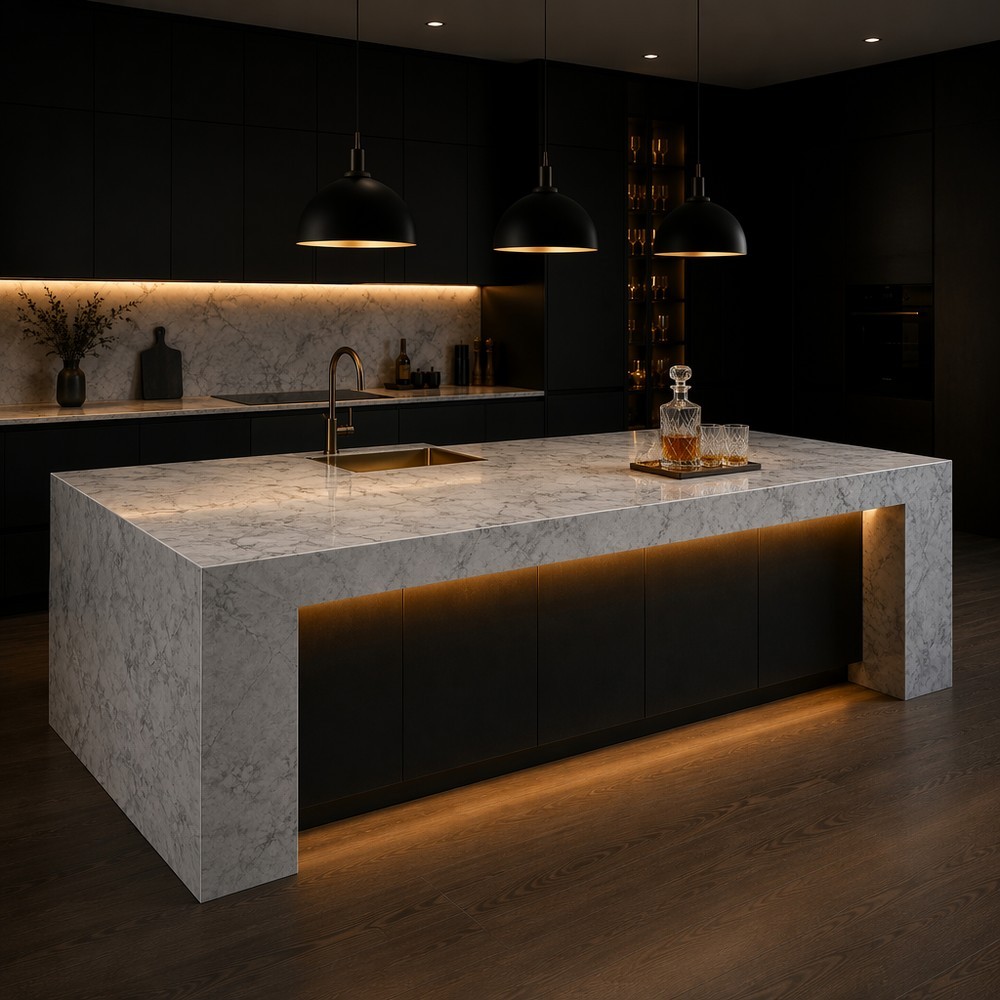
When sintered stone vs quartz points you toward quartz, the right slab makes the rest easy. Send us your dimensions, color reference and destination port, and we return samples, a cutting diagram and a line-item quotation. Our engineering team reviews every slab before production, so the surface you receive is consistent, non-porous and built for decades of service in any climate.
📱 WhatsApp: +86 198 6115 3736
📧 Email: raykelee@hyquartzslabfactory.com
Related Articles
Send Us A Message