
Quartz vs Concrete Countertops: Which Surface Should You Specify?
Quartz vs Concrete Countertops: Which Surface Should You Specify?
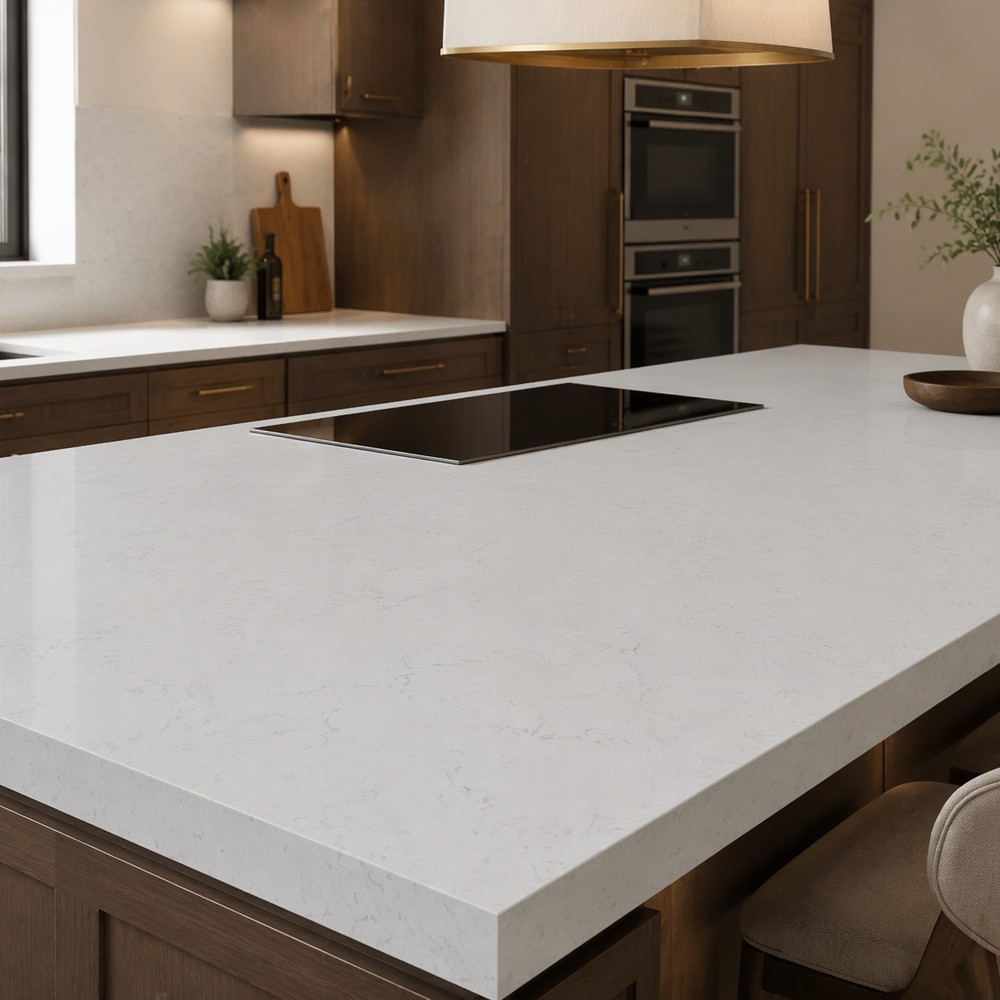
Quartz vs Concrete: Which Countertop Should You Specify?
When a designer or project buyer is choosing a modern, monolithic surface, the real comparison is often quartz vs concrete. Both deliver a seamless, contemporary look that natural stone and laminate cannot match, but they behave very differently in service. This guide compares quartz vs concrete on appearance, durability, maintenance, cost and best-fit applications, written from the factory side so you can specify with confidence rather than guess.
Engineered quartz is roughly 90 percent natural quartz aggregate bound with resin and pigment, made in slabs under high pressure. Concrete countertops are poured cast-stone, typically a cement mix with aggregates and often a sealer or wax topcoat. In a quartz vs concrete decision, the difference that matters most is consistency and maintenance — and that is where this article focuses.
Appearance and Design Flexibility
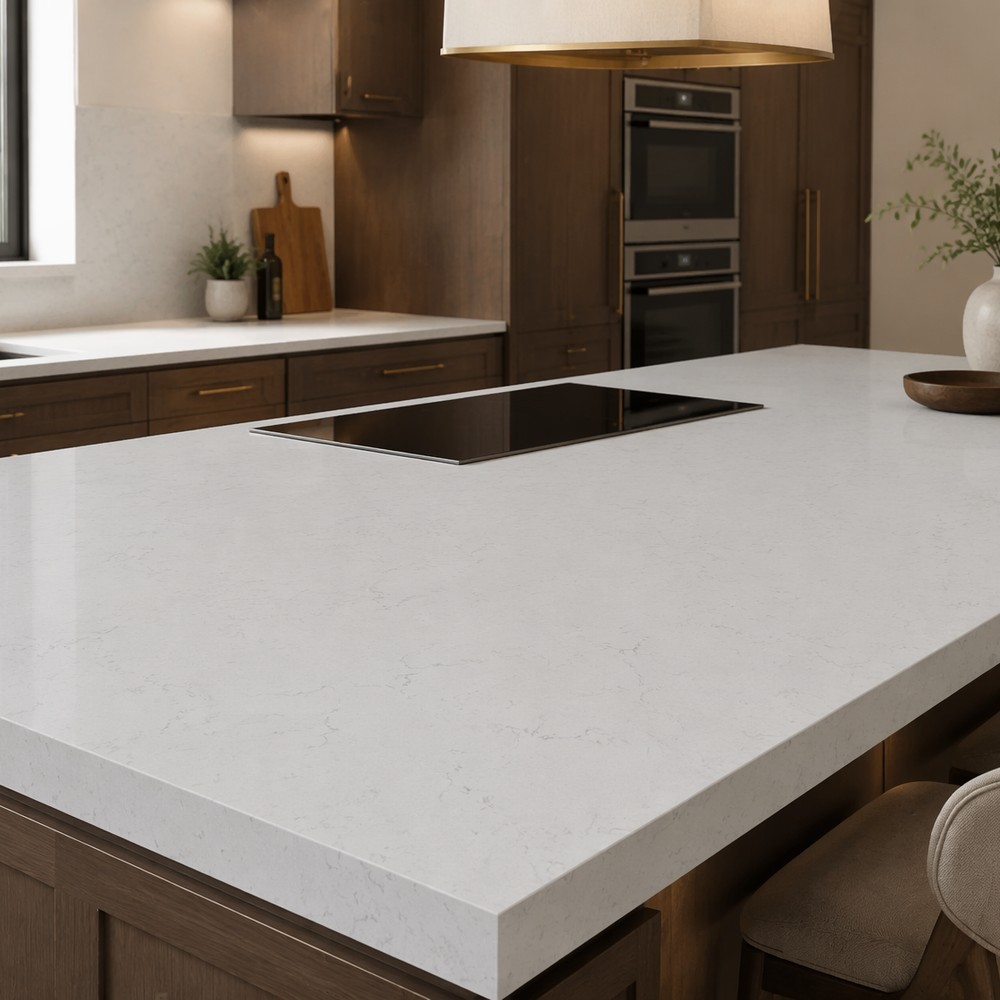
In a quartz vs concrete comparison, appearance is the first thing buyers notice. Quartz is produced to a controlled recipe, so the colour, vein and finish are identical from the first slab to the thousandth; a hotel or restaurant can reorder two years later and the new tops match the originals. Concrete is hand-poured, so no two tops are exactly alike — some buyers love that one-off character, while others find the colour drift across a large project unacceptable.
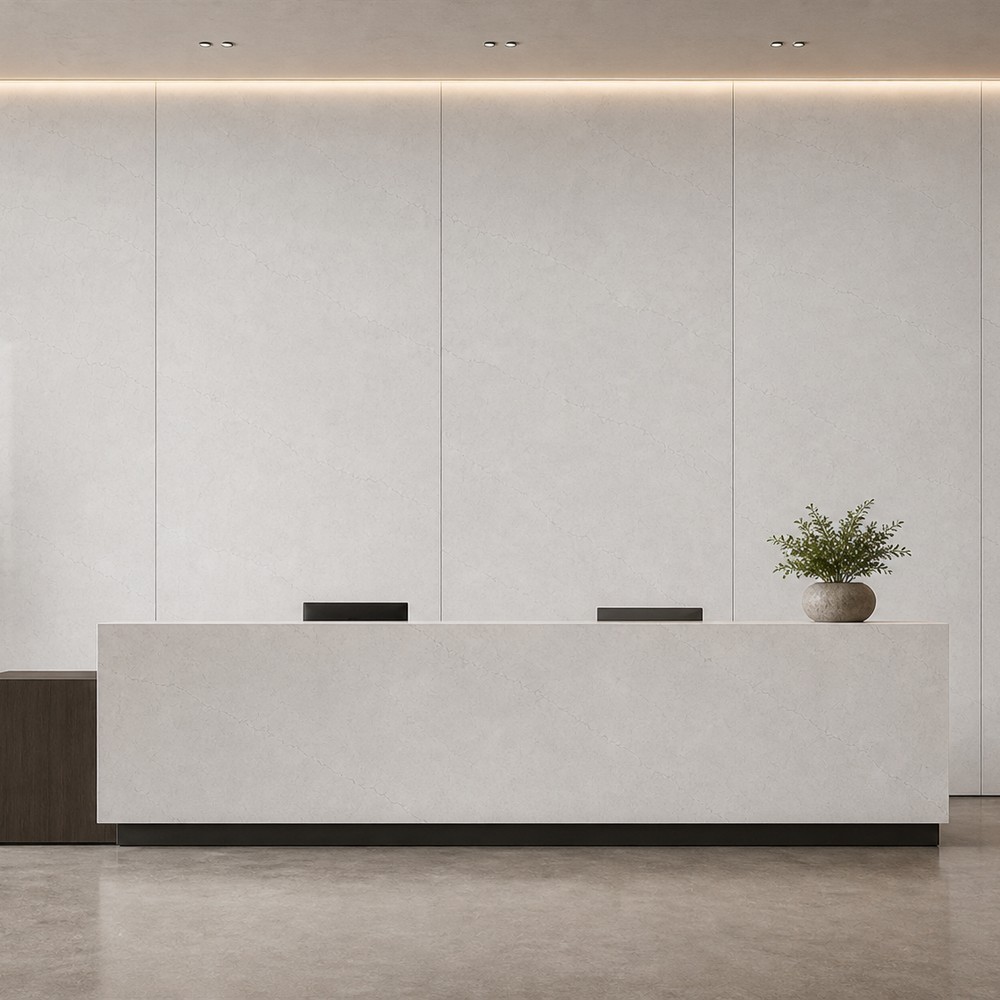
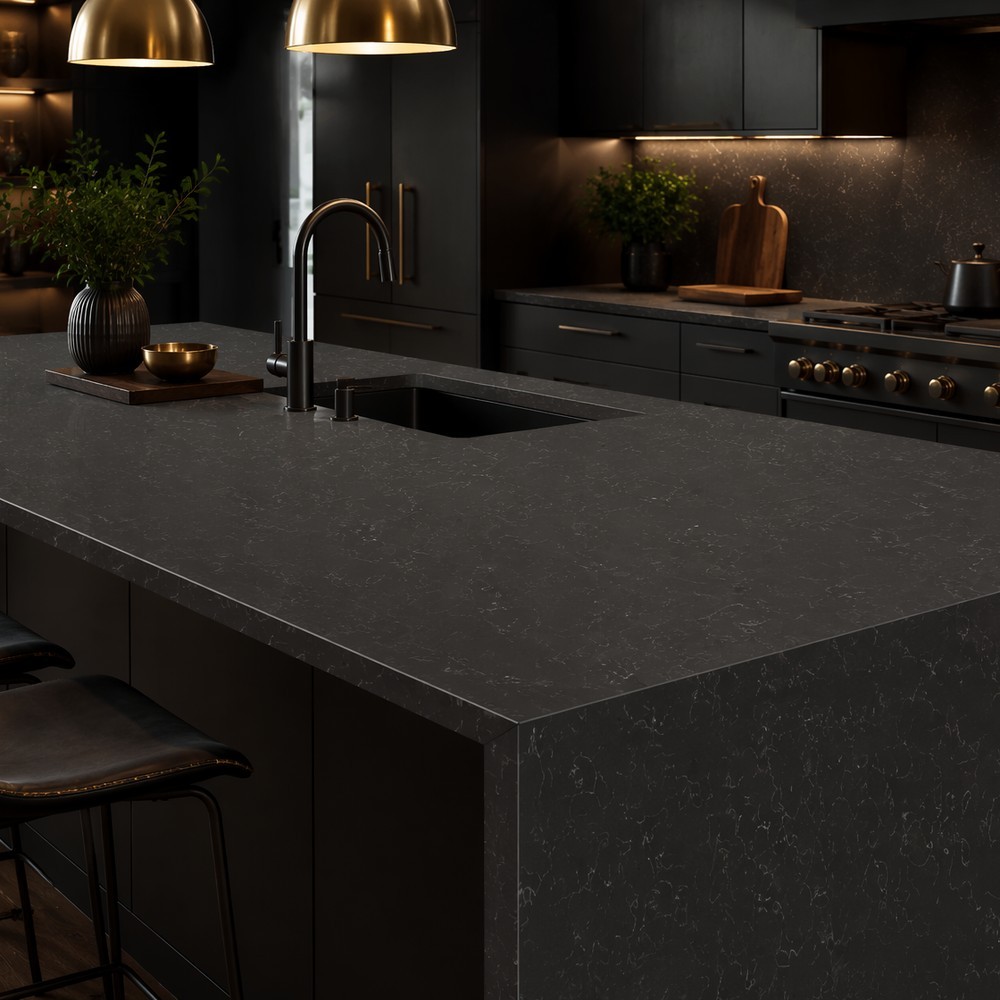
Quartz also offers a far wider catalogue of looks: bright white with soft grey cloud veining, warm white with gold Calacatta-style veins, bold black-and-white contrast, and grey or wood-tone finishes. Concrete is limited to grey and a few pigment tints, and its surface reads as flat and matte next to a polished quartz. If the brief calls for a specific marble look, quartz vs concrete is barely a contest — quartz reproduces the marble aesthetic without the etching.
Durability and Stain Resistance
Durability is where quartz vs concrete splits decisively. Engineered quartz is non-porous, with a water absorption rate of 0.02 percent and a Mohs hardness of 6. Wine, coffee, oil and citrus sit on the surface without soaking in, and a wipe with a pH-neutral cleaner removes them. Concrete is porous even after sealing; it absorbs stains, develops a patina, and in a busy kitchen the surface darkens unevenly no matter how carefully it is maintained.
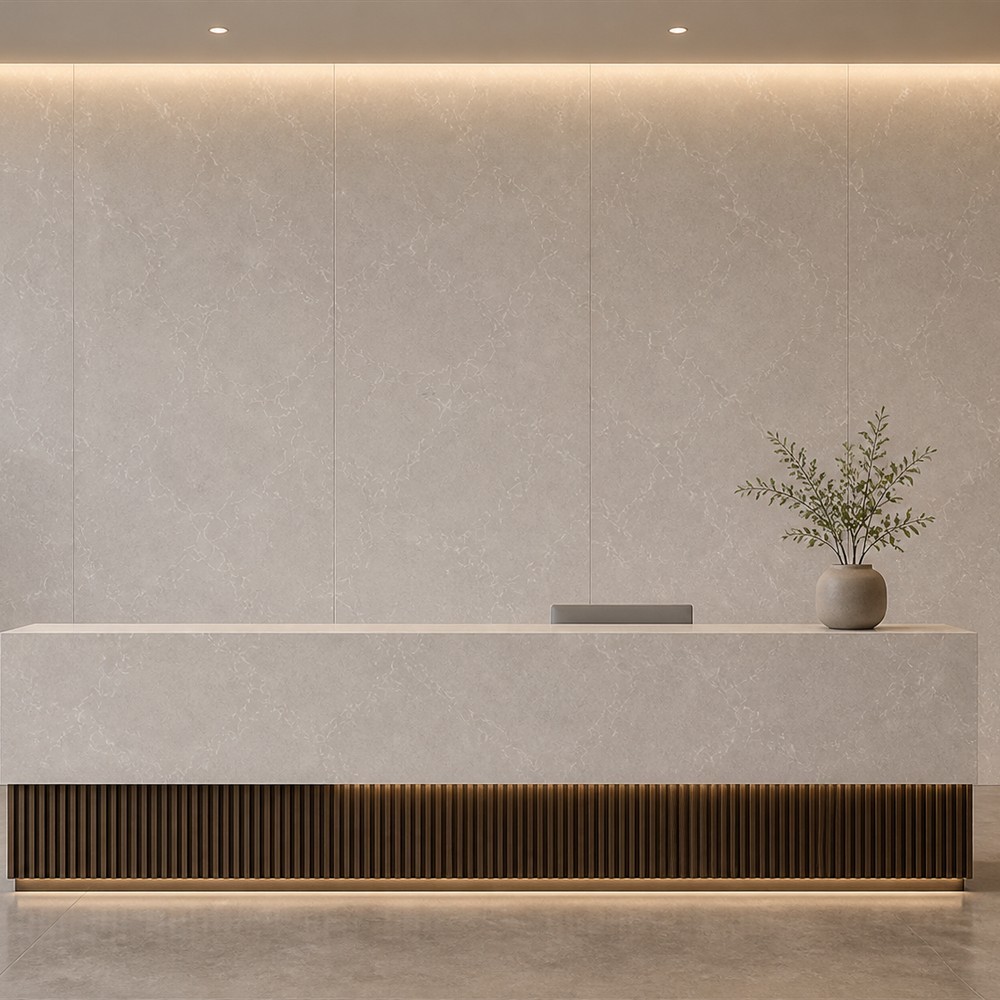
For a commercial bar, a hotel breakfast station or a family kitchen, the non-porous nature of quartz is the reason most specifiers choose it. When the question is quartz vs concrete for a high-traffic surface, concrete's porosity is the single biggest argument against it.
Heat and Scratch Performance
Neither material is heat-proof. Engineered quartz tolerates hot cups and plates but a hot pan set directly on it can mark the resin bond, so a trivet is still advised. Concrete tolerates heat better at the surface, but thermal shock can crack a thin cast top. On scratches, quartz vs concrete favours quartz: its higher hardness resists knife and ring marks far better, while concrete shows wear, scoring and chip edges more readily at corners and cutouts.
Maintenance and Sealing
Maintenance is the practical heart of the quartz vs concrete debate. Quartz needs no sealing, no waxing and no annual treatment — the same wipe-down applies on day one and in year ten. Concrete requires a sealing schedule: a fresh top is sealed on installation and then re-sealed every one to two years, with wax topcoats in between for food-contact areas. Skip the schedule and the surface stains permanently.
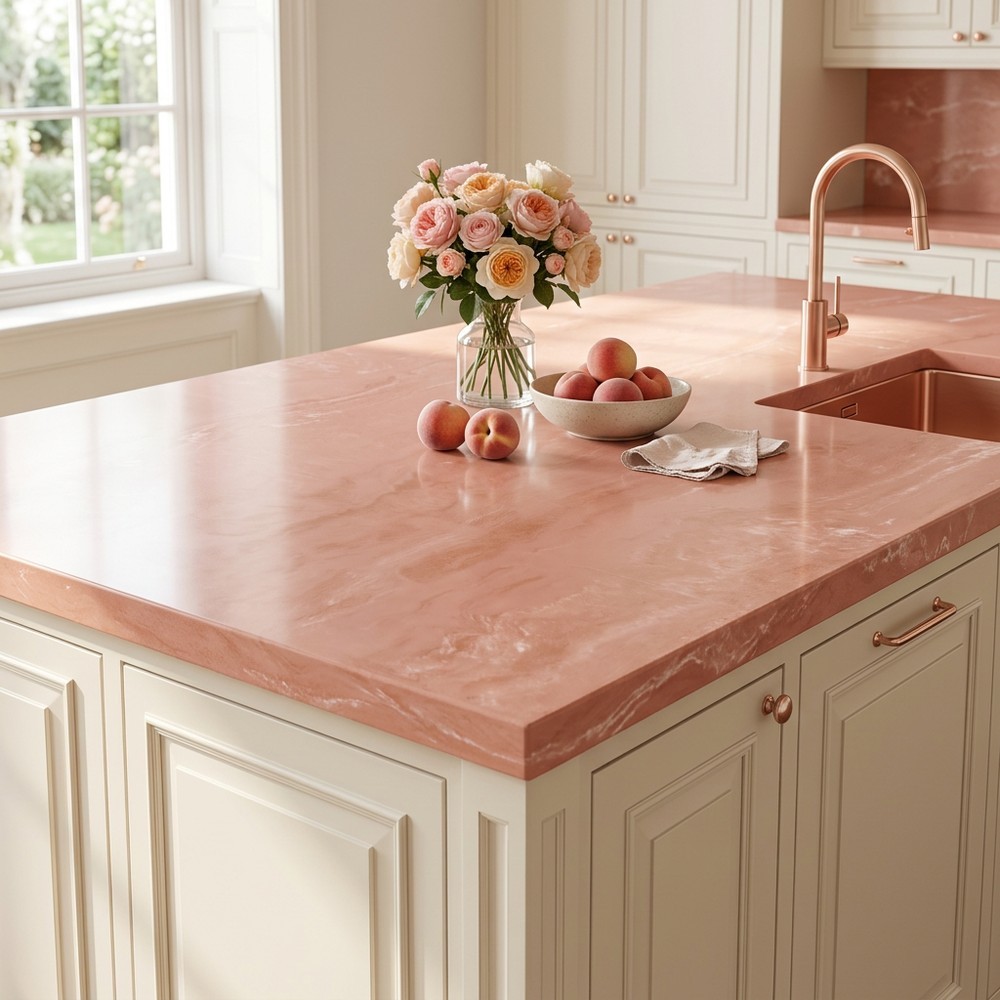
For a property owner who wants a surface that looks after itself, quartz vs concrete ends here — quartz wins on lifetime labour. Concrete's maintenance is not difficult, but it is unmissable, and it is the reason many concrete installs are later replaced with quartz.
Cost, Lead Time and Fabrication
Cost is rarely a simple number. A cast concrete top is labour-intensive to pour, cure and finish on site, and install labour is high. Quartz is fabricated in a factory from standard 3200 × 1800 mm slabs, so cut-to-size tops, cutouts and edge profiles are produced off-site and delivered ready to set — lower on-site labour, predictable lead time of 2 to 4 weeks for standard colours. In a true quartz vs concrete total-cost view, concrete's hidden cost is the sealing and the eventual replacement; quartz's is the higher material ticket up front, offset by near-zero upkeep.
Best Applications for Each Material
Neither material is wrong; they suit different briefs. Choose quartz for kitchens, bathroom vanities, commercial bars and anywhere staining and consistency matter. Choose concrete for feature pieces, outdoor kitchens with shade-stable mixes, and designs where a hand-poured, one-of-a-kind patina is the point. When the surface must still look new after years of service with no maintenance programme, quartz vs concrete is the safer specification.
Frequently Asked Questions
Is quartz or concrete better for a kitchen countertop?
For most kitchens, quartz is the better specification: it is non-porous, stain-resistant and needs no sealing, while concrete requires a regular sealing schedule and stains more easily. Concrete suits briefs that specifically want a hand-poured, unique patina.
Does concrete need to be sealed like quartz does?
No — and that is the key difference. Quartz never needs sealing. Concrete must be sealed at installation and re-sealed every one to two years, or it absorbs stains and develops uneven patina.
Which is more durable, quartz or concrete?
Quartz is more durable in daily service: Mohs hardness 6, non-porous, scratch- and stain-resistant. Concrete is more heat-tolerant at the surface but more porous, more prone to staining, and chips more easily at edges.
Can quartz look like concrete?
Yes. Our grey and soft-cloud veining ranges reproduce a concrete-like matte minimalist look without the porosity or sealing. If the brief wants the concrete aesthetic with none of the maintenance, quartz vs concrete becomes a styling choice rather than a performance one.
What is the lead time for quartz compared with cast concrete?
Factory quartz tops from standard slabs ship in 2 to 4 weeks with edges and cutouts pre-finished. Cast concrete depends on on-site pouring, curing and finishing, which extends the schedule and the install labour.
Specify Your Quartz Countertops Direct from the Factory
If your project needs a consistent, non-porous surface with no sealing programme, send the specification and we will return samples, a cutting diagram and a line-item quotation. Our engineering team reviews every drawing before production, so the tops that arrive on site fit the first time — and a quartz vs concrete decision becomes a decision you never have to revisit.
📱 WhatsApp: +86 198 6115 3736
📧 Email: raykelee@hyquartzslabfactory.com
Related Articles
Send Us A Message