
Quartz vs Corian Countertops: A Complete Comparison
Quartz vs Corian Countertops: A Complete Comparison
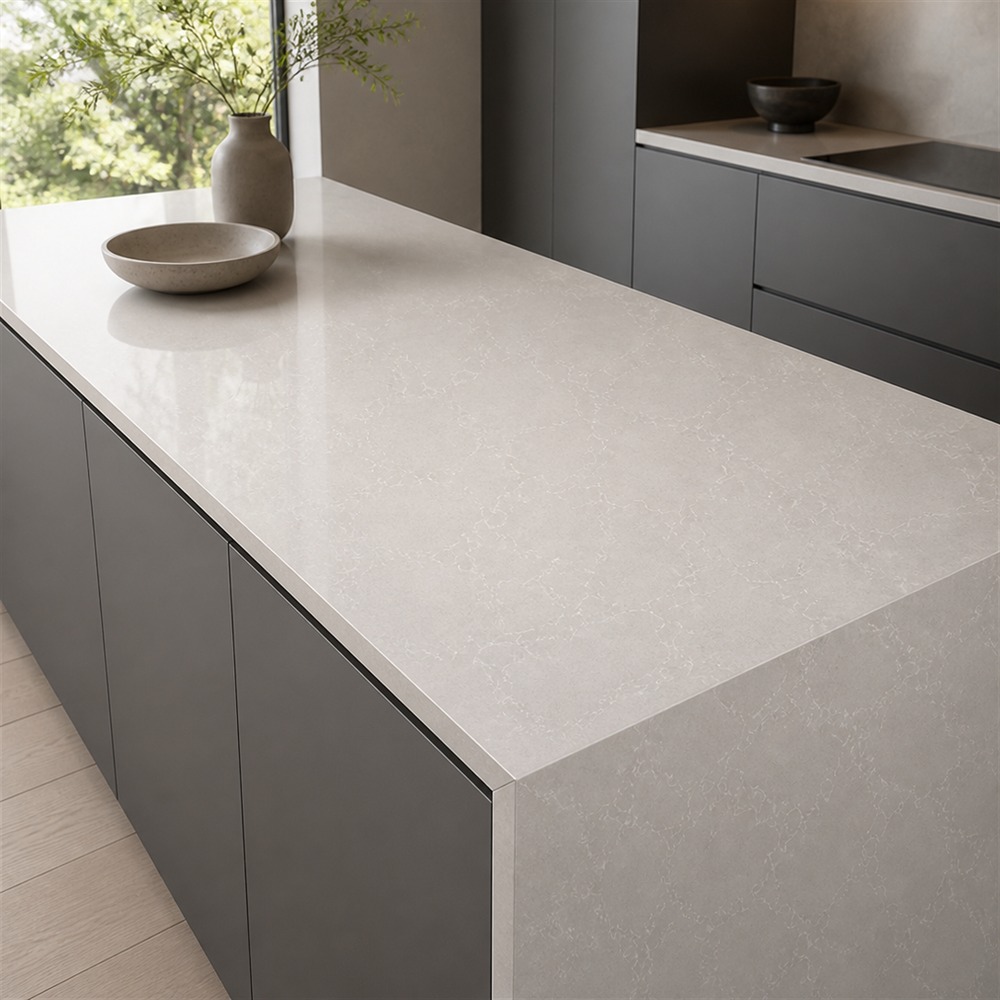
Quartz vs Corian Countertops: Which Engineered Surface Should You Specify?
When specifying a new kitchen or commercial surface, the quartz vs Corian decision comes up constantly. Both are engineered, both are sold as low-maintenance alternatives to natural stone, and both carry strong brand names, but they are built from completely different materials. This guide compares quartz vs Corian countertops on hardness, heat, stains, repair, cost and design, so you can choose with confidence from the factory side.
The quartz vs Corian countertops question is really a contest between two manufacturing philosophies. Quartz is roughly 90 percent natural quartz aggregate bound with resin; Corian is a solid surface made from acrylic or polyester resins with mineral fillers and almost no natural stone. That single difference drives everything else below.
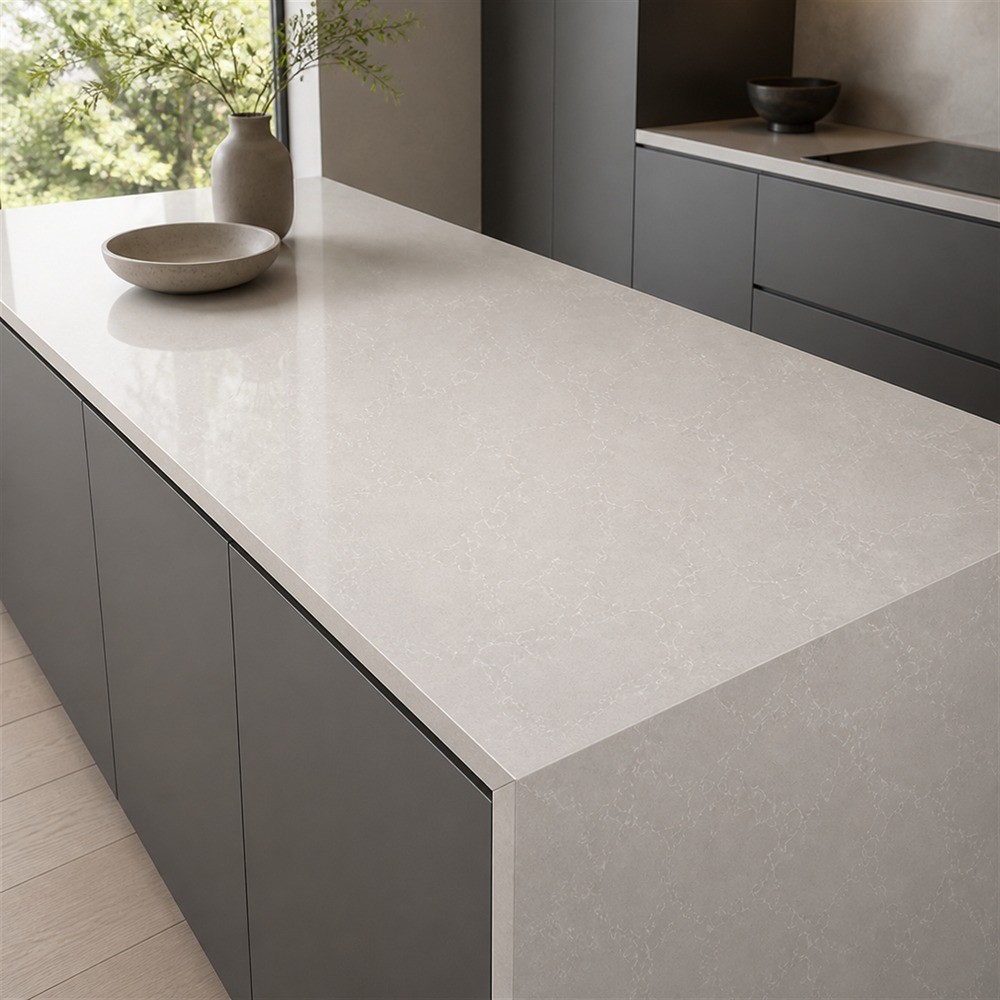
What Is Corian, and How Is It Different from Quartz?
Corian is the original solid-surface brand, introduced by DuPont in the 1960s, and the name is now used generically for acrylic solid surfaces. In a quartz vs Corian comparison, the defining trait of Corian is that it is homogeneous: the colour and pattern run all the way through, with no top layer. Quartz, by contrast, is a rigid slab with a surface of real stone chips. That makes Corian easier to seam invisibly, which we cover below.
Hardness and Scratch Resistance
On the Mohs scale, quartz sits around 6 to 7 because of its natural quartz content, while Corian rates about 3. In everyday terms, quartz vs Corian countertops favours quartz for knife-edge resistance and daily abrasion. A Corian surface can pick up fine scratches from grit and pots, though they can be buffed out, which we cover in the repair section. For a busy kitchen island, quartz holds its polish longer.
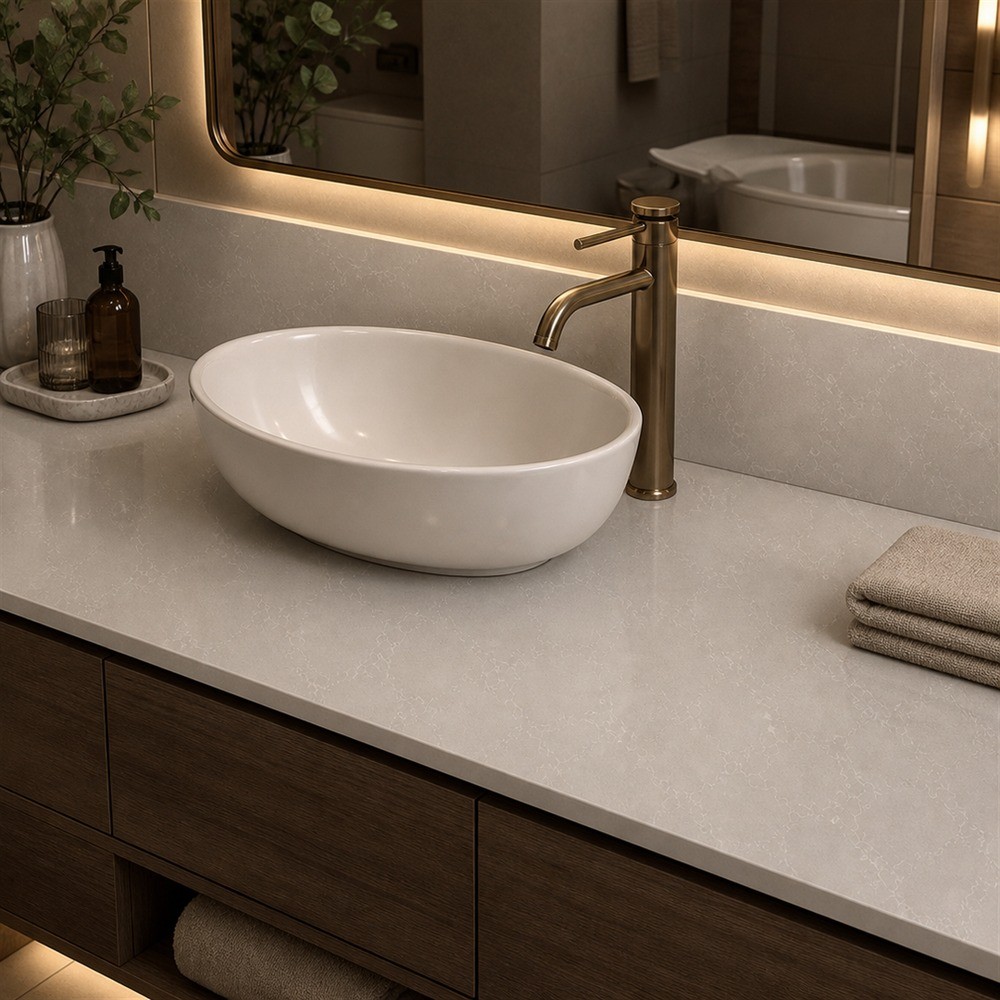
Seamless Joints: Where Corian Wins
The clearest point in favour of Corian is the invisible seam. Because it is a thermoformable solid surface, two Corian pieces can be joined with colour-matched adhesive and sanded flush, leaving no visible line. Quartz vs Corian countertops differs here: quartz is joined with thin seams that are tight but visible, especially on long runs or curved builds. If your design needs a continuous, coved, germ-free surface, such as a hospital, lab or waterproof bathroom, Corian's seamlessness is hard to beat.
Heat Resistance: Quartz vs Corian
Neither material is heat-proof, and this is where the quartz vs Corian story gets nuanced. Corian is acrylic-based and will scorch or discolour under a hot pan. Quartz resists higher temperatures, but its resin binder can crack from thermal shock if a very hot item is placed directly on it. The practical rule for both is to always use a trivet. If heat exposure is frequent, neither quartz nor Corian should take direct contact with cookware.
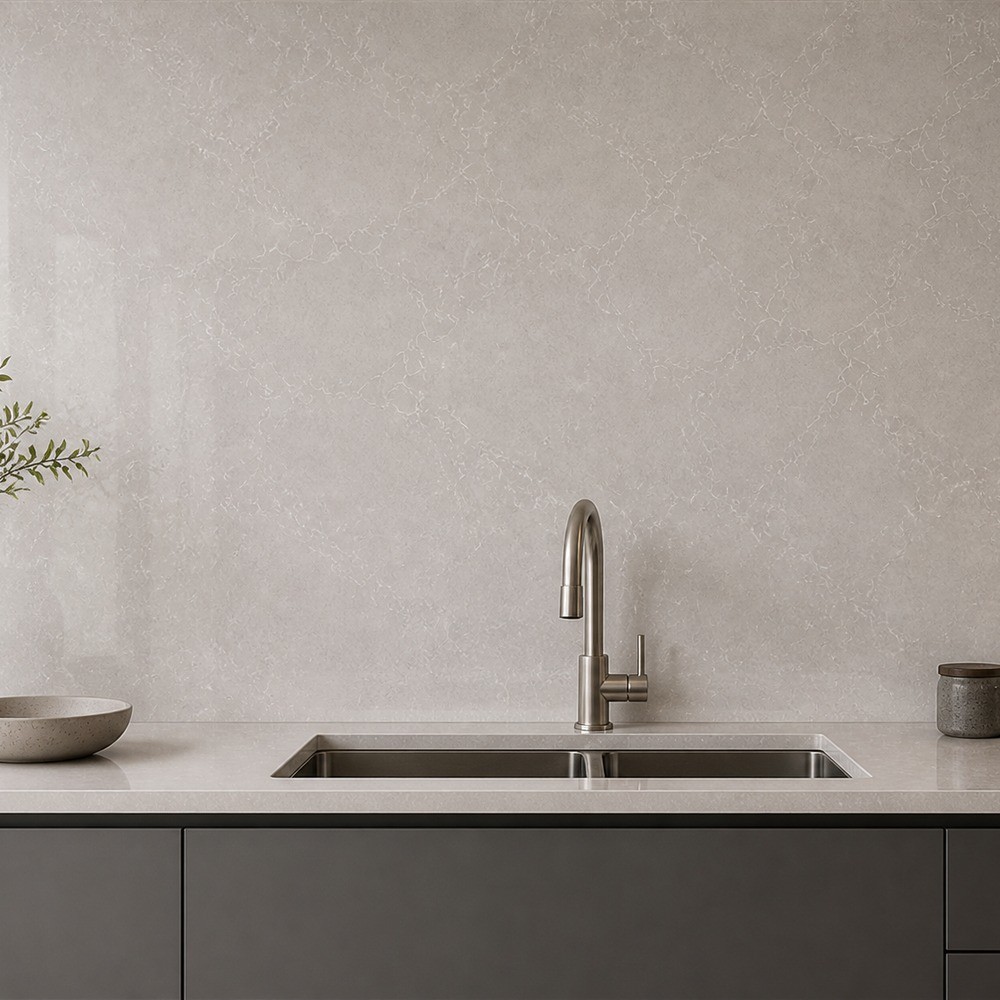
Stain and Water Resistance
Both surfaces are non-porous when properly made, so a quartz vs Corian countertops stain test ends in a draw for sealed, quality slabs. Quartz's denser resin-stone body gives it a slight edge against strong dyes and oils; Corian can be more vulnerable to certain chemicals, such as acetone, which can mark it. For a laundry or wet bar, either works, but quartz is the more forgiving daily performer.
Maintenance and Repair
Upkeep is simple for both: wipe with a pH-neutral cleaner, with no sealing ever required. The repair story is the interesting part of quartz vs Corian countertops. Corian scratches and scorch marks can be sanded and polished back to new by a trained fabricator, which is a genuine advantage. Quartz chips or cracks are harder to hide, though minor ones can be filled. If restorable-in-place matters to your spec, Corian leads.
Cost: Quartz vs Corian Countertops
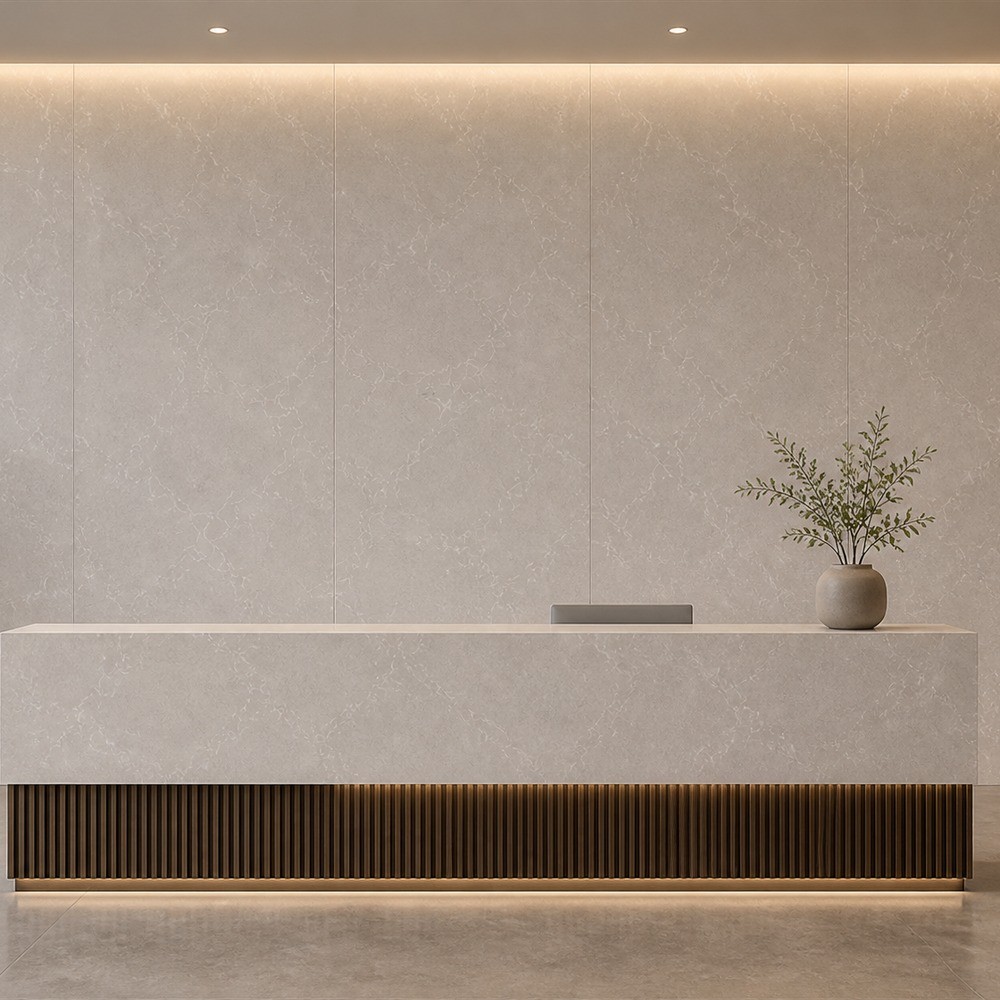
Price is where many buyers expect a clear winner, but quartz vs Corian cost lands close. Entry-level quartz and Corian start in a similar range per square foot; premium quartz colours and large-format slabs can exceed Corian, while designer Corian colours rival high-end quartz. The bigger cost lever is fabrication: Corian's seamless joining is labour-intensive, while quartz templating and mitred edges are well established and competitive. For a like-for-like kitchen, budget the two as peers and decide on performance, not price.
Design, Colour and Visual Depth
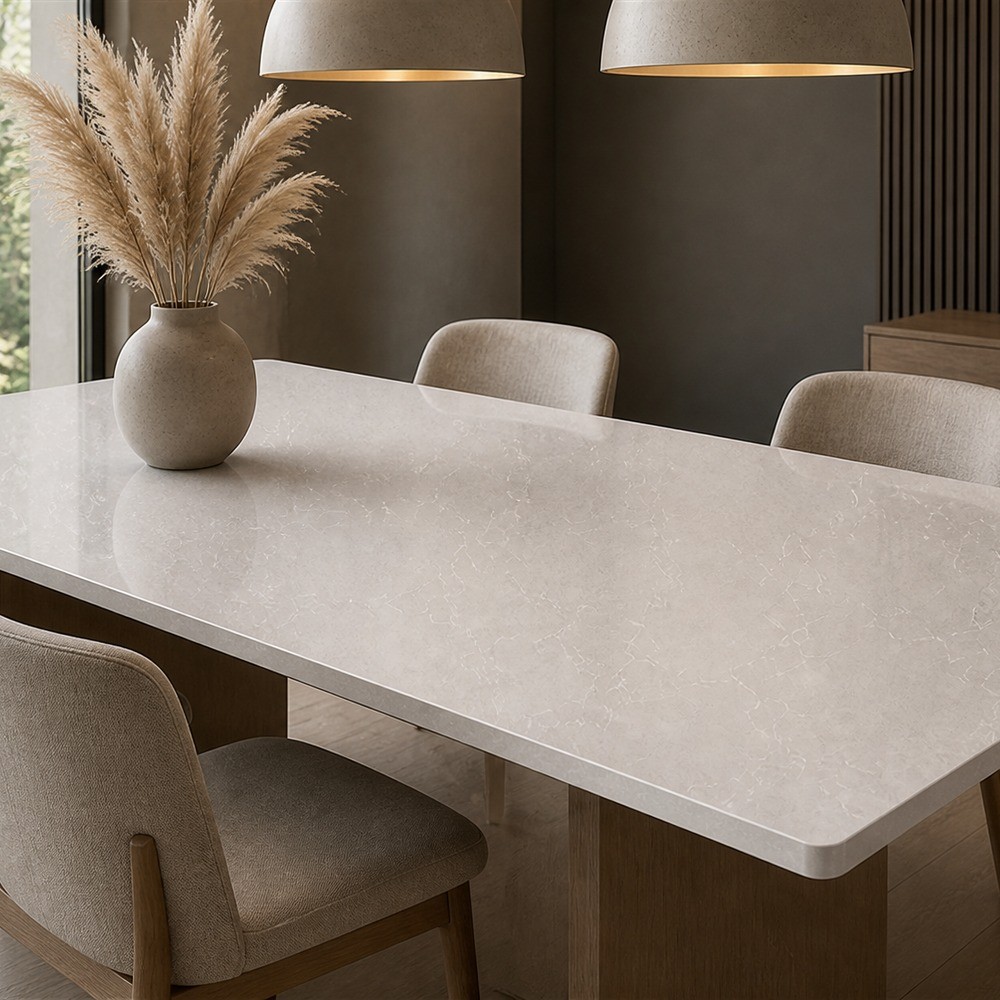
Corian offers uniform, often matte colours and can be formed into organic shapes. Quartz delivers the look of natural stone, including Calacatta, Statuario and Carrara-style veining, which many buyers now prefer for resale value. In a quartz vs Corian countertops visual comparison, quartz wins on looks like expensive stone for less, while Corian wins on clean, seamless, contemporary minimalism.
Which Should You Choose?
Choose Corian when you need invisible seams, integral sinks, coved backsplashes or in-place restoration, such as labs, healthcare or bold minimalist bathrooms. Choose quartz when you want stone looks, harder scratch resistance and strong resale appeal for kitchens. The quartz vs Corian question is not which is universally better, but which fits this specific project. For most residential kitchens, quartz is the more popular, lower-fuss default.
Frequently Asked Questions
Is Corian the same as quartz?
No. Corian is an acrylic solid surface with no natural stone, while quartz is an engineered slab of about 90 percent natural quartz bound with resin. The quartz vs Corian difference is material composition, which drives hardness, repair and looks.
Is quartz more durable than Corian?
For scratch and impact resistance, yes. Quartz is harder, at Mohs 6 to 7 versus about 3. Corian is more repairable because scratches can be sanded out, but quartz resists daily wear better.
Which is cheaper, quartz or Corian?
They overlap heavily. Quartz vs Corian cost is similar at entry level, with fabrication, especially Corian's seamless joining, often pushing the total higher for solid surface.
Can Corian be repaired seamlessly?
Yes. Corian joints are glued and sanded flush, and scratches or scorch marks can be polished out in place, which is the main repair advantage over quartz.
Does Corian stain more than quartz?
Both are non-porous, but quartz's denser body resists dyes and oils slightly better, and Corian can mark from harsh chemicals like acetone. For daily kitchen use, quartz is the more forgiving surface.
Specify Your Quartz Countertops Direct from the Factory
If your project needs the stone look and scratch resistance that win most quartz vs Corian countertops decisions, send us your dimensions and we will return samples, a cutting diagram and a line-item quotation. Our engineering team reviews every slab before production, so the quartz countertops that arrive on site fit the first time, and a surface that beats solid surface on looks and wear is yours without the solid-surface price premium.
📱 WhatsApp: +86 198 6115 3736
📧 Email: raykelee@hyquartzslabfactory.com
Related Articles
Send Us A Message