
Quartz Flooring: Where and How to Use Quartz Stone on Floors
Quartz Flooring: Where and How to Use Quartz Stone on Floors
Quartz Flooring: Where and How to Use Quartz Stone on Floors
Quartz flooring is one of the most durable and lowest-maintenance floor choices available to commercial and residential specifiers, yet it is still underused because buyers confuse it with polished concrete or natural stone tile. This guide explains what quartz flooring is, where it performs best, how it is installed, and how it compares on cost and care — so you can decide whether a quartz floor belongs in your next project.
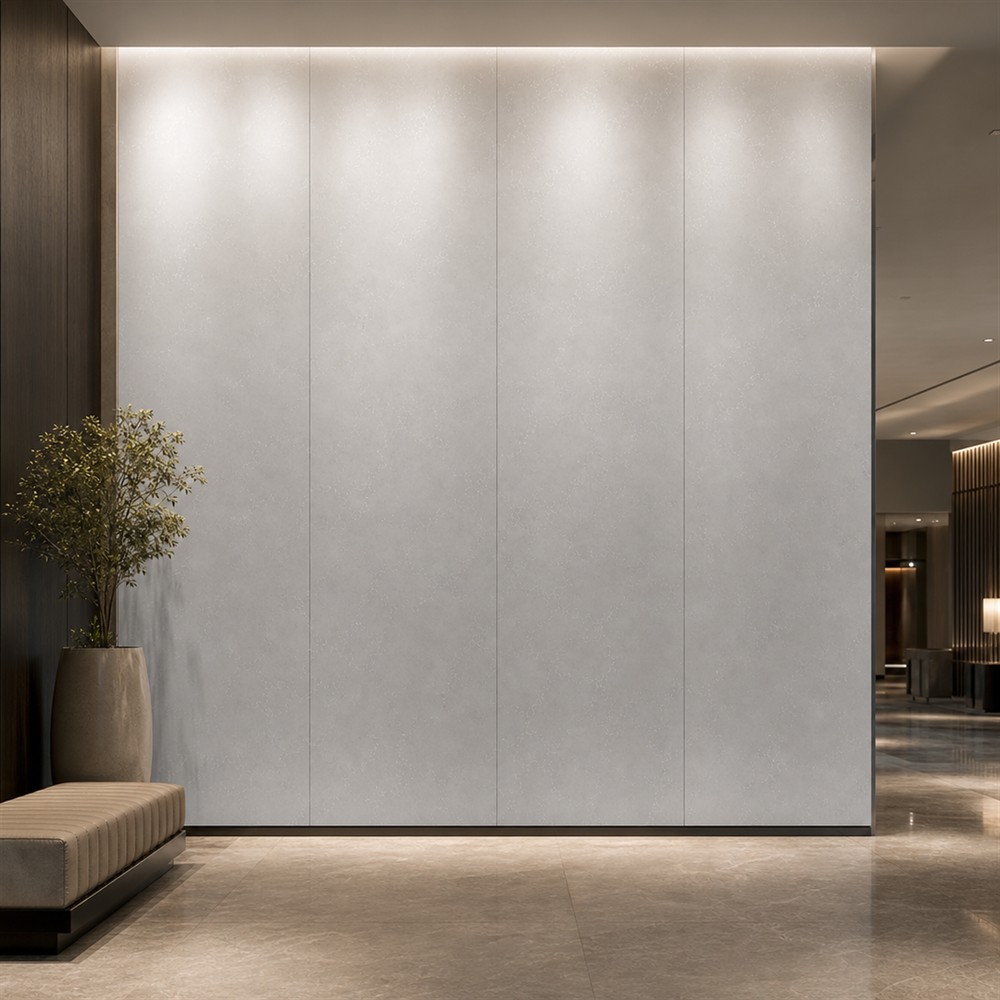
Engineered quartz flooring is made from the same 90 percent natural quartz slab stock we use for countertops, cut into large-format tiles or laid as full slabs. It is non-porous, Mohs-hardness 6, and certified to ISO 9001, NSF and SGS standards. That combination — stone appearance, zero sealing, and high traffic rating — is why quartz flooring is appearing in lobbies, retail, healthcare and premium residences rather than just on benches.
What Quartz Flooring Actually Is
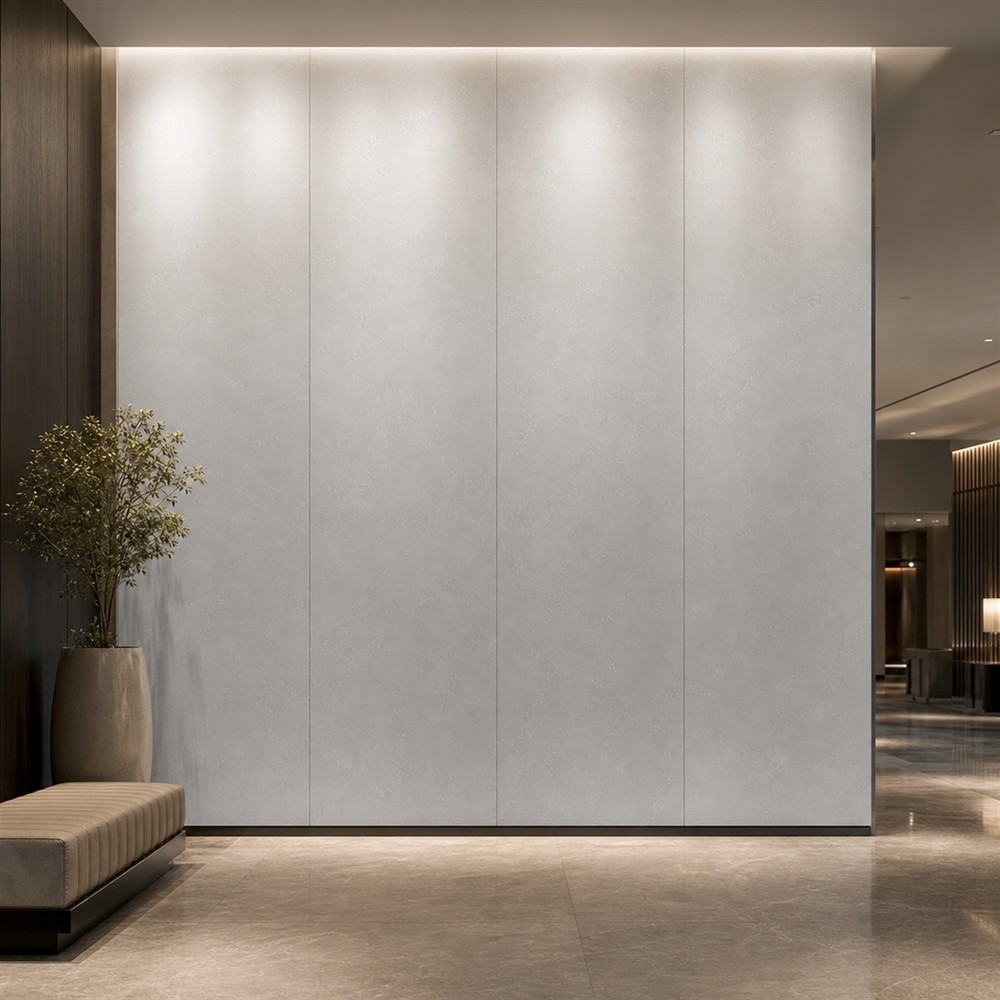
Quartz flooring is not a thin vinyl or a poured coating. It is the same engineered-quartz material as a countertop, delivered in floor-appropriate formats. The two common formats are large-format tiles (typically cut from 3200 × 1800 mm or 3200 × 1600 mm slabs) and full slab sections for seamless feature areas. Because the material is produced to a controlled recipe, a quartz floor keeps a uniform colour and vein across hundreds of square metres — something quarried stone cannot guarantee.
Where Quartz Flooring Works Best
Quartz flooring suits any space where a hard, non-porous, easy-clean surface earns its keep. The strongest applications are:
- Commercial lobbies and retail — the polished surface shrugs off trolley and foot traffic and never needs waxing.
- Healthcare and labs — non-porous means no bacterial harbouring in grout or pores, which matters for hygiene ratings.
- Bathrooms and wet rooms — water sits on the surface, so a quartz floor resists the staining and mildew that porous tile grout attracts.
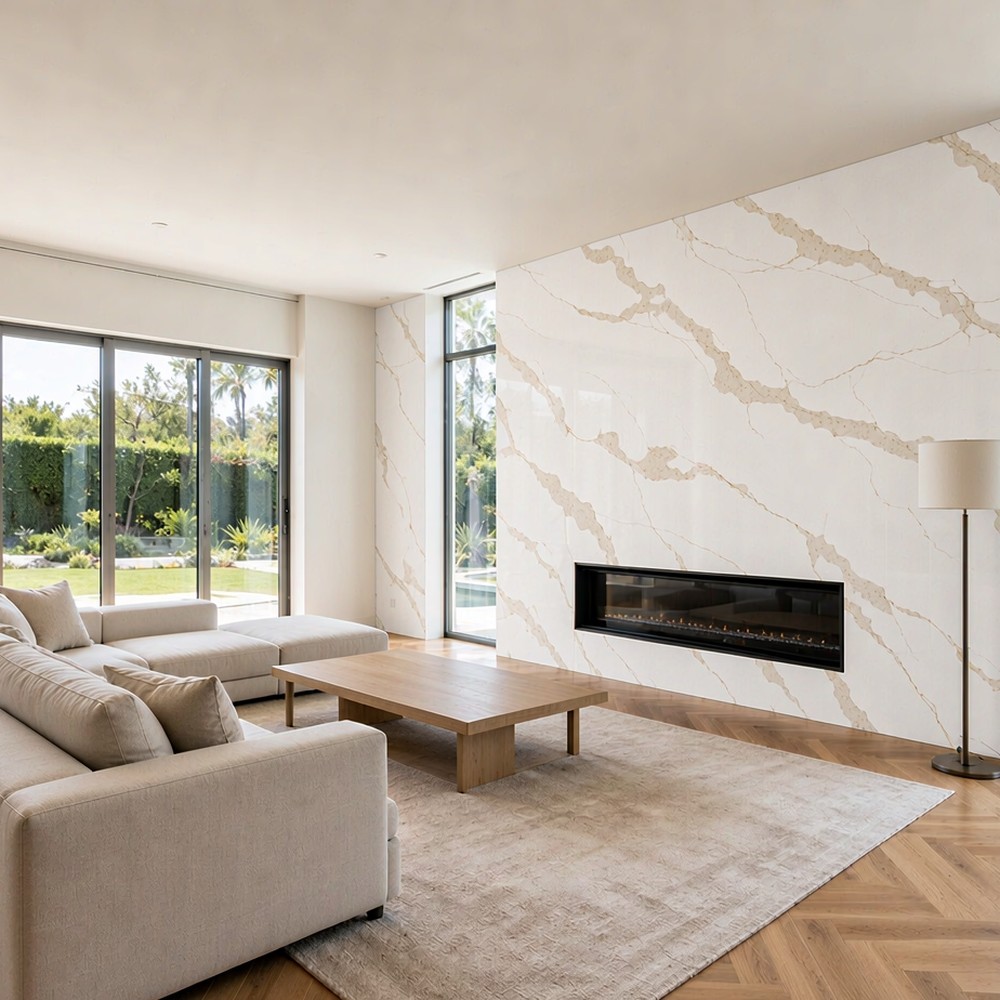
- Premium residential — open-plan kitchens flow into the same quartz floor for a monolithic, seamless look.
Where quartz flooring is the wrong call is heavy industrial areas with constant dropped steel or impact tools; for that, a steel-trowel concrete is still better. For everything else, quartz flooring outperforms tile and stone on upkeep.
Slip Resistance, Finish and Safety
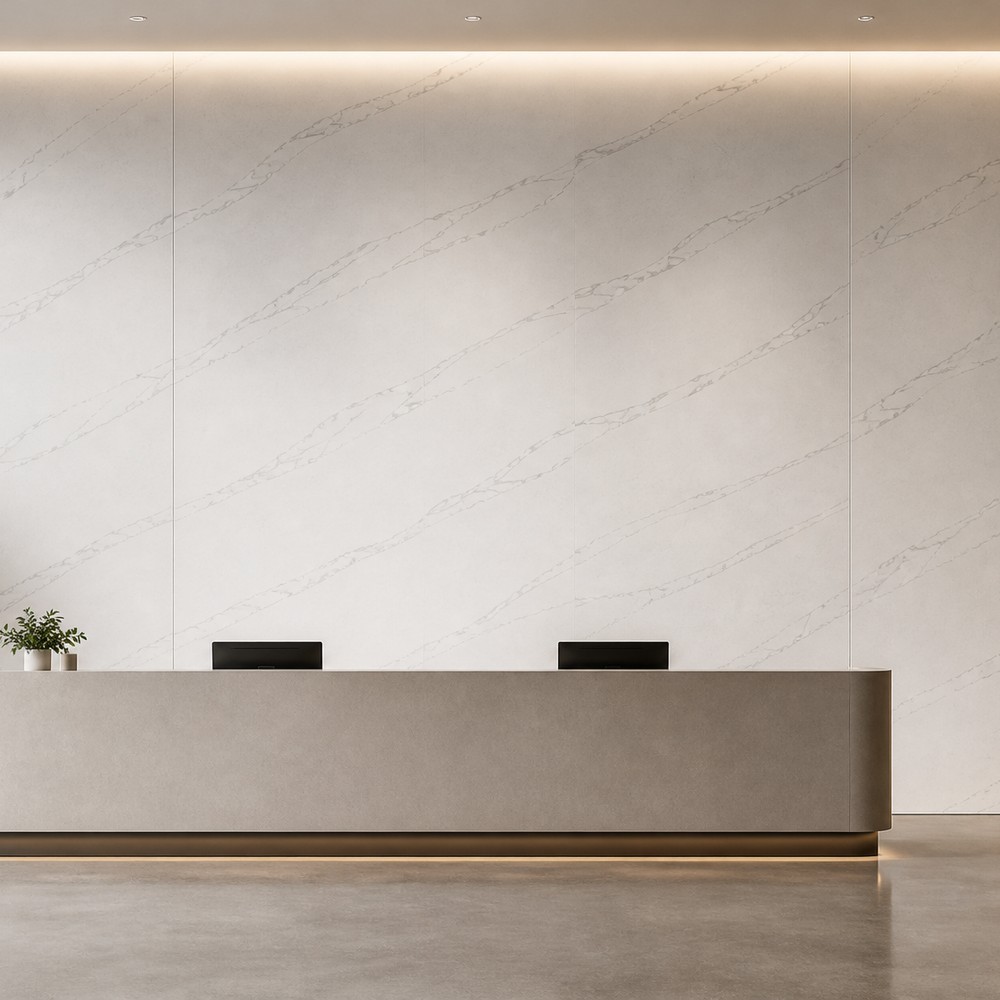
A polished quartz floor is beautiful but can be slick when wet, so for quartz flooring we recommend a honed or satin (textured matte) finish in wet or high-traffic areas, which raises the slip rating without losing the stone look. The edge of every tile is factory-finished, so there is no on-site cutting that leaves a chipped, sharp lip. For ramps and pool-adjacent areas, specify the textured finish and confirm the slip test rating with your local code before sign-off.
Durability and Load
Quartz flooring carries heavy foot and trolley loads without denting or staining. At Mohs 6 it resists scratching from shoes, caster wheels and furniture far better than marble or polished concrete, and a 0.02 percent water absorption means spills never soak in. The one limitation to respect is point impact: a dropped heavy steel item can chip a quartz tile, as it would any stone — so use protection pads under heavy equipment, the same as you would for any hard floor.
Installation and Subfloor
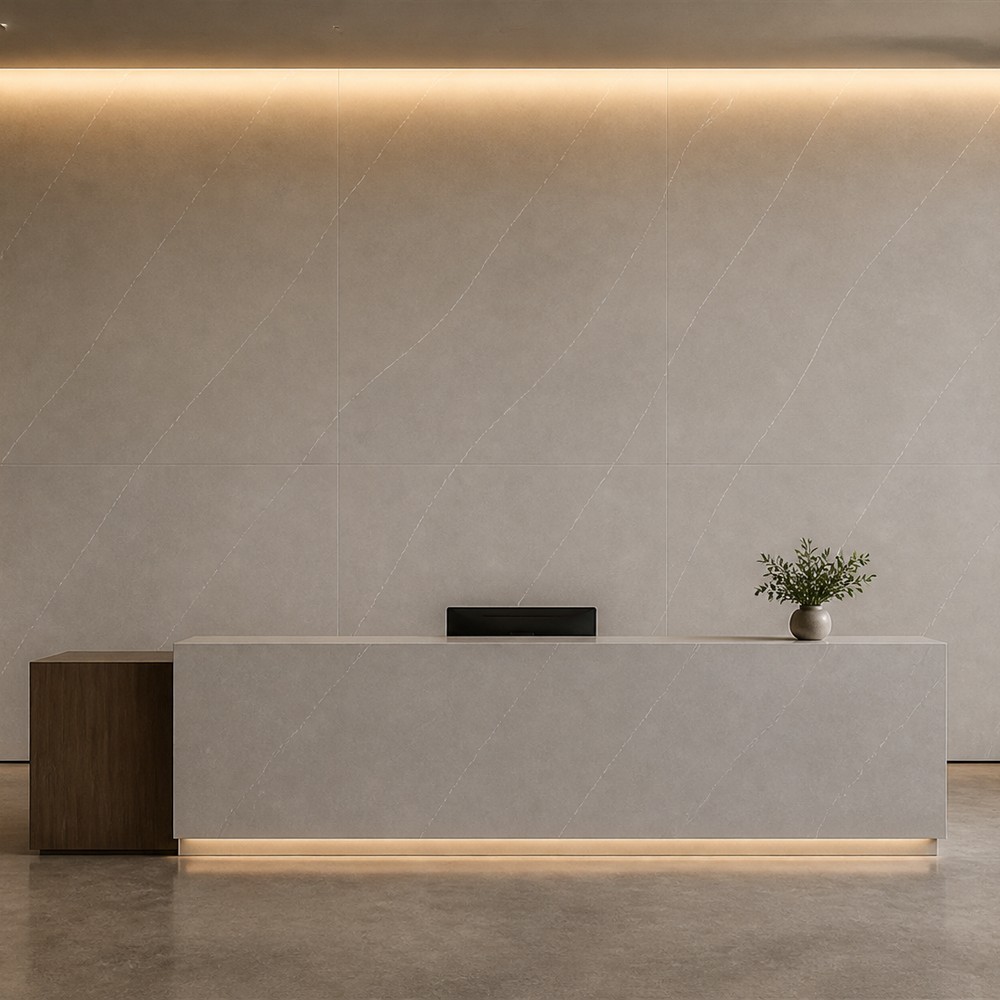
Quartz flooring is installed like large-format porcelain: a flat, rigid, crack-isolated subfloor, a high-quality tile adhesive, and narrow, even grout joints. Because the tiles are large and dimensionally stable, a poorly prepared subfloor shows through immediately — flatness is the single biggest factor in a good result. We supply the tiles cut to the project's module sizes from the factory, so the installer lays rather than cuts, which keeps edges clean and waste low.
Cost and Lead Time
Quartz flooring carries a higher material ticket than ceramic tile, but the lifetime cost is lower: no sealing, no waxing, no grout staining, and a surface that still looks new after years. Standard colours ship in 2 to 4 weeks from order confirmation, and mixed tile sizes from one colour are cut in a single production run so the floor reads as one consistent material. Ask us for a cutting diagram so the installer can verify yield before the order is placed.
Care and Maintenance
Care for quartz flooring is minimal. Sweep or damp-mop with a pH-neutral cleaner; avoid strong alkali or solvent strippers left standing, and never use a wax or acrylic dressing — it only builds a film on a surface that was never meant to be waxed. Because the floor is non-porous, there is no sealing schedule; the routine on day one is the routine in year ten. For outdoor or semi-covered areas, ask for the shade-stable grades, as prolonged UV can affect resin-based products over time.
Frequently Asked Questions
Is quartz flooring the same as quartz tile?
Yes — quartz flooring is engineered quartz delivered as large-format tiles or slab sections rather than as a countertop. It is the same non-porous, high-hardness material, specified for floors.
Does quartz flooring need sealing?
No. Engineered quartz is non-porous with 0.02 percent water absorption, so a quartz floor never needs sealing, waxing or annual treatment — unlike concrete or natural stone floors.
Is a quartz floor slippery when wet?
A polished quartz floor can be slick wet, so specify a honed or textured satin finish for wet and high-traffic areas. The slip rating should be confirmed against your local code before sign-off.
Can quartz flooring be used outdoors?
In covered or semi-covered outdoor areas, yes, with the shade-stable grades we supply for UV resistance. Fully exposed, all-day sun is not recommended for resin-based quartz flooring.
What is the lead time for quartz flooring tiles?
Standard colours ship in 2 to 4 weeks from order confirmation. Tiles are cut to the project module sizes in the factory, so the installer lays rather than cuts on site.
Specify Your Quartz Flooring Direct from the Factory
If your project needs a hard, non-porous floor with no sealing programme and a consistent colour across the whole area, send the floor plan and we will return samples, a cutting diagram and a line-item quotation. Our engineering team reviews every layout before production, so the tiles that arrive on site fit the first time.
📱 WhatsApp: +86 198 6115 3736
📧 Email: raykelee@hyquartzslabfactory.com
Related Articles
Send Us A Message