
Quartz Outdoor Kitchen: Specs, UV Resistance and Factory-Direct Guide
Quartz Outdoor Kitchen: Specs, UV Resistance and Factory-Direct Guide
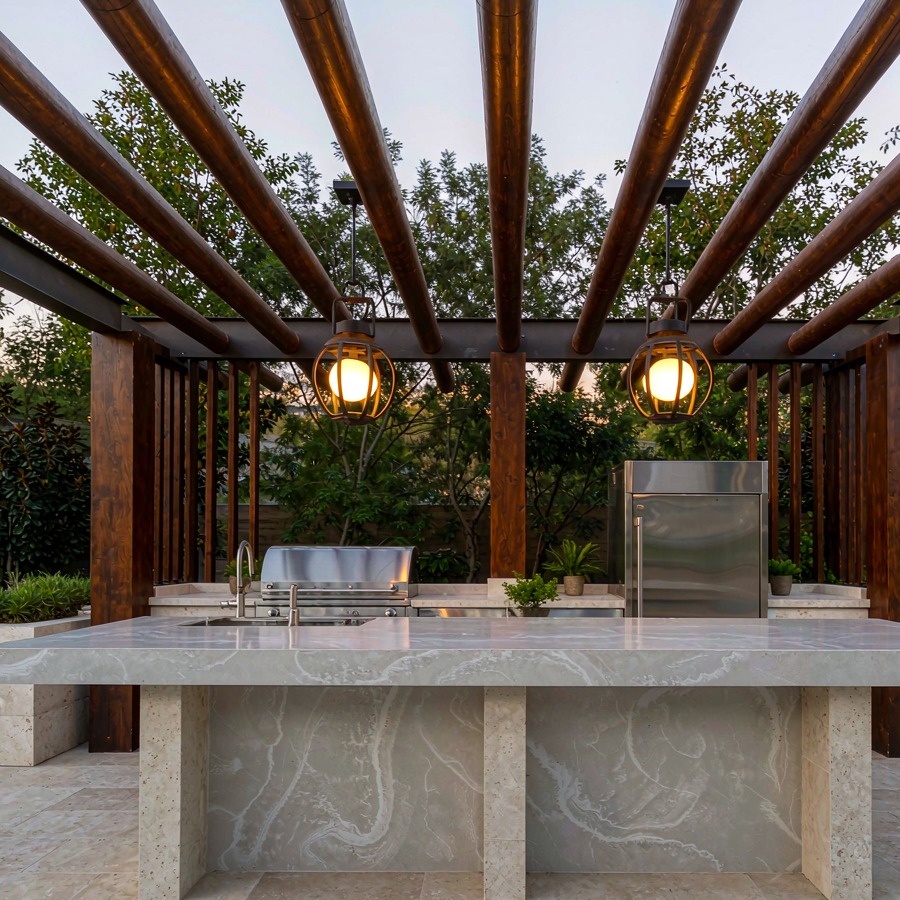
Specifying surfaces for a quartz outdoor kitchen is a different exercise from an indoor project. UV exposure, freeze-thaw cycles, rain and wide temperature swings all shorten the life of a material that performs perfectly in a controlled interior. As a factory supplying quartz slabs for outdoor projects across more than 60 countries, we see the same specification mistakes again and again — and the good news is that most of them are avoidable once a buyer understands how engineered stone behaves outdoors. This guide covers what to specify, what to avoid, and how to source a quartz outdoor kitchen directly from the manufacturer.
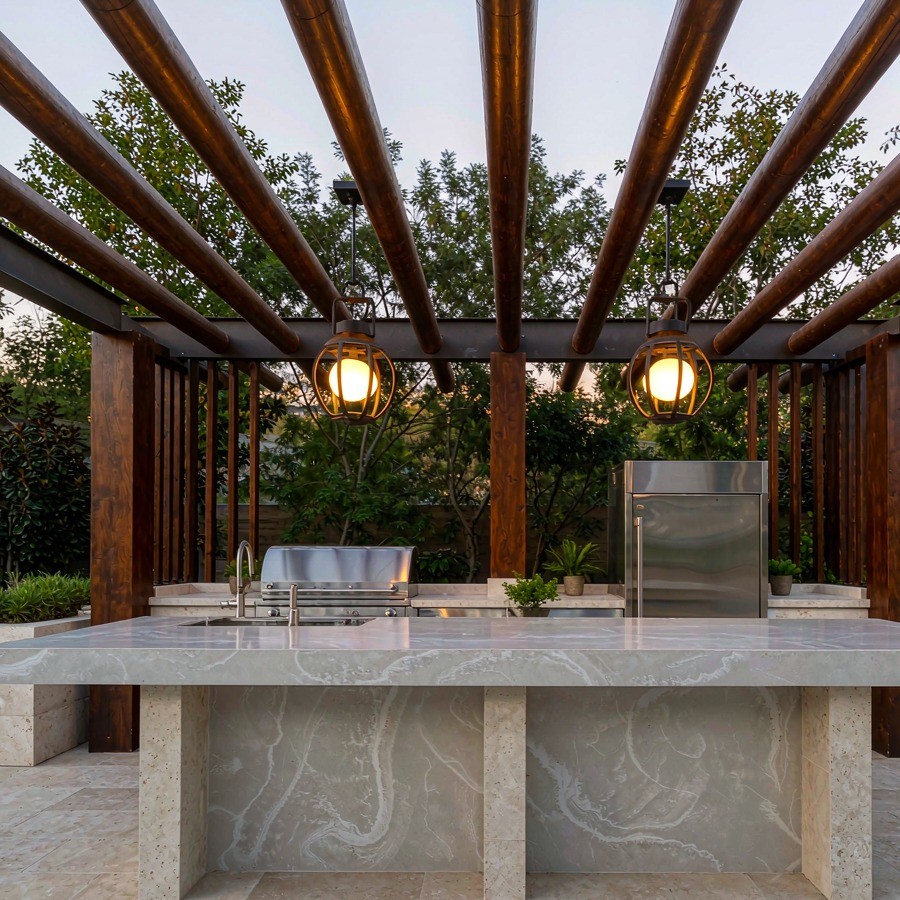
Why Quartz Works Outdoors — and Where It Struggles
A quartz outdoor kitchen combines the look of natural stone with the practical benefits of an engineered surface. The resins and pigments locked into each slab under roughly 7,000 psi of pressure produce a non-porous, hygienic surface that resists staining from wine, oil, grease and fruit — the exact challenges of an outdoor grill station, wet bar or prep area. Unlike granite, quartz never needs sealing, and unlike most porcelain, it can be fabricated with the same mitred edges, drainboards and cutouts as an indoor countertop.
Where a quartz outdoor kitchen needs careful specification is UV and heat. The resin binder in any quartz slab is organic, and prolonged direct sunlight can gradually fade or yellow some formulations. Dark, saturated colours are the most sensitive; whites, light greys and mid-tone greys with subtle veining are the most stable. Surface temperature also matters: a dark quartz countertop in full afternoon sun can reach temperatures uncomfortable to touch, and long-term thermal cycling stresses the slab. Neither issue disqualifies quartz — it simply drives the choices covered below.
Specifying for Outdoor Conditions
Colour and Pattern Selection
For any project with meaningful sun exposure, specify a light to mid-tone colour. Our factory recommends white, warm white and light grey bases with soft grey or gold veining — these are the formulations we have tracked performing best in hot-climate markets including Australia, the Gulf states, Spain and the southern United States. Avoid pure black and highly saturated blues or greens in full-sun installations; they are fine for covered outdoor kitchens and loggias, which is often the best compromise.
Thickness and Slab Size
Specify 20mm for outdoor work. It carries spans over cabinetry or steel frames without flexing under the weight of grills and stone cladding, and it survives the knocks of an outdoor environment better than 18mm. A jumbo slab — 126 by 63 inches — keeps an L-shaped outdoor kitchen countertop run to two or three field joints instead of five or six, which is where dirt collects and thermal movement shows first.
Edge Profiles and Finish
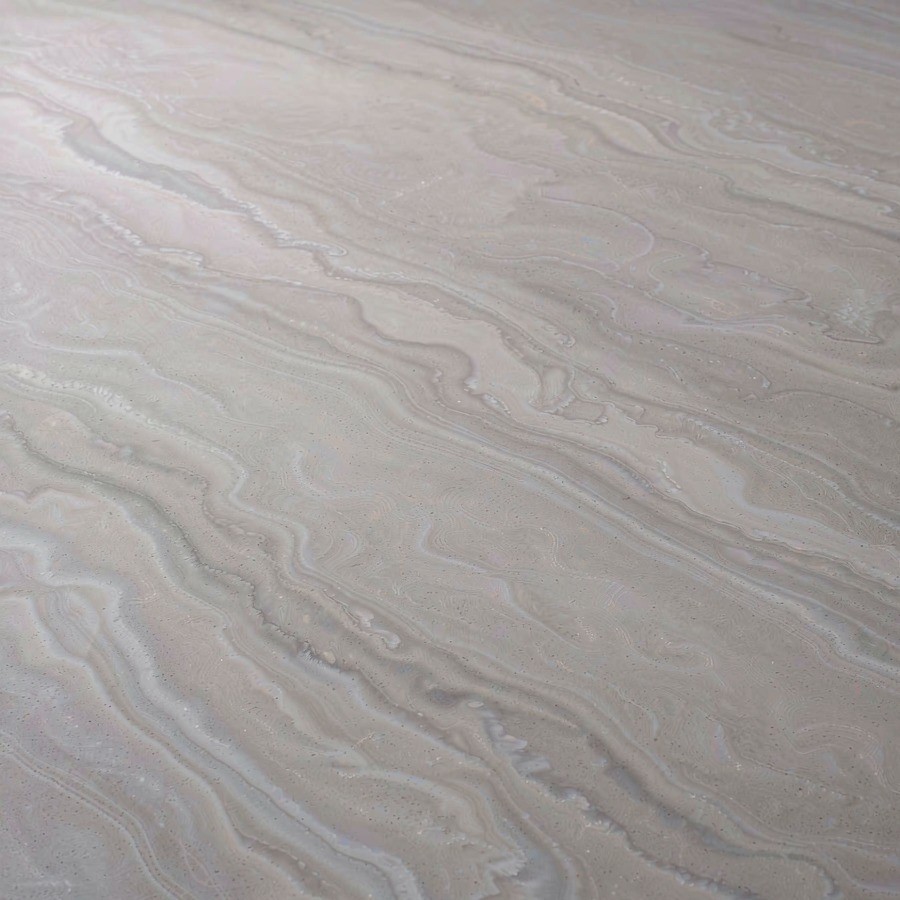
Choose a simple edge: a 1/8-inch eased edge or a 3/8-inch bevel. Ogee and bullnose profiles are beautiful indoors but create thin points that can chip when coolers, grills and furniture are dragged across an outdoor counter. A honed or matte finish hides water spots and sunscreen smudges better than a high polish, and it does not show the fine scratches that patio furniture leaves over a season.
Quartz vs. Natural Stone vs. Porcelain Outdoors
Buyers comparing materials for a quartz outdoor kitchen usually weigh three options. The table below summarises how each behaves in an uncovered, sun-exposed setting:
Our honest position: if the kitchen is fully uncovered in a high-UV climate, granite or a UV-stable light quartz both work, and quartz wins on hygiene and design. If the space is covered — a loggia, pergola with a solid roof, or a lanai — a quartz outdoor kitchen is, in our experience, the best-value choice available.
Layouts and Work Zones for a Quartz Outdoor Kitchen
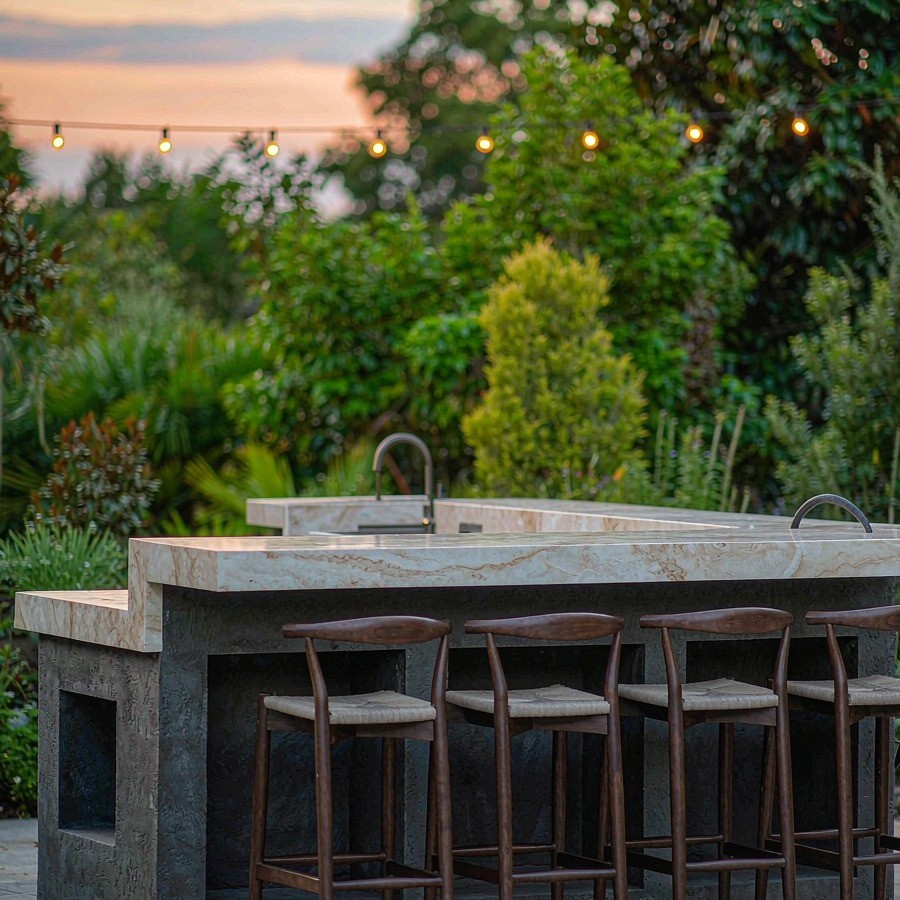
Most outdoor kitchens follow one of three layouts, and each puts different demands on the quartz specification. A linear quartz outdoor kitchen — counters and appliances along a single wall — is the cheapest to build and the easiest to keep seam-free, but it forces the cook to work in a cramped line. An L-shaped layout is the workhorse of residential projects: it separates the grilling zone from the prep and serving zones, and with jumbo slabs it usually needs only two seams. An island layout with a quartz outdoor kitchen island is the social option — the island carries the grill and a bar overhang for seating, and it becomes the gathering point of the yard.
Whichever layout you choose, plan the zones by distance rather than by look. Keep the refrigerator-to-prep distance under 6 feet, the prep-to-grill distance under 4 feet, and the sink within reach of both. These are the same rules professional kitchen designers apply indoors, and they are what turns a row of appliances into a kitchen that people actually cook in. A quartz surface ties the zones together visually because the same slab colour runs continuously across every counter, which is difficult to achieve with mixed materials.
Climate Notes by Region
In hot, high-UV climates — the Gulf, Australia, the US Southwest — the priority is light colours and covered installation wherever possible. In humid coastal regions, salt air is the main concern: rinse the surface occasionally, and specify a honed finish rather than a polish, which salt crystallisation can etch over seasons. In cold climates with hard freezes, the installation method matters more than the material: full substrate, supported seams, and a fitted cover through winter. If the quartz outdoor kitchen is built to those three rules, the same slab that performs in Doha or Sydney performs in Minnesota too.
Fabrication Details That Matter Outdoors
Seams and Expansion
Outdoor installations move. Daily temperature swings of 20–30 °C between dawn and afternoon expand and contract every component, so seam placement is an engineering decision, not a convenience. Seams should be positioned over cabinet supports, away from grill cutouts, and colour-matched with a two-part adhesive mixed to the base colour of the slab. A skilled fabricator will also radius internal corners slightly — sharp 90-degree inside corners are the most common origin of stress cracks in any large quartz surface.
Cutouts for Grills, Sinks and Appliances
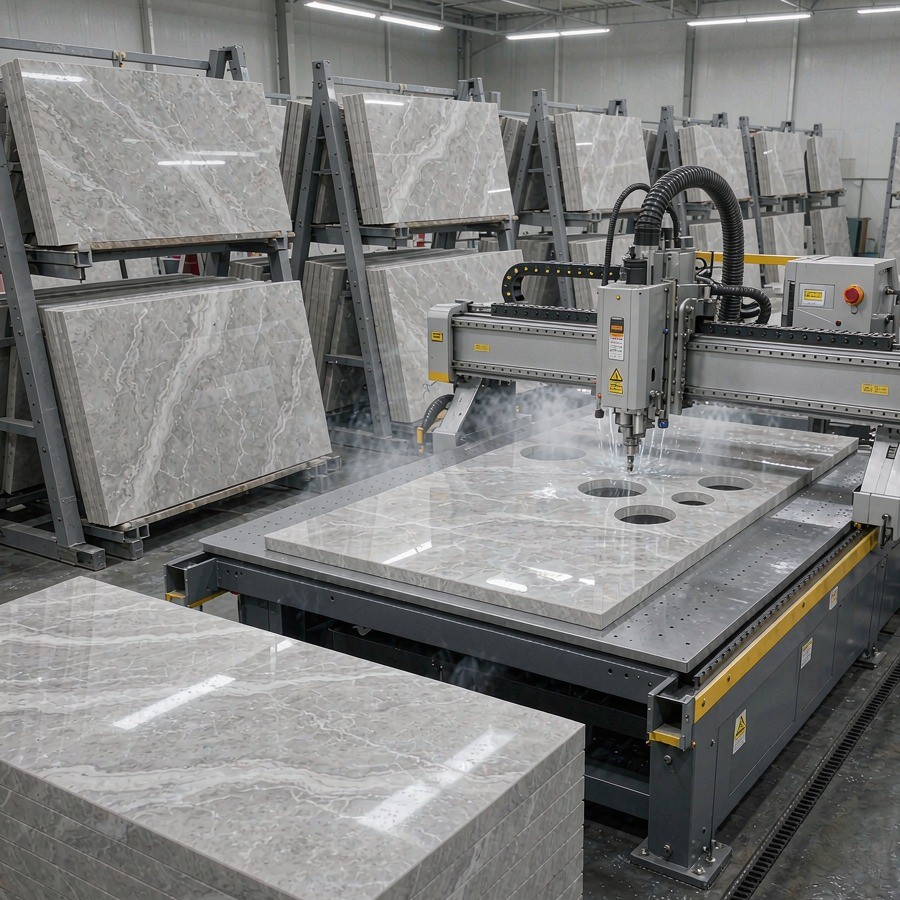
Every cutout needs a corner radius of at least 3/8 inch. Square corners concentrate stress, and a quartz outdoor kitchen sees more thermal and physical stress than any indoor counter. Keep cutouts at least 2 inches from seams and at least 3 inches from the front edge. For drop-in grills, specify a non-combustible surround — quartz is rated for incidental heat, but direct flame contact will damage any engineered stone, and a stainless or aluminium flanged liner around the grill opening protects the slab edge.
Support and Substrate
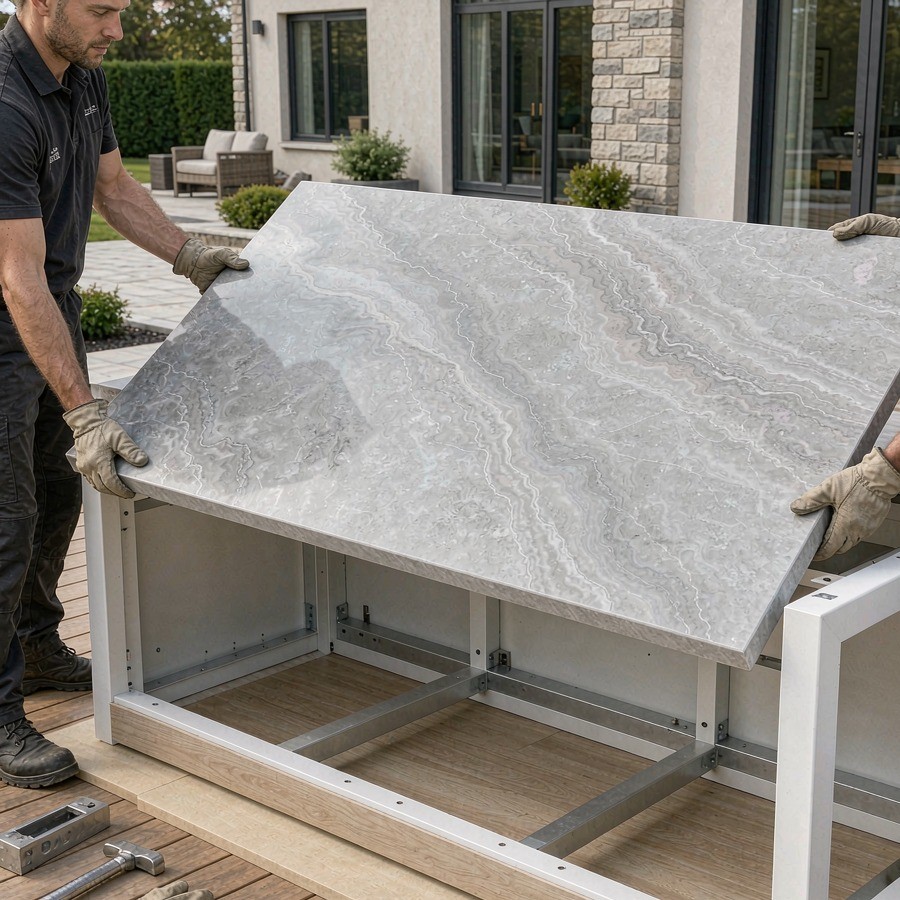
Run a full substrate under outdoor slabs: cement board or a marine plywood deck with a waterproof membrane. Never set a quartz outdoor kitchen directly on masonry blocks without a levelled bed, and never rely on adhesive alone for a 20mm slab. Overhangs beyond 12 inches — common for a bar or breakfast ledge on the social side of the kitchen — need steel support brackets every 24 inches, the same rule as indoors.
Maintenance Through the Seasons
The same routine applies on day one and in year ten. A pH-neutral cleaner and a soft cloth handle 95% of what happens to an outdoor quartz surface. Pressure washing is acceptable at a distance with a fan nozzle — a direct jet at a seam or cutout can force water into the joint. In climates with hard freezes, cover the surface or winterise the kitchen: a fitted cover keeps snow and de-icing salt off the slab, and salt in particular is abrasive to polished finishes.
Sourcing Factory-Direct
Most of the value in a quartz outdoor kitchen is set long before the truck arrives — in the slab choice, the fabrication drawings and the packing. Working directly with the manufacturer gives a project team three things a distributor rarely can: slabs from the same calibrated production batch so colours match across the whole kitchen, cut-to-size fabrication to project drawings, and crated export packing built for long-haul container transport. If you are weighing suppliers, our guide on buying from quartz slab manufacturers in China covers the vetting process in detail.
For projects combining outdoor kitchens with matching dining or bar tops, our custom quartz table tops are fabricated on the same lines and can ship in the same container. Budgeting is usually the next question, and our quartz slab price guide breaks down how FOB, CIF and DDP quotes differ for a full project order. Related specification questions — from 18mm vs 20mm thickness to vanity top edge profiles and sink cutouts — are covered in the linked guides.
Project Checklist
Before releasing a purchase order for a quartz outdoor kitchen, confirm these items with the supplier: slab colour and batch number; thickness (20mm recommended); slab size to minimise seams; edge profile and finish; cutout schedule with radii; seam layout approved by the fabricator; crated packing with moisture protection; and the Incoterm for delivery. A supplier that answers all eight without hesitation is a supplier that has shipped outdoor projects before.
Frequently Asked Questions
Will a quartz outdoor kitchen fade in direct sunlight?
Light and mid-tone colours from a reputable factory show no visible fading over years of outdoor exposure. Very dark or highly saturated colours can gradually shift in permanent direct sun, so we recommend them only for covered outdoor kitchens.
Can I put a grill directly on a quartz outdoor kitchen surface?
No. Quartz tolerates incidental heat from a warm pan or a hot plate, but direct flame or the base of a lit grill will damage the resin. Use a stainless flanged liner around the grill cutout and keep the appliance on its own base.
Is a quartz outdoor kitchen strong enough for freeze-thaw winters?
Yes, with correct installation: a full substrate, support at every seam, and a fitted winter cover. Quartz is non-porous, so unlike some natural stones it does not absorb water and crack when it freezes.
How many slabs do I need for a quartz outdoor kitchen?
A typical residential outdoor kitchen with a 12–16 foot counter run uses 3–5 jumbo slabs including backsplash and island cladding. Send the drawings and we will return an exact cut list with offcut minimisation.
Do you fabricate and ship quartz outdoor kitchen projects internationally?
Yes. We fabricate to project drawings, crate for container transport and export to more than 60 countries. Send the specification and we will return samples, drawings and a delivered-cost quotation.
If your project needs a quartz outdoor kitchen built to project drawings, factory-direct and batch-matched across the whole run, contact our export team with the layout and colour preferences and we will return a cut-to-size quotation.
Send Us A Message