
Quartz Kitchen Sink: Integrated, Undermount and Factory-Direct Guide
Quartz Kitchen Sink: Integrated, Undermount and Factory-Direct Guide
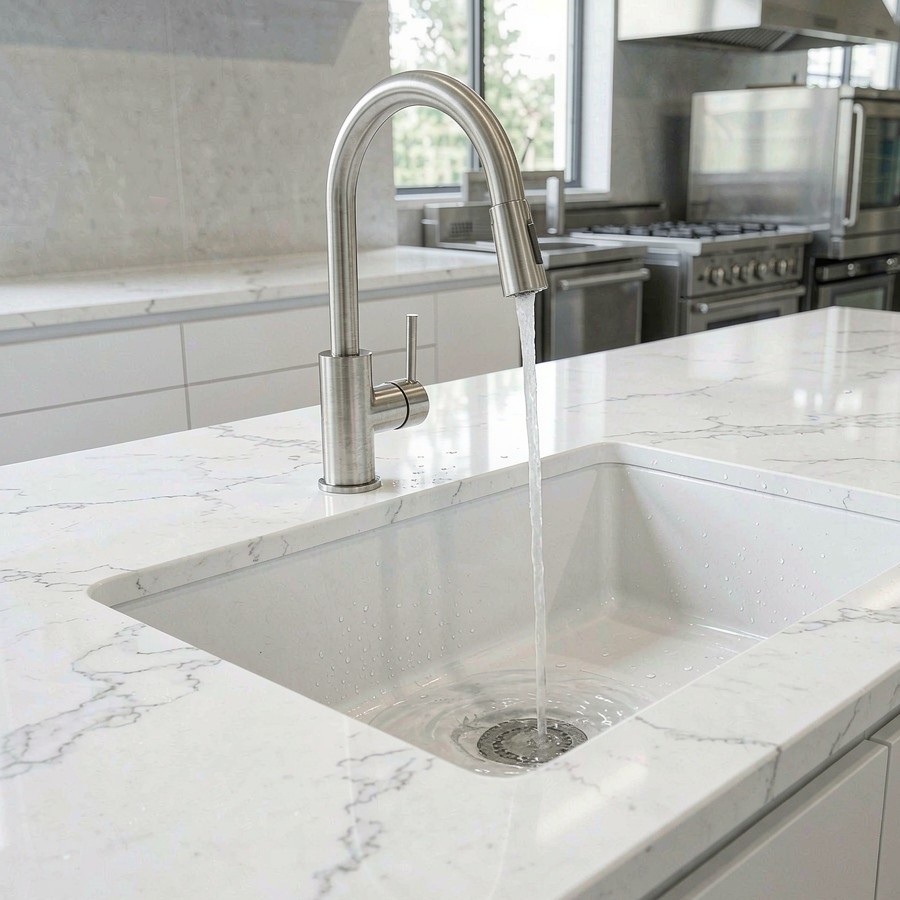
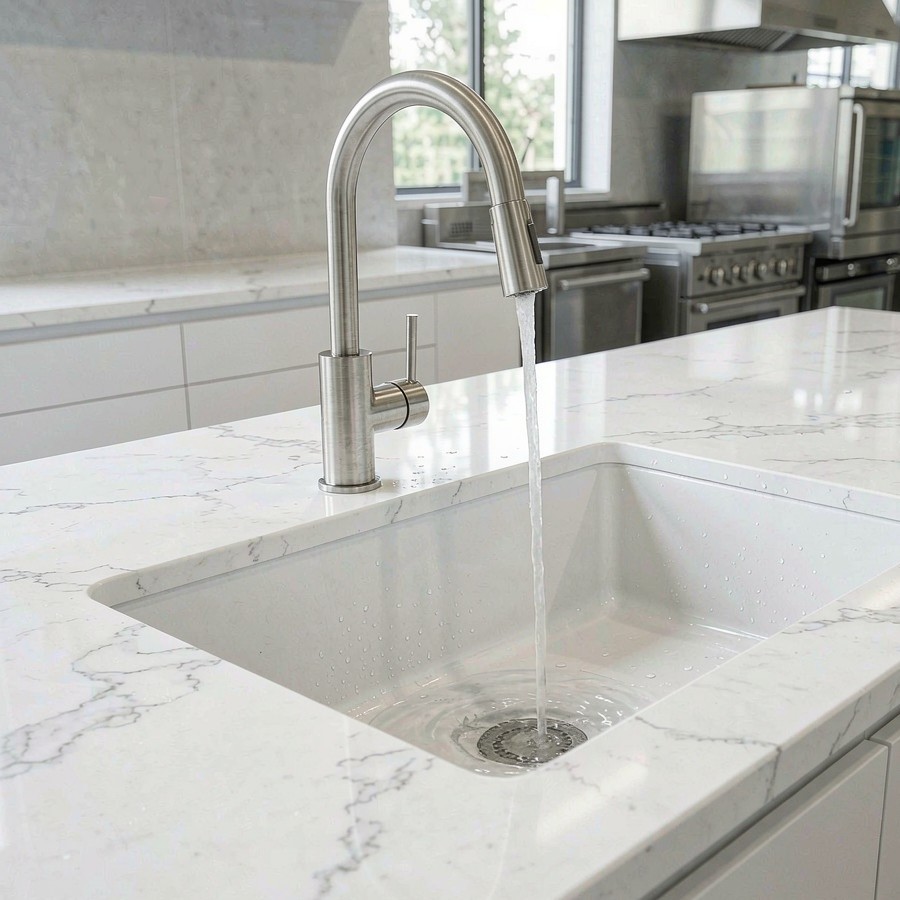
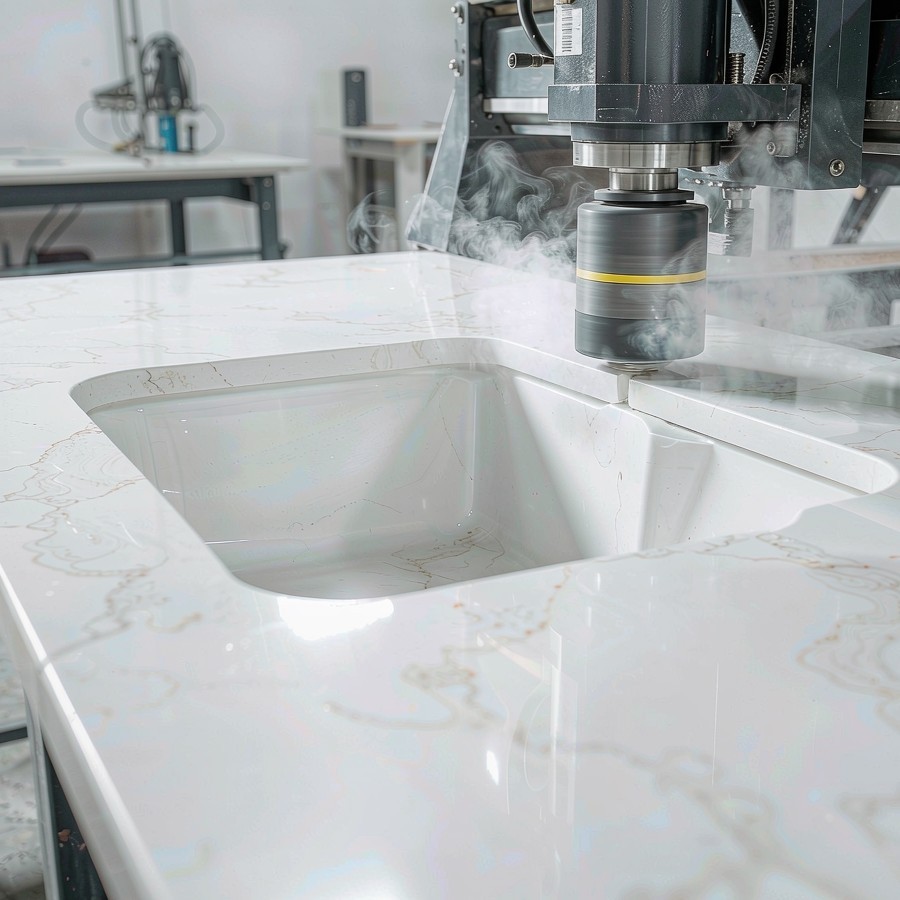
A quartz kitchen sink is a basin fabricated from the same engineered quartz compound as solid surface countertops — roughly 90% crushed quartz grit bound with resin, pressed and cured into a seamless, non-porous bowl. Unlike a stainless or fireclay basin dropped into a cutout, a quartz kitchen sink is either undermounted from below the countertop or moulded as one continuous piece with the slab itself. That single difference drives everything buyers ask about: weight, price, cleaning, and how the sink behaves when a cast-iron pan meets the bowl.
This guide is written for importers, distributors, and stone fabricators specifying sinks for residential and hospitality projects. It covers what quartz sinks are made of, how they compare with stainless steel and porcelain, the real-world failure modes we see in warranty claims, and what to put on the order sheet when sourcing factory-direct. If you are also sourcing slabs, our related guides on slab sizes and jumbo formats and kitchen backsplash design cover the countertop side of the same project.
What Is a Quartz Kitchen Sink, Really?
The term gets stretched across three different products, and confusing them is the most common sourcing error we see:
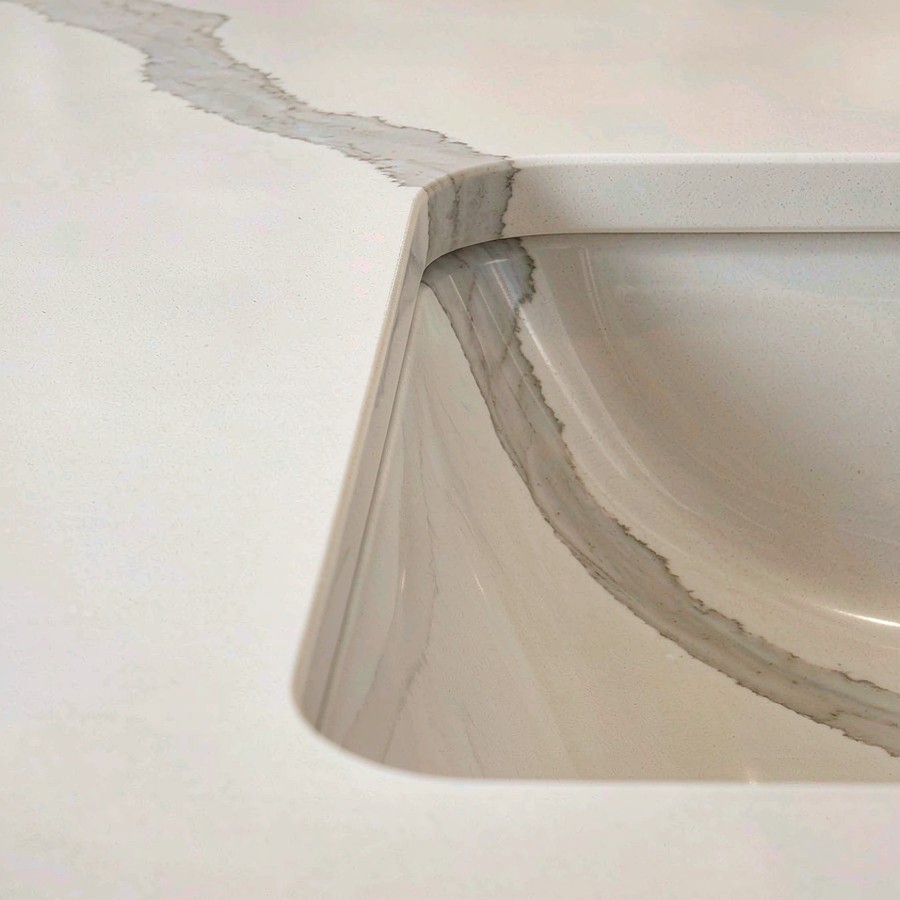
- Integrated quartz sink — the bowl is formed into the countertop slab during fabrication, so counter and sink are one seamless piece with no joint to leak or stain.
- Fabricated quartz sink — a standalone bowl cut and bonded from quartz sheet, undermounted from below. Same material family as the countertop, same colour family as the slab.
- Quartz composite sink — the mass-market version: acrylic or polyester resin with a high quartz loading, sold through retail channels at a fraction of the price.
All three are marketed as "quartz", but they differ in resin grade, quartz loading, and UV stability. A fabricated quartz kitchen sink from a slab supplier is a different animal from a big-box composite bowl, and buyers should insist the quote states which one they are getting.
Quartz vs Stainless Steel vs Porcelain: The Honest Comparison
Buyers usually shortlist three sink materials:
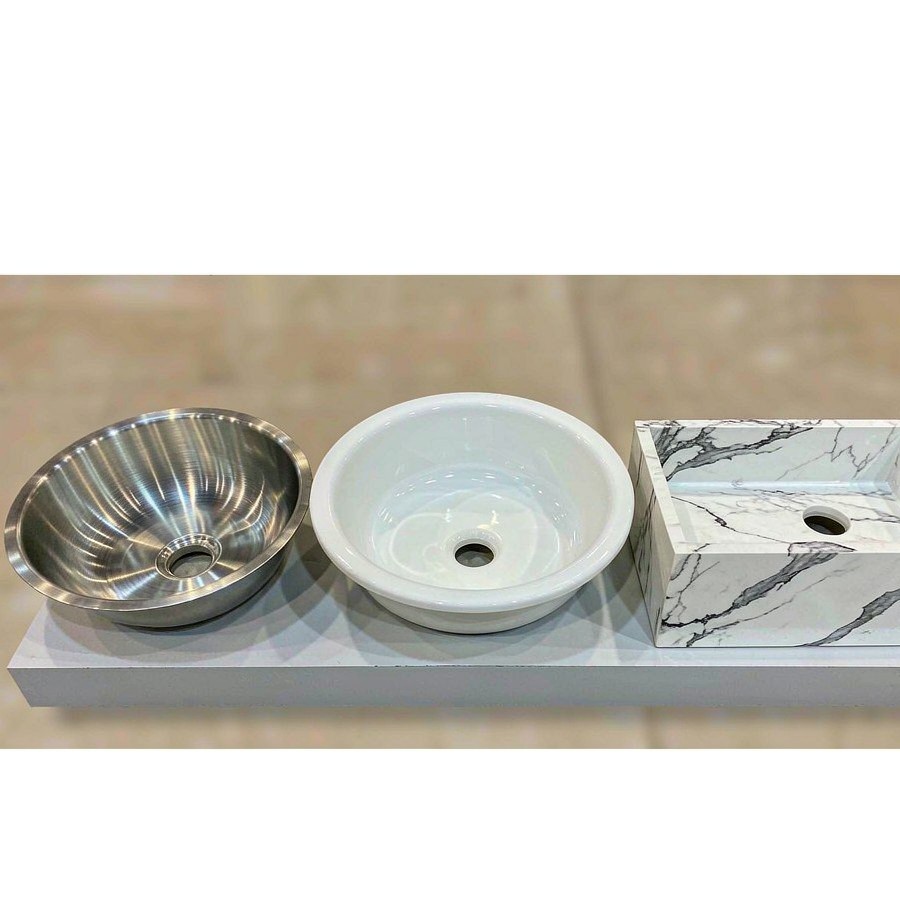
- Stainless steel (16–18 gauge). The benchmark: cheap, dent-resistant, heat-proof, universally repairable. Weaknesses are noise — thin gauges drum under running water — and scratching. A scratched steel bowl still works perfectly, but shows every water spot in hard-water regions.
- Porcelain / fireclay. The classic look, and properly fired fireclay is genuinely durable. Weaknesses: chips on impact are permanent and hard to repair invisibly, and crazing can develop over decades of thermal cycling.
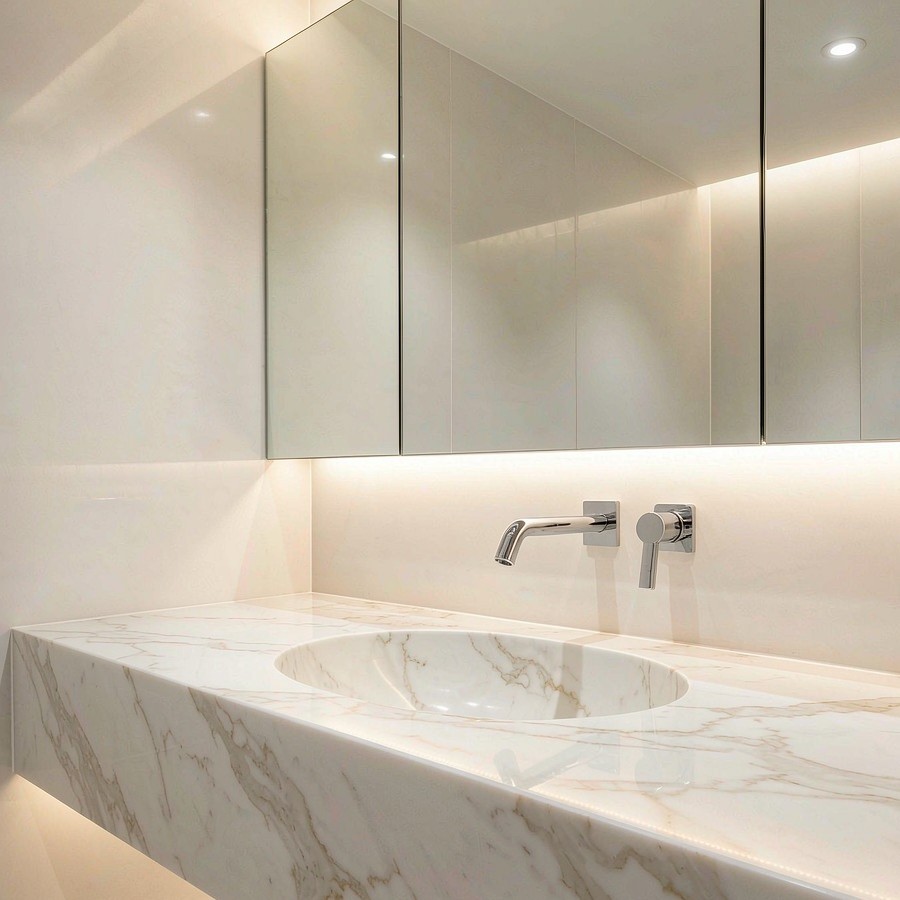
- Quartz kitchen sink. Near-zero porosity (no staining, no mineral deposit keyed into the surface), sound damping under running water, and colour continuity with the countertop. A quartz kitchen sink in the same batch colour as the slab makes the undermount line nearly invisible — the reason designers specify it.
Our recommendation on record: quartz sinks win on looks, noise, and hygiene; stainless wins on price, impact toughness, and heat tolerance; porcelain wins on traditional styling where budget allows. There is no single best sink material — only the right one for the client's usage profile.
Real Failure Modes (From Warranty Claims, Not Marketing)
Any supplier promising a maintenance-free sink has not read their own claim files. The genuine failure modes of a quartz kitchen sink:
- Thermal shock. Quartz's resin binder softens around 150–200°C. A quartz kitchen sink tolerates normal kitchen heat — hot pans on the board, boiling water in the bowl — but a red-hot pan set directly into the bowl, or a fryer basket dropped straight from 180°C oil, can craze or scorch the resin. Kitchen accidents, not daily use, cause this.
- Edge chips from heavy impact. Dropping a cast-iron skillet into a quartz bowl can chip the rim. Stainless would dent instead. Chips are repairable by a fabricator but not invisibly.
- Hairline crazing over years in thin-wall composite bowls from freeze-thaw cycling in unheated kitchens — rare in 20 mm fabricated bowls, more common in retail composite versions.
- Water spotting in hard-water areas. Quartz does not stain, but mineral films sit on the surface. A wipe-down after use keeps it looking new — same as any polished stone.
Open-flame cooking directly over a quartz fire zone, fryer work, or heavy impact workshops are the exception cases. For deep-fry commercial kitchens we steer clients to stainless or porcelain for the bowl zone and quartz for the elevation — the same honest redirection we apply to fireplaces.
Sizes, Mounting and What the Cabinet Needs
Standard fabricated quartz kitchen sink bowls run 450–800 mm in length, 380–500 mm wide, and 180–220 mm deep, cut from 20 mm sheet. Key ordering facts:
- Weight is the real constraint. A large quartz bowl filled with water plus a pan-load of dishes can exceed 40 kg, versus roughly 8 kg for a 16-gauge steel bowl of the same size. Base cabinets need the fabricator's reinforcement kit — a bar across the sink rails — and installers should spec a full-depth, 18 mm plywood floor in the cabinet, not a 12 mm back panel.
- Undermount is the default for quartz. Top-mount rims break the seamless look that justifies the material, and the flange edge is the chip zone. Flush-mount (bowl welded level to the slab underside) is the premium spec.
- Drain cutouts are cut in the factory, not site-drilled. The overflow groove is cast, and a site-drilled overflow voids the warranty.
- Faucet deck fit. Integrated decks for multiple taps need the bowl layout approved on a drawing before cutting — ret rogressive drilling into a cured bowl is not possible.
Design Considerations: Depth, Ergonomics and Drainage
Specifiers focus on colour and forget the three numbers that decide whether the kitchen is pleasant to use:
- Bowl depth. A 180 mm bowl splashes under a running tap and leaves tall stock pots proud of the rim; 220 mm contains a full sink of water and a stock pot below the counter line. Most residential projects land at 200–220 mm. Hospitality back-of-house goes shallower for fast filling.
- Drainage fall. An integrated quartz kitchen sink is cut from the same flat slab as the countertop, so the fabricator must machine a drainage fall into the channel side of a flush-mount bowl. Bowls with a dead-flat floor leave a film of standing water that no amount of wiping fixes — insist the drawing shows the fall direction before cutting.
- Tap reach. A deep narrow bowl pushes the tap too far back, so the stream hits the bowl wall instead of the drain. Check the tap's projection against bowl width, and check that a tall gooseneck tap clears a windowsill behind the bowl.
These three checks take five minutes on a drawing and prevent the majority of post-installation complaints about a quartz kitchen sink.
Colour Matching: Why Batch Matters More Than the Catalogue
Engineered quartz is produced in batches, and mineral feedstock varies slightly between them. A white bowl cut from batch 27 sits beside a countertop from batch 31: under showroom lighting the difference is invisible; under a north-facing kitchen window at 7 a.m. it can read as two different whites. That is why the single most valuable line on a quartz kitchen sink order sheet is not a dimension — it is the batch number of the countertop slabs, and a factory clause tying the bowl to the same production run. Retail composite sinks have no batch-match option at all, which is precisely the gap factory-direct fabrication fills.
Cleaning and Long-Term Care
A quartz kitchen sink is one of the lowest-maintenance bowls sold. Daily: rinse, wipe with a cloth. Weekly: any non-abrasive household cleaner. Avoid prolonged contact with strong alkalis (drain cleaners, oven cleaner residues) and paint strippers — the same chemical exclusions as any engineered stone. No sealing is ever required, unlike natural stone bowls. Water spots wipe off with a damp cloth; a paste of baking soda handles the rare stubborn film without scratching the polished surface.
Specifications to Put on the Order Sheet
When you request a quote for quartz kitchen sinks, a complete order sheet gets a firm price the same day:
- Bowl dimensions (L×W×D) and whether single, one-and-a-half, or double bowl
- Mounting style: undermount, flush-mount, or integrated into the slab
- Quartz loading / resin system, and colour match: which slab colour and batch
- Drain position(s) and overflow requirement
- Cabinet reinforcement responsibility: fabricator or installer
- Destination market compliance: NSF food-zone certification where specified
How to Order Quartz Kitchen Sinks Direct from the Factory
Working with the slab factory removes a layer between the bowl and the countertop. Batch colour match is the practical advantage: order the quartz kitchen sink with the same production batch as the countertop slabs and the undermount line disappears. Slab suppliers also cut bowls from offcuts of ordered jumbo slabs, turning waste into a matched accessory at near-zero material cost. That is the sourcing logic distributors use when they quote a full project instead of separate sink and slab lines.
Samples of any catalogue colour ship before production, so the client signs off on the real tone rather than a screen render — the same discipline we apply to slabs, just at bowl scale.
FAQ: Quartz Kitchen Sinks
Can you put a hot pan in a quartz kitchen sink?
A warm or hot pan is fine; a pan straight off a 200°C+ flame is not. Quartz's resin softens around 150–200°C, and that specific accident — not daily use — is what causes scorch marks and crazing. In commercial kitchens with fryers, we recommend stainless for the bowl.
Will a quartz kitchen sink stain?
Properly formulated quartz is near-zero porosity, so wine, turmeric, and grease sit on the surface rather than soaking in. That is the material's core advantage over granite bowls. Leftover films wipe off; nothing needs sealing.
Is a quartz kitchen sink heavier than stainless?
Yes — commonly 4–5 times heavier. The cabinet under a large quartz kitchen sink needs a sink-rail support bar, and fabricators routinely add it. Any competent installer accounts for this; specify it on the order sheet so responsibility is clear.
Quartz kitchen sink price: what drives it?
Quartz loading, bowl size, whether it is fabricated from slab or retail composite, and colour match to a specific slab batch. Factory-direct fabricated bowls cut from ordered material are priced off the sheet, not off retail channel markups — request a quote with your slab order to see the difference.
Can a chipped quartz kitchen sink be repaired?
Small rim chips can be filled and polished by a fabricator using matching resin and quartz dust from the same colour family. The repair is functional and close to invisible on light colours; on heavily veined patterns it may be faintly visible. Because the material is through-body (not surface-printed porcelain), a repair does not show a different colour underneath — one more reason fabricators prefer it over composite bowls.
Conclusion
A quartz kitchen sink earns its place where looks, hygiene, and noise matter — and the honest list of things it dislikes (extreme heat, heavy impact, strong alkalis) is short and manageable. Specify it with the same batch colour as the slab, undermount it properly, reinforce the cabinet, and it will outlast the countertop trend that chose it. For project quantities, get the bowl on the same order sheet as the slabs: one batch, one colour match, one delivery.
Related Articles
Quartz Vanity Tops: Sizes, Sinks and Edge Profiles
Quartz Slab Thickness: 18mm vs 20mm
Quartz Slab Sizes and Jumbo Formats Explained
Quartz Kitchen Backsplash: Full Guide for Buyers
Sourcing quartz kitchen sinks or countertops? Contact the team at Shandong Hongyue Quartz Stone Co., Ltd. on WhatsApp at +86 198 6115 3736 or email raykelee@hyquartzslabfactory.com for colour samples, bowl drawings and an indicative quartz sink quotation.
Send Us A Message