
Quartz Wall Panels for Showers: What Buyers Should Know
Quartz Wall Panels for Showers: What Buyers Should Know
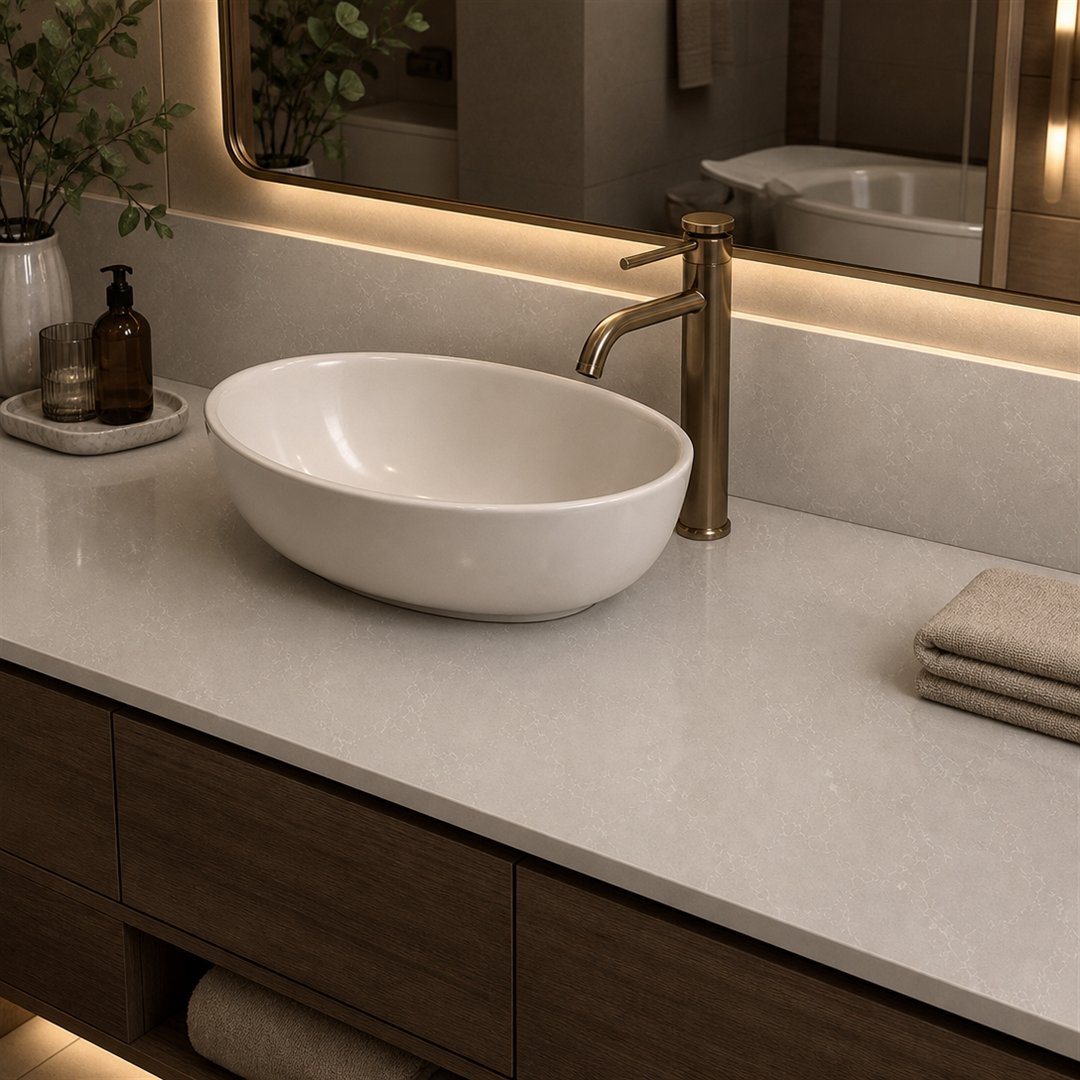
Quartz wall panels are being specified for showers, wet rooms, and commercial bathrooms in increasing volumes, and for a practical reason: a full-height engineered stone surface removes the grout lines, caulk joints, and penetrating seams that make tiled showers the most maintenance-heavy surface in any building. If you are evaluating quartz wall panels for a bathroom or shower project, this guide covers what they actually are, how they compare with tile, the sizes and thickness that matter, and the specification details fabricators get wrong most often.
We manufacture engineered quartz slabs in Shandong and export them as slabs for fabrication, so what follows is written from the supply side: what we produce, what we see specified correctly and incorrectly in export orders, and what a buyer should confirm with a supplier before committing to a quartz wall panel order.
What Are Quartz Wall Panels
A quartz wall panel is simply a large-format engineered quartz slab cut to a wall size and installed as a cladding surface. There is no separate product line called "wall panel" in quartz production: the same slab that becomes a kitchen countertop becomes a wall panel when it is cut to cover a wall rather than a cabinet run. The material is approximately 90% natural quartz aggregate bound with resin and pigments, pressed and cured into a slab, then polished or honed at the surface.
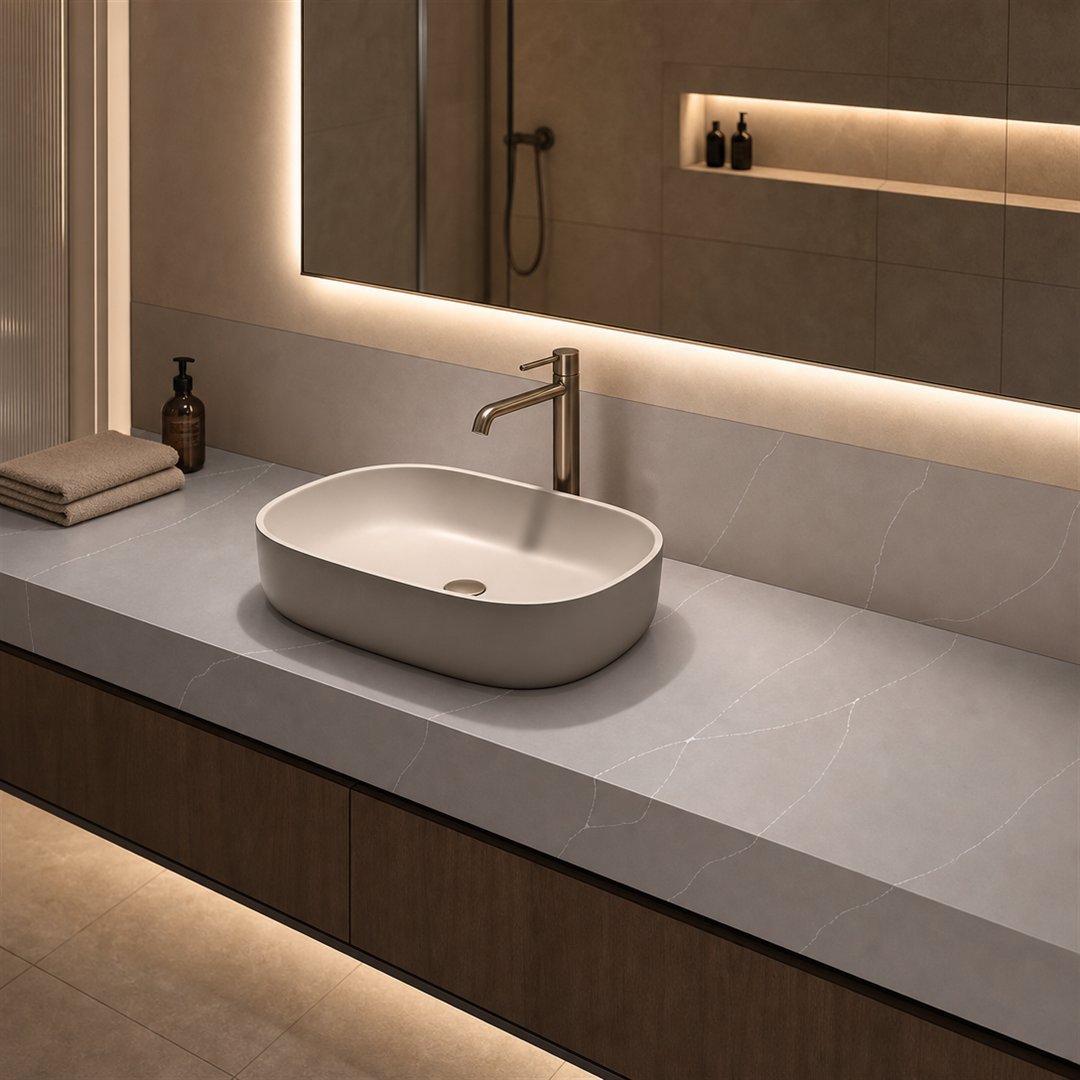
This matters for buyers because it means the wall panel inherits the full material specification of the slab: the same hardness, the same near-zero absorption, the same colour consistency across a production run, and the same available sizes. When a project calls for matching wall panels and a vanity top, they can be cut from the same batch and the vein pattern will line up.
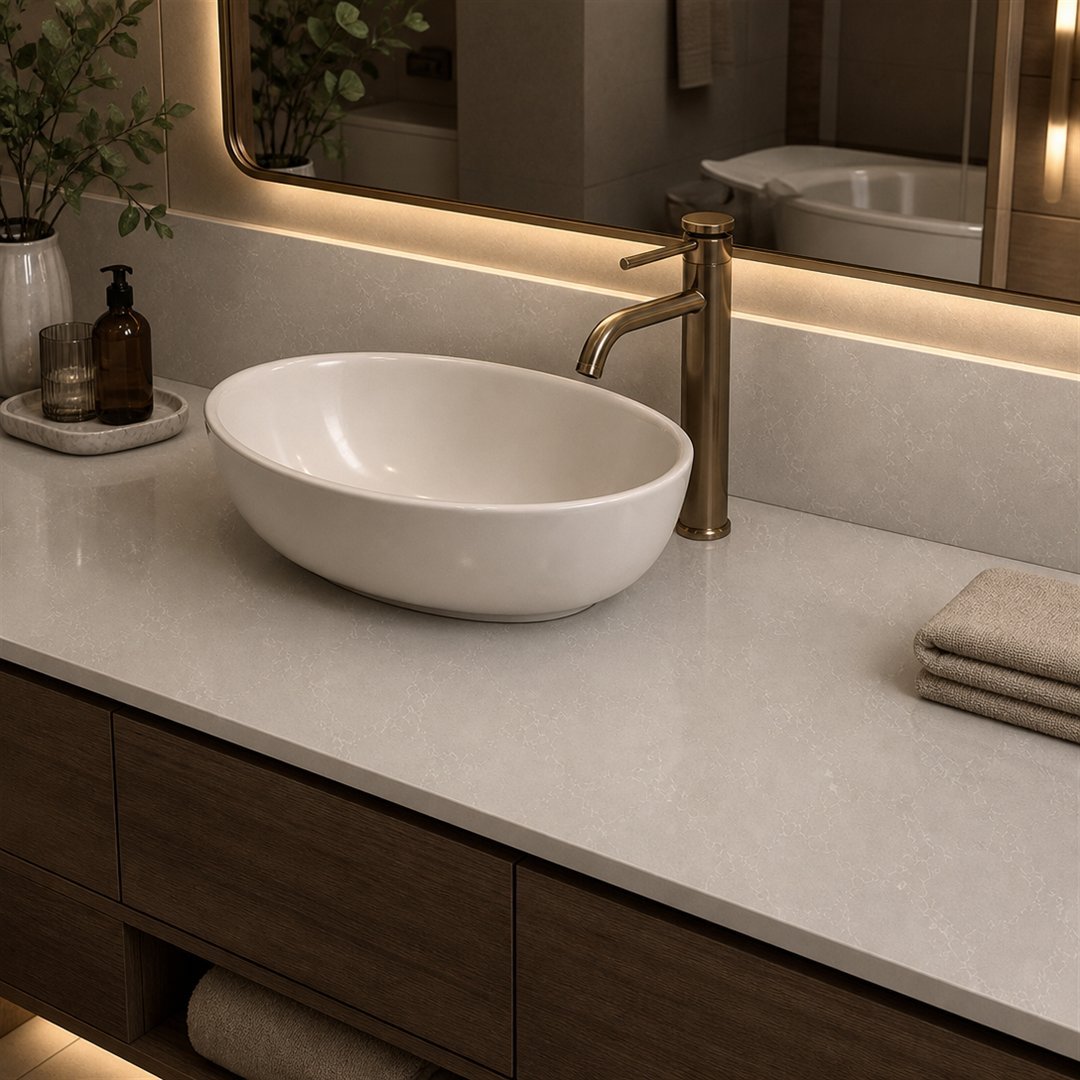
Quartz Wall Panels vs Tile: A Practical Comparison
Tile is cheaper per square metre to buy and install in most markets, and it remains the default for shower enclosures. The comparison is not simply about material cost, so it is worth setting the two side by side on the criteria that decide a specification.
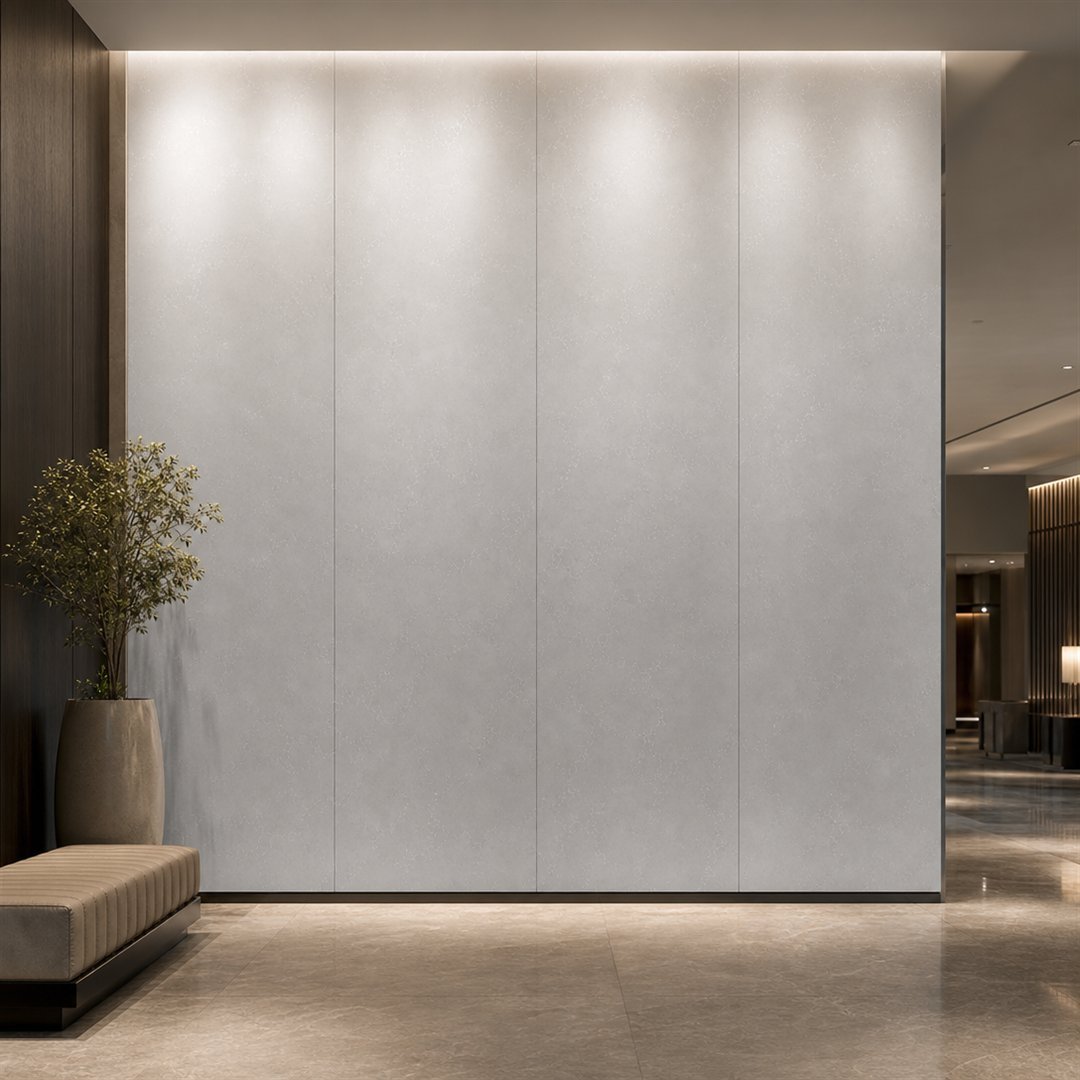
- Joints. A tiled shower has a grout joint every 300 mm or so, plus a flexible caulk joint at every internal corner and every change of plane. Quartz wall panels reduce a typical shower enclosure to two or three seams, each a straight-cut butt joint rather than a filled recess.
- Absorption. Porcelain tile is dense and fully vitrified by standard, but grout is not. Cementitious grout absorbs water and stains; epoxy grout solves that at roughly double the material cost. A quartz surface has no grout component at all, because the panel itself is effectively non-porous.
- Impact and repair. A dropped tool chips tile and the repair is a colour-matched replacement that rarely matches an aged batch. Quartz wall panels resist impact at 6 on the Mohs scale, and a chip is repairable by a fabricator with filler and polish. On the other hand, a cracked panel is a panel replacement, not a single tile.
- Lead time. Tile is a stocked product in every market. Quartz wall panels are cut to the wall schedule at the fabricator, which adds days, and if you want matched panels for multiple rooms in one project the fabrication has to be scheduled once, centrally.
The honest summary: quartz wall panels win on joints, maintenance, and visual continuity, and lose on installed cost in a small bathroom where material coverage is low and fabrication labour dominates. They make most sense in projects where the bathroom is seen daily by the public or the client — hotel showers, show suites, and residential projects where the specifier values a seamless wall.
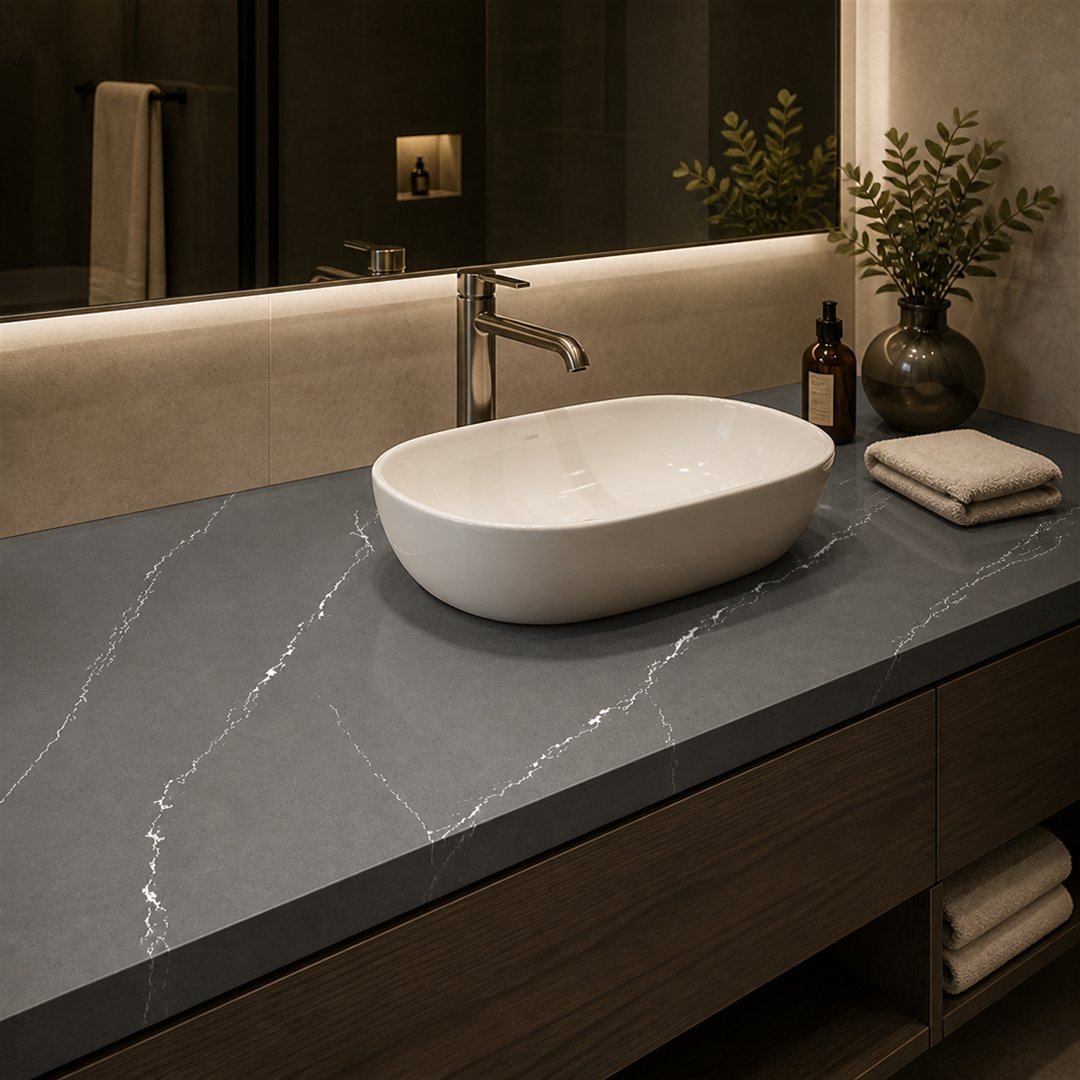
Standard Sizes and Thickness for Shower Applications
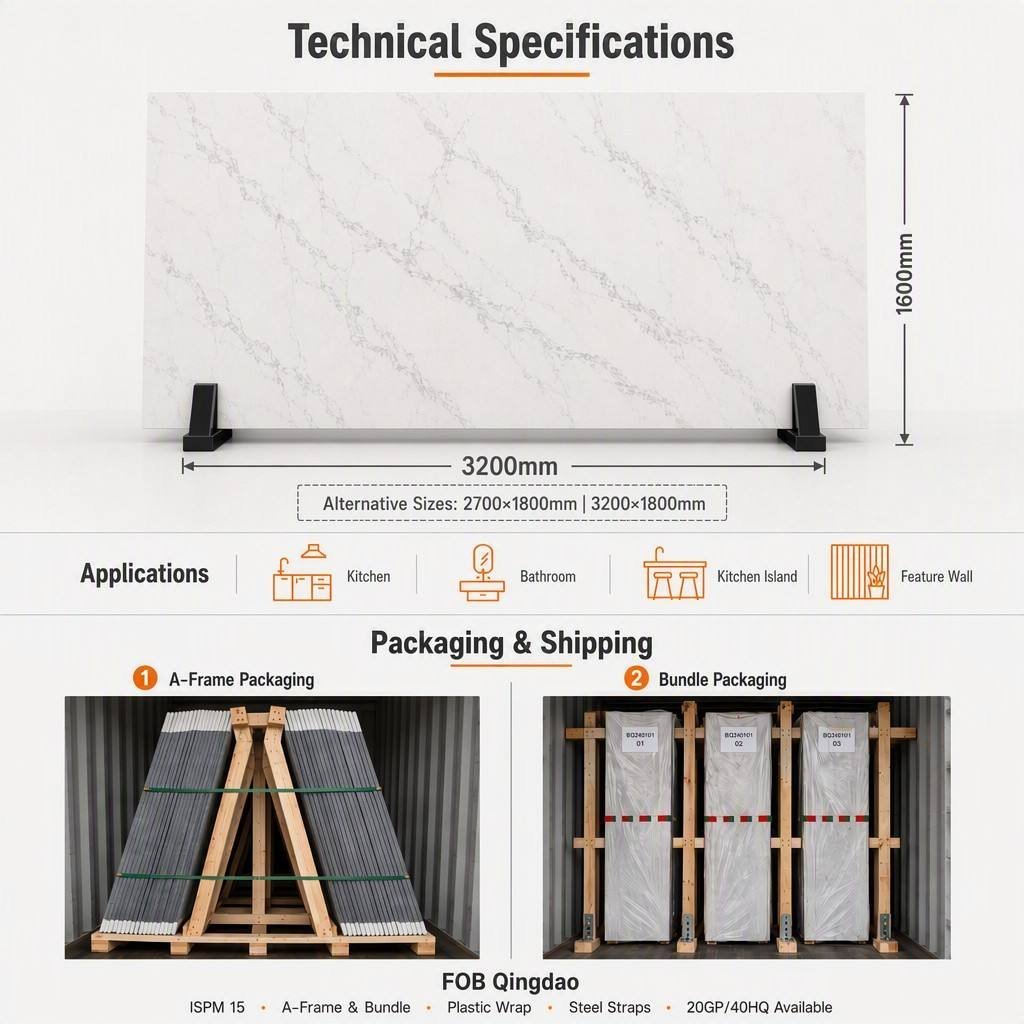
Quartz wall panels for a shower are usually cut from our standard slab sizes: 3200×1800 mm, 3200×1600 mm, and 3200×750 mm, with a jumbo format at 1800×3500 mm available on request. For a typical shower enclosure with a 2400 mm ceiling, a single 3200×1800 mm slab covers an entire wet wall in one piece when the slab is oriented vertically.
Two thicknesses matter in wall applications:
- 18 mm is the standard choice for wall panels and countertops alike. It is stiff enough to span a full wall without deflection when bonded to a flat substrate, and it keeps the weight per square metre manageable for adhesive fixing.
- 20 mm is specified where the same slab forms the counter and the upstand, or where the client wants a heavier edge profile at niches and reveals. Our 18 mm vs 20 mm thickness guide covers when the heavier gauge is worth the extra cost and freight.
Plan the cut list around slab yield, not wall count. A wall panel schedule that leaves a 200 mm offcut strip across three separate walls wastes what a slightly re-planned joint layout would use, and a full-size slab that ships as an A-frame bundle needs to be unloaded and moved with an A-frame or vacuum lifter, not by hand.
Water Absorption and the Shower Environment
The shower is the most demanding wet environment in a building, so the absorption question deserves a direct answer. Engineered quartz is effectively non-porous: it is a pressed composite of quartz aggregate and resin, and its water absorption sits well below the 0.5% threshold that defines fully vitrified porcelain tile. There is no sealing requirement, no re-sealing schedule, and no maintenance product involved in keeping the surface watertight.
What does fail in a wet room is almost never the slab. It is the interface: a caulk joint that has lost adhesion, a silicone bead applied to a damp substrate, or an unsealed mechanical fixing penetrating the panel. Specify a neutral-cure silicone rated for wet areas at every panel joint and at every penetration, and detail the plumbing penetrations before the panels are cut, not after.
Seams, Edges, and Corner Details
The visible quality of a quartz wall panel installation is decided at the joints. A well-executed installation reads as a continuous stone surface; a poorly executed one reads as large tiles. Three details decide the outcome:
- Joint position. Plan seams at the least visible plane — the inside corners of the enclosure and the shadow lines of niches — and keep the joint width consistent, typically 1.5 to 2 mm with a colour-matched resin or epoxy filler.
- Edge treatment. Factory-polished edges at every panel perimeter, including the top edge against the ceiling. A raw cut edge at the top of a wall panel is visible in raking light and cannot be corrected after installation.
- Internal and external corners. Specifiers choose between a butt seam with a silicone joint or a mitred corner where two panel edges are joined at 45°. Mitred corners read cleanest and are what we recommend for visible corners in client-facing projects; they cost fabrication time and require a tight substrate.
How Quartz Wall Panels Are Installed
The installation sequence is what a fabricator will follow, and it is worth understanding it as a buyer because the substrate condition is the buyer's responsibility, not the stone's.
- Substrate. Cement board or a flat, sound plastered wall. The adhesive is a cementitious tile adhesive (C2 class or better) applied full-contact with a notched trowel; plasterboard alone is not acceptable in a wet zone. Flatness is critical: with a full-contact bonded panel, any hollow behind it becomes a crack later.
- Setting out. The fabricator marks panel positions on the wall schedule and pre-cuts with a bridge saw or waterjet, including tap and shower valve cutouts, before anything goes on site. Cutouts come with a radius at every internal corner, because a sharp internal corner is the stress point most likely to crack in service.
- Fixing. Quartz wall panels go up full-contact bonded, with temporary support until the adhesive cures, then joints are filled and the perimeter sealed with neutral-cure silicone. Weight must be considered on upper floors: at 18 mm the panel weighs roughly 45 kg per square metre before adhesive.
- Curing. Twenty-four to forty-eight hours before the shower is commissioned, so the silicone and adhesive reach full cure before sustained water exposure.
If you are a fabricator sourcing slabs for wall panel production, our direct slab buying guide covers ordering, and our inspection checklist covers what to check when the bundle arrives.
Common Specification Mistakes
Five mistakes account for most of the wall-panel problems we see in export projects:
- Specifying the colour from a small sample. Vein scale and contrast read very differently on a 3.2 m wall than on a 100 mm chip. Ask for a large-format preview cut from the actual batch, or write the order against the batch number.
- Mixing batches across rooms. Engineered quartz is consistent within a run but varies between runs. One order, one wall schedule, one batch.
- Ignoring the plumbing rough-in. Panel cutouts are made in the factory, days before installation. Any change to valve positions on site means a re-cut or an on-site cut that is never as clean.
- Assuming a panel can be any size. Yield is set by the slab. A wall that needs 3.4 m in one direction forces either a seam or the jumbo format; plan for one of the two from the start.
- Skipping the lead time. Fabrication for a full wall schedule adds several working days to the slab lead time; if the project programme counts in days, this must be booked.
FAQ
Do quartz wall panels need sealing? No. Engineered quartz is non-porous and requires no sealer at manufacture or in service. The only maintenance action is routine cleaning with a neutral cleaner.
Can quartz wall panels be used in a steam room? In a residential shower or wet room, yes. A commercial steam room cycling above roughly 60 °C at high humidity for extended periods is a different duty: quartz tolerates temperature spikes but prolonged saturated heat accelerates wear on any engineered stone, and we would advise porcelain for that specific case.
How many panels does a shower need? A typical domestic enclosure needs two to three quartz wall panels for the wet walls plus a vanity top. Because a panel is cut from a 3200×1800 mm slab, most domestic showers need one slab or less per enclosure, subject to the cut layout.
What colours hide hard water stains best? Light, uniform tones with restrained veining. High-contrast whites show limescale deposits quickly, and dark polished surfaces show every water spot. A light grey with fine veins is the practical choice for hard-water regions.
Do you supply cut-to-size panels or only slabs? We supply slabs for fabrication, and we can execute the wall cutting schedule at the factory for container orders where it improves yield and consistency.
Conclusion
Quartz wall panels solve the joint problem that makes tiled showers the highest-maintenance surface in a building, and they do it with the same slab specification that has made engineered quartz the default countertop material. The specification decisions that matter are joint layout, thickness, colour selection from a large-format preview, and a substrate built for full-contact bonding. Get those four right and the installation reads as continuous stone for the life of the building.
If you are specifying quartz wall panels for a project, Shandong Hongyue Quartz Stone Co., Ltd. supplies engineered quartz slabs in standard and jumbo formats for fabrication worldwide, with production to ISO9001, NSF, and SGS standards and standard lead times of two to four weeks. Contact us for a cut-list review, a large-format colour preview, or an indicative quotation: WhatsApp +86 198 6115 3736 or raykelee@hyquartzslabfactory.com, and we will respond with the slab specification that matches your quartz wall panel schedule.
Related Articles
- Quartz Application in Hotel Bathroom Decoration
- Quartz Vanity Tops: Sizes, Sinks, Edge Profiles
- Quartz Slab Thickness: 18mm vs 20mm for Counters and Walls
- Maintenance Guide for Quartz Countertops
Quartz Slab Supplier for Bathroom and Shower Wall Projects
Shandong Hongyue Quartz Stone Co., Ltd. manufactures engineered quartz slabs for bathroom wall panels, shower enclosures, and vanity tops. We supply 3200×1800 mm and jumbo formats in 18 mm and 20 mm, ISO9001/NSF/SGS certified, with standard lead times of two to four weeks. Fabricators and project buyers specifying quartz wall panels are welcome to send a wall schedule for a cut-list review and indicative quotation before ordering.
📱 WhatsApp: +86 198 6115 3736
📧 Email: raykelee@hyquartzslabfactory.com
Send Us A Message