
Commercial Quartz for Shopping Mall and Front Desk Counter
Commercial Quartz for Shopping Mall and Front Desk Counter
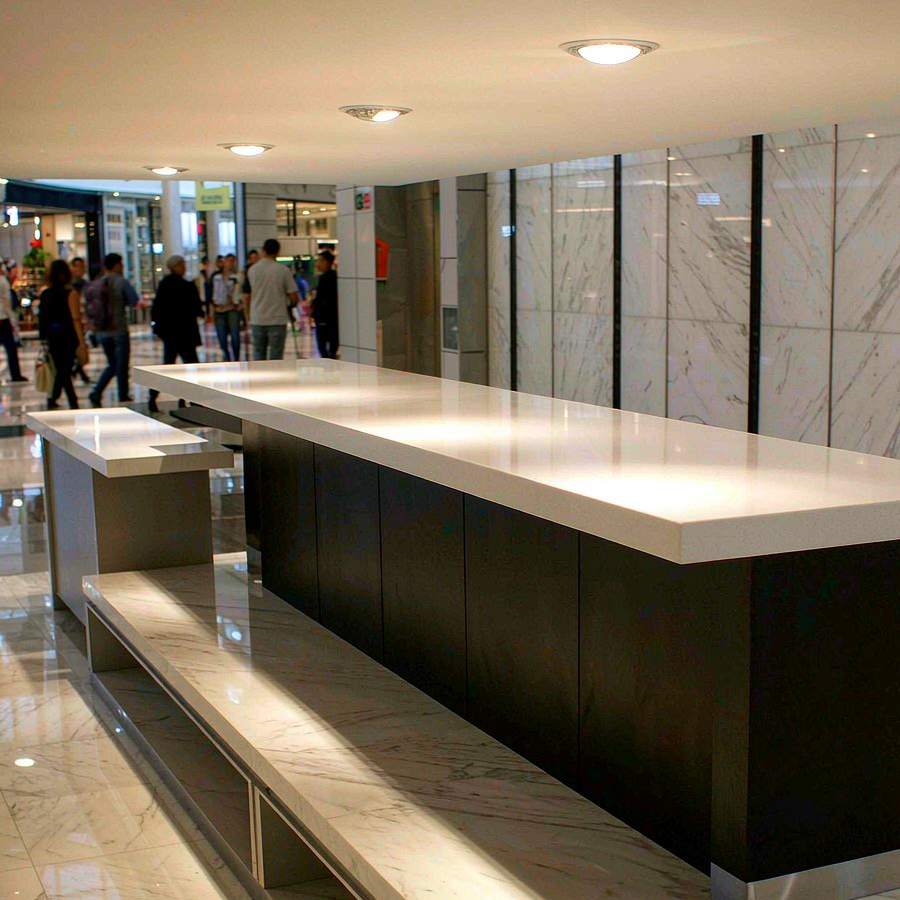
Commercial Quartz for Shopping Mall and Front Desk Counter
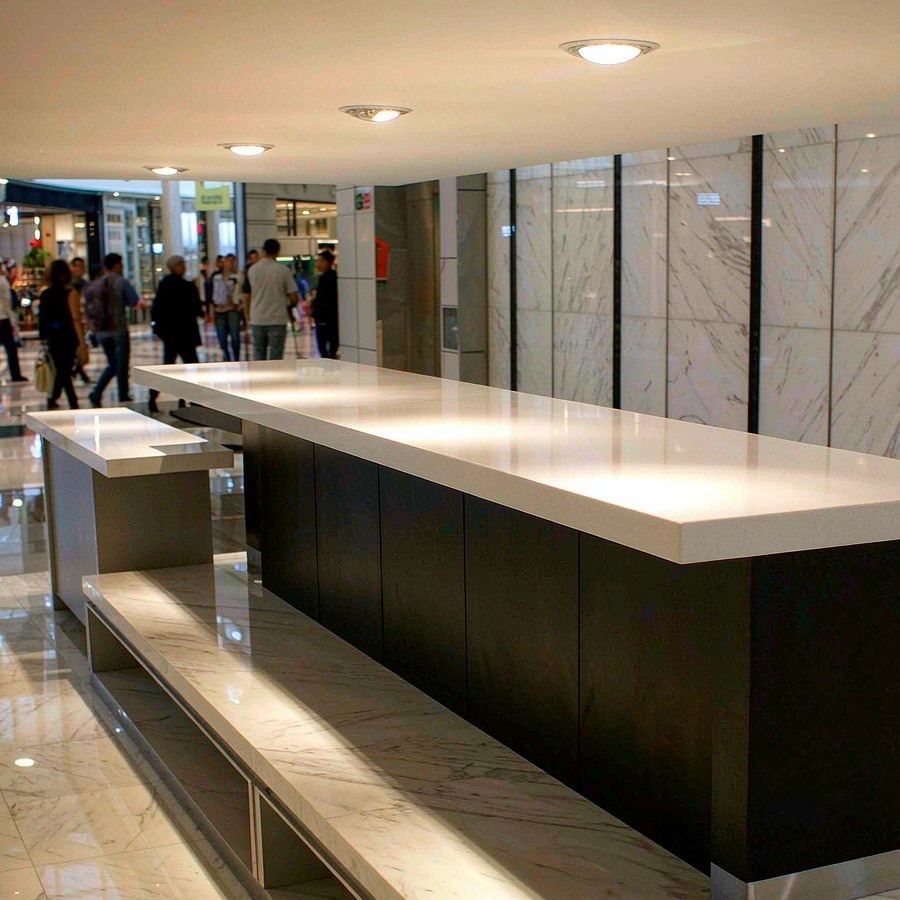
Commercial Quartz is becoming a preferred surface solution for shopping malls and front desk counters thanks to its modern appearance, durability, and low maintenance. In high-traffic commercial spaces, choosing the right material is essential for both functionality and brand image. This article explores how Commercial Quartz enhances retail interiors, improves customer impressions, and delivers long-term value for shopping mall and front desk counter applications.
In commercial interior projects, the counter is rarely just a work surface. At a mall information desk, reception island, cashier zone, concierge point, or customer service counter, the top surface is one of the first things visitors see up close. It takes hand contact, shopping bags, cleaning chemicals, coffee spills, and constant friction. That combination is why material choice matters more than many owners expect.
Quartz has moved into this space because it sits in a practical middle ground. It can deliver a cleaner and more consistent look than many natural stones, while avoiding some of the maintenance concerns associated with porous materials. For retail and front-of-house settings, that balance is often more valuable than a dramatic visual effect alone.
Why Commercial Quartz Works Well in High-Traffic Retail Interiors
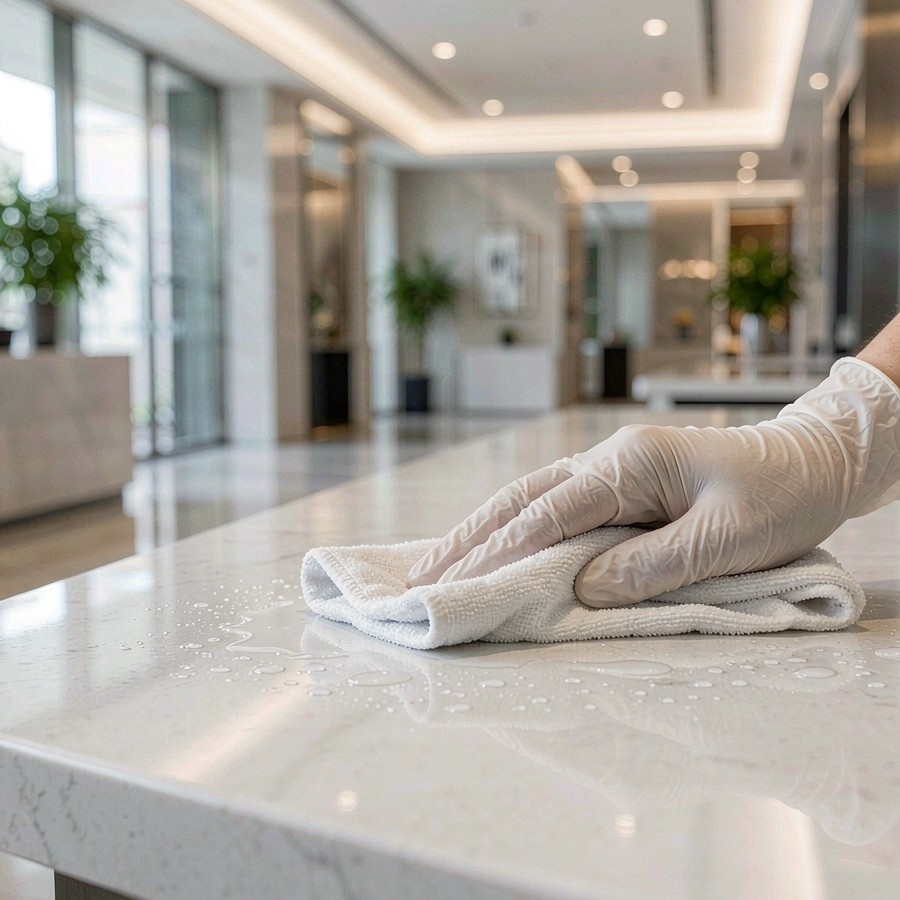
Shopping malls and reception counters do not age gently. Surfaces are exposed to repeated abrasion, wheeled items, cosmetic products, beverages, and frequent wiping. In these conditions, materials that stain easily or require regular sealing can become expensive to manage, even if their initial purchase price looks acceptable.
Commercial quartz is often selected because its surface is typically non-porous and easier to keep visually clean in daily operation. That matters in premium retail environments where fingerprints, splash marks, or uneven polishing quickly affect the perceived quality of the entire space. A front desk does not need to fail structurally to become a problem; sometimes it only needs to start looking tired.
Another reason designers and contractors consider quartz is visual consistency. In large shopping mall projects, several counters may need to match across different zones. Engineered quartz usually offers more controlled color and pattern continuity than many natural materials. For brand-driven interiors, this predictability helps during mockup approval, fabrication planning, and future replacement.
The Front Desk Is Part of the Brand Experience
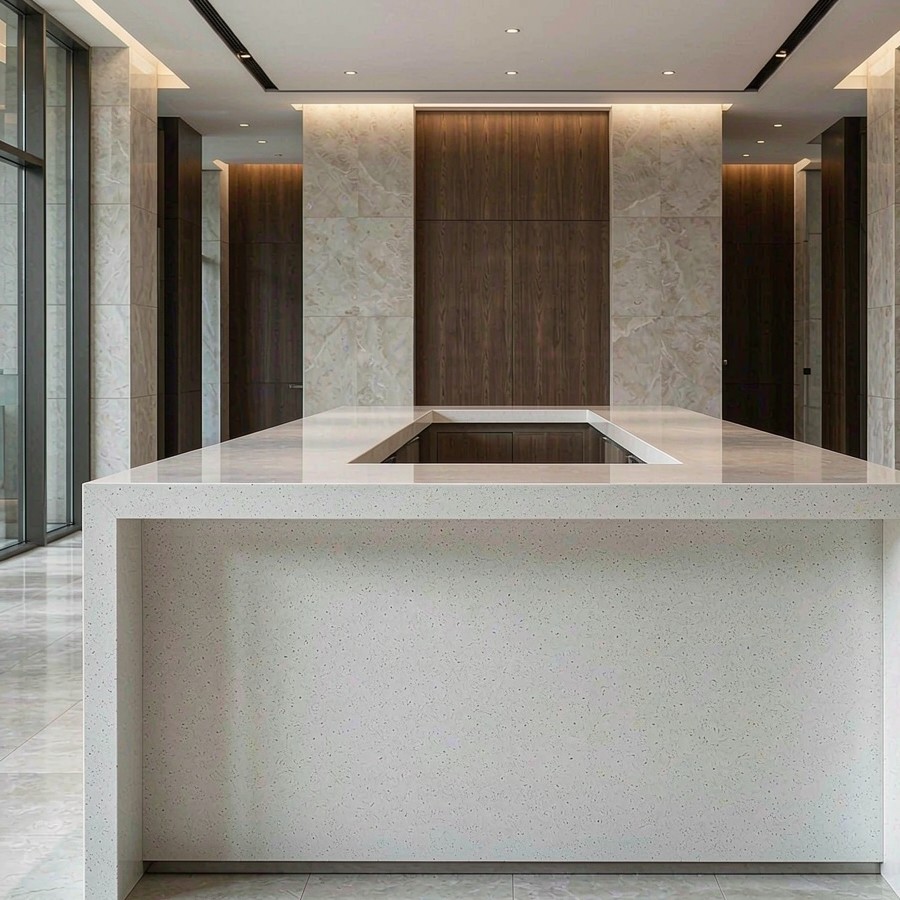
A reception or service counter is one of those architectural elements that people remember without consciously noticing it. If the surface looks patched, heavily scratched, or hard to clean, the space feels less organized. If it looks sharp and calm, the whole entry sequence feels more trustworthy.
Quartz supports this part of the experience because it can be fabricated into crisp, contemporary forms with waterfall edges, integrated transaction tops, or minimal-joint layouts. In mall interiors, where lighting is bright and finishes are constantly exposed, subtle details become visible. Poor seam placement, unstable color tone, or edge chipping can stand out immediately.
That is why the discussion should not stop at color selection. For a front desk counter, edge profile, slab size, seam strategy, thickness build-up, and substrate support are just as important as the decorative surface itself. A good-looking material can still perform badly if the fabrication details are treated casually.
Where Project Teams Often Make the Wrong Comparison
Many decisions start with a simple question: quartz or natural stone? In practice, that is too broad to be useful. The better question is what the surface needs to withstand in that exact commercial setting.
If the counter is mainly a visual reception point with light use, several materials may work. But if it handles check-in traffic, bag dragging, retail transactions, and all-day cleaning, maintenance tolerance becomes critical. Some stones may need more frequent care to maintain appearance. Some solid surfaces may be easier to repair in certain conditions but may respond differently to scratching or impact. Quartz often enters the shortlist because it offers a durable everyday finish with a premium visual language that suits modern commercial interiors.
Still, "quartz" should not be treated as a single performance level. Product composition, slab quality, finish, and fabrication standards vary by supplier. For commercial use, asking only about color availability is not enough.
What to Check Before Specifying Commercial Quartz
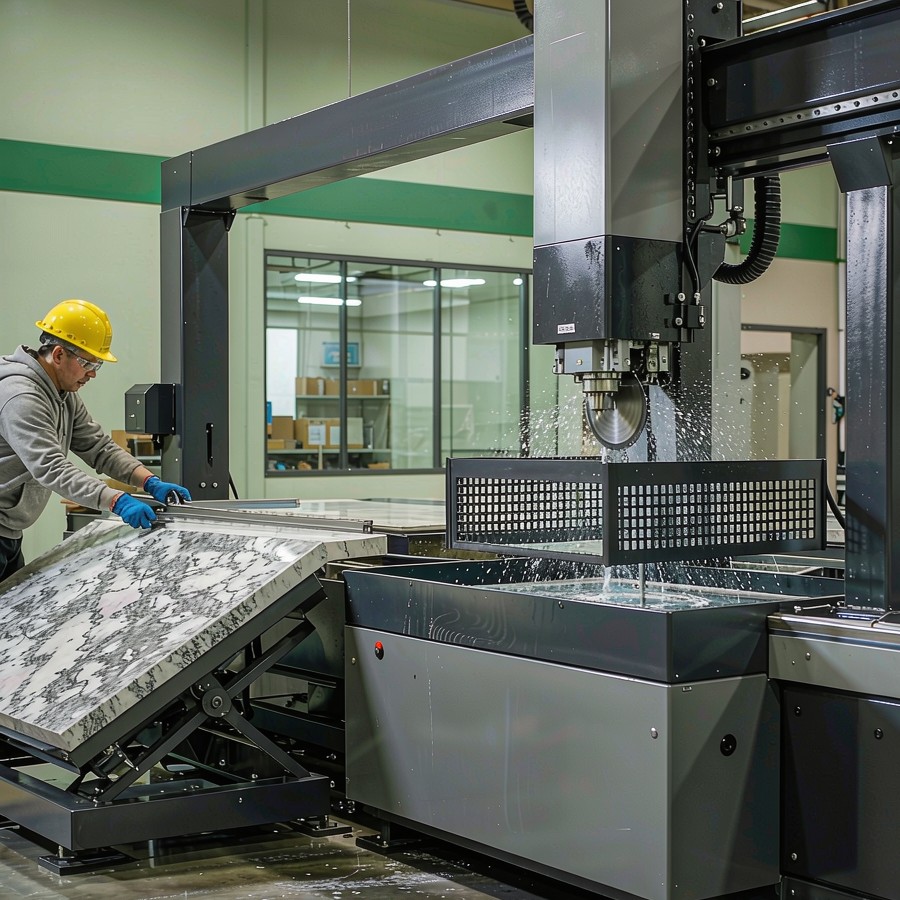
For shopping mall and front desk counter applications, a few issues deserve close review early in the project:
- Surface finish: polished surfaces can look refined, but in very bright spaces they may show smudges more easily than expected.
- Edge durability: heavily used transaction edges are more vulnerable than display-only surfaces.
- Seam placement: seams near payment zones, writing areas, or corner stress points may create both visual and service issues.
- Heat exposure: quartz is not usually the first concern in mall counters, but localized heat from equipment still needs attention.
- Cleaning protocol: the maintenance team should know what chemicals are acceptable for the selected surface.
- Local code and project standards: fire performance, installation method, and material documentation may need project-specific confirmation.
This is where experienced coordination matters. A mall operator may focus on lifecycle upkeep, while the architect cares about finish quality and the contractor cares about installation tolerance. Quartz can satisfy all three, but only if those requirements are aligned before fabrication begins.
Maintenance Is Not Just a Housekeeping Issue
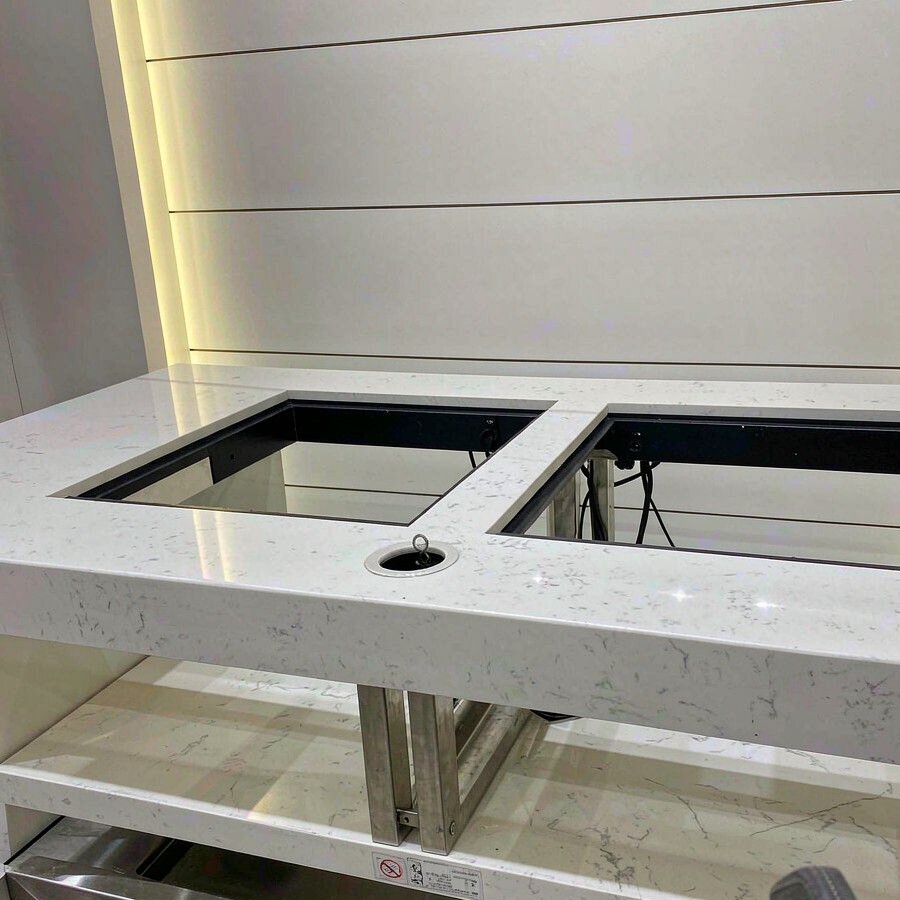
Low maintenance is often mentioned as a selling point, but in commercial settings it is really an operations issue. A shopping mall may have multiple counters cleaned by different teams across long operating hours. Materials that require special treatment are more likely to be mishandled over time.
Quartz is generally attractive here because routine cleaning is straightforward. But "low maintenance" does not mean "careless use." Harsh chemicals, impact on unsupported sections, or poor repair methods can still shorten service life or damage appearance. Project handover should include practical maintenance guidance, not just a finish schedule.
This is especially relevant for front desk counters that support equipment cutouts, cable access points, and transaction hardware. Openings weaken the slab locally. If cleaning crews or service staff use these points as load-bearing areas, edge cracks can appear even when the material itself is suitable.
Cost Should Be Judged Over Use, Not Only at Purchase
Commercial buyers often compare only the quoted surface price, but that rarely reflects the real cost of ownership. A lower-priced material that stains, chips, or requires more frequent intervention may create higher disruption costs later, particularly in retail spaces that cannot easily shut down for repairs.
Quartz tends to make sense when the project values stable appearance over time, predictable replacement planning, and reduced maintenance complexity. Whether it is the right choice for a specific mall or reception project depends on traffic intensity, design expectations, counter geometry, and installation quality. There is no universal answer, but there is usually a clear answer once those conditions are mapped properly.
Frequently Asked Questions
Is commercial quartz suitable for high-traffic shopping mall counters?
Yes. Commercial quartz is engineered with a non-porous surface, so spills, cleaning chemicals and everyday abrasion are handled without the sealing routine that porous natural stone often needs. For a shopping mall information desk or cashier counter, that means the appearance holds up over years of daily use rather than only on opening day.
How does commercial quartz compare with granite for a front desk counter?
Granite is hard and heat tolerant, but it is natural, so color and veining vary from slab to slab, which is a real problem when several counters must match across zones. Commercial quartz is manufactured, so color and pattern continuity is far more predictable, which simplifies mockup approval and future replacement.
Can a commercial quartz countertop be repaired if it chips?
Localized chips and scratches can usually be repaired on site by a trained fabricator using color-matched resin, and the repair is often hard to spot on a uniform surface. Structural cracks near equipment cutouts are a different case and usually call for slab replacement, which is why support detail should be planned before fabrication.
What thickness of commercial quartz is best for a front desk counter?
Most reception and transaction counters are built from 20 mm slabs, often doubled up on the front edge to create a thicker visual profile, or from 30 mm slabs where the design calls for a solid look. The right choice depends on span, substrate support and edge detail rather than thickness alone.
A Better Way to Evaluate the Material
Instead of asking whether commercial quartz is "good," it is more useful to ask whether it fits the service conditions of the counter. For shopping malls and front desk applications, that means reviewing finish samples under actual lighting, confirming edge and seam details, checking fabrication capability, and making sure maintenance expectations are realistic.
In many projects, commercial quartz performs well because it answers a simple commercial requirement: the surface must look reliable every day, not only on opening day. If a project team treats the material as part of operations, branding, and construction quality all at once, the specification tends to be much stronger. Before final selection, it is worth confirming slab format, support details, cleaning requirements, and any local compliance items that apply to the project. Those checks usually matter more than another round of color debate.
Related Articles
- Quartz vs Granite for Project Use
- Stain Resistance of Quartz Slabs
- Quartz Countertop Maintenance Guide
- Quartz in Hotel Bathroom Projects
Commercial Quartz Slab Supplier for Shopping Mall and Front Desk Projects
We supply commercial quartz slabs in large formats for shopping mall, retail and hotel front desk counters, with consistent color across bulk orders, fabricator-ready sizes, and export packing for project delivery. Send us your counter drawings and finish requirement for samples and a project quotation.
📱 WhatsApp: +86 198 6115 3736
📧 Email: raykelee@hyquartzslabfactory.com
Send Us A Message