Low Silica Quartz: Silica Dust Rules Buyers Should Know
Low Silica Quartz: Silica Dust Rules Buyers Should Know
When a European or Australian tender asks for low silica quartz slabs, or asks the supplier for a "low silica declaration", the phrase causes more confusion on both sides of the supply chain than almost any other specification line. Buyers searching for low silica quartz are usually not looking for a slab with less quartz in it: they are looking for a supplier who can speak the language of respirable crystalline silica regulation, produce the documentation their own market requires, and control quartz dust at the points where it is actually generated. This guide separates what the phrase means in practice, which regulations buyers are citing, and what an importer should ask a factory in writing.
We manufacture engineered quartz slabs in Shandong and export to over fifty countries, so this is written from the factory side of the conversation: what a supplier can truthfully certify, where the dust risk actually sits in the supply chain, and how a buyer should read the claims they receive.
What "Low-Silica Quartz" Actually Means
Start with an uncomfortable fact: engineered quartz is roughly 90% natural quartz aggregate by weight, bound with resin and pigments. There is no mainstream "low silica quartz slab" in the sense of a panel that contains much less quartz: the mineral content is what gives the material its hardness, near-zero absorption, and colour-through performance. Any supplier advertising a genuinely low-silica quartz surface at scale is either describing a different product family (such as sintered porcelain or solid surface) or marketing around the phrase.
What buyers actually mean by low silica quartz falls into three real concerns, and all three are answerable by a legitimate factory:
- Workplace exposure. The respirable crystalline silica that regulators limit is a dust generated when stone is cut, ground, or drilled. It is a fabrication-workshop and construction-site issue, not a finished-slab issue.
- Material documentation. Tenders increasingly require a Safety Data Sheet (SDS) that states the crystalline silica content of the material, and low silica declaration letters that confirm the supplier understands and manages the dust risk. A factory that can produce both is a supplier that has read the regulations its customers live under.
- Higher-temperature silica phases. A small amount of cristobalite, a more hazardous crystalline silica phase, can form in quartz-resin composites under curing conditions. A credible supplier can state the cristobalite content from laboratory testing on the actual production material, and this number is what a serious low silica checklist should ask for.
The Silica Regulations Buyers Cite
Regulation of respirable crystalline silica is now standard across the markets that buy engineered quartz in volume, and the buyer's tender document is usually quoting one of three frameworks.
- United States (OSHA). The respirable crystalline silica standard is set out in 29 CFR 1910.1053 for general industry and 29 CFR 1926.1153 for construction. Both set a permissible exposure limit of 50 micrograms per cubic metre of air, averaged over an eight-hour shift, with an action level of 25 micrograms. The rule pushes employers towards wet methods, local exhaust ventilation, and respiratory protection, in that order of preference.
- European Union. Exposure limits are set at member-state level under the chemical agents framework rather than by a single EU number, and the binding limit varies by country, commonly in the 0.05 to 0.1 mg/m³ range for respirable crystalline silica over an eight-hour shift. An importer should confirm the binding limit in the specific destination country before quoting compliance into a tender.
- Australia and the UK. Both moved to tighter, mid-2020s exposure limits for respirable crystalline silica, and the Australian model has become particularly visible in engineered stone discussions because it couples the exposure limit with licensing of high-risk fabrication work. A supplier quoting into these markets should expect questions about wet cutting and dust monitoring.
Notice what these rules regulate: none of them limit the silica content of the slab. They limit the dust that becomes airborne when the slab is worked. That distinction is the whole reason the low silica quartz phrase is confusing, and it is the distinction a supplier should make clear in its tender response.
Where the Dust Risk Actually Sits
A cured quartz slab is a stable solid. Silica dust is generated at the points where the material is worked, and the volume of dust generated depends almost entirely on whether that work is wet or dry.
- Dry cutting and grinding — angle grinders and dry saws on stone — are the single largest source of respirable crystalline silica exposure in the supply chain, and the reason several jurisdictions now restrict or licence dry processing of engineered stone.
- Wet cutting — bridge saws and waterjets running with water feed — suppresses most of the airborne fraction at source, which is why every serious factory and every regulated fabricator defaults to it.
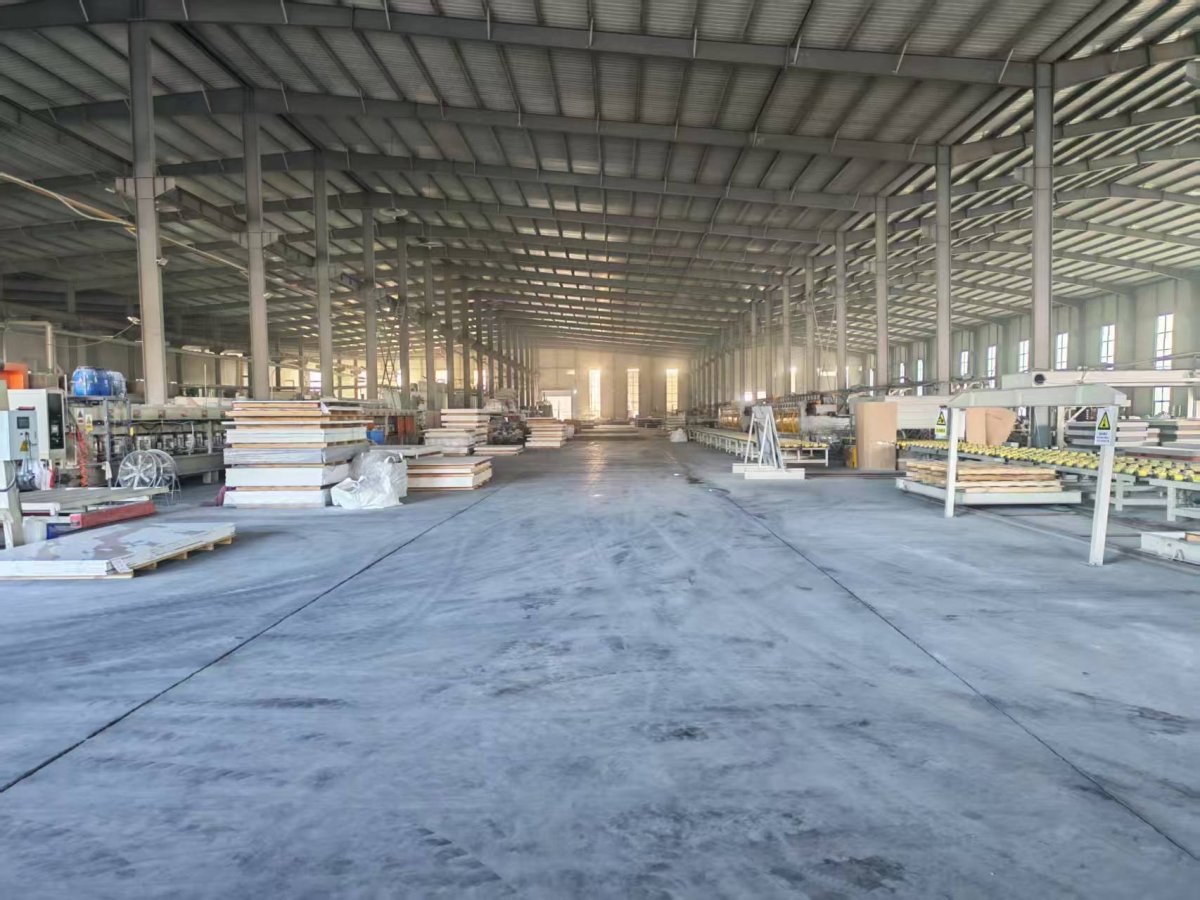
- Factory finishing, polishing, and calibration are wet processes in a modern plant, with enclosed lines and water recirculation. The dust exposure in a modern quartz factory is concentrated in slurry handling, machine maintenance, and housekeeping, not in the open shop floor.
- On-site installation is where exposure control is weakest, because the controls that exist in a factory do not travel to a renovation site. This is the part of the chain where an importer's documentation and instructions matter most to the installer.

How a Quartz Factory Controls Silica Dust
For an importer, the useful question is not "is this a low silica quartz supplier" but "what does this factory actually do". These are the controls a credible engineered quartz plant runs, and they are worth seeing on a factory audit rather than taking on paper.
- Wet processing throughout the line. Mixing, pressing, calibration, and polishing run as wet or enclosed processes; slurry is collected rather than allowed to dry into airborne dust.
- Dust containment at the raw-material end. Quartz aggregate receiving and the press area are where fine particulate is handled at volume, and a controlled plant uses enclosed conveying, local extraction, and filter monitoring in these zones.
- Personal exposure monitoring. Respirable dust sampling against the local limit, with records, is what separates a managed plant from one that has simply bought respirators.
- Laboratory testing of the material itself. Crystalline silica content and cristobalite content measured on the production material, reported on request. This is the number a serious tender checklist asks for, not a general safety claim.
Our quality control system documentation covers the production-side controls, and our safety and eco-compliance guide explains how engineered quartz compares with natural stone on the durability and safety questions buyers raise.
What to Ask Your Supplier in Writing
If you are evaluating a supplier against a low silica quartz requirement, put these five items in the inquiry — any factory that can answer all five promptly is operating to a standard you can build a tender response on.
- The SDS for the actual product, stating crystalline silica content, not a generic resin datasheet.
- Cristobalite content from laboratory testing on the production material, with the test method stated.
- Confirmation of wet processing across the production line, and the dust controls at raw-material handling.
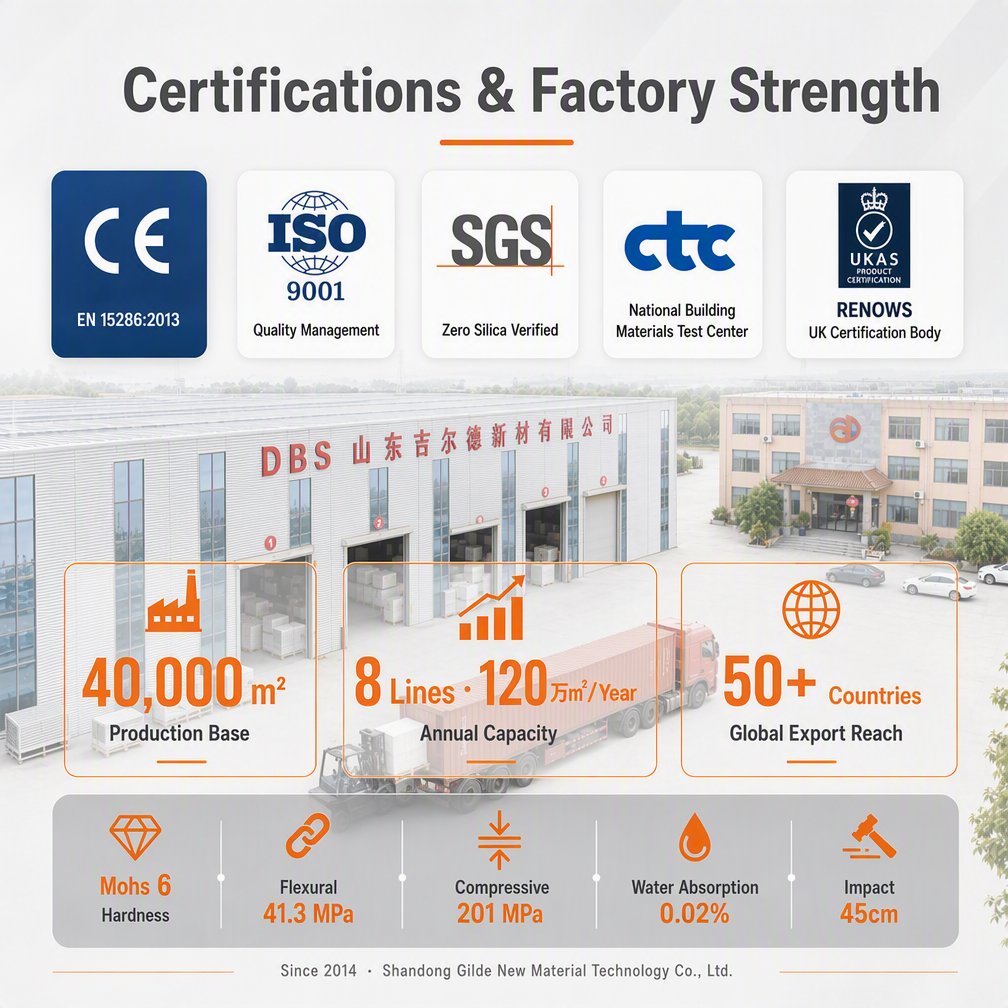
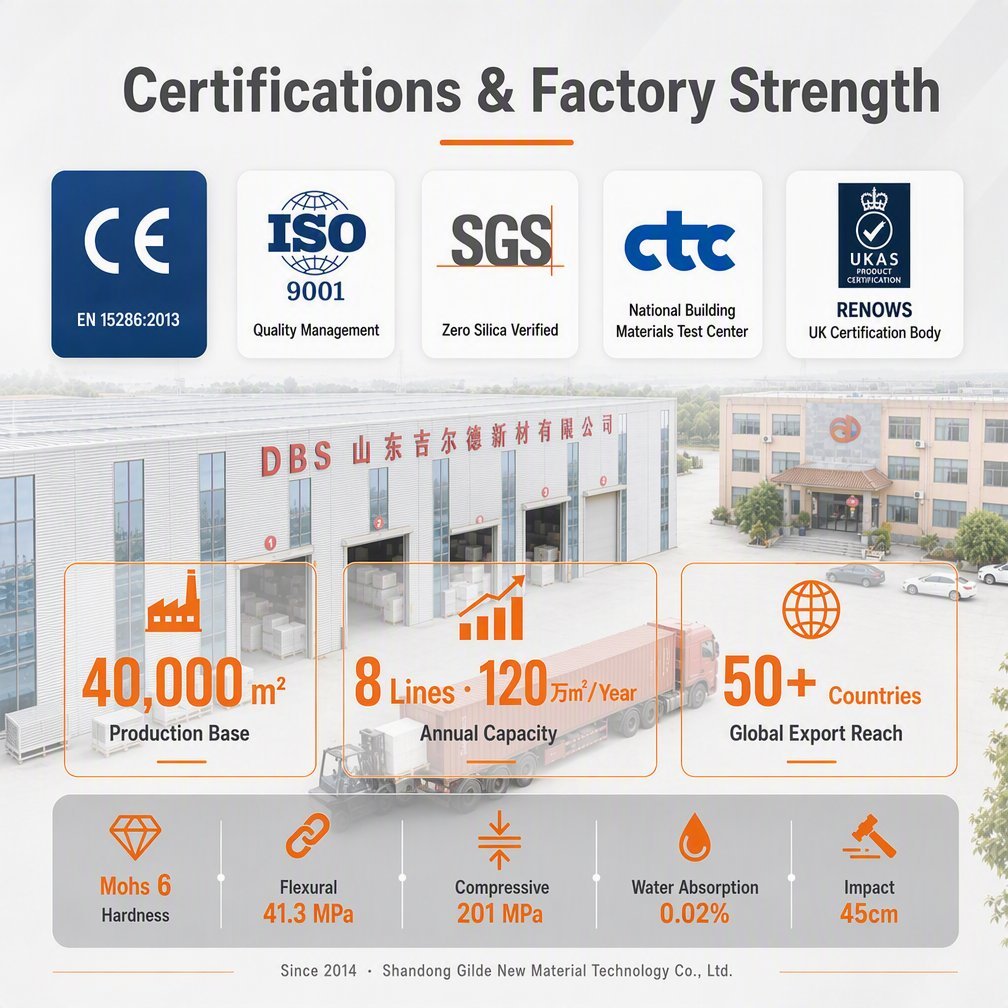
- Certification scope. ISO9001 covers the quality system; SGS zero-silica verification on the export material is a material-level declaration. Ask which one the supplier holds and what it covers, because the two are not interchangeable.
- Installation guidance. A short wet-cutting and dust-control instruction sheet for the fabricator at the destination. This costs the factory nothing, protects the installer, and is the detail that most importer tender packs are missing.
Suppliers who answer these questions with documents tend to answer everything else with documents too. Our supplier vetting guide sets out the fuller checklist for audit and verification.
FAQ
Is there such a thing as a genuinely low silica quartz slab? Not in the mainstream engineered quartz market. The material is approximately 90% quartz aggregate by design; that content is what delivers its hardness and stain resistance. Buyers looking for a genuinely low-silica product should evaluate sintered porcelain or solid surface instead, and buyers who say "low silica quartz" should confirm which of the three real concerns described above they mean.
Does a quartz slab release silica dust in normal use? No. A cured, finished slab is stable, and the silica within it is bound in the composite. Exposure arises only when the material is cut, drilled, or ground, which is why regulations target fabrication and construction rather than the installed surface.
What is the OSHA limit for crystalline silica? The permissible exposure limit is 50 micrograms per cubic metre of air over an eight-hour shift (29 CFR 1910.1053 and 1926.1153), with an action level of 25 micrograms. European limits are set nationally, commonly in the 0.05 to 0.1 mg/m³ range, so the destination country's binding figure should be confirmed for each tender.
Can I ask the factory for a low silica declaration letter? Yes, and a credible factory will provide one, but read what it actually declares. A letter confirming the material's crystalline silica content, cristobalite testing results, and wet-process controls is meaningful; a letter asserting the slab is "low silica" without numbers is not.
Does low silica quartz cost more? The material itself does not, because the quartz content is the material. What a compliance-driven project pays for is documentation and verification: laboratory testing, declaration letters, and the audit trail behind them. Those are real costs but small ones relative to the slab.
Conclusion
The phrase low silica quartz is best read as a documentation and dust-control requirement wearing a material description. The slab itself is not the regulated item; the dust from working it is, and the regulations your buyer is citing — OSHA in the United States, national limits in Europe, and the tighter exposure regimes in Australia and the UK — all aim at the same target. A supplier that answers the five written questions above is one whose compliance claims can be verified rather than taken on trust.
If your project requires low silica quartz documentation, Shandong Hongyue Quartz Stone Co., Ltd. supplies engineered quartz slabs under ISO9001, NSF, and SGS certification with SGS zero-silica verification available on export material, produced on a wet-processing line with laboratory testing of crystalline and cristobalite content. Contact us for the documentation pack, wet-cutting guidance for your fabricator, or an indicative quotation: WhatsApp +86 198 6115 3736 or raykelee@hyquartzslabfactory.com.
Related Articles
- Quartz Slab Factory: How to Vet a Reliable Supplier
- Is Engineered Quartz Stone Safe and Eco-Friendly
- Strict Quality Control System for Export Quartz Slabs
- Hardness and Wear Resistance Advantages of Engineered Quartz
Compliance Documentation for Quartz Slab Importers
Shandong Hongyue Quartz Stone Co., Ltd. provides engineered quartz slabs with ISO9001, NSF, and SGS certification, SGS zero-silica verification on export material, wet-process production, and laboratory-reported crystalline and cristobalite content on request. Importers and tender teams sourcing low silica quartz documentation can request our compliance pack and indicative pricing directly.
📱 WhatsApp: +86 198 6115 3736
📧 Email: raykelee@hyquartzslabfactory.com
Send Us A Message