
Quartz Slab Payment Terms: T/T, L/C and Deposit Structures Explained
Quartz Slab Payment Terms: T/T, L/C and Deposit Structures Explained
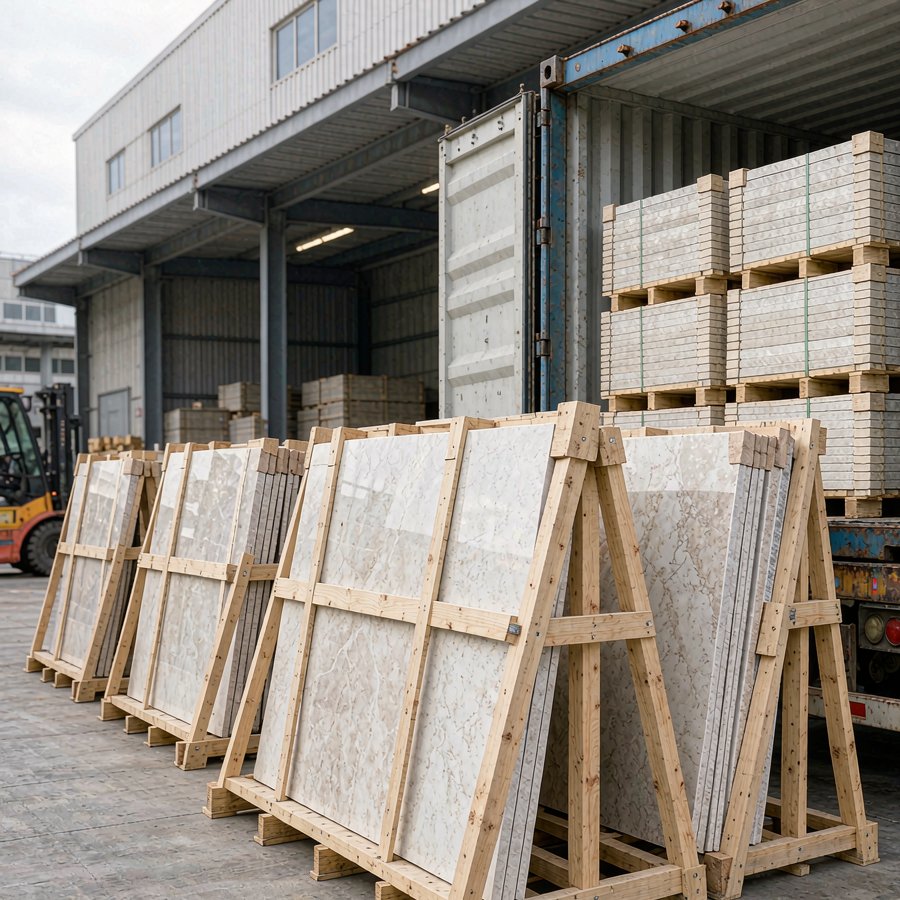
Payment is where a quartz slab order stops being a conversation and becomes a commitment. The quartz slab payment terms a factory offers tell you how it manages risk, how confident it is in its production, and how it will behave if something goes wrong mid-shipment. Importers who understand the standard structures negotiate better prices, avoid scams, and rarely end up in a dispute. This guide covers the three payment methods you will actually be offered, what a typical deposit structure looks like, and the red flags that should end a negotiation immediately.
The Three Payment Methods You Will Actually Be Offered
Nearly every quartz factory in the world works with some combination of three instruments, and quartz slab payment terms are almost always built from them:
- T/T (telegraphic transfer) — a bank wire, the default for 90% of container orders. Fast, cheap, and the structure most factories quote by default.
- L/C (letter of credit) — a bank guarantee that pays the factory once shipping documents are presented correctly. Slower and costlier, but it shifts risk to the banks.
- Western Union / Wise-type transfers — used for sample orders and small top-ups, almost never for full containers because the fees and limits make them impractical.
Open-account terms (shipping first, paying later) exist in this industry, but almost exclusively for repeat orders with established partners. A factory offering O/A on a first order from a new buyer is either very large and very confident, or not what it claims to be. Everything below assumes the standard structures, because those are what quartz slab payment terms actually mean in day-to-day trade.
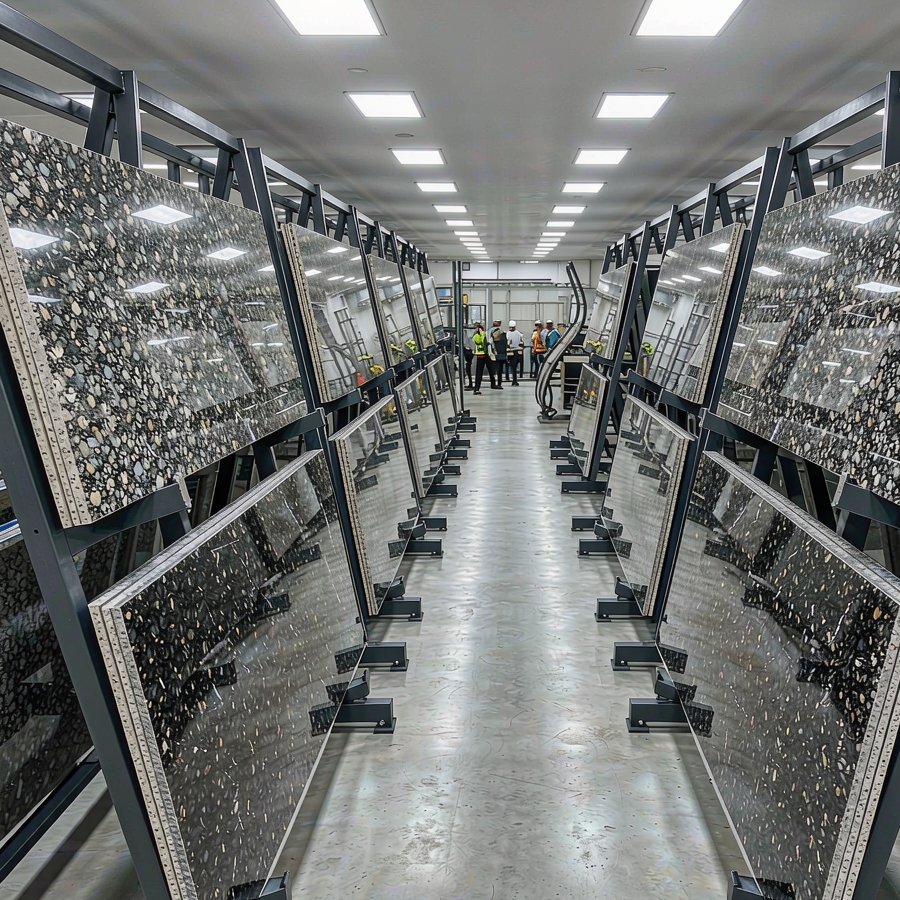
How a Standard T/T Structure Works
The most common quartz slab payment terms in the trade split the order value into a deposit and a balance. A typical structure looks like this:
- 30% deposit by T/T — paid before production starts. This secures your slot in the production schedule and commits the factory to your specifications.
- 70% balance by T/T against copy of B/L — paid after production is finished and the container is loaded. The factory sends a copy bill of lading, packing list and inspection photos; you wire the balance; the factory releases the original documents through its bank.
The exact split varies — some factories ask 50/50 on larger orders, others drop the deposit for established buyers — but the logic never changes. The deposit covers the factory's material and scheduling risk; the balance gives you proof the goods exist and are loaded before you pay the majority.
Why a B/L copy and not, say, photos alone? The bill of lading is the document that proves the container physically left the loading port with your goods on board. It is issued by the shipping line, not the factory, which makes it the one piece of paper in the chain nobody can fake.
Letters of Credit: When They Make Sense
An L/C replaces trust with paperwork. Your bank promises to pay the factory's bank when the factory presents documents matching the credit's terms — typically the B/L, commercial invoice, packing list, and certificate of origin. Quartz slab payment terms based on L/C are common in two situations: first orders between parties who have no history together, and orders large enough that a default would hurt.
The trade-offs are real. L/Cs add bank charges on both sides (often several hundred dollars per transaction, usually borne somewhere in the negotiation), and they are unforgiving — a single typo in the documents ("Suzhou" for "Shandong", a wrong weight) can delay payment by weeks while the discrepancy is fixed. Factories that quote an L/C price usually have it slightly padded to absorb that friction. If you trust the factory's references, plain T/T is usually cheaper for both sides.
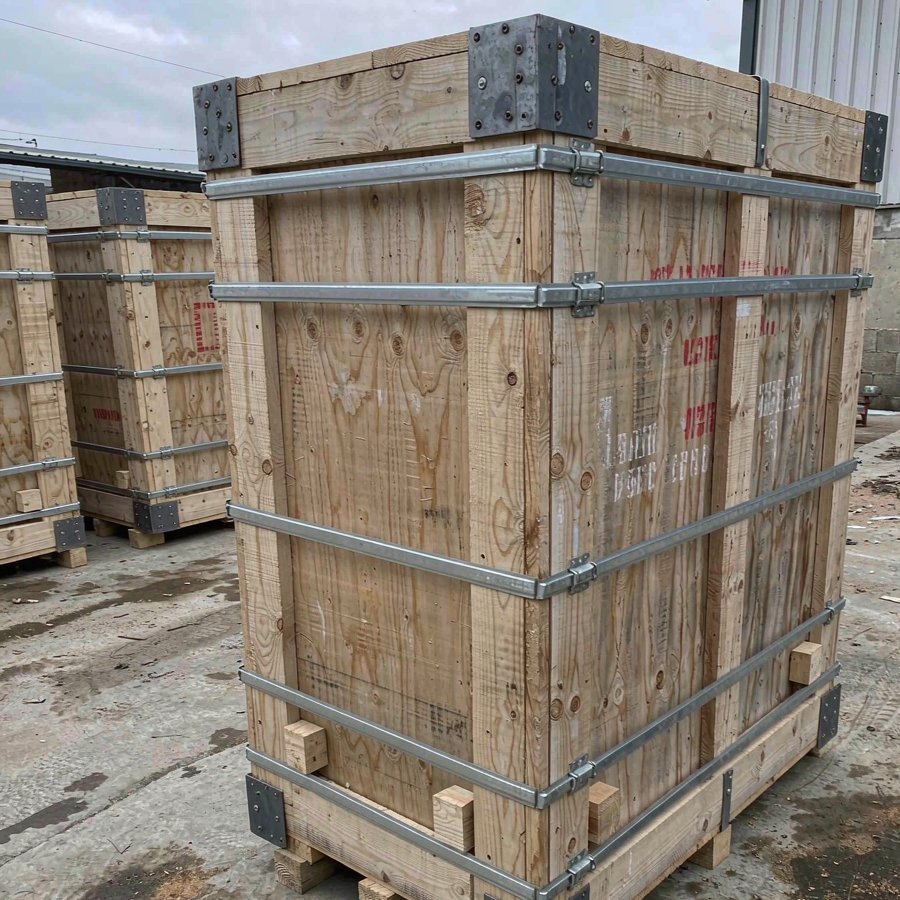
What the Deposit Actually Buys You
Importers sometimes read the deposit as a show of faith. It is not — it is a scheduling instrument. A quartz production line runs batches by colour and pattern; once your slabs enter a run, the line cannot easily switch. The deposit is what moves your order from "quoted" to "scheduled", and it is the factory's only protection if you walk away after the slabs are cut to your sizes.
This is also why deposits are non-refundable once production starts. A fair factory will tell you this plainly before you wire anything, and will send production-start and container-loading photos as the order progresses. If a factory dodges the refund question on its quartz slab payment terms, treat that as information.
Why Payment Terms Affect Your Quote
Payment method is priced, whether the quote says so or not. An L/C carries bank fees and document risk, so factories quietly build a margin into L/C quotes. Long payment terms (net 30, net 60) carry financing cost and default risk, and either shrink the factory's cash flow or raise your unit price. This is why two quotes for the same slabs can differ by 5–10% — the difference often lives in the payment line, not the material.
If you want the sharpest price on quartz slab payment terms, pay by T/T with a standard deposit structure. If you want maximum protection on a large first order, accept the L/C premium. What you cannot get is both.
Red Flags: How Scams Use Payment Terms
Fraud in building materials almost always announces itself through the payment terms before anything else. The patterns are consistent enough to memorise:
- 100% payment up front from a factory you have never worked with, especially "to release stock" or "to secure a price expiring today". Urgency is the tell — real factories schedule weeks out and do not need your money today.
- Payment to a personal account, or a bank account name that does not match the company on the invoice. A registered factory invoices from a company account; mismatches mean someone is collecting privately.
- Price far below market combined with any of the above. If the quote is 20% under everyone else's and the terms demand full prepayment, it is not a factory — it is a collection.
- No video call, no factory audit, no third-party inspection option. A real production base has nothing to hide; a website with stock photos has everything to hide.
None of this means distrust by default. It means the payment line deserves the same scrutiny you already give the slabs: verify the company registration, ask for the business licence, run a video walkthrough of the plant, and start with a sample order before a full container. Every scam pattern above is a distortion of normal quartz slab payment terms — the structures themselves are sound, the abusers are not.
Timing: From Deposit to Container Departure
A realistic timeline for a standard container order under typical quartz slab payment terms: deposit confirmed and production scheduled in week 1; production and curing through weeks 2–3; inspection, packing and loading in week 4; balance paid against B/L copy within days of loading; original documents couriered or telex-released so you can clear customs at destination. Total: roughly four to five weeks from deposit to vessel departure, longer during peak seasons or when custom colours are involved.
Knowing this rhythm protects you twice. It tells you when to chase updates (production photos should appear before you are asked for the balance), and it tells you when a factory is lying — if "production is 80% done" in week one of a scheduled three-week run, something is wrong with the quartz slab payment terms you were sold.

Frequently Asked Questions
What payment terms should a first order from a new factory use?
T/T with a 30% deposit and 70% balance against B/L copy is the industry default for good reason: it splits risk evenly, and it is a structure any legitimate factory can accept as standard quartz slab payment terms.
Is a 50% deposit normal?
It happens on larger orders or when custom colours tie up material, but it is not the standard. If a factory demands more than 50% before production, ask what the extra covers — and verify the company hard.
Can I pay the balance after the goods arrive?
Not on a first order. Balance-against-B/L is the point where the factory gets paid for goods already at sea; paying on arrival means shipping without any payment security, which no factory will accept from a new buyer.
Do payment terms affect lead time?
Directly. Production does not start until the deposit clears, so a delayed wire is a delayed container. Confirm the deposit the same day you agree the terms.
What documents come with the balance request?
Expect a copy B/L, commercial invoice, packing list and loading photos at minimum. If any are missing, the balance request is premature — ask for them before wiring.
Talk to Us About Payment Terms
We quote standard quartz slab payment terms — T/T with a deposit before production and balance against B/L copy — and we support L/C for larger first orders where you want bank-level protection. Every step comes with documentation: production-start photos, loading photos and full shipping documents. If a structure in this guide raises a question about your order, ask us directly — a straight answer before the deposit is worth more than any reassurance after it.
For the bigger picture on ordering factory-direct, our quartz slabs wholesale guide covers container planning, pricing tiers and payment terms.
If minimum order sizes affect how you structure payment, the quartz slab MOQ guide explains how low you can realistically start.
Thickness also feeds into per-slab cost and packing — see our quartz slab thickness comparison (18mm vs 20mm) for countertops and walls.
Edge profile choice can change fabrication cost and lead time; the quartz edge profiles spec guide matches eased, bevel, bullnose and ogee to real jobs.
And if color selection drives your order mix, our most popular quartz colors in 2026 roundup ranks what buyers are specifying now.
Send Us A Message