
Green Quartz Countertops: Bold Color Without the Upkeep
Green Quartz Countertops: Bold Color Without the Upkeep

Green Quartz Countertops: Bringing Bold Color Into Engineered Stone
Green quartz countertops are no longer a niche statement piece — they have become one of the fastest-rising choices for designers who want a surface with personality but none of the upkeep of natural stone. Engineered quartz lets you put a deep emerald, sage or Amazon-green slab on a kitchen island or vanity while keeping the non-porous, low-maintenance performance that made quartz mainstream. This guide explains what green quartz countertops are, how they compare with marble and granite, where they work best, and how to specify the right slab for your project.
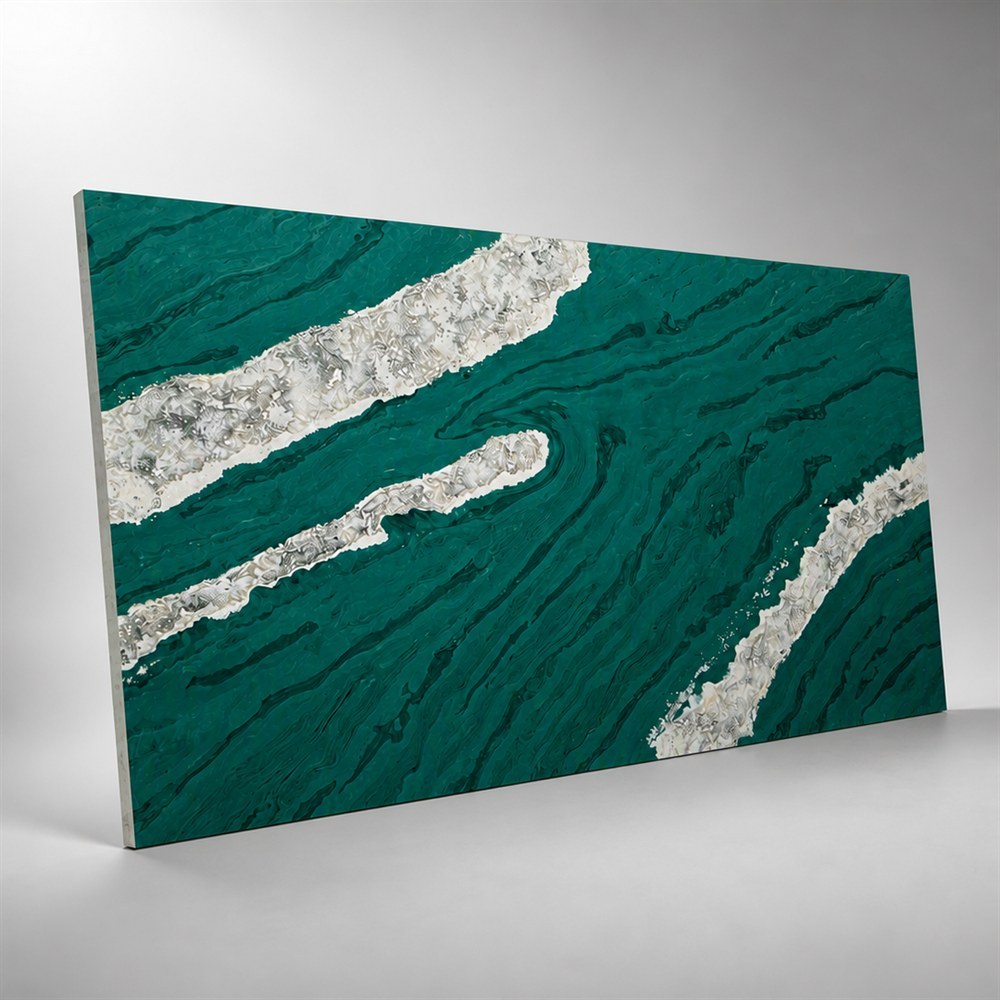
Why Green Quartz Countertops Are Gaining Ground
The appeal of green quartz countertops is simple: color that reads as intentional and premium, without the sealing, etching and staining headaches of green marble. A natural green marble is beautiful but porous and easily etched by citrus and wine; granite is tougher but limited in pattern and needs periodic sealing. Green quartz countertops sit in the sweet spot — a consistent, book-matchable engineered surface that shrugs off daily kitchen abuse. For specifiers, that consistency also means fewer surprises between the sample board and the delivered slab.
Green Quartz Looks: From Amazon Green to Soft Sage
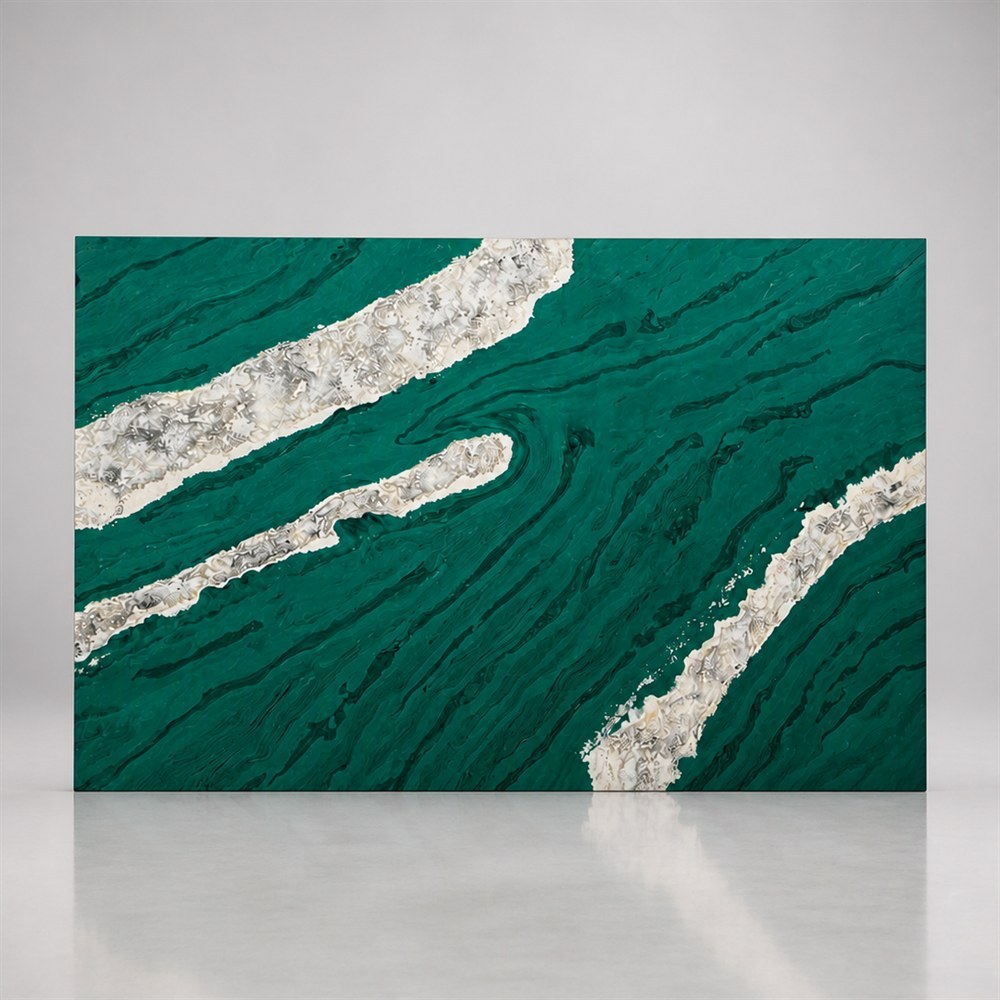
Within green quartz countertops there is a wide stylistic range. At the dramatic end, an Amazon Green style — deep emerald base with white and grey mineral veining — delivers a jewel-like focal point, ideal for a waterfall island or a feature backsplash. Softer sage and mint tones read calmer and pair easily with white oak, brass and honed cabinetry. Because the pattern is engineered, you can request a vein density and base saturation that matches the mood of the room. Our Amazon Green Vein Quartz (model 9182) is a typical example of the bold end of the range, built at 93% quartz with a 7% resin binder for everyday stability.
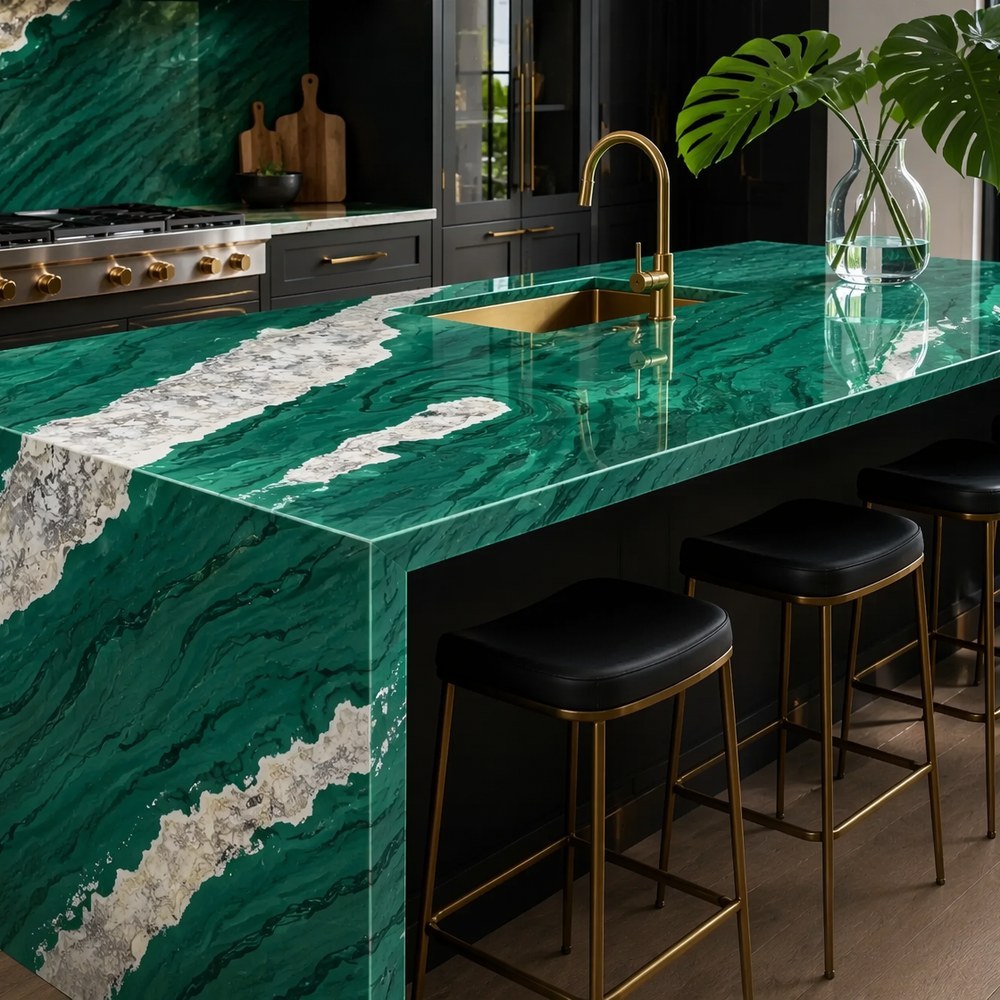
Green Quartz Countertops vs Marble and Granite
The honest comparison matters. Marble wins on organic depth but loses on maintenance — it etches and stains and must be sealed. Granite is durable but its green options are rarer and the slab-to-slab variation is large. Green quartz countertops give you marble's look with granite-adjacent practicality: non-porous, stain-resistant, no sealing, and color-consistent across the run. The trade-off is heat — like all quartz, the resin softens above roughly 150 to 200 degrees Celsius, so trivets are still required. For most homes and commercial spaces that is a small price for a surface that stays pristine for fifteen years.
Where Green Quartz Countertops Work Best
Green quartz countertops suit kitchens, bathroom vanities, bar tops and even light commercial reception desks. A full-slab island in Amazon Green becomes the room's centerpiece; a softer sage works better for perimeter counters where you want color without dominance. In hospitality and retail, mid-to-deep green hides daily wear better than pure white and reads as designed rather than default. Whatever the room, specify the same batch and thickness across connected surfaces so the veining flows visually from countertop to backsplash.
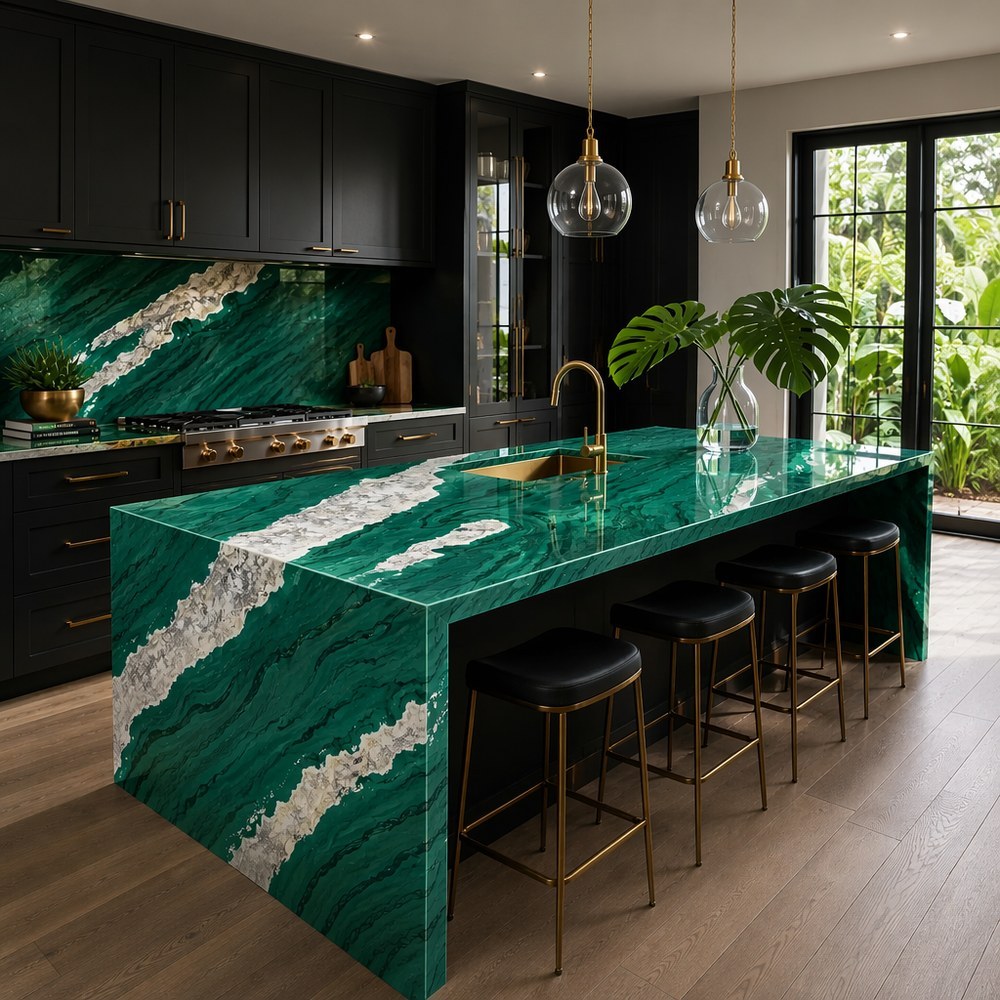
Specifying Green Quartz: Color, Thickness and Finish
When you order green quartz countertops, three decisions drive the result. First, color and vein style — confirm against a physical sample, not a screen shot, because backlit showroom lighting shifts green tones. Second, thickness — 20 mm is the most common slab for countertops; 18 mm is acceptable with a plywood substrate. Third, finish — polished for maximum depth, honed for a softer, low-glare look. Standard jumbo slabs run about 3200 by 1600 mm, enough for a large island in one piece. Our factory holds ISO 9001, NSF and SGS certifications, and tolerances are held to plus or minus 0.5 mm so fabricated edges line up cleanly.
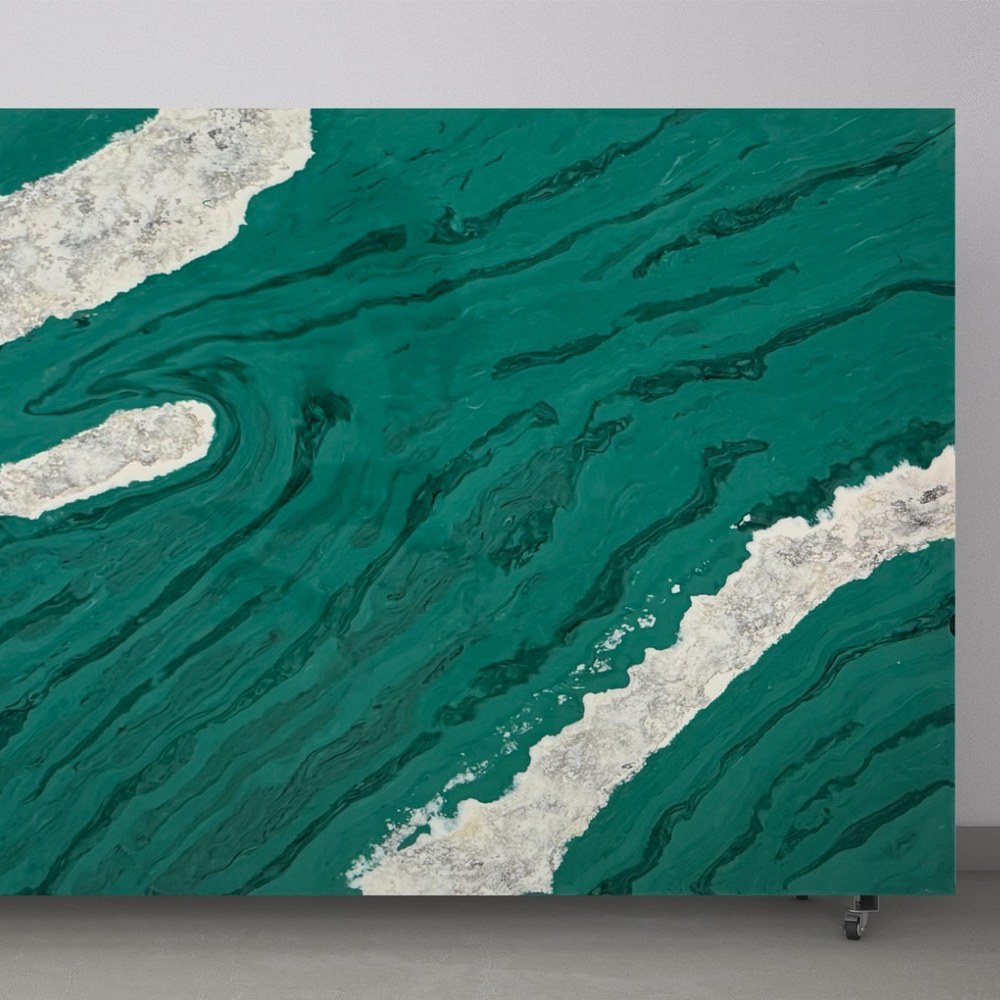
Caring for Green Quartz Countertops
Care is the easy part. Wipe green quartz countertops daily with warm water and a drop of dish soap, dry to avoid spots, and keep acetone and strong bleach off the surface. No sealing, no special wax, no annual treatment. Use a trivet for hot pans and a board for chopping, and the surface will look new for well over a decade. That low lifetime cost is exactly why green quartz countertops are specified for rentals, busy family kitchens and commercial bars where nobody will ever re-seal a worktop.
Frequently Asked Questions
Are green quartz countertops high maintenance? No. They are non-porous and never need sealing; daily wiping with mild soap and water is enough.
Do green quartz countertops stain? Not if spills are wiped reasonably soon. The non-porous surface holds liquid on top, so prompt wiping prevents any mark.
Are green quartz countertops more expensive than white ones? Pricing tracks color complexity and slab size rather than the hue itself; a bold Amazon Green usually sits in the mid-to-premium quartz band.
Can I use green quartz countertops outdoors? Indoors, yes. Avoid leaving uninstalled slabs in direct sun, as UV can slowly shift the resin color.
Will green quartz countertops match my sample? Engineered quartz is far more consistent than natural stone; ordering from one batch and one production run keeps tone and veining aligned.
Conclusion
Green quartz countertops deliver the drama of natural green stone with the practicality of engineered quartz — no sealing, no etching, consistent color, and a fifteen-year lifespan in normal use. Whether you choose a bold Amazon Green island or a quiet sage perimeter, the key is to specify color, thickness and finish against a real sample and from a single batch. If you want slabs engineered for performance — 93% quartz, ISO 9001, NSF and SGS certified, in the green tone and thickness your project needs — contact Shandong Hongyue Quartz Stone Co., Ltd., email raykelee@hyquartzslabfactory.com or reach us on WhatsApp at +86 198 6115 3736.
Specify Your Green Quartz Countertops Direct from the Factory
When green quartz countertops are part of your specification, the right slab makes the whole scheme easier. Send us your dimensions, color reference and destination port, and we return samples, a cutting diagram and a line-item quotation. Our engineering team reviews every slab before production, so the surface you receive is consistent, non-porous and built for low-upkeep performance in any climate.
📱 WhatsApp: +86 198 6115 3736
📧 Email: raykelee@hyquartzslabfactory.com
Related Articles
Send Us A Message