
Marble Look Quartz: The Marble Aesthetic Without the Marble Upkeep
Marble Look Quartz: The Marble Aesthetic Without the Marble Upkeep
Marble Look Quartz: The Marble Aesthetic Without the Marble Upkeep
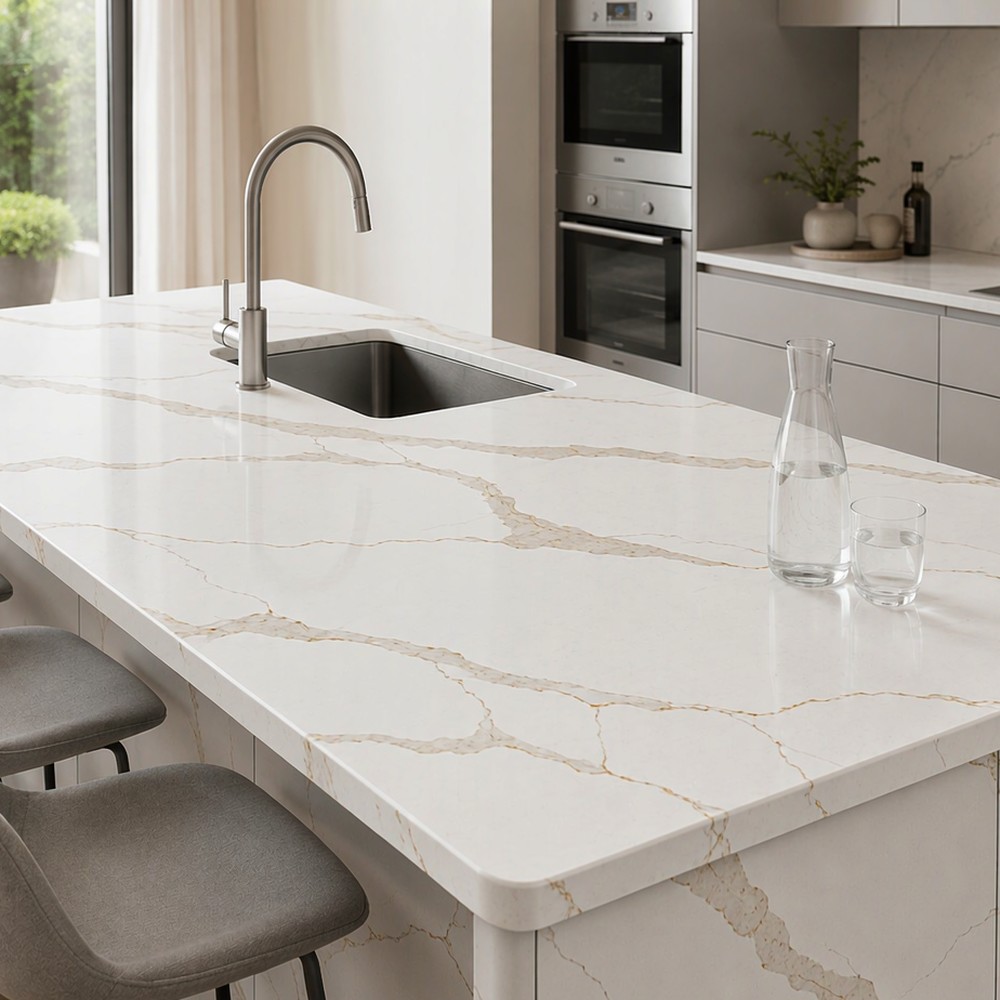
Marble look quartz is the fastest-growing style in engineered stone, and for good reason. Buyers want the soft grey veining and bright, airy feel of Italian marble, but they do not want the etching, staining and annual sealing that real marble demands. Marble look quartz delivers the visual signature of Calacatta and Carrara with the non-porous, low-maintenance performance of engineered stone. This guide explains what marble look quartz actually is, how it compares with natural marble, which styles are most requested, and how to specify it without surprises.
What Is Marble Look Quartz
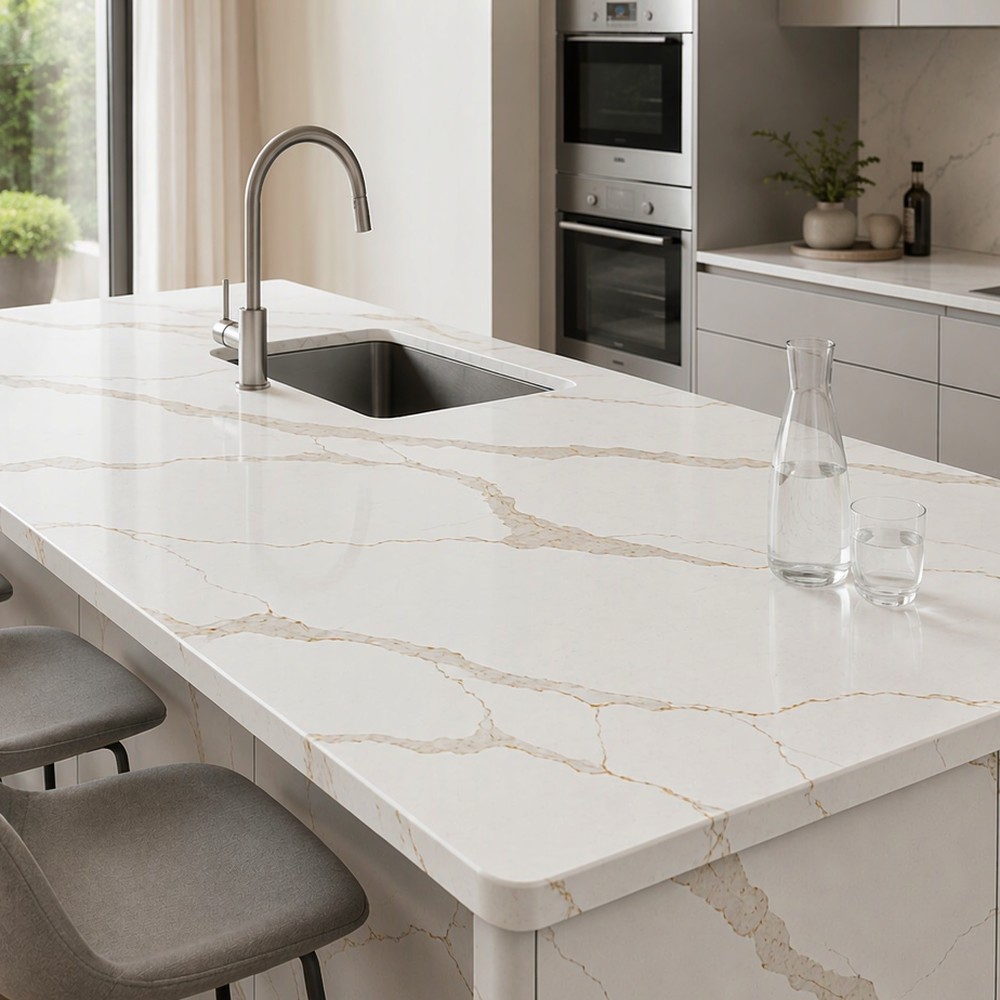
Marble look quartz is engineered stone — about 93% crushed quartz bound with resin — printed or veined to imitate the appearance of natural marble. The base is a consistent, non-porous slab, and the marble effect is created through calibrated veining that reproduces the calm movement of Calacatta, Carrara or Statuario. Because it is manufactured, every marble look quartz slab can be colour-matched across a large project, something natural marble can never guarantee. The result is a surface that reads as marble to the eye but behaves as engineered stone in daily use.
Marble Look Quartz vs Real Marble
The comparison buyers care about is performance. Real marble is calcium carbonate: it etches on contact with lemon, wine or any acid, and it stains because it is porous. Marble look quartz does none of those things — it is non-porous, so wine and oil wipe off, and acids leave no dull marks. The trade-off is heat: real marble tolerates heat better, while marble look quartz should be protected from pans above roughly 150–200 °C. For kitchens, bathrooms and commercial fronts, the stain and etch resistance of marble look quartz is almost always the deciding factor, because a marble-look surface that never needs sealing simply fits how people actually live.
Popular Marble Look Styles
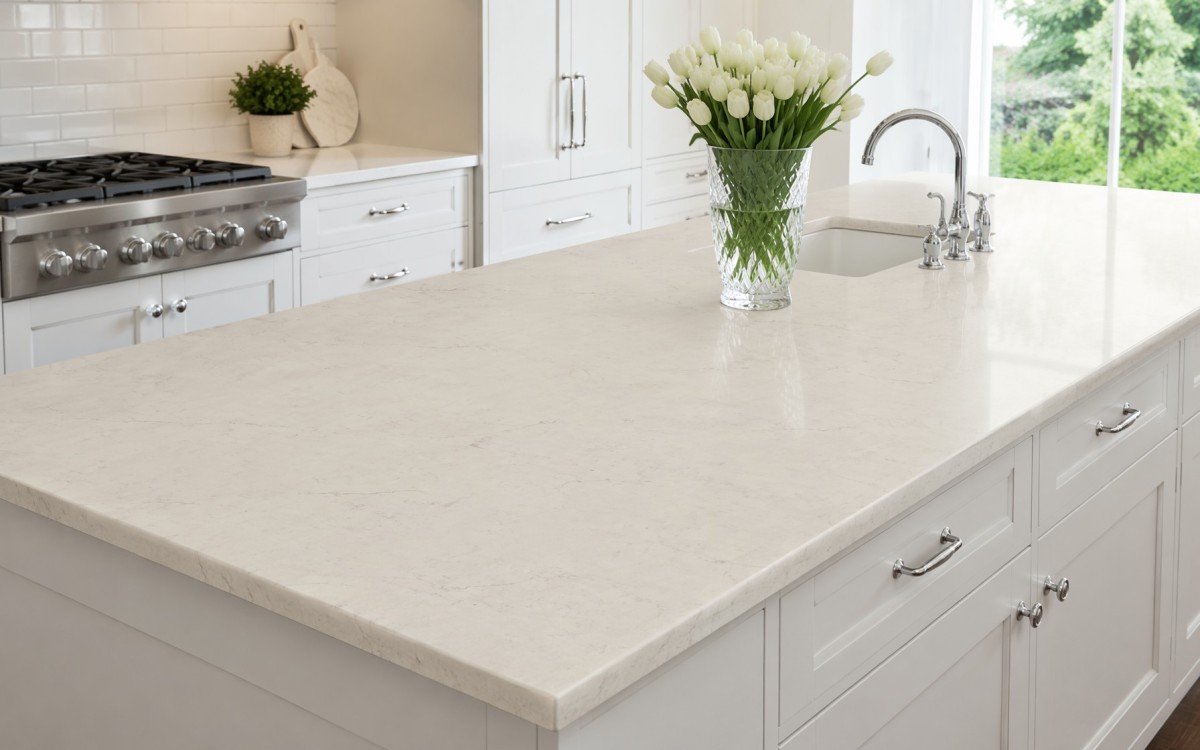
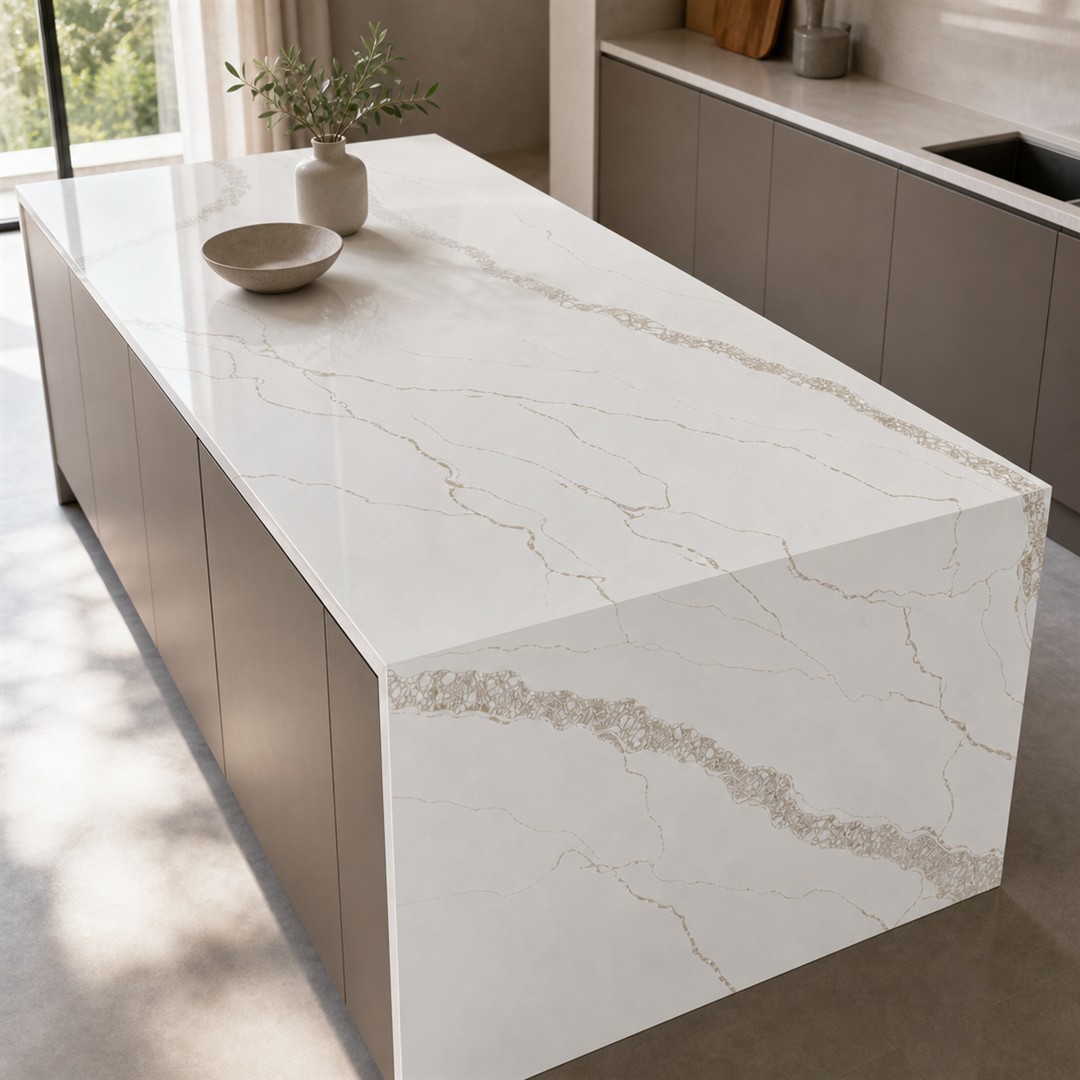
The most requested marble look quartz styles follow the natural marble names buyers already search for. Calacatta carries bold, dramatic gold-grey veining on a bright white base. Carrara is quieter, with fine light-grey feathered lines. Statuario sits between the two, with strong grey veining and a crisp white ground. A growing number of buyers also ask for a "soft white" or "ice" marble look quartz that is calmer than any natural stone, for minimalist kitchens. Because the pattern is engineered, a single colourway can be produced consistently for years, which matters for phased renovations and multi-unit developments.
Where to Use Marble Look Quartz
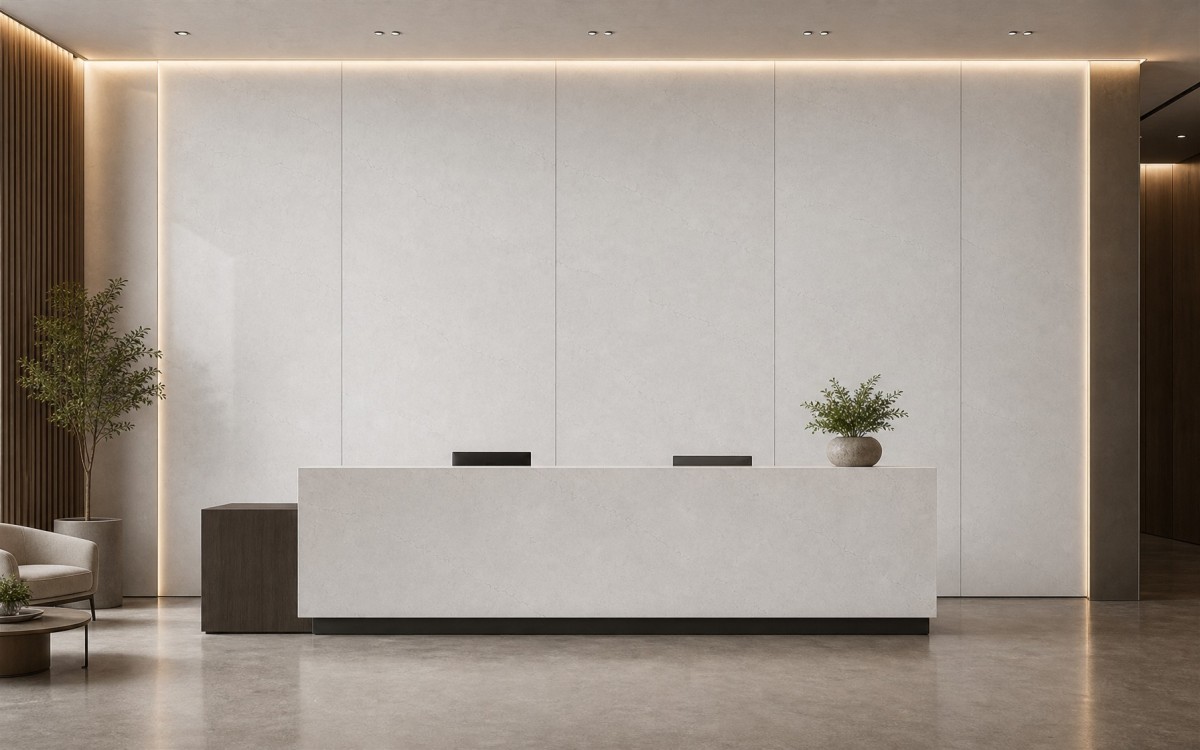
Marble look quartz suits almost any interior where marble would have been specified. Kitchen islands and worktops are the largest use, followed by bathroom vanities, backsplashes, and reception or bar fronts in hospitality. A marble look quartz top reads elegant in a hotel lobby and practical in a busy café, precisely because it will not etch under constant use. For flooring or outdoor use, however, marble-look surfaces follow the same heat and UV limits as other engineered quartz, so specification should stay indoors unless the product is rated for the application.
How to Choose the Right Marble Look Quartz
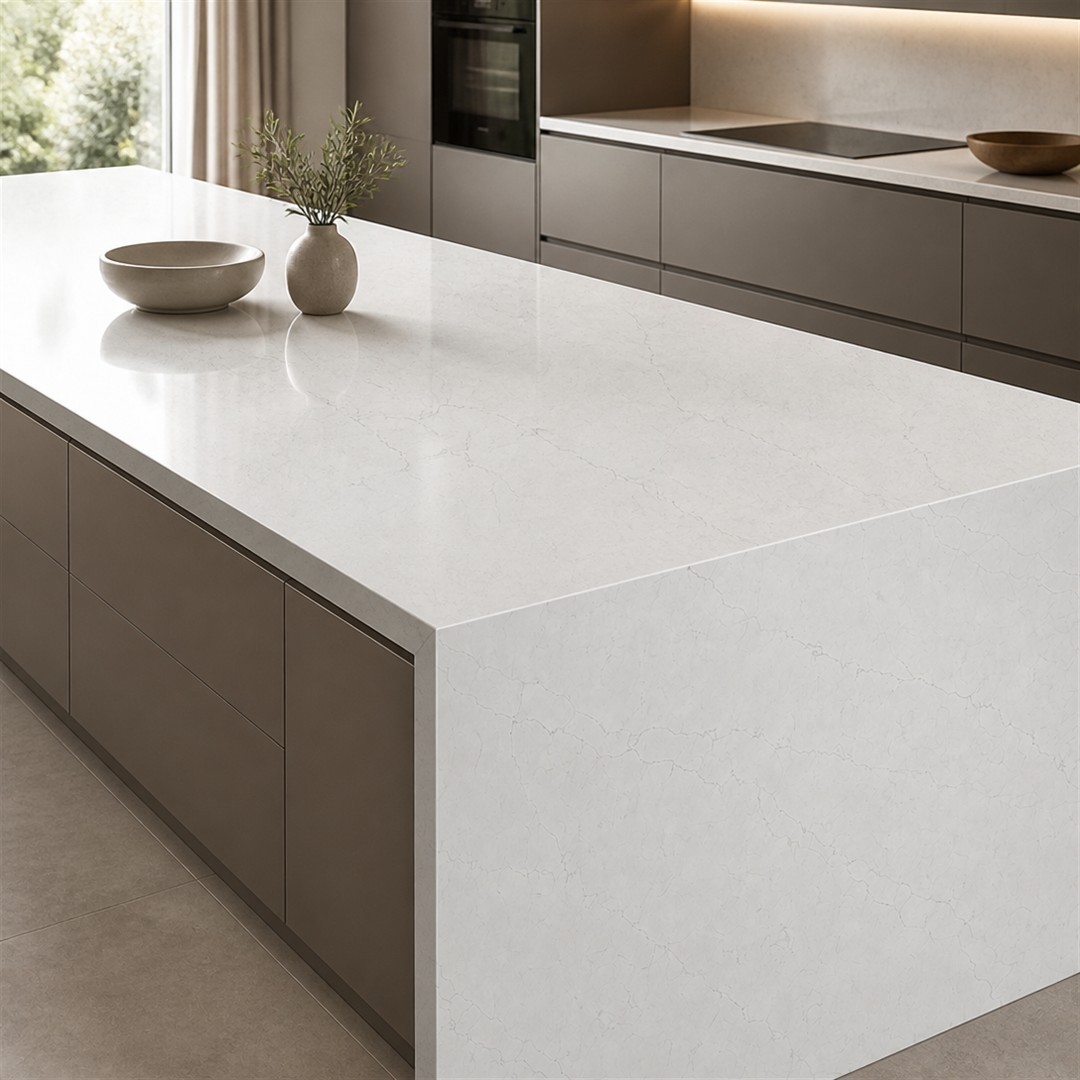
Choosing a marble look quartz comes down to three decisions. First, vein intensity: bold Calacatta-style veining is a feature statement, while quiet Carrara-style lines disappear into a calm background. Second, slab format: larger slabs mean fewer seams on a long island, which keeps the marble effect uninterrupted. Third, finish — polished gives the classic marble gloss, honed gives a softer, more contemporary matte. When you specify, ask for a full slab photo rather than a small sample, because the vein movement across a whole marble look quartz slab is what you actually live with, not the swatch in a showroom.
Caring for Marble Look Quartz
Care is where marble look quartz wins outright. Wipe with warm water and mild soap, dry to avoid spots, and keep harsh chemicals and hot pans off the surface — the same simple routine as any engineered quartz. There is no sealing, no etching to polish out, and no porous stain to worry about, which is the whole point of choosing a marble look quartz over natural marble. A quick daily wipe keeps the bright white ground and soft veining looking exactly as it did on install day, year after year.
Frequently Asked Questions
Is marble look quartz the same as marble? No. It is engineered stone styled to look like marble. It keeps the appearance but removes the etching, staining and sealing that real marble requires.
Does marble look quartz stain or etch? No. Because it is non-porous, wine, oil and acidic foods wipe off without staining or etching, unlike natural marble.
Which marble look style is most popular? Calacatta-style bold veining is the most requested for feature islands, while Carrara-style quiet veining is preferred for calm, minimalist spaces.
Can I use marble look quartz outdoors? Only if the specific product is rated for it. Standard engineered quartz has heat and UV limits, so keep marble-look surfaces indoors unless rated otherwise.
Do I need to seal marble look quartz? No. Like all engineered quartz, it is non-porous and never needs sealing, which is a key advantage over natural marble.
Conclusion
Marble look quartz gives you the marble aesthetic — the bright ground, the soft veining, the sense of space — without the marble upkeep. For kitchens, bathrooms and commercial interiors it is the practical way to get a luxury look that actually survives daily use. If you want marble-look slabs engineered for consistency and performance — 93% quartz, ISO9001, NSF and SGS certified, in Calacatta, Carrara, Statuario and custom colours — contact Shandong Hongyue Quartz Stone Co., Ltd., email raykelee@hyquartzslabfactory.com or reach us on WhatsApp at +86 198 6115 3736.
Specify Your Marble Look Quartz Direct from the Factory
When you specify marble look quartz, colour consistency across the whole project matters more than the showroom swatch. Send us your dimensions, preferred marble style and destination port, and we return samples, a cutting diagram and a line-item quotation. Our engineering team reviews every slab before production, so the veining and white ground you approve are the veining and white ground you receive.
📱 WhatsApp: +86 198 6115 3736
📧 Email: raykelee@hyquartzslabfactory.com
Related Articles
Send Us A Message