
How Many Quartz Slabs Fit in a Container (20ft/40ft)
How Many Quartz Slabs Fit in a Container (20ft/40ft)
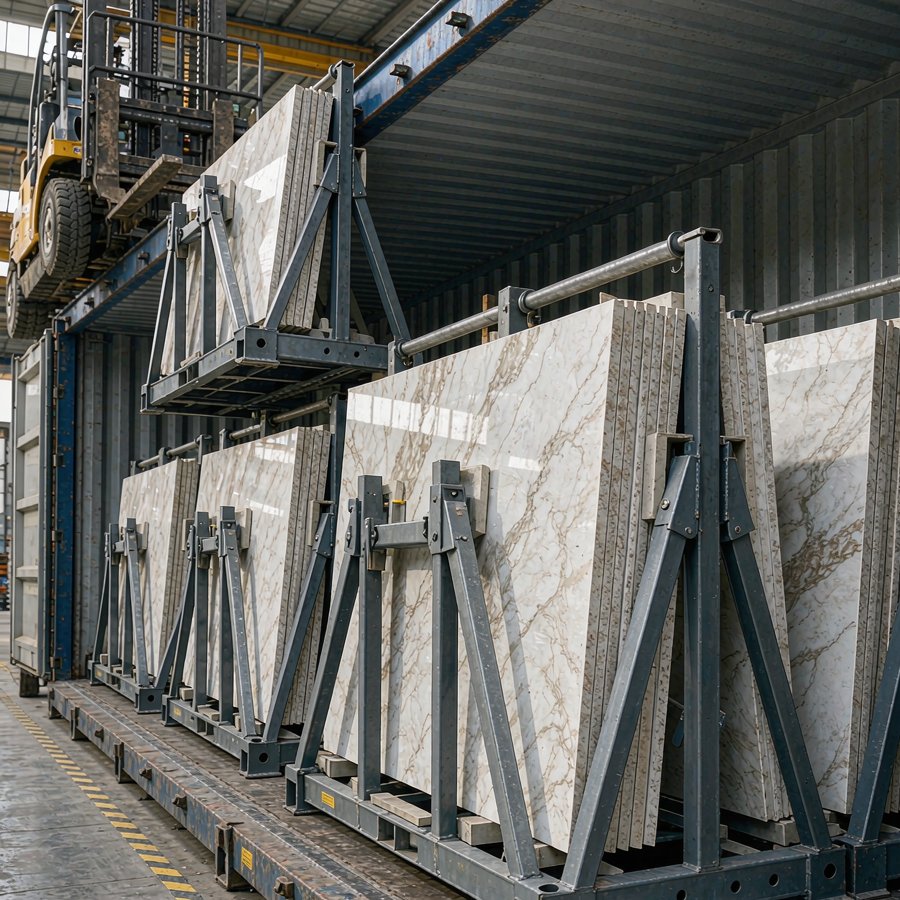
One of the first numbers an importer needs is not the price per square foot but how many slabs a shipment actually holds. A container load quartz order is priced, insured and freighted by the box, so the slabs-per-container figure drives your true unit cost. This guide gives indicative load counts for 20ft and 40ft containers across the common 15mm, 18mm and 20mm thicknesses, and explains what changes the number.
Why the Container Load Quartz Figure Matters
Freight and insurance are quoted per container, not per slab. If a shipment holds 150 slabs instead of 200, your cost per square metre rises by roughly a third — even when the ex-works price is identical. That is why buyers should agree the load count before signing, not after the crate is sealed.
Standard Slab Size We Use for the Math
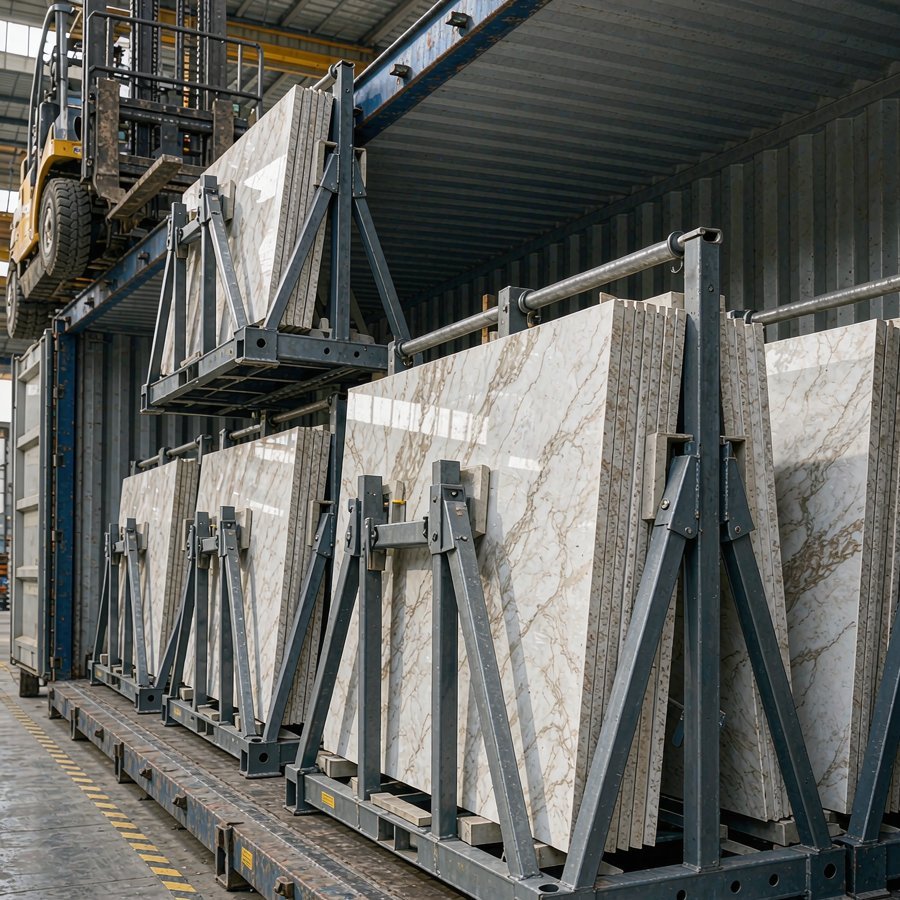
Most export jumbo slabs are 3200 × 1600 mm (about 5.12 m² each). A few lines run 3000 × 1400 mm or 3500 × 2000 mm, but the jumbo format is the default for a container load quartz booking. All counts below assume the 3200 × 1600 mm jumbo unless stated.
How A-Frame Crates Stack in a Container
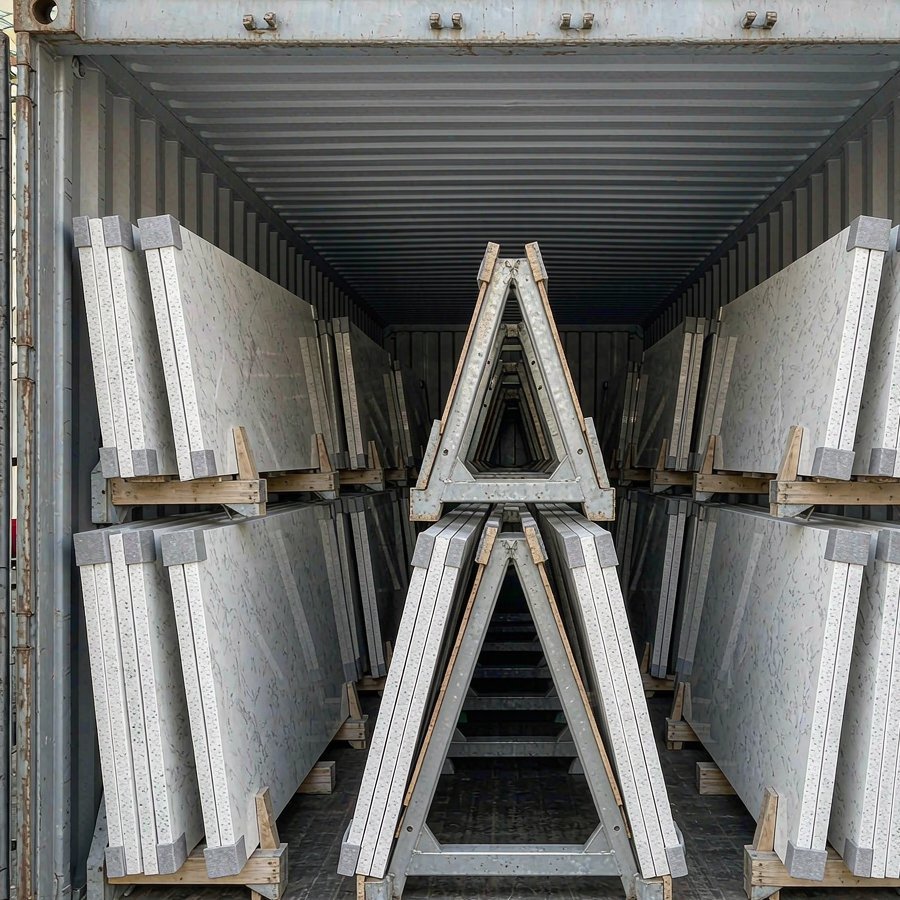
Slabs travel on A-frame racks, not loose. A standard 40ft high-cube fits roughly 20–24 A-frames laid and stacked along the floor, and each A-frame carries 8–10 slabs depending on thickness. That rack geometry — not the slab area alone — sets the real container load quartz limit, because the crates must stay stable and strapped.
Indicative Load Counts: 40ft High Cube
The table below is a planning estimate for a 40ft high-cube container. Treat it as indicative; your supplier confirms the exact count after crating.
At 20mm the crate thus lands near the 28-tonne payload ceiling of most 40ft boxes, which is why thicker slabs often mean fewer pieces rather than a heavier crate.
Indicative Load Counts: 20ft Container
A 20ft container holds about half of a 40ft, because the interior length and payload both drop. For a container load quartz at 20ft you can plan on:

What Changes the Number
Four things move the load count. Smaller slab formats free up space and raise the piece count. Mixed colours on one A-frame pack looser than a single colour, so a mixed order holds slightly fewer slabs. Foam wrapping adds a few millimetres per slab. And the destination port's weight limit can cap the crate before the volume is full — common on routes with low road-legal axle loads after unloading.
Single Colour vs Mixed Colour Loads
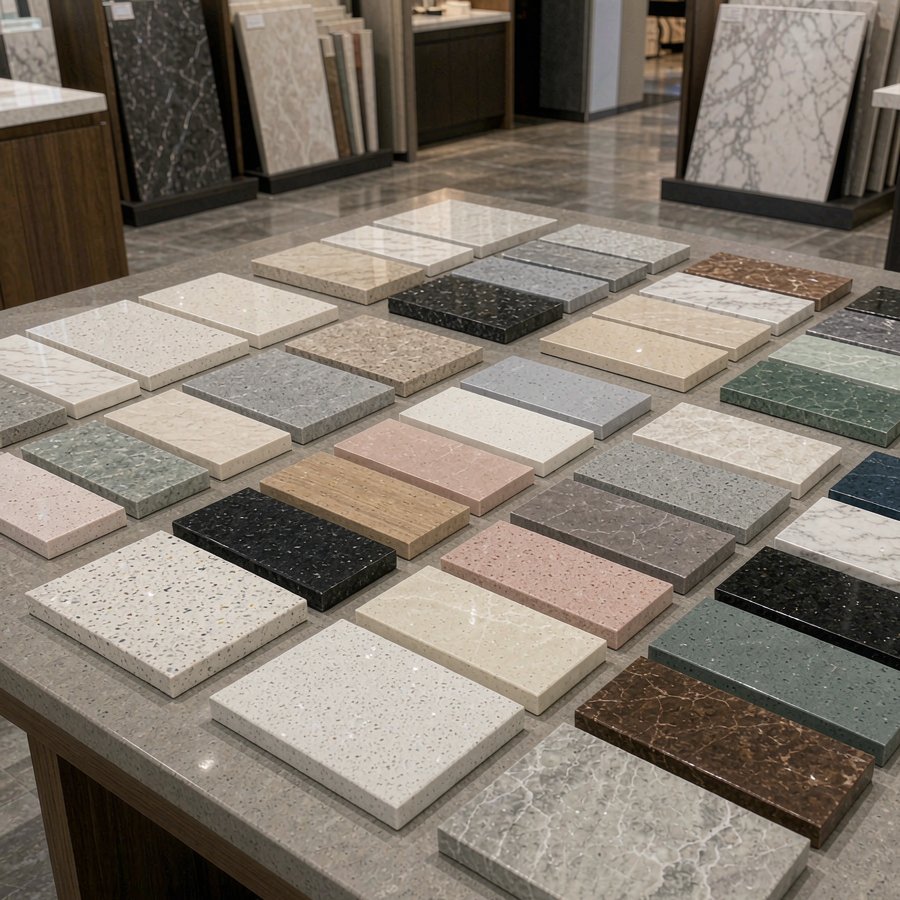
A single-colour load books tightly: slabs sit flush, wrappers are thin, and the crate is dense. A mixed-colour order needs separation boards between colours, which eats 5–10% of the capacity. If you are weighing price against variety, ask the supplier for both counts side by side.
Matching Load Count to Your MOQ
Your minimum order quantity and your container count are the same planning exercise. If an 18mm load holds about 170 slabs and your project needs 200, you are shipping a 40ft plus a partial 20ft — or accepting a small buffer. Our guide on quartz slab MOQ shows how distributors split a container across colours, and our step-by-step import guide walks the full shipping chain from factory to warehouse.
How We Confirm Your Count Before Crating
Before an order is crated, we send a load plan: slab size, thickness mix, colour spread, crate layout and the final piece count with the net weight. You see the number in writing, not as a surprise at the destination port. Supervised loading photos follow once the container is sealed.
FAQ: Container Load Quartz
How many jumbo slabs fit in a 40ft container?
Indicatively 150–200 pieces depending on thickness — about 150 at 20mm, 170 at 18mm, 200 at 15mm. A confirmed container load quartz count comes after crating.
Is a 20ft or 40ft better for a small order?
A 20ft holds roughly half a 40ft. If you are under about 100 slabs, a 20ft is usually the cleaner booking; above that, a 40ft is cheaper per slab.
Does slab thickness change the freight?
Yes. Thicker slabs hit the weight ceiling sooner, so a 20mm crate holds fewer pieces than a 15mm one even in the same box.
Can I mix colours in one container?
You can. Expect 5–10% fewer slabs than a single-colour load because of the separation boards between colours.
Get a Confirmed Load Plan for Your Order
The right supplier quotes a container load quartz plan in writing before crating — slab size, thickness, colour mix and the exact piece count with net weight. Reach our export desk for a confirmed load plan matched to your thickness and colour list, so your true cost per slab is known before the vessel sails.
Send Us A Message