
Quartz Countertop Myths Debunked: What's True and What's Marketing
Quartz Countertop Myths Debunked: What's True and What's Marketing
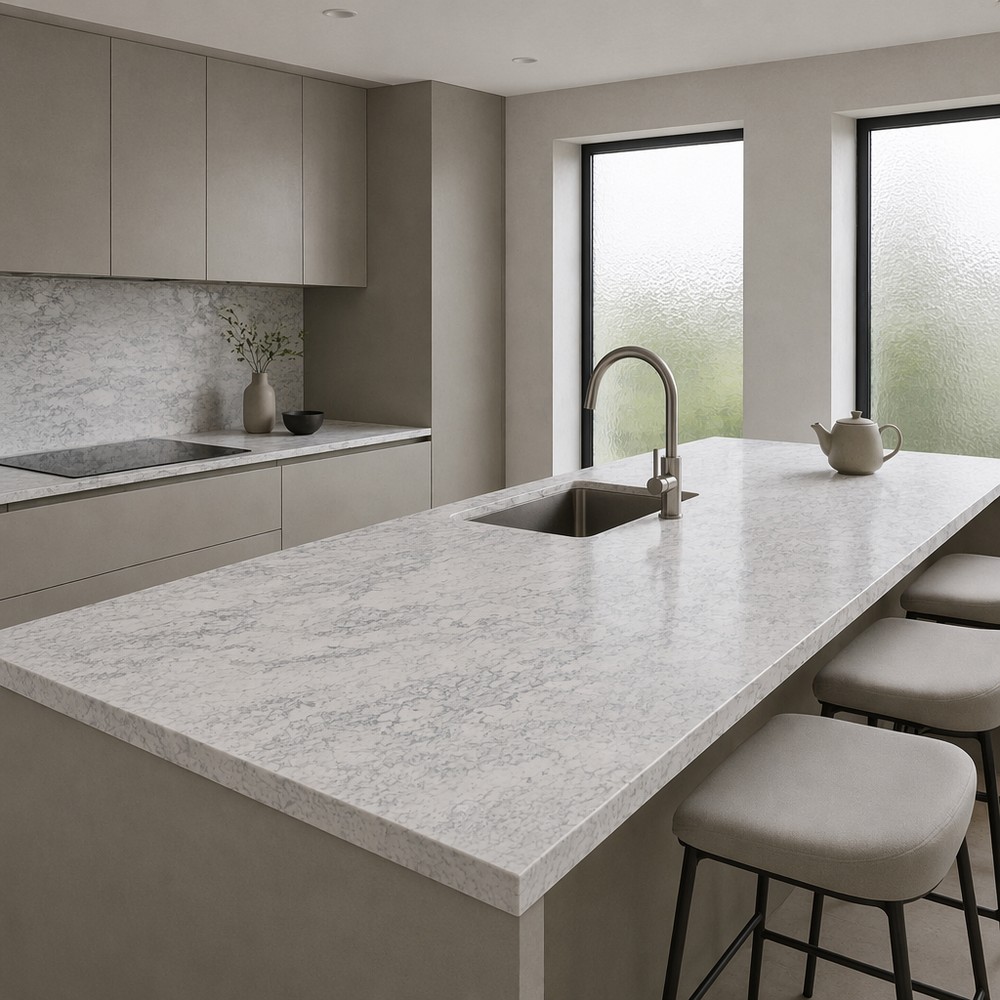
Walk into any showroom or scroll any forum and you will hear the same quartz countertop myths repeated as fact. Some come from old memories of natural stone, some from clever marketing, and some from pure guesswork. This guide separates the real engineering from the fiction so you can specify, buy and live with quartz without surprises. We will debunk the eight most common quartz countertop myths one by one, using the actual product specs rather than the sales script.
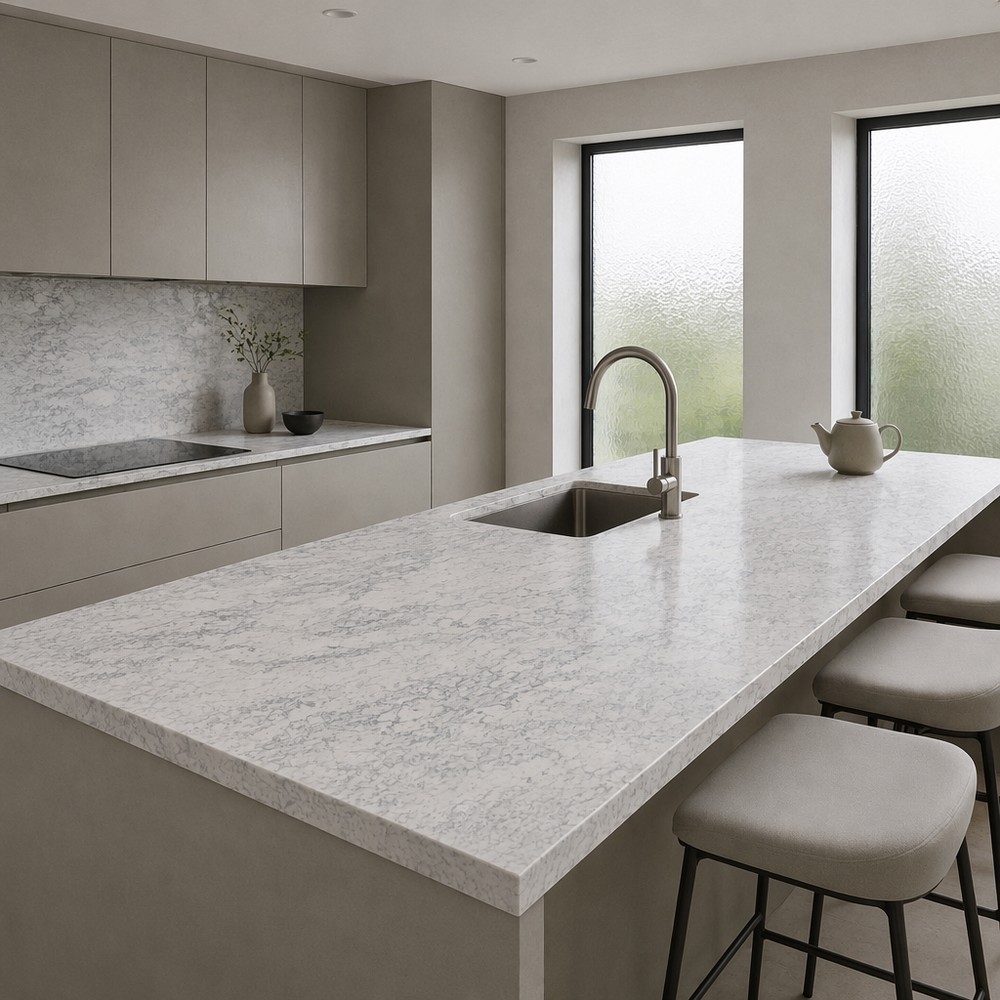
Myth 1 — Quartz Countertops Are 100% Natural Stone
One of the most repeated quartz countertop myths is that quartz is "just natural stone cut to size." It is not. Engineered quartz is about 90–93% crushed natural quartz bound with polymer resin. That blend is exactly why it is harder, less porous and more consistent than raw stone. The resin lets factories control colour and veining instead of leaving it to nature — a feature, not a flaw. Calling it "fake" misses the point: it is a designed surface built for performance. This is the first of the quartz countertop myths we hear most from first-time buyers.
Myth 2 — Quartz Is Completely Heat-Proof
A very common quartz countertop myths claim is that you can set a hot pan straight from the stove onto the slab. The quartz particles themselves shrug off heat, but the resin binder does not. Most resins start to soften or discolour around 150 °C (300 °F), and a roasting tray or frying pan easily exceeds that. Always use a trivet or heat pad. This is the same advice we give for every quartz install, and it is why heat resistance is tested at the factory rather than trusted in the kitchen. Believing these quartz countertop myths is how scorched rings happen.
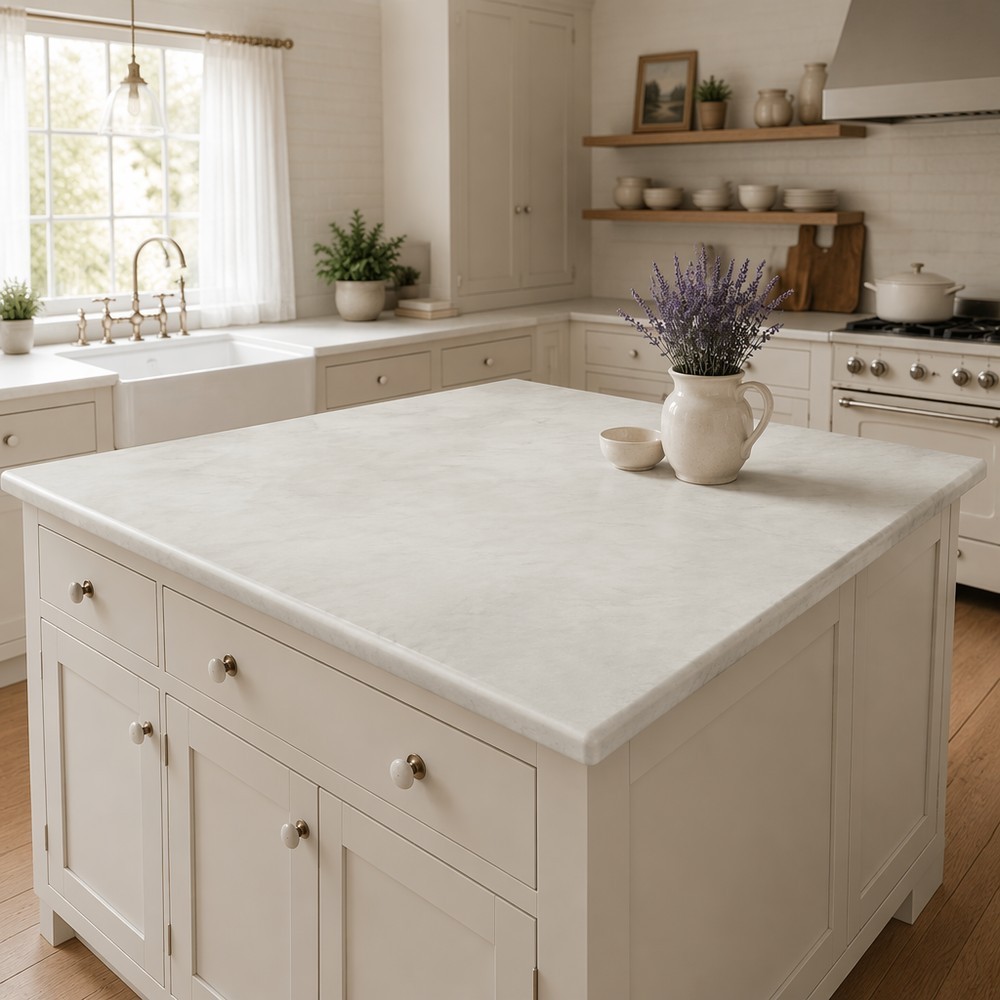
Myth 3 — Quartz Never Stains
"Quartz never stains" is one of the quartz countertop myths that needs a footnote. Quartz is non-porous, so it does not absorb spills the way marble or concrete do — no sealing required. But "non-porous" is not "magic." Leave a strong dye, oil or red wine sitting for hours and it can leave a mark on the surface film. The fix is simple: wipe spills promptly with mild soap and water. Our stain-resistance testing shows everyday messes lift clean in seconds when handled normally. Holding onto these quartz countertop myths is how avoidable marks appear.
Myth 4 — Quartz Is Scratch-Proof, So Just Cut on It
Another persistent quartz countertop myths entry is that the surface is so hard you can chop directly on it. Quartz ranks about 6 on the Mohs scale — harder than steel, so a knife will not cut the slab. But "harder than the knife" is not "immune to marks." Knife edges can leave grey metal streaks or micro-scratches on the resin top coat. Use a cutting board. The hardness is your friend for daily wear; it is not a licence to skip the board. This is the quartz countertop myths claim fabricators hate most.
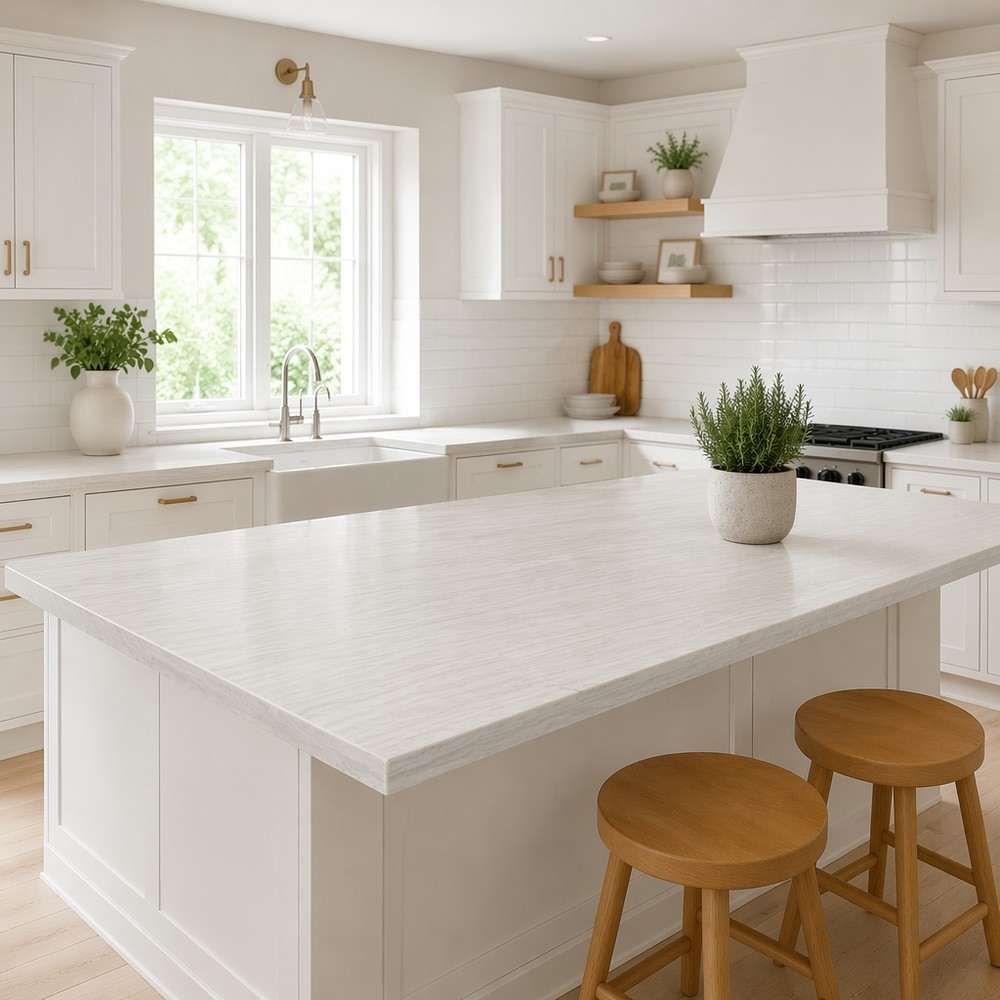
Myth 5 — You Can Clean Quartz With Any Product
Among the quartz countertop myths that actually damage surfaces, this is the costly one. Bleach, oven cleaner, acidic descalers and abrasive powders can dull or etch the resin over time. Quartz only needs warm water and a drop of mild dish soap, with a soft cloth. For dried-on spots, a plastic scraper lifts them without scratching. Skip the harsh chemicals — they do more harm than the stain ever would. This quartz countertop myths belief costs people their warranty more than anything else.
Myth 6 — Quartz Needs Sealing Every Year
Because granite owners reseal annually, a related quartz countertop myths claim says quartz needs the same ritual. It does not. The non-porous surface has nothing for a sealer to soak into, so there is no benefit and no schedule. "Maintenance-free" is close to true for the stone itself — the real task is just keeping it clean, which takes seconds a day. This quartz countertop myths notion just wastes product and time.
Myth 7 — Quartz Is Fine Outdoors Anywhere
A tempting quartz countertop myths story for patio projects is that any quartz will survive the garden. In shaded, covered areas quartz performs well, but prolonged direct UV can slowly yellow or fade the resin in some lines. For full-sun outdoor kitchens, choose a line rated for UV exposure or a UV-stable formulation. This is the one place where the "quartz everywhere" idea needs a qualified yes rather than a blanket one — see our outdoor-use guide before you spec it. Don't let these quartz countertop myths sink your patio.
Myth 8 — All Quartz Brands Are Basically the Same
The final quartz countertop myths claim is that price differences are pure markup. They are not. Resin ratio, batch colour control, slab flatness, edge quality and certification (ISO9001, NSF food-contact, SGS) vary widely between makers. A cheap slab may look fine on day one and drift in colour across a large island. Specifying from a certified, batch-controlled factory protects the look over the life of the job. This is the quartz countertop myths trap that makes cheap jobs fail years later.
How to Care for Quartz the Right Way
Strip away the quartz countertop myths and the real routine is short: wipe daily with mild soap and water, never place hot pans directly on the surface, always use a cutting board, and avoid harsh chemicals. Do that and a quartz countertop will look new for well over a decade. The surface is genuinely low-maintenance — it just is not indestructible, and pretending otherwise is how damage happens. A proper maintenance routine takes minutes a week.
Frequently Asked Questions
Is quartz a natural stone? No. It is about 90–93% natural quartz bound with resin — engineered for consistency and performance, which is why the "natural stone" myth does not hold.
Can I put a hot pan on quartz? Not directly. The resin softens around 150 °C, so always use a trivet. This is the heat myth worth remembering.
Does quartz need sealing? No. Its non-porous surface means sealing adds nothing. Annual resealing is a granite habit, not a quartz need.
Will quartz stain or scratch? It resists both far better than natural stone, but prolonged spills and direct knife cuts can mark the surface. Prompt cleaning and a cutting board prevent both. These quartz countertop myths show up in almost every consultation we run.
Conclusion
Most quartz countertop myths mix a grain of truth with a lot of outdated assumption. Quartz is not natural stone, not heat-proof, not stain-proof and not scratch-proof — but it is the most practical, consistent and easy-care surface most homes and projects can specify. Understand the real limits and you get decades of good looks with almost no effort. When you drop the quartz countertop myths, the buying decision gets simple.
Shandong Hongyue Quartz Stone Co., Ltd. — factory-direct quartz slabs in 85/90 whiteness grades, batch-controlled colour and full certification (ISO9001, NSF, SGS), MOQ-friendly for projects. WhatsApp: +86 198 6115 3736 · Email: raykelee@hyquartzslabfactory.com
Send Us A Message